

Baltiysk-Kaliningrad (Russia)
Cruise Port schedule, live map, terminals, news
Region
Baltic - Norwegian Fjords - Russia
Local Time
2026-10-24 11:14
 53°F
53°F 11.7°C

 Mod. breeze
7.4 m/s
 56 °F / 14 °C
 49 °F / 10 °C
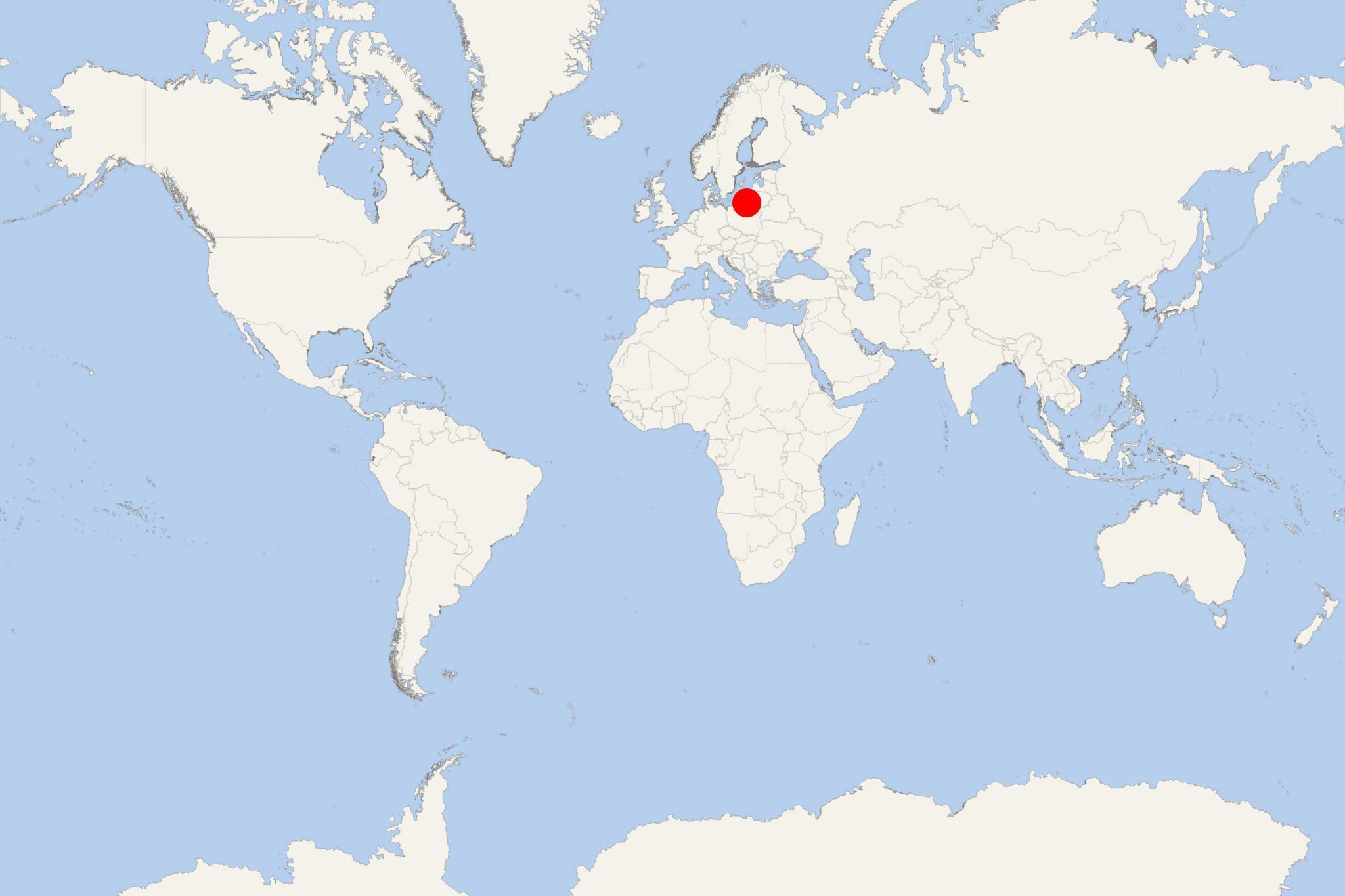
Baltiysk is a Russian port town (known as Pillau / Piliava prior to 1946) with population around 33,000. It is located on the northern part of Vistula Spit (a peninsular stretch of land). Baltiysk is Russia's westernmost town, also major naval base and ferry port on the Baltic Sea route to St Petersburg. Baltiysk (Kaliningrad) and Sankt Petersburg are Russia's only Baltic Sea ports free of ice the whole year-round.
During WW2 (1939-1945), the German port town Pillau had a U-boat training facility. Here on April 16, 1945, by artillery fire, the Russians sunk a U-78 submarine docked near the pier. This was the war's only case of a submarine being sunk by land-based forces. As the Soviet army entered East Prussia, over 450,000 citizens from Pillau were evacuated (ferried) to other ports in Germany. The town was captured on April 25, 1945.
After the war, the town's remaining German inhabitants were expelled. In 1946, its name was changed from Pillau to Baltiysk. In 1952, there was inaugurated a Soviet Navy base. As a result, the town was closed for foreigners and accessible by permits only.
Kaliningrad (fka Konigsberg) is a Russian port city on the Baltic Sea, as well as the administrative center of the Russian territory Kaliningrad Oblast (located between Lithuania and Poland). The city has a population of around 430,000. As the East Prussian province's capital, Konigsberg was founded in 1255 and named in honor of King Ottokar II. During WW2, Konigsberg was heavily bombed and damaged by the British in 1944. At the end of the war, it became part of the USSR (Soviet Union). In 1946 was renamed Kaliningrad (after Mikhail Kalinin). In the period 1946-49, the German population was expelled, the city was repopulated with USSR citizens and rebuilt.
In July 2007, Russia declared that if NATO missile systems were deployed in Poland, then Russian nuclear weapons might be deployed in Kaliningrad.
Among Kaliningrad's most popular tourist attractions are museums (Immanuel Kant /on Kneiphof island, History and Arts, Amber Museum, State Art Gallery, World's Oceans), churches, the city gates, Kaliningrad Zoo (since 1896, with 315 species and thousands of individual animals), Lower Pond (man-made lake and recreation park), Upper Pond. There is an anchored U-boat (B-413) hosting a permanent exhibit about Russia's submarine fleet. The city's oldest building is Juditten Church (built 1288).
Kaliningrad has its own brands of vodka (Stari Konigsberg) and beer (Ostmark).
The city has many restaurants offering traditional East Prussian specialties, as well as seafood dishes, pizzas, sushi.
Baltiysk-Kaliningrad cruise terminal
Cruise ships to Kaliningrad dock at the Baltiysk port. Their passengers are then transported to the city via charter buses.
- Kaliningrad is served by the Khrabrovo Airport connecting it to other Russian territories, as well as to some European cities.
- From Baltiysk there is a regular ferry service to St Petersburg Russia, Stockholm Sweden, Copenhagen Denmark, Riga Latvia, and Kiel Germany.
- The Kaliningrad Passazhirsky railway station connects the city to Moscow, St Petersburg, Adler, and Chelyabinsk.
- Regional trains from Kaliningrad-North (on Victory Square, in the city centre) depart to the local Russian towns (in Kaliningrad Oblast) Sovetsk, Svetlogorsk, and Zelenogradsk.
Baltiysk is both a naval base and the gateway port for Kaliningrad. Port movements and independent access can be restricted, while foreign nationals require advance authorization to visit Baltiysk and the nearby Baltic Spit. For most international cruise passengers, a ship-organized or properly arranged local tour is therefore the practical choice.
At a Glance
- Best suited to: organized sightseeing in Kaliningrad or a pre-authorized tour of Baltiysk.
- Independent sightseeing: limited by port controls and local permit requirements.
- Main destination: Kaliningrad, approximately 45 km (28.0 mi) inland.
- Local highlights: Baltiysk waterfront, lighthouse, naval monuments, beaches and maritime history.
- Important: carry the identification and documents specified by the cruise line or tour operator.
Getting from the Cruise Port
Cruise ships using Baltiysk normally berth within a controlled commercial and naval port. Passengers should not assume that they can walk directly from the berth into town. Cruise calls have traditionally used charter coaches to transfer passengers through the port and onward to Kaliningrad.
Kaliningrad is usually around 60–90 minutes away by road, depending on the berth, security procedures and traffic. Although regional buses and limited train services connect Baltiysk with Kaliningrad, they are poorly suited to a cruise call because passengers must first clear the controlled port and schedules may not match the ship.
Confirm the authorized passenger exit, transport arrangements and permission requirements with the cruise line before making independent plans.
Best Ways to Spend Your Time
Kaliningrad Highlights
Organized excursion recommended; allow 5–7 hours. Kaliningrad offers the greatest range of sightseeing but requires a substantial round-trip transfer. Typical stops include Kant Island and Königsberg Cathedral, the historic city gates, the Amber Museum and the Museum of the World Ocean.
A coach tour is the safest option for managing port clearance, travel time and the return to the ship. A shorter call may leave too little time for several museum interiors.
Baltiysk Waterfront and Maritime Sights
Possible only when port exit and local authorization permit; allow 2–3 hours. Central Baltiysk has a compact group of outdoor sights around Marine Boulevard and the harbour channel. These include the red-and-white Baltiysk Lighthouse, the Peter the Great monument, the Sailor’s Wife sculpture, the Pilot Tower and views of vessels entering the harbour.
The lighthouse is operational and not open to visitors. Pillau Citadel remains connected with an active military area and should not be approached as an ordinary walk-in attraction. Visits, where offered, require advance arrangements and appropriate identification.
Baltic Fleet Museum
Best with a local guide; allow about 1–1.5 hours. The museum covers regional naval history through ship models, uniforms, weapons and historic objects. Opening arrangements and visitor eligibility should be checked in advance, especially for foreign passengers.
Baltiysk Beach and Admiral Golovko Park
Suitable for a relaxed local visit when authorized; allow 2–3 hours. The town’s Baltic coast provides a quieter alternative to an inland excursion. A walk can combine Admiral Golovko Park, the seafront and one of the local beaches. Conditions can be windy and cool even in summer, and sea bathing depends on weather and locally supervised areas.
Baltic Spit
Advance authorization and a guided arrangement recommended; allow at least 3–4 hours. A local ferry crosses the narrow channel from Marine Boulevard to the Baltic Spit, where there are beaches, woodland, fortifications and remains of the former Neutief airfield.
Foreign nationals require special permission to visit the spit, and an additional border zone begins farther along it. Ferry operations can also be disrupted by strong wind, fog, waves or ice. Do not attempt this independently during a cruise call unless access, ferry timing and return transport have been confirmed in advance.
Conditional Self-Guided Walk in Baltiysk
Use this route only if the cruise line confirms that independent port exit and local access are permitted.
Maritime Baltiysk Walk
- Begin at the authorized port exit or cruise shuttle drop-off.
- Walk to the St George Naval Cathedral, housed in a former nineteenth-century church.
- Continue past the Baltic Fleet Museum and nearby naval memorials.
- Reach Marine Boulevard and view the Baltiysk Lighthouse from outside.
- Pass the Peter the Great monument and follow the harbour channel waterfront.
- See the Pilot Tower and Sailor’s Wife sculpture.
- Continue toward the Empress Elizabeth monument and seafront if time and access allow.
- Return by the same waterfront route to the confirmed shuttle point or port entrance.
The central route is approximately 4–6 km (2.5–3.7 mi), depending on the authorized start point and turnaround. Allow 1–1.5 hours of pure walking or 2–3 hours with stops. The walk is mostly easy, although exposed waterfront sections can be windy. Avoid military entrances, restricted piers and photography of sensitive facilities.
Practical Tips
- Check entry, permit and document requirements with the cruise line well before arrival; they cannot reliably be arranged after docking.
- Use only the passenger exit and transport specified by port personnel.
- Do not photograph naval installations, military vessels, checkpoints or other restricted facilities.
- For Kaliningrad, leave a generous margin for the road transfer and port security on return.
- For the Baltic Spit, confirm both outbound and return ferry operation before crossing.
- Allow extra time for security processing and aim to be back at the designated meeting point well before the cruise line’s all-aboard time.
Baltiysk-Kaliningrad hotels
- Cruise Industry
Fred Olsen's Prussia-themed Braemar ship cruise in August 2022
Fred Olsen Cruise Line's MS Braemar ship is scheduled to depart on a 10-night culture-themed itinerary to the lost lands of Prussia in August 2022...
December 12, 2020 - Accidents
Ferry Stranded in Baltic Sea with 335 People Onboard
Almost 300 ferry passengers have been stranded after an engine breakdown in Baltic Sea. The ship sent out a distress call following a reported...
October 2, 2018 - show more news