

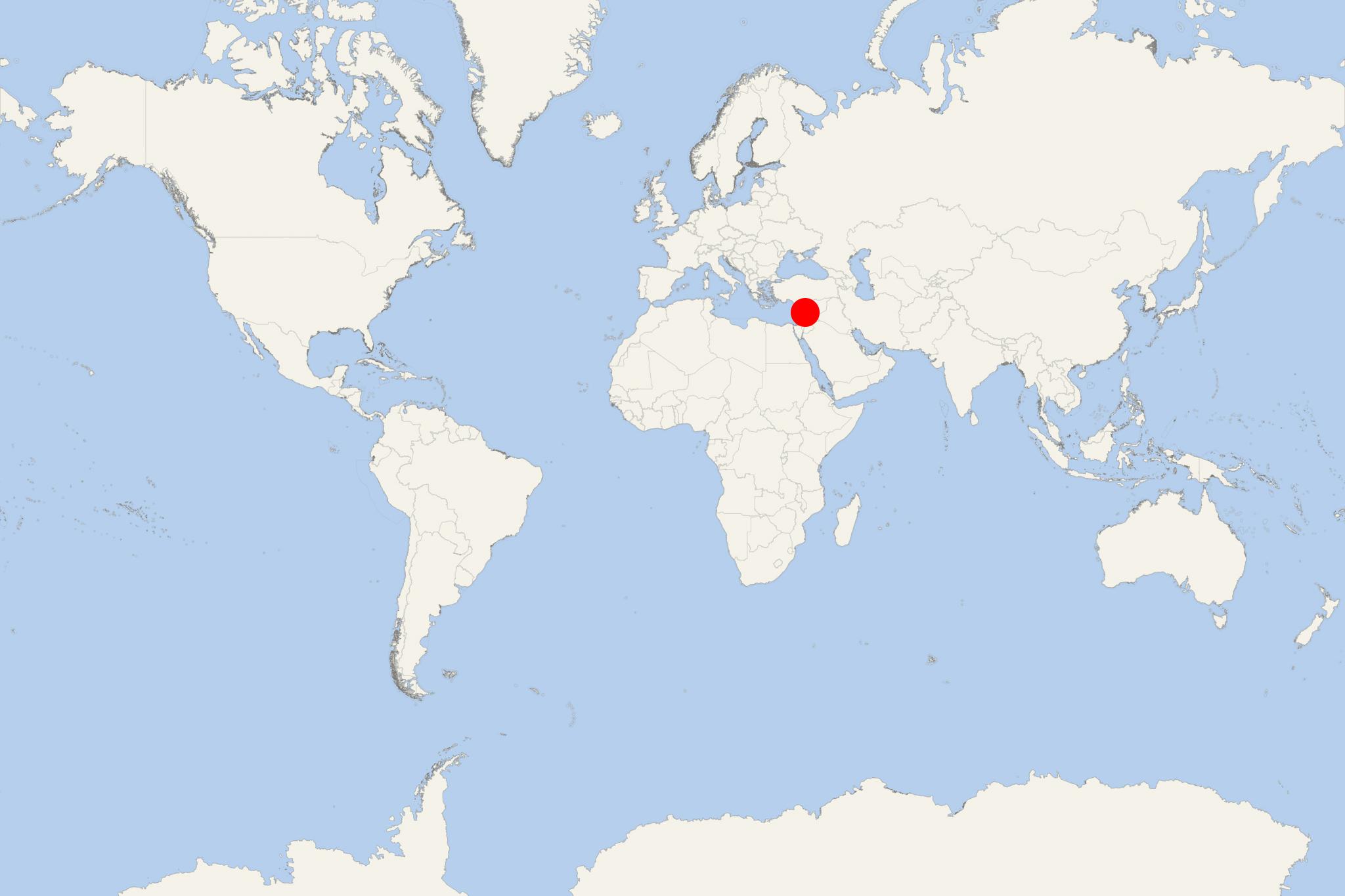
Beirut (Lebanon)
Cruise Port schedule, live map, terminals, news
 72°F
72°F 
 Light breeze
Beirut is a Mediterranean cruise port and Lebanon's main seaport, capital and largest city with population over 1 million (metro around 2,2 million). Beirut is one of the world's oldest cities, settled 5000+ years ago. Port Beirut was completely destroyed and the surrounding city area (in a 10 km / 6 mi radius) severely damaged in two explosions that occurred on August 4, 2020.
At ~6 pm on August 4th, two massive explosions in Port Beirut caused deaths, numerous serious injuries and severe damages to the cargo port area (totally destroyed) and various buildings in the city. The second blast sent up an enormous mushroom cloud-like shockwave and damaged many buildings as far as 10 km (6 mi) away from the port.
On August 5th was announced that the blast have been caused by 2750 tonnes of ammonium nitrate (NH4NO3) unsafely stored in a warehouse (Warehouse 12) since 2013. The local news reports first suggested 100+ dead. The explosion destroyed almost everything in a 10 km (6 mi) radius.
Various reports soon confirmed significant damages to Abou Merhi Cruises-owned ship Orient Queen, the Bangladesh Navy vessel BNS Bijoy (guided missile corvette, IMO 7920015), the general cargo ship Mero Star (IMO 8321682) and the livestock carrier Jouri (IMO 9174775). Other severely damaged/destroyed in the explosions vessels included Raouf H (cargo ship, IMO 8325535), Amadeo II (edible oil tanker, IMO 7423990), two abandoned livestock carriers (Abou Karim 1, Abou Karim 3). On the berthed Orient Queen, two crew were killed and 7 seriously injured. Cruise liner's interior was blown out. The vessel listed heavily onto the quayside and capsized/partially sank overnight.
On August 6th was reported that the explosions have killed 135+ people and injured 5000+. In total, the powerful explosions (equivalent to 4,5 Richter magnitude earthquake) resulted in 220+ deaths, 6500+ injured, ~300,000 homeless/displaced, USD 15+ billion in property damages.
Port Beirut
Port Beirut is Lebanon's main seaport, located on St George Bay's eastern part, west of Beirut River. By cargo shipping volumes, it is ranked among Eastern Mediterranean's largest.
- Containership terminals are operated by a private subcontractor (Beirut Container Terminal Consortium). Most of the cargo traffic is with Syria, Jordan, Iraq, the Persian Gulf States. The seaport covers a total area of 1,2 km2 (0,5 ml2) and has 4 turning basins, 16 docks (quays) and 1 container terminal (quay 16) with an annual capacity to handle up to 745,000 TEUs (containers).
- Free Zone in the seaport includes 3 warehouses and a commercial building with 46 tax-free shops. Logistic Free Zone contains several warehouses with processing capabilities. The Port's general cargo area has 12 warehouses and 1-grain silo (capacity of 120,000 tons).
- Beirut is a transshipment port serving some of the world's largest container shipping companies - MSC and CMA-CGM.
Turning Basin 1 became part of a major port development project budgeted around USD 2 billion. It includes rebuilding the Central District, transforming quays 1 and 2 into a promenade and construction of leisure properties.
The port expansion project includes upgrades of the existing infrastructure, cargo area (container terminal, buildings, equipment), marine works (quay walls, breakwaters), new shuttle bus system. The project also included building an international cruise terminal, cultural, entertainment and commercial venues on the waterfront (markets, shops, event spaces, exhibitions, parks). Among the signature design elements were pedestrian bridges, viewing platforms, light-towers.
Beirut City
The city is a hub for Lebanon's politics and economy. Here are the headquarters and main offices of all major banks and corporations. The city is served by its seaport and the international Rafic Hariri Airport. Lebanon's currency is among the few backed with solid gold. Lebanese currency is fully convertible and exchangeable.
Most city investment projects are in construction, commerce, and industry (mainly textiles and shoe manufacturing, food processing, printing). Among the largest industries are banking and finance, publishing, trade, oil production. Here are located the country's central bank and Stock Exchange, Middle East Airlines, the unions of Arab Banks and Arab Stock Exchanges.
Tourism is a historically important industry and a major revenue source for the country. Annually, the city is visited by around 3 million foreign tourists.
- Statistics show that over 1/3 of all tourists come from Arab states and 1/3 from Europe (mainly France, Germany, UK). Most tourist attractions and tourism-related services are in the Central District, where are located numerous interesting buildings in various architectural styles (French, Venetian Gothic, Ottoman, Arabesque), old mosques, crusader churches, Roman ruins, restaurants, cafes, pubs, shopping malls, hotels. The waterfront, the marina features a seaside promenade and an amazing city skyline with skyscrapers.
- Corniche is 5 km (3 ml) long promenade street (Raouche) encircling the seafront from St George Bay (north) to General de Gaulle Avenue (south).
- Badaro neighborhood is the city's green district with a large public park (Beirut Pine Forest) and hippodrome (serving floatplanes. Here can be found numerous small eateries and shops selling home-made food and traditional crafts), including bakeries, pastry shops, sidewalk cafes.
- Hamra Street (connecting Central District with Raouche) houses numerous boutiques, restaurants, and cafes, bars and pubs, street vendors, nightclubs.
Major international hotel chains establish partnerships with local clinics and travel agencies to develop medical tourism to Beirut with attractive healthcare packages. Cosmetic surgery attracts many foreigners mainly for routine procedures (plastic, dental, eye). The city's best clinics are Sahel General Hospital and Clemenceau Medical Center.
Beirut cruise terminal
Beirut cruise terminal is located on Quay 5 and faces Turning Basin 2. The old building was reconstructed into a modern passenger terminal (sized 600 m2 / 6500 ft2). The terminal project was completed in 2018.
Here is homeported the operated by Abou Merhi Cruises ship Orient Queen.
Beirut combines a compact central district with sights spread along the coast and into nearby neighborhoods. A city visit is manageable during a cruise call, but transport from the working port and between outlying attractions requires planning.
Independent with some planning or transport: central Beirut can be explored on foot after reaching the sightseeing area, while the National Museum, Corniche and Pigeon Rocks are easier by taxi. For destinations outside Beirut, an organized excursion or prearranged driver is preferable.
Getting from the Cruise Port
Cruise ships traditionally use the passenger facilities around Quay 5, although the assigned berth and passenger exit can vary. Beirut is primarily a commercial port, so passengers should not assume they can walk freely from the ship through the dock area.
- Follow the cruise line’s instructions for any port transfer or shuttle.
- If taxis are permitted at the passenger exit, agree on the destination, currency and total fare before departing.
- Martyrs’ Square and the eastern side of Downtown Beirut are close to the port geographically, but the practical distance depends on the berth and authorized exit.
- Public transport is not the most dependable choice for a short port call. Taxis or prearranged transport are more practical.
Best Ways to Spend Your Time
Downtown Beirut and the Historic Core
Allow about 2–3 hours for Martyrs’ Square, Mohammad Al-Amin Mosque, St George Maronite Cathedral, the Roman Baths, Nejmeh Square and the Beirut Souks area. The sights are close enough to combine on foot once you reach central Beirut. Some streets may be closed or access-controlled, so remain flexible.
Gemmayzeh and the Sursock Museum
Allow 2–3 hours for the traditional buildings, cafés and galleries of Gemmayzeh, followed by the Sursock Museum in nearby Achrafieh. The neighborhood rises away from the port and includes slopes and steps. Check the museum’s opening status before setting out, as hours and exhibitions can change.
National Museum of Beirut
The National Museum is the strongest choice for passengers interested in Lebanon’s archaeological heritage. A visit normally takes 1–2 hours. It lies outside the compact downtown walking area, so use a taxi and confirm that the museum is open on the day of the call.
Corniche and Pigeon Rocks
Raouché is known for its coastal promenade and views of the Pigeon Rocks. It is roughly 6 km (3.7 mi) from the port area and is best reached by taxi. Allow 1.5–2.5 hours for the transfer, viewpoints and a walk along the Corniche. The promenade is generally easy, but it is exposed to sun and traffic.
Byblos and Jeita Grotto
Byblos is approximately 38 km (23.6 mi) north of Beirut and offers an old harbor, archaeological remains and a compact historic center. Jeita Grotto is approximately 22 km (13.7 mi) from Beirut and is often combined with Byblos or Harissa. Allow most of the port day and use an organized excursion or prearranged driver because traffic can make return times unpredictable.
Self-Guided Downtown Walk
Distance: approximately 2.5 km (1.6 mi)
Pure walking time: about 35–45 minutes
Recommended total time: 2–3 hours
Difficulty: easy to moderate, mostly urban pavements with road crossings and occasional uneven surfaces
- Martyrs’ Square: begin at a taxi or cruise-shuttle drop-off rather than attempting to cross the commercial port independently.
- Mohammad Al-Amin Mosque: view the prominent blue-domed mosque and neighboring St George Maronite Cathedral. Enter only when visits are permitted and dress respectfully.
- Roman Baths: continue toward the exposed remains below the government district.
- Nejmeh Square: walk through the central district if security controls allow public access.
- Beirut Souks area: continue through the rebuilt commercial quarter.
- Saifi Village: finish among pedestrian lanes, restored buildings and small shops.
From Saifi Village, return to the agreed pickup point or take a taxi back to the authorized port entrance. Do not rely on finding your ship by walking toward the waterfront, as passenger access through the port may be restricted.
Practical Considerations
- Lebanon’s security situation can change quickly. Check current government travel advice and follow all instructions from the cruise line and local authorities before leaving the ship.
- Avoid demonstrations, political gatherings, military facilities and unfamiliar districts.
- Carry your ship’s contact information and the exact name of the passenger entrance or pickup point.
- Confirm taxi fares and the accepted currency before travel. Keep small notes because card payment should not be assumed.
- Dress modestly when entering mosques and churches.
- Summer conditions can be hot and humid; carry water and sun protection.
- Allow at least 60–90 minutes between finishing sightseeing and the ship’s all-aboard time. Use a larger margin after an excursion outside Beirut or whenever traffic is heavy.
Beirut hotels
- Accidents
VIDEO: Orient Queen cruise ship sinks after blast in Beirut
The Orient Queen ship, which was berthed at Port Beirut (Lebanon), has sunk following two very large explosions in the cargo port on August 4. ...
August 6, 2020 - Accidents
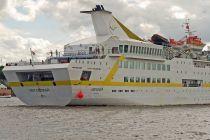
Orient Queen cruise ship significantly damaged in Beirut Port explosion
Authorities in Lebanon are counting the number of dead and injured after the explosion at Beirut Port that rocked the city. The blast, which...
August 5, 2020 - Accidents

Powerful explosions rock Beirut port
A massive explosion ripped through Lebanon;'s capital Beirut City on Tuesday, August 4, injuring many people and blowing out windows in a wealth of...
August 4, 2020 - show more news