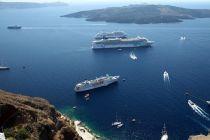
Amorgos Island (Katapola, Greece)

Cruise Port schedule, live map, terminals, news
Rating:
Amorgos Island cruise port

Region
Mediterranean - Black Sea

Local Time
2026-09-11 06:02

min: 73 °F (23 °C) / max: 76 °F (25 °C) 75°F
23.8°C
Wind: 305°/ 3.3 m/s  Gust: 3.8 m/sWind: 305°/ 3.3 m/s  Gust: 3.8 m/sLight breeze
3.3 m/s
Min / Max Temperature76 °F / 25 °C
73 °F / 23 °C

Port Amorgos Island cruise ship schedule shows timetable calendars of all arrival and departure dates by month. The port's schedule lists all ships (in links) with cruises going to or leaving from Amorgos Island, Katapola, Greece. To see the full itineraries (ports of call dates and arrival / departure times) and their lowest rates – just follow the corresponding ship-link.

DayShipArrivalDeparture
17 June, 2026
Wednesday
MSC Explora Journeys Cruises cruise lineMSC Explora 209:0017:00
19 June, 2026
Friday
Ponant Cruises Cruises cruise lineLe Bougainville07:0016:00
30 June, 2026
Tuesday
Ritz-Carlton Yacht Collection Cruises cruise lineRitz-Carlton Ilma08:0019:00

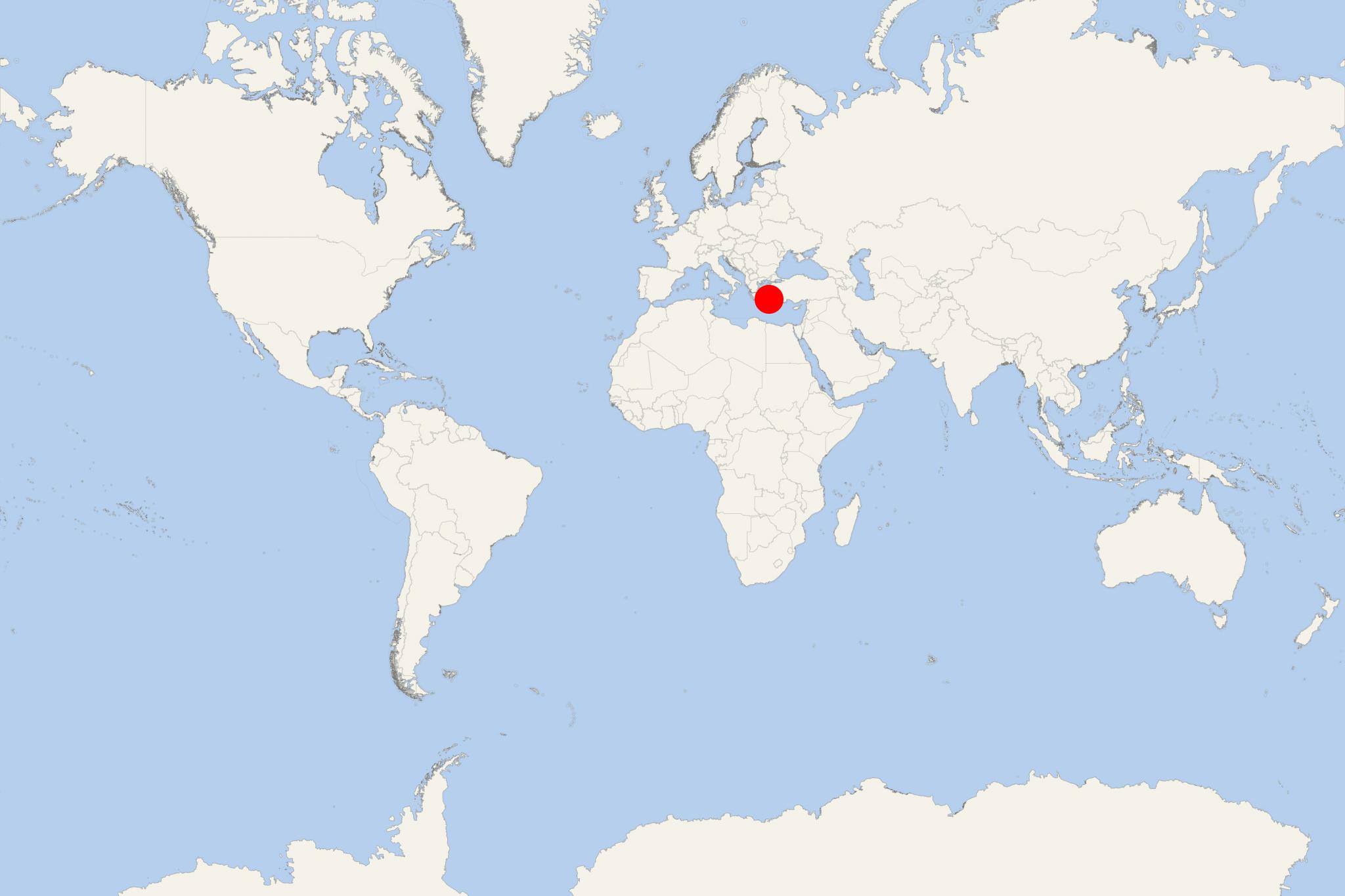
Amorgos Island (Katapola port locode GRKTP) is the easternmost isle of Greece's Cyclades Islands group, as well as the nearest to the neighboring Dodecanese Islands group. Amorgos, along with its neighboring islets (the biggest of which is Nikouria) comprises the Amorgos municipality, with municipal land area approx 126 km2 (49 mi2), and population around 2,000.

Due to the position of Amorgos Island opposite the ancient beaches of Ionian cities, such as Alikarnassos, Ephesos, and Militos, it became one of the first sites from which the Ionians passed through to Cyclades Islands and onto the Greek mainland.

Throughout history, Amorgos Island was also popular as Yperia, Patagy (Platagy), Pagali, Psichia, and Karkisia. It features a wealth of remnants of old civilizations. At Archaic Greece's time, there were 3 independent city-states. They are believed to have had autonomous constitutions but a common currency. Amorgos Island is distinguished by the quality and size of the walls surrounding Arkesini city, by the ancient towers with remains scattered all over the isle, by the ancient tombs, stone tools, vases, inscriptions, and other antiquities.

Panagia Hozoviotissa monastery is situated northeast of Chora, on the cliffside. It was built early in the 2nd millennium to protect a religious icon, which dates back to 812, from intruders. The unique icon is on public display in the monastery. Visitors must be dressed decently if they want to enter. As of July 2012, Panagia Hozoviotissa monastery is active and houses 3 practicing monks.

Tourism on Amorgos Island is going up slowly, though its features prevent mass tourism. Amorgos is accessible only by boat. The three main places of tourist accommodations are Aegiali, Chora, and Katapola. Hiking ways are well-maintained. Other activities are related to wellness and also include scuba diving. 

Amorgos Island was featured in The Big Blue, a film by Luc Besson (1988). Agia Anna and Panagia Hozoviotissa monastery can be seen in it. Amorgos was also featured in Ariadni, a film by Giorgos Kordelas (2002).


Amorgos Island cruise terminal

Cruise ships to Amorgos Island dock (anchor) at Katapola - port town on the western coast.

Amorgos is a small, mountainous island where the principal sights lie beyond the cruise landing point. Katapola is easy to explore on foot, but visiting Chora, Panagia Hozoviotissa Monastery or the island’s more distant beaches requires a bus, taxi or arranged tour.

Independent sightseeing with some planning or transport. A relaxed Katapola visit is straightforward. For the monastery and Chora, confirm transport and return times before leaving the harbour.

Getting Ashore and Around

  • Arrival: Larger cruise ships normally anchor in Katapola Bay and tender passengers to the harbour quay. Small vessels may use the quay when conditions and berth availability permit.
  • Katapola: The tender landing is beside the village waterfront, with tavernas, cafes and small shops immediately accessible on foot.
  • Chora: The island capital is approximately 5.5 km (3.4 mi) inland and uphill from Katapola. It is about 10–15 minutes away by road.
  • Transport: Seasonal buses connect Katapola with Chora and may continue to Panagia Hozoviotissa Monastery and Agia Anna. Timetables change during the year, so check the posted schedule before departing.
  • Taxis: Taxis are useful but limited in number. Arrange a return pickup rather than assuming a vehicle will be waiting at a remote sight.

Tendering can reduce usable time ashore, particularly if sea conditions delay operations. Follow the ship’s stated last-tender time rather than relying only on the scheduled departure.

Best Ways to Spend the Call

Chora and Panagia Hozoviotissa Monastery

Recommended time: 4–5 hours. This is the strongest choice for a first visit. Travel first to the cliffside monastery, then continue to Chora for its whitewashed lanes, small squares, churches, windmills and hilltop views.

Vehicles stop below the monastery, after which visitors climb a steep paved path with roughly 300 steps. Allow about 15–25 minutes each way for the climb, more in hot weather. The route is unsuitable for passengers with limited mobility.

The monastery traditionally closes for several hours around midday, and conservative clothing is required. Men should wear long trousers; women should wear a long skirt, and shoulders should be covered. Confirm current visiting hours locally before setting out.

This combination is practical independently when bus times fit the port call. A taxi or organized excursion is safer during a short call, outside the main season or when the bus timetable leaves little return margin.

Explore Chora Without the Monastery

Recommended time: 2–3 hours. Take a bus or taxi uphill and explore Chora’s pedestrian lanes at an unhurried pace. The village has uneven paving, steps and slopes, but distances within the center are short.

This option suits passengers who want Cycladic architecture and views without undertaking the monastery staircase. Allow extra time to locate the correct return bus stop or prearrange a taxi.

Stay Around Katapola Bay

Recommended time: 1.5–3 hours. Katapola is the easiest low-risk option. Walk along the waterfront through the neighbouring settlements of Katapola, Rachidi and Xylokeratidi, visit Panagia Katapoliani church and stop at a harbour cafe.

The waterfront sections are generally easy, although side streets become steeper away from the bay. This plan works well when tender time is limited or the weather makes a longer island journey unattractive.

Swim at Maltezi Beach

Recommended time: 2–3 hours. Maltezi is a sandy beach inside Katapola Bay. It can be reached on foot in roughly 30 minutes from the harbour or, when operating, by a local transfer boat.

Confirm the boat’s return time before using it. The walking approach includes exposed sections with little shade, so carry water and allow more time in strong heat. Seasonal beach services should not be assumed outside summer.

Self-Guided Walking Routes

Easy Katapola Waterfront Walk

Approximate distance: 2.5 km (1.6 mi) round trip
Pure walking time: 35–45 minutes
Recommended total time: 1.5–2 hours
Difficulty: Easy, mostly level waterfront walking with occasional uneven paving.

  1. Begin at the tender landing on Katapola’s harbourfront.
  2. Walk past the waterfront cafes and fishing boats.
  3. Detour into Rachidi to see Panagia Katapoliani church.
  4. Continue around the bay toward Xylokeratidi.
  5. Explore the narrow lanes and small waterfront of Xylokeratidi.
  6. Return along the same shoreline to the tender quay.

This route remains close to the ship and can be shortened easily if tender queues begin forming.

Moderate Walk to Maltezi Beach

Approximate distance: 4 km (2.5 mi) round trip
Pure walking time: About 1 hour
Recommended total time: 2–3 hours
Difficulty: Moderate because of heat, exposed paths and some uneven ground.

  1. Start at Katapola harbour and follow the waterfront toward Xylokeratidi.
  2. Continue to the small beach and chapel of Agios Panteleimon.
  3. Follow the coastal approach to Maltezi Beach.
  4. Allow time for a swim or rest.
  5. Return on foot, or use the local beach boat only after confirming its schedule.

Wear secure footwear and avoid rushing back over uneven ground. Begin the return with ample time before the last tender.

Longer Excursion Options

A scenic island drive may combine Chora, the monastery, viewpoints, traditional southern villages and a beach such as Mouros or Kalotaritissa. These places are spread along narrow, winding roads, making an organized excursion or prearranged vehicle more practical than trying to combine them using public buses.

Aegiali, at the northern end of Amorgos, is approximately 21 km (13.0 mi) from Katapola. It is better treated as a dedicated scenic excursion than added casually to a Chora and monastery visit.

Amorgos also has long, rocky hiking trails between villages. Most are poorly suited to an ordinary cruise call because of heat, elevation, limited shade and the need to coordinate transport at the far end.

Practical Tips

  • Check the latest bus timetable immediately after landing; seasonal schedules can change at short notice.
  • Carry water, sun protection and shoes with good grip. Amorgos is exposed, hilly and often windy.
  • Do not combine the monastery with a swim at Agia Anna unless the call is long and transport is secure. The beach is rocky, has little shade and is reached by a substantial descent.
  • Allow a generous return margin for winding roads, limited taxis and tender queues.
  • Passengers with mobility limitations will find Katapola waterfront considerably easier than Chora or the monastery.

Amorgos Island hotels