

Aride Island Seychelles (La Cour)
Cruise Port schedule, live map, terminals, news
Region
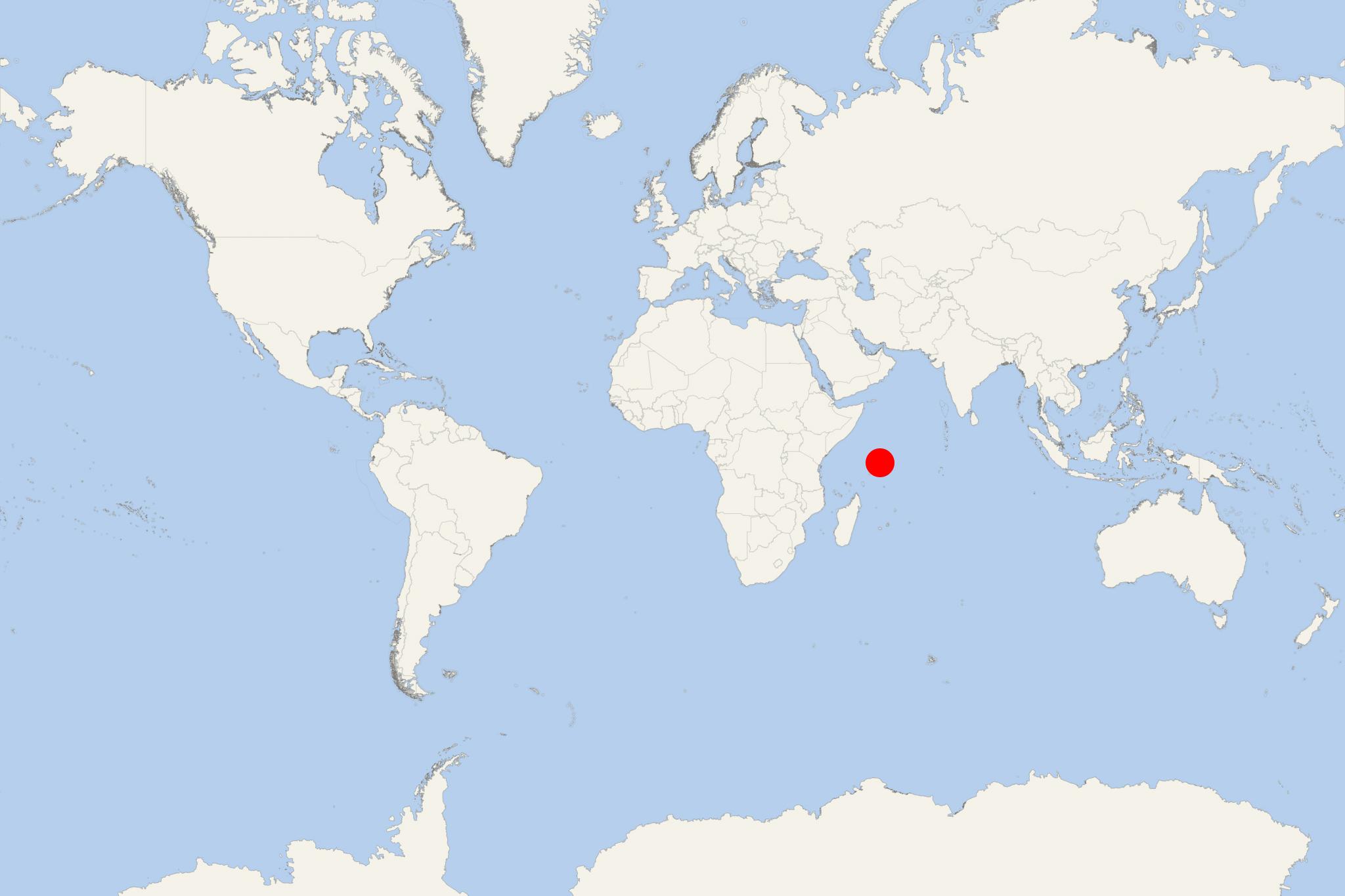
Africa - Indian Ocean Islands
Local Time
2026-10-26 22:04
 81°F
81°F 27.4°C

 Gentle breeze
5.1 m/s
 82 °F / 28 °C
 81 °F / 28 °C
Port Aride Island Seychelles cruise ship schedule shows timetable calendars of all arrival and departure dates by month. The port's schedule lists all ships (in links) with cruises going to or leaving from Aride Island Seychelles, La Cour. To see the full itineraries (ports of call dates and arrival / departure times) and their lowest rates – just follow the corresponding ship-link.
| Day | Ship | Arrival | Departure |
|---|---|---|---|
| 28 February, 2028 Monday |  Emerald Raiya Emerald Raiya |
Aride Island is the Seychelles' northernmost island (Bird Island is the northernmost of the Seychelles islands). A nature reserve, Aride Island is leased and managed by the Island Conservation Society of Seychelles. The total area of Aride Island is 0.71 km2 (0.27 mi2).
Aride is part of the Grand'Anse district, located 10 km / 6 mi north of Praslin Island and is sized 68 hectares / 168 acres. The only inhabitants here are the reserve's staff, currently 4 rangers, 2 expatriate Conservation Officers and 2 volunteers who live in La Cour, the main village of the island, on the south side of Aride.
Being an isle with a small population, there are no government buildings or services on Aride Island and for many services, people have to visit Praslin. An interesting fact is that the wooden plantation house on the island, overlooking the tiny settlement, is one of the last buildings of the type to survive in Seychelles.
The name "Aride" appeared for the first time on nautical charts after French trips of exploration in 1770-1771. The first written account dates back from 1787 and is by the French commandant of Seychelles, Jean-Baptiste Malavois.
Sooty tern eggs were cropped on Aride Island for nearly a century, and up to 220,000 were removed each season. The number of nesting seabirds increasingly declined and endemic land birds were put to death. In 1967, Paul Chenard, island’s owner, ceased egg collection and declared the Aride a reserve. In 1973, Mr.Christopher Cadbury bought the island for the Society for Promotion of Nature Reserves (currently Royal Society of Wildlife Trusts). In 1979 Aride Island was declared a Special Reserve under Seychelles law, including a marine zone of 200 m around it, with penalties including imprisonment for disturbance or killing of its wildlife.
Management was handed over to the Island Conservation Society in 2003. The freehold was transferred to the UK Registered Charity Island Conservation Society in 2006. Aride was leased back to Seychelles' Island Conservation Society in 2008.
At a Glance
Organized excursion recommended. Aride is a protected nature reserve rather than a conventional cruise port. There is no pier, terminal, road network, public transport, shopping area or independent sightseeing district. Visits depend on reserve permission, suitable sea conditions and the arrangements made by the ship.
Getting Ashore
Ships remain offshore and passengers transfer by tender or other small craft. The final landing is made on the beach using a reserve-authorized boat; visitors may need to transfer between boats offshore. The landing can be wet and energetic, particularly when surf is present.
Access is highly weather-dependent and can be cancelled even after the ship arrives. The reserve normally receives visitors during the calmer northwest-monsoon period, roughly October to May, but permission and landing conditions must always be confirmed for the individual call.
Best Way to Spend the Call
Guided Nature Walk
This is the island’s principal activity and the most realistic choice for cruise passengers. A typical guided circuit covers about 2 km (1.2 mi) and takes approximately two hours with wildlife stops. It begins near La Cour and crosses the lowland plateau, where guides identify seabirds, endemic land birds, reptiles and native plants.
The plateau section is comparatively easy, but paths may be uneven, sandy, damp or crossed by roots. Visitors must remain with their guide and follow reserve rules; independent roaming is generally inappropriate in this sensitive environment.
Hill and Cliff Viewpoint
When time, weather and the guide’s route permit, the walk may continue uphill toward the island’s northern cliffs. This section is more demanding because of the incline, heat and humidity. It offers elevated views over seabird colonies and the surrounding islands, but may not suit passengers with limited mobility or poor balance.
Birdwatching and Photography
Aride is especially rewarding for birdwatchers and wildlife photographers. Large seabird colonies can often be observed at close range, while guides help visitors spot less conspicuous endemic species. Bring binoculars and protect cameras from spray during the boat transfer.
Beach or Snorkeling Time
Some ship programs may include limited beach or snorkeling time, but this should not be assumed. Surf, currents, wildlife protection measures and the day’s landing schedule can restrict water activities. Enter the sea only when the ship’s team or reserve staff confirms that conditions and the designated area are suitable.
Walking Conditions
Aride is explored on foot, but it is not suitable for a conventional self-guided walking tour. The standard reserve circuit is guided and normally combines easy plateau paths with an optional hotter, hillier section. Closed shoes with good grip are preferable to flip-flops.
- Plateau route: generally easy to moderate, with natural and sometimes uneven surfaces.
- Hill route: moderate, with an ascent, heat exposure and potentially slippery ground after rain.
- Accessibility: the beach landing and natural trails are unsuitable for wheelchairs and may be difficult for passengers with reduced mobility.
Practical Tips
- Follow the ship’s excursion and tender instructions; there is no independent transport waiting ashore.
- Place phones, cameras and other valuables in a waterproof bag before the beach landing.
- Bring drinking water, sun protection, insect repellent and sturdy walking shoes.
- Do not touch wildlife, nests or plants, and do not remove natural material from the reserve.
- Stay with the assigned guide and return to the landing area at the stated time.
- Allow for slow boat transfers and possible delays caused by surf. The ship controls the final return schedule.
- If landing is cancelled, sightseeing from offshore may be the only possible experience.
Aride Island Seychelles hotels
- Cruise Industry
Emerald Cruises to build a 2nd superyacht, Emerald Sakara
Emerald Cruises announced the company would build a second superyacht, Emerald Sakara, which is expected to enter the brand’s fleet in 2023...
September 29, 2021 - Cruise Industry
Reservations open for Crystal Esprit cruises in 2023 through early 2024
Crystal Yacht Cruises opened reservations for its boutique yacht Crystal Esprit 2023 and early 2024 itineraries. The 6-, 7-, and 8-night voyages...
August 29, 2020 - show more news