

Bagan (Myanmar)
Cruise Port schedule, live map, terminals, news
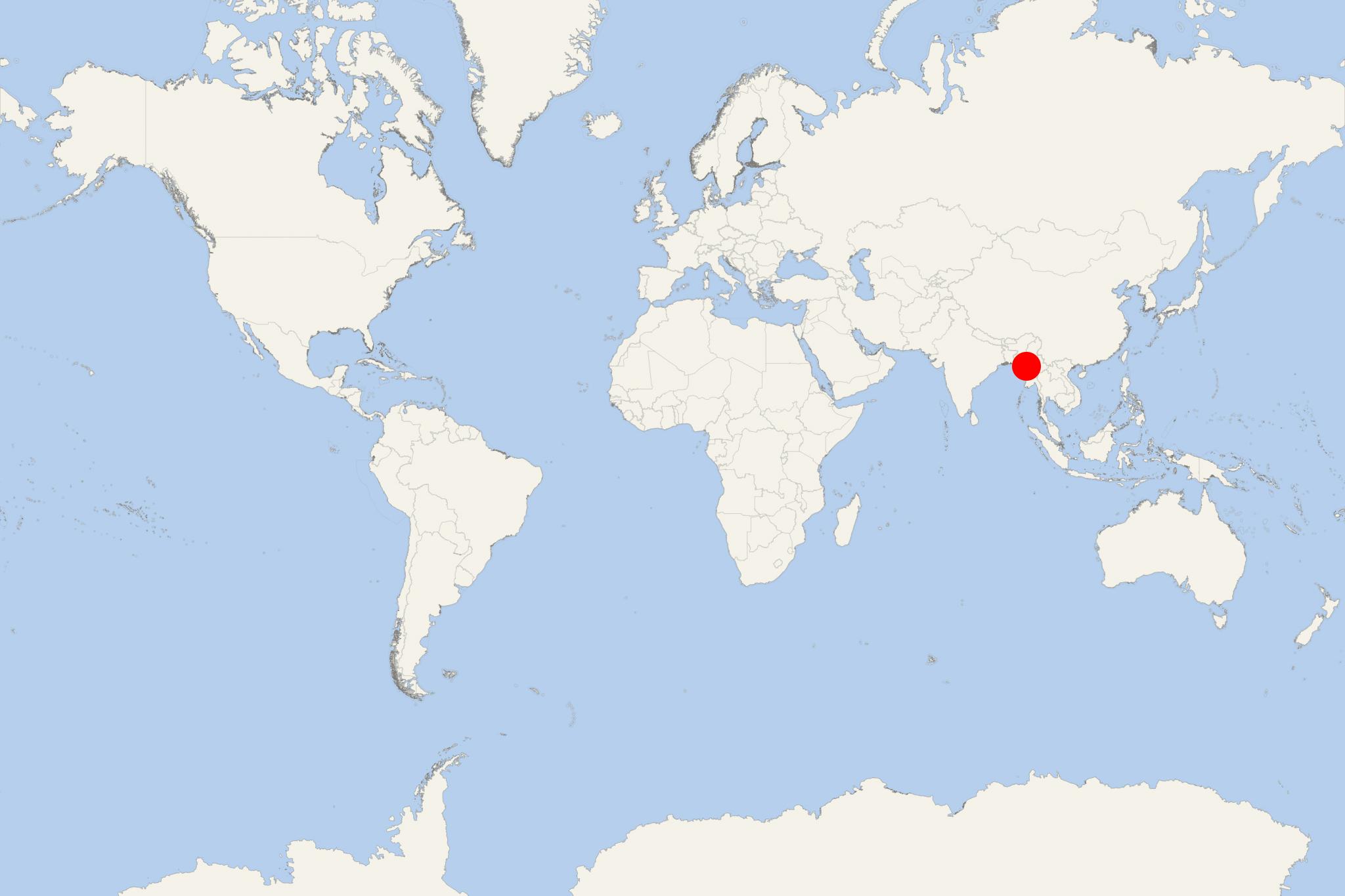
Region
Asia Rivers
Local Time
2026-10-24 23:07
 82°F
82°F 27.7°C

 Very Light
1.5 m/s
 92 °F / 34 °C
 77 °F / 25 °C
Bagan (aka Pagan) is an ancient city located in Burma's Mandalay Region. In the period 9th-13th centuries it was the Pagan Kingdom's capital city.
During the Bagan's height (11th-13th centuries), in the plains around the city were constructed over 10,000 pagodas, temples, and monasteries, of which over 2200 still remain. The Bagan Archaeological Zone is Myanmar's main draw for the river cruising and tourism industries. The Bagan temple complex in Burma is often compared as equal to the Angkor Wat temple complex in Cambodia.
At a Glance
Best suited to: a guided temple circuit by cruise excursion or pre-arranged car.
Independent sightseeing: Independent with planning, but an organized excursion is currently recommended. Bagan’s monuments cover a large, hot and dusty archaeological landscape rather than a compact town center. Myanmar’s security situation is unpredictable, travel restrictions can change quickly, and several governments advise against travel to the country or to the Mandalay Region.
Time needed: Allow at least 4–5 hours for the principal temples. A longer call permits a market visit, traditional workshop or sunset viewpoint.
Getting from the River Landing
Bagan is visited by river vessels sailing the Ayeyarwady rather than by conventional ocean cruise ships. Boats commonly use landing places around Nyaung-U or Old Bagan, but the exact jetty can change with river level, season and vessel operations. Gangways and riverbanks may be steep, sandy or uneven.
Nyaung-U is several kilometers from the main Old Bagan monuments, while some Old Bagan landings are closer to the archaeological area. Walking directly from the vessel should not be assumed practical. Confirm the landing point and return arrangements aboard before going ashore.
There is no convenient sightseeing-oriented public transport network linking all the temples. A cruise excursion, private car with driver or locally arranged taxi is the most practical option. Agree on the full route, waiting time and return point before departure. Electric scooters and bicycles may be available locally, but they are less suitable for a short port call because of heat, dust, rough tracks, navigation difficulties and changing local conditions.
Best Ways to Spend the Call
Essential Bagan Temple Circuit
Recommended time: 4–6 hours. Transport: Guided vehicle or private car with driver. Difficulty: Easy to moderate, with repeated barefoot walking on hot or uneven surfaces.
A practical first visit can combine several of Bagan’s most important monuments:
- Shwezigon Pagoda: A major gilded stupa near Nyaung-U and a convenient first stop when landing there.
- Htilominlo Temple: A large brick temple with surviving decorative work.
- Ananda Temple: One of Bagan’s best-preserved and most significant temples, with four standing Buddha images.
- Thatbyinnyu Temple: A prominent landmark close to the heart of Old Bagan.
- Dhammayangyi Temple: Notable for its massive scale and distinctive brickwork.
- Sulamani Temple: Known for its balanced architecture and interior murals.
Trying to include every famous monument produces a rushed visit. Four or five well-chosen stops usually work better during a limited call. A guide is valuable for explaining the buildings and adjusting the route if individual sites are closed or under conservation.
Old Bagan and the Riverfront
Recommended time: 2.5–4 hours. Transport: Vehicle transfer followed by walking. Difficulty: Moderate in the heat.
Concentrate on Ananda Temple, the area around Tharaba Gate, Thatbyinnyu Temple and the riverfront near Bupaya Pagoda. This option involves less driving than a broad temple circuit and works well when time ashore is short. Bupaya overlooks the Ayeyarwady, although access and riverbank conditions should be checked locally.
Nyaung-U Market and Shwezigon Pagoda
Recommended time: 2–3 hours. Transport: Taxi, private car or cruise excursion. Difficulty: Easy, apart from busy and uneven market surfaces.
This is a practical shorter outing when the vessel lands near Nyaung-U. Visit the local market first, preferably earlier in the day, and continue to Shwezigon Pagoda. Depending on available time, add Htilominlo or Ananda Temple before returning to the vessel.
Mount Popa
Recommended time: At least 5–6 hours. Transport: Organized excursion or private car. Difficulty: Demanding if climbing to the monastery.
Mount Popa is approximately 57 km (35.4 mi) from Bagan and normally requires about 1–1.5 hours of driving each way. The principal visitor destination is Taung Kalat, the monastery on a volcanic outcrop reached by a long, steep staircase. Visitors climb barefoot, and monkeys around the steps can be aggressive around food and loose belongings.
This excursion consumes much of a short port call and should be attempted only when the ship’s schedule provides ample time. A ship-operated or reliably pre-arranged excursion is preferable because of the long road transfer.
Self-Guided Old Bagan Walk
Tharaba Gate to the Ayeyarwady River
Route: Tharaba Gate → Ananda Temple → Thatbyinnyu Temple → Shwegugyi Temple area → Bupaya riverfront.
Approximate distance: 3 km (1.9 mi). Pure walking time: About 45–60 minutes. Recommended total time: 2.5–3.5 hours. Difficulty: Moderate because of heat, exposed sections, uneven ground and repeated removal of footwear.
- Begin at Tharaba Gate, reached by vehicle from the river landing or Nyaung-U.
- Walk to Ananda Temple and allow sufficient time to see its interior.
- Continue through the monument area to Thatbyinnyu Temple.
- Proceed toward the Shwegugyi Temple area, observing any barriers or conservation closures.
- Finish at Bupaya Pagoda and the riverfront.
Arrange a driver to meet you at the final stop rather than walking back in the midday heat. Do not rely on finding immediate transport at a quiet monument or river landing. Temple climbing is generally prohibited, and closed stairs or restricted structures should never be entered.
Practical Tips
- Check the latest security advice, local restrictions and cruise operator guidance immediately before the visit. Conditions can change with little warning.
- Confirm the vessel’s exact landing point, all-aboard time and whether the ship will remain at the same jetty.
- Keep a generous return margin. River levels, unpaved access roads, checkpoints and local restrictions can affect journey times.
- Dress modestly. Shoulders and knees should be covered at active religious sites.
- Shoes and socks must normally be removed before entering pagoda and temple compounds. Carry footwear that is easy to remove and expect hot paving.
- Bring drinking water, sun protection and a hat. Much of the archaeological zone is exposed, with limited shade between monuments.
- Carry cash in suitable condition because card acceptance and reliable electronic payments should not be assumed.
- Do not climb monuments, cross barriers or enter visibly damaged structures. Access may change following conservation work or structural inspections.
- Ask permission before photographing worshippers, monks or local residents, and avoid posing disrespectfully with Buddha images.
Bagan hotels
- Cruise Industry
Pandaw Cruises to resume Irrawaddy Delta expeditions in Myanmar
Pandaw Cruises will resume river expeditions in Myanmar’s Irrawaddy Delta in November, marking the company’s return to the region...
September 14, 2026 - show more news