

Boulogne-sur-Mer (France)
Cruise Port schedule, live map, terminals, news
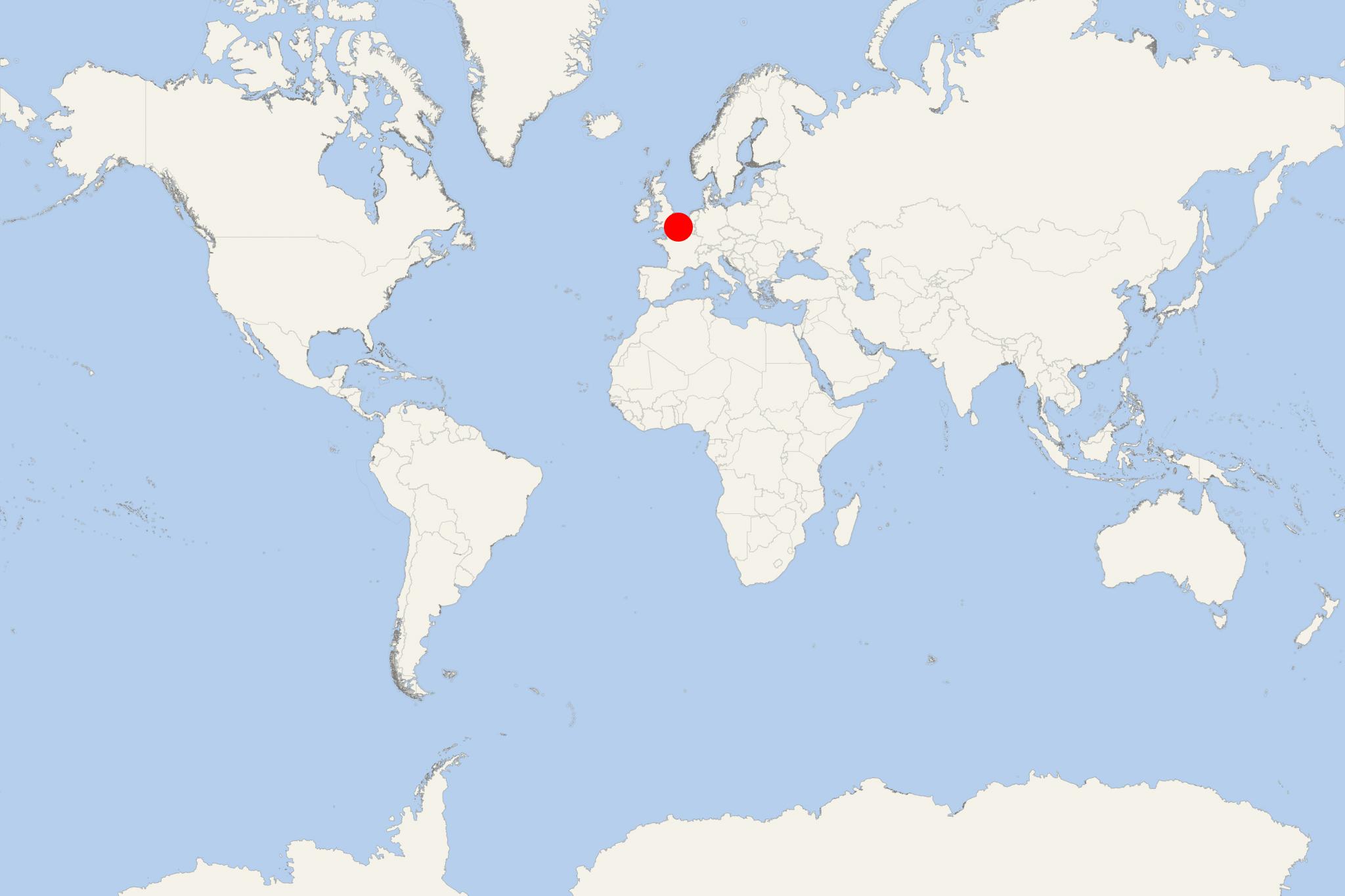
Region
Western Europe - Azores - Canary Islands
Local Time
2026-09-19 00:17
 63°F
63°F 17.2°C
 Strong breeze
11.1 m/s
 65 °F / 19 °C
 61 °F / 16 °C
Port Boulogne-sur-Mer cruise ship schedule shows timetable calendars of all arrival and departure dates by month. The port's schedule lists all ships (in links) with cruises going to or leaving from Boulogne-sur-Mer, France. To see the full itineraries (ports of call dates and arrival / departure times) and their lowest rates – just follow the corresponding ship-link.
| Day | Ship | Arrival | Departure |
|---|---|---|---|
| 11 January, 2027 Monday |  MS Hamburg MS Hamburg | 08:00 | 19:00 |
Boulogne-sur-Mer (aka Boulogne) is a port city located Northern France's English Channel coast. The city covers a total area of approx 8 km2 (3 ml2) and has population around 45,000.
- Boulogne-sur-Mer is on Cote d'Opale coast of the English Channel. This is also the 2nd-largest city of its department - after Calais, as well as the country's 60th largest. Boulogne port is France's largest fishing port, specializing in herring.
- Boulogne was the most important Roman port for communication and trade with Anglia (Britain).
- The city's 12th century belfry (tower) is one of all 56 found in Belgium and northeastern France with shared World Heritage Site status. It's the city's oldest building - currently a museum of Celtic remains from Roman times.
- Around 7,000 of the city's inhabitants derive their livelihoods from herring fishing port. The French Research Institute for Exploitation of the Sea (IFREMER) and Pasteur Institute are situated in Boulogne Port.
- Chateau de Boulogne-sur-Mer (castle museum) houses the world's most important exhibition of Alaskan masks, also the France's 2nd largest collection of Greek ceramics (after the Louvre), as well as collections of Roman and medieval sculptures, Egyptian collection, paintings (15th-20th century), African Arts.
- La Casa San Martin is now a museum where Jose de San Martin (1778-1850, Argentina's leader of independence struggle) died in 1850. Between 1930-1967 the house was consulate of Argentina in France. A statue there is dedicated to Simon Bolivar (1783-1830) - another South American liberator in revolutions against Spanish colonial rule during the 1810s.
Boulogne-sur-Mer cruise terminal
Boulogne Calais Port is the operator of both ports - Boulogne-sur-Mer and Calais. The distance between them is 31 km (19 ml). Cruise ships in Boulogne-sur-Mer dock at the Quai de l’Europe berth. The port provides bus shuttles from the quay to the town centre.
Boulogne-sur-Mer combines a working fishing port, a compact lower town, a fortified upper town and the major Nausicaá sea-life centre. Cruise ships normally berth at Quai de l’Europe, where passengers should expect a transfer into town rather than an unrestricted walk through the commercial port.
Independent sightseeing: Independent with some planning. Once transferred from the berth, the main sights are reasonably close together, although the fortified town stands uphill and includes cobbles and steps.
Getting from the Cruise Port
- Berth: Cruise calls generally use Quai de l’Europe in the commercial port.
- Port exit: The berth is inside a working port area. Shuttle buses are normally provided for visiting cruise ships, but the precise drop-off point and frequency can vary by call.
- Walking: Plan sightseeing from the shuttle stop rather than assuming that passengers may walk directly from the ship.
- Local transport: Taxis and the Marinéo bus network are useful for Nausicaá, the railway station and destinations outside the center. Check current schedules before relying on a bus for the return journey.
Best Ways to Spend Your Time
Explore the Fortified Upper Town
Allow about 2–3 hours for the old town, known as the Ville Fortifiée or Haute Ville. Enter through one of its historic gates and visit the Basilica of Notre-Dame, the town hall and belfry area, the castle exterior and the ramparts promenade. The complete circuit around the walls is approximately 1 km (0.6 mi).
This is easy to explore independently, but reaching it from the lower town involves an uphill walk. Cobblestones and occasional steps may be uncomfortable for visitors with limited mobility.
Visit Nausicaá
Nausicaá, the National Sea Centre, is Boulogne-sur-Mer’s principal indoor attraction and a practical choice for families or poor-weather calls. Its extensive aquariums and marine exhibits merit at least 2.5–3.5 hours.
The centre stands beside the seafront on Boulevard Sainte-Beuve. Depending on the cruise shuttle drop-off, reach it on foot through the lower town, by local bus or by taxi. Advance admission is sensible on busy dates, and visitors should confirm opening information for the day of the call.
Combine the Waterfront and Beach
For a relaxed visit, walk around the marina and Quai Gambetta, continue toward Nausicaá and reach Boulogne’s broad sandy beach. This works well as a 1.5–2.5-hour outing and can be combined with a seafood lunch.
The waterfront is largely level and easier than the upper town. The Channel coast can be cool and windy even in summer, while swimming conditions depend on weather, tides and local safety advice.
Take a Coastal Excursion
Wimereux is a nearby seaside town with a promenade and characteristic villas, while the Côte d’Opale farther north offers cliffs, dunes and viewpoints around Cap Gris-Nez. A taxi, prearranged private vehicle or organized excursion is preferable because public transport may limit the time available ashore.
For the more distant headlands, allow roughly half a day and retain extra return time. Weather can reduce visibility and make exposed coastal paths uncomfortable.
Self-Guided Fortified Town Walk
Route: Central shuttle drop-off – Église Saint-Nicolas – pedestrian streets of the lower town – Porte des Dunes – Basilica of Notre-Dame – belfry and town hall – Château-Musée exterior – ramparts promenade – return downhill to the shuttle stop.
- Begin in the lower town and pass Église Saint-Nicolas and the surrounding shopping streets.
- Walk uphill toward Porte des Dunes, one of the entrances through the fortified walls.
- Continue to the domed Basilica of Notre-Dame and consider visiting its large crypt if time permits.
- Walk to the town hall and medieval belfry.
- Continue to the castle, now the Château-Musée, at the eastern side of the walls.
- Follow the ramparts promenade for views over the town and port.
- Descend to the lower town and return to the designated shuttle point.
Approximate distance: 3.5 km (2.2 mi). Pure walking time: about 50–60 minutes. Recommended total time: 2.5–3 hours with sightseeing stops. Difficulty: Moderate because of the climb, cobbled streets and possible steps.
Practical Tips
- Confirm the last cruise shuttle and its exact pickup location before beginning your visit.
- Allow extra time when returning through the commercial port, even if the town appears close to the berth.
- Nausicaá can occupy most of a short call; combine it only with a brief waterfront walk unless ample time is available.
- Wear shoes suitable for cobbles and slopes if visiting the fortified town.
- Keep a weatherproof layer available because conditions beside the Channel can change quickly.
- For independent coastal trips, aim to be back in central Boulogne well before the ship’s required all-aboard time.