

Coiba Island Panama
Cruise Port schedule, live map, terminals, news
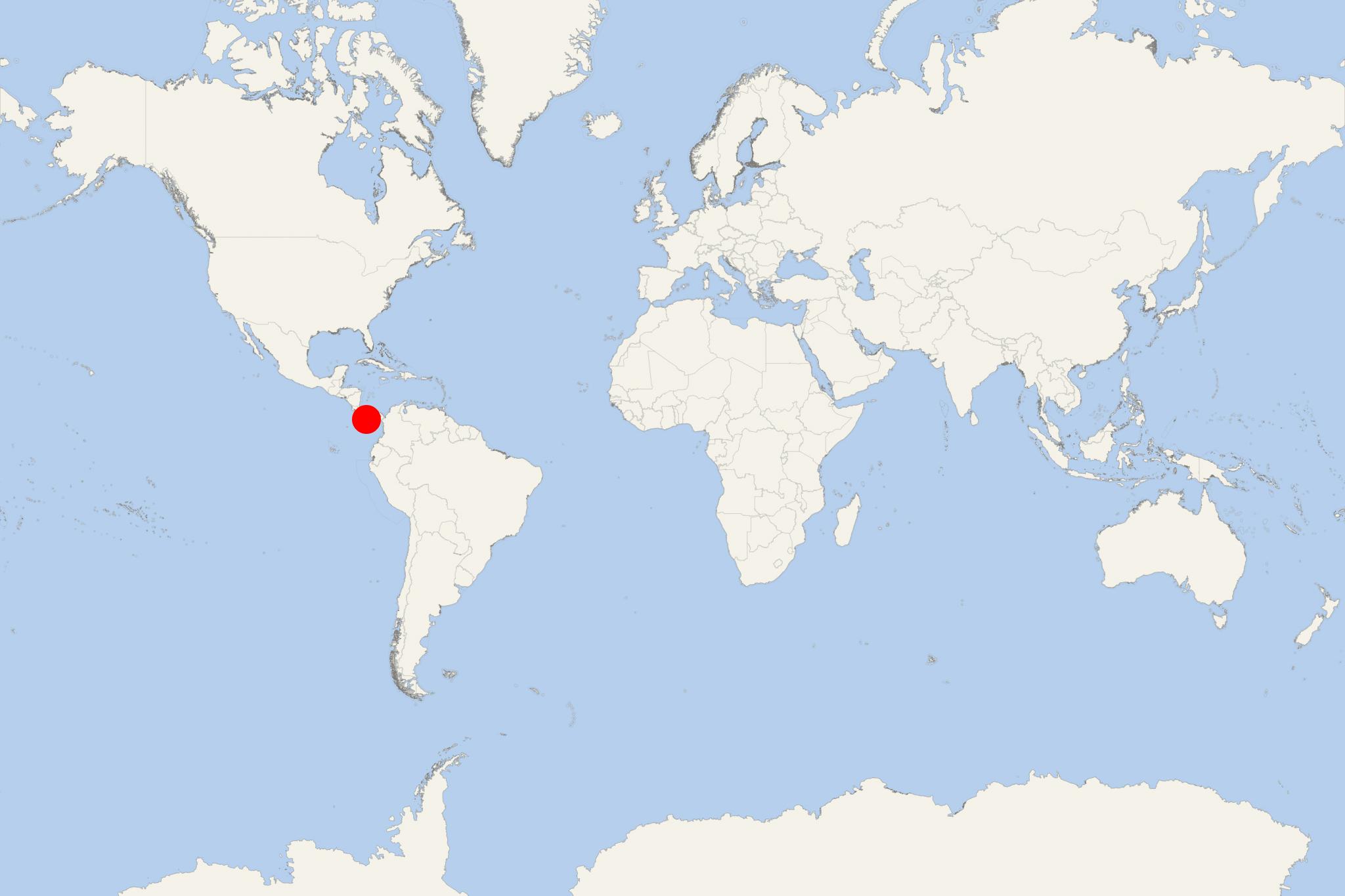
Region
Hawaii - Mexico - Panama Canal
Local Time
2026-10-12 12:19
 83°F
83°F 28.6°C

 Gentle breeze
3.4 m/s
 85 °F / 30 °C
 77 °F / 25 °C
Port Coiba Island Panama cruise ship schedule shows timetable calendars of all arrival and departure dates by month. The port's schedule lists all ships (in links) with cruises going to or leaving from Coiba Island Panama. To see the full itineraries (ports of call dates and arrival / departure times) and their lowest rates – just follow the corresponding ship-link.
| Day | Ship | Arrival | Departure |
|---|---|---|---|
| 27 November, 2026 Friday |  Le Bellot Le Bellot | 08:00 | 16:00 |
Panama's Coiba Island (officially Isla Coiba) covers a total area of 503 km2 (194 ml2), ranking it the Central America's largest. It is located off the Pacific Ocean coast of the Panamian province Veraguas (Montijo District).
Isla Coiba was separated from the mainland around 12,000-18,000 years ago, following the rise of sea levels. Animals and plants on the new isle became isolated and over the millennia most of them diverged in appearance and behavior from their mainland counterparts. The island is home to a lot of endemic subspecies, among which howler monkey, common agouti, spinetail. Coiba is home to rare plant species that are found only there. It also harbors tree species which have long disappeared from mainland due to overharvesting and deforestation. Approx 3/4 of the island is forested with ancient forest. Coiba is also one of the last sites in Central America where scarlet macaw is found in the wild and in large numbers.
On the island used to live Coiba Cacique Indians until 1560 when they were conquered by the Spanish conquistadors and forced into slavery. A penal colony was built on the island in 1919. During the years when Panama was under Omar Torrijos and Manuel Noriega's dictatorships, the prison was a feared place with bad reputation for brutal conditions, political murder, extreme tortures and executions.
In 2004 the prison was closed and the island's pristine condition made it ideal as a reserve. In 1992 was officially declared the Coiba National Park. In July 2005, Unesco declared the park a "World Heritage Site". Due to all its diverse marine life, Coiba National Park is a perfect destination for snorkeling and scuba diving.
Coiba is a remote national-park call focused on wildlife, beaches and marine activities rather than conventional sightseeing. There is no town, cruise terminal, road transport or independent tourism infrastructure near the landing areas.
At a Glance
- Arrival: Ships anchor offshore and passengers normally go ashore in expedition boats or Zodiacs.
- Independent sightseeing:Limited and generally not recommended. Visits require park authorization, controlled landings and boat transport.
- Best for: Snorkeling, swimming, wildlife observation, guided nature walks and beach time.
- Mobility: Boarding small boats and making a beach or basic-jetty landing may be required. Conditions depend on swell, tides and the selected site.
Getting Ashore
Coiba has no regular cruise pier. The ship’s expedition team normally manages all transfers and determines which sites can be visited safely. Depending on conditions, passengers may land near the park facilities on the main island or visit one of the smaller islands and beaches within Coiba National Park.
There are no taxis, buses, shops or practical walking routes beyond the designated visitor areas. Do not plan to separate from the organized group or arrange transport after arrival.
Best Ways to Spend the Call
Snorkeling at Granito de Oro or Another Protected Site
Snorkeling is usually the principal activity. Expedition boats carry passengers to reefs and rocky islets where sea turtles, rays, reef fish and small sharks may be seen. The exact location is selected according to visibility, currents and sea conditions.
This is practical only as a guided ship activity. Participants should be comfortable entering the water from a beach or small boat and following instructions in open-water conditions.
Guided Wildlife Walk
A naturalist-led walk may explore part of the rainforest near an approved landing site. Possible wildlife includes monkeys, agoutis, scarlet macaws and other tropical birds, although sightings are never guaranteed.
Trails can be hot, humid, muddy and uneven. Closed shoes with good grip are preferable to sandals. Routes such as Los Monos or the thermal-springs trail may be used only when open and included in the ship’s program.
Beach Landing and Swimming
Some calls include time on a small sandy beach, often combined with snorkeling or kayaking. Facilities are minimal or absent, and shade may be limited. Swimming conditions can change quickly, so remain within the area supervised by the expedition team.
Kayaking or Zodiac Wildlife Cruise
Where offered, kayaking or a Zodiac cruise provides a good alternative for passengers who prefer to stay above water. These outings may follow forested shores, sheltered bays and small islands while looking for birds and marine life.
Former Penal Colony Area
Some itineraries include a guided visit near the remains of Coiba’s former penal settlement. Access depends on park restrictions, site condition and the ship’s landing plan. The buildings are not a conventional restored attraction, and passengers should not enter restricted or unsafe structures.
Walking and Independent Exploration
A self-guided walking tour is not appropriate at Coiba. Visitor movements are controlled to protect the national park, and trails begin only from specific boat-accessible landing points. Remain with the ship’s guides and follow all ranger instructions.
Practical Tips
- Choose activities through the ship unless it explicitly confirms that an authorized local operator will meet the vessel.
- Carry a passport or other identification if requested; park admission procedures may require visitor details in advance.
- Wear reef-safe sun protection, a hat and quick-drying clothing. Bring water in a reusable bottle.
- Use sturdy closed shoes for forest walks and water shoes for beach landings.
- Do not touch, feed or approach wildlife, and take nothing from beaches or reefs.
- Landings and water activities may be changed or cancelled because of swell, currents, rain or temporary park restrictions.
- Return times are controlled by the expedition team; allow for boat loading and the transfer back to the anchored ship.
Coiba Island Panama hotels
- Accidents
Star Pride Runs Aground in Panama
Windstar's ship Star Pride experienced grounding on December 22, at 6:15 a.m. CST, while coming into anchor at Isla de Coiba, Panama. All passengers...
December 23, 2015 - show more news