

Cubzac-les-Ponts (France)
Cruise Port schedule, live map, terminals, news
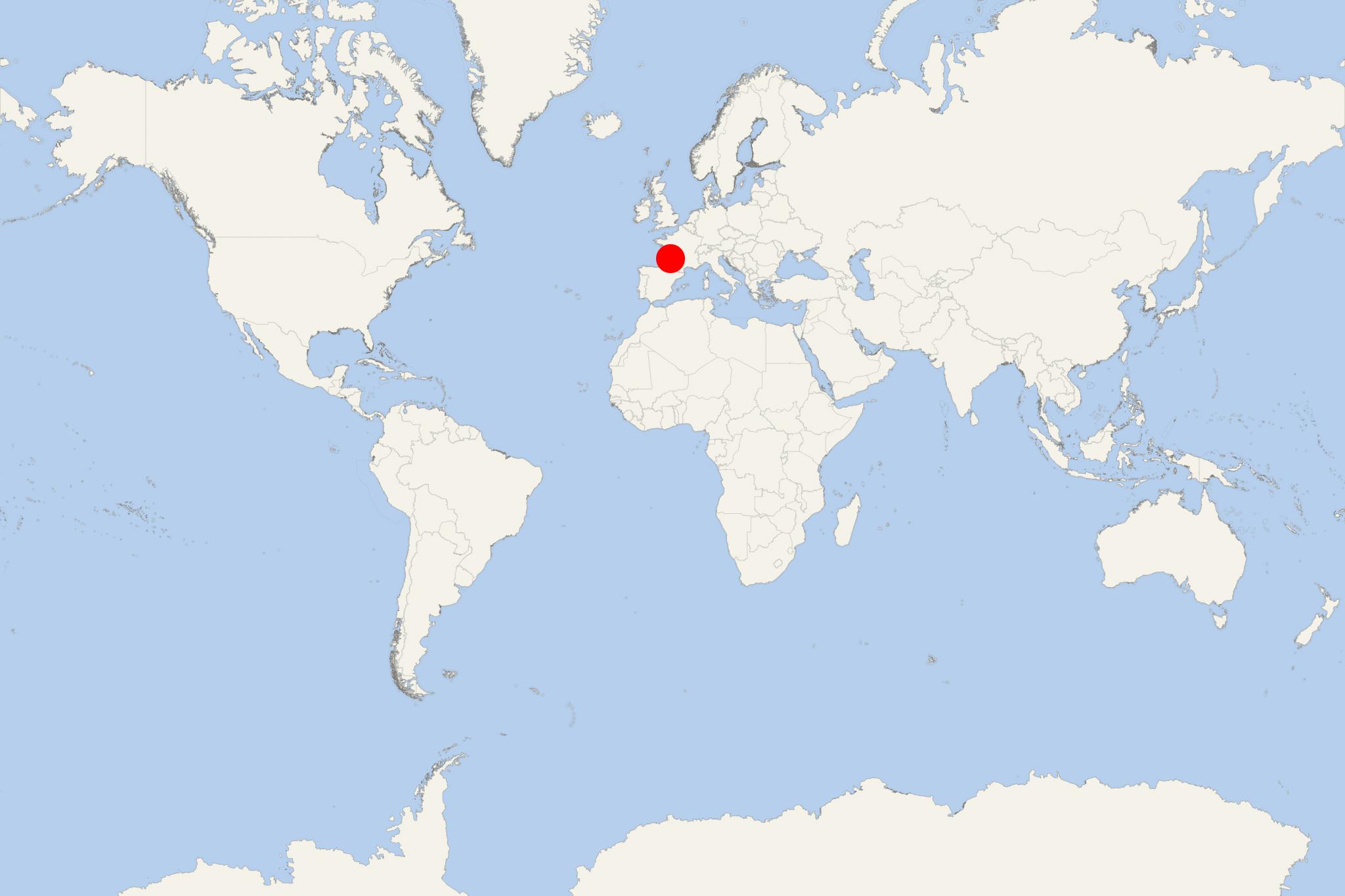
Region
France Rivers
Local Time
2026-10-26 15:16
 71°F
21.7°C

 Light breeze
2.7 m/s
 72 °F / 23 °C
54 °F / 13 °C
Cubzac-les-Ponts, often referred to just as Cubzac, is a commune of Gironde department in Nouvelle-Aquitaine, region in southwestern France. Situated 20 km (12.4 miles) southwest of Bordeaux, it's a crossing point of Dordogne river. Cubzac-les-Ponts has 3 bridges, one of which designed by Gustave Eiffel. Cubzac has a total area of 8.9 km2 (3.4 ml2) and a population of 1,930 people (2008 census).
During the Middle Ages, Cubzac-les-Ponts served as a watchtower via Four Sons of Amon castle. Historically, different means of crossing Cubzac's river have been used, from horse-powered ferries and pontoon bridges to concrete and steel bridges. Part of a lively wine region, Cubzac features a few wine castles, including Terrefort castle. Cubzac-les-Ponts has developed a sparkling wine of its own, in what is now Café de Paris. Cubzac's limestone quarries supplied for the specific white constructions in Bordeaux and its region. Two Monuments Historiques are found in the commune: the first one is a painting in a church, and the other is the ruins of Four Sons of Amon castle.
During the 18th and 19th centuries, Cubzac's mound was slashed all around in order to provide stone for the construction of Bordeaux and ballast of some river banks, thus creating very deep excavations in the limestone. Andre Cousteau, who was uncle of the ecologist and researcher Jacques Cousteau, started using the caves in 1898 to make sparkling wine based on typical Champagne-making techniques. The wine, which was treated in a closed tank, then bottled and kept neck down for months at constant temperature, eventually became bubbly and had the impurities accumulate close to the cap. Once this was removed, bottles were resealed by force, corks were muzzled. Cousteau property was sold to Société Anonyme Gay-Mousse in 1920. In 1966, the caves where assigned to Monsieur Lateyron who, a year later, created Café de Paris.
Cubzac-les-Ponts is a quiet Dordogne riverside stop suited to a short walk, bridge photography and a prearranged wine-cellar visit. Easy independently for the waterfront; independent with some planning for the village and cellar visits. The local sights can comfortably occupy a few hours, rather than a full day of intensive sightseeing.
Getting Ashore and Around
The local waterfront is around Rue du Port, beside the Eiffel Bridge. A passenger landing is not interchangeable with the marina’s restricted pontoons: confirm your vessel’s actual landing point and shore access with the crew before setting off. Do not assume a dedicated cruise terminal, shuttle or waiting taxi service.
From the public port area, the riverbank and bridge approaches are accessible on foot. Reaching the upper village involves an uphill walk. For trips farther afield, arrange transport and the return journey before leaving the ship.
Best Ways to Spend Your Time
Dordogne Waterfront and Eiffel Bridge
Allow 45–90 minutes for a relaxed waterfront stroll, views across the Dordogne and a closer look at the bridge’s stone approach arches. The structure is particularly interesting from below. This is the simplest independent option for a short call, with little need for transport.
A separate pedestrian and cycle walkway offers an optional elevated river view. Watch for cyclists and allow extra time for the approach; crossing the entire bridge is unnecessary for a worthwhile visit.
Upper Village and Château des Quatre Fils Aymon
Combine the waterfront with an uphill visit to the village, the remains of the Château des Quatre Fils Aymon and Saint-Julien Church. Allow roughly 1.5–2.5 hours altogether. Expect modest village sights and castle ruins rather than a furnished château. Treat the church as an exterior stop unless it is open.
This option suits passengers comfortable with slopes and ordinary village streets. Stay on public routes around the ruins and respect any access barriers.
Café de Paris Cellars
The sparkling-wine cellars at 21 Rue du Port occupy former limestone quarries. A confirmed visit can add a cellar tour and tasting to a local walk; allow about an hour for the visit, plus walking time.
Check availability before making this your main activity. The site does not open continuously to casual visitors. Public opening dates are limited, and group visits require advance arrangements. Confirm the tour language and whether the viewpoint above the cellars is included.
Self-Guided Walking Tour
Waterfront, Bridge Arches and Village
Start: the public waterfront on Rue du Port, after confirming the route from your vessel. Approximate distance: 2–3 km (1.2–1.9 mi), depending on the landing point and detours. Pure walking time: 40–60 minutes. Recommended total: 1.5–2.5 hours. Difficulty: moderate because of the climb into the village.
- Public port area: begin with views across the Dordogne and photographs of the river crossings.
- Eiffel Bridge approach arches: follow the accessible riverside route toward the stone arches and view the bridge from below.
- Rue du Port: return toward the village, passing the Café de Paris premises. Enter only if a visit is confirmed.
- Château des Quatre Fils Aymon: continue uphill to see the surviving ruins from accessible public areas.
- Saint-Julien Church: make a short exterior stop, with an interior visit only if open.
- Return to the waterfront: retrace the village streets to Rue du Port and your confirmed embarkation point.
For an easier outing, keep to the waterfront and bridge arches, then return the same way. Uneven riverside surfaces and the pontoon gangway may still require care, especially after rain.
Going Farther Afield
Organized excursion recommended for vineyard touring. A prearranged visit in the Côtes de Bourg wine area is more practical than arriving at estates without appointments. Choose one focused visit and confirm the driving time, tasting arrangements and return transport.
Bordeaux is a separate city outing requiring transport. TER trains connect Cubzac-les-Ponts with Bordeaux Saint-Jean, but a cruise-day plan must include getting to the station, waiting for trains and onward travel into the historic center. Check both directions for your actual date and leave a substantial return margin. A short call is better spent locally.
Practical Tips
- Confirm whether the ship remains at the same landing throughout your time ashore.
- Use the public waterfront; marina pontoons are restricted to authorized users.
- Wear shoes with grip for slopes, damp paths and gangways.
- Bring water and check meal arrangements rather than relying on finding an open restaurant.
- For a local walk, aim to reach the embarkation point at least 30 minutes before the announced all-aboard time. Allow considerably more contingency for trains or road excursions.