

Guilin (Li River, China)
Cruise Port schedule, live map, terminals, news
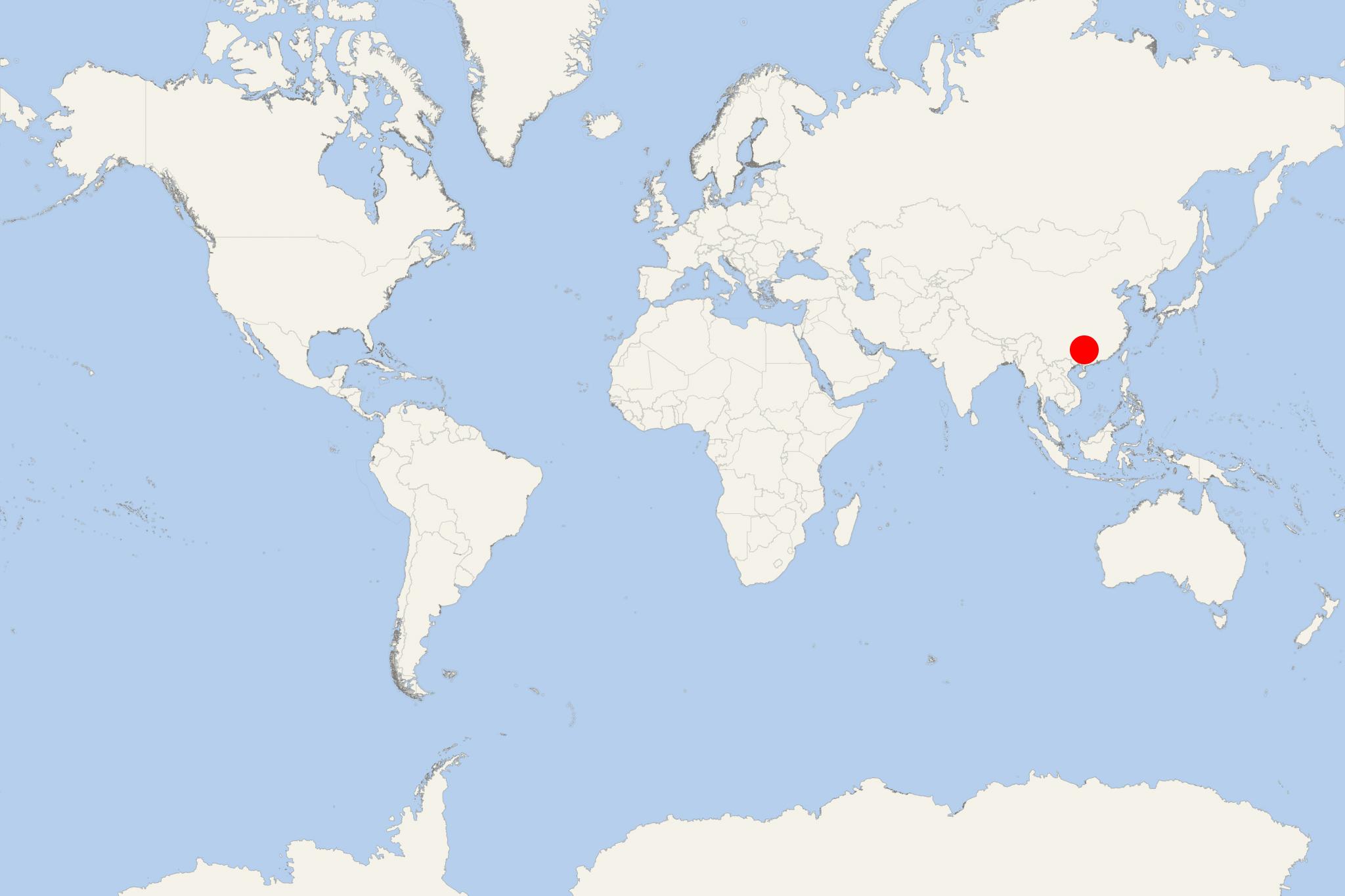
Region
Asia Rivers
Local Time
2026-09-08 10:11
 83°F
83°F 28.3°C

 Very Light
1.3 m/s
 91 °F / 33 °C
 72 °F / 23 °C
Guilin is a Li River cruise port in the northeast of Guangxi Zhuang, China. The city has population around 4,75 million. It is located on the river's west bank and borders Hunan to the north. Its name is translated to "Forest of Sweet Osmanthus", due to the many fragrant sweet osmanthus trees found in the city.
The prefecture-level city of Guilin has been renowned for a long time for its beautiful scenery of karst topography. Currently, it is one of the most popular tourist travel destinations in China. Li River flows in a southern direction through Guilin, then approx 83 km (52 mi) to Yangshuo. In Pingle, the river merges with the rivers Lipu and Gongcheng, then continues south (under the name Gui River). The confluence of the rivers Gui and Xun is at Wuzhou, where they form the Xi River.
A small settlement was founded along the banks of the Li River in 314 BC. During the campaigns of the Qin Dynasty (221–207 BC) against the Nanyue state, the first administration was set up in the region around Guilin.
Guilin prospered in the Tang and Song dynasties. However, it remained a county. Guilin was a nexus between the southwest border and the central government, and it was where armies were placed to guard the border. Canals were created so that food supplies could be transported directly from the food-productive Yangtze plain to the empire's farthest southwestern point.
In 1921, the city of Guilin became one of the headquarters of the Northern Expeditionary Army. The city acquired its present name in 1940.
Guilin city was listed by the State Council in 1981 as one of the 4 cities (the other 3 being Hangzhou, Suzhou and Beijing) where the protection of cultural and historical heritage, plus natural scenery, should be treated as a priority project.
Until 1949, only a cement works, a thermal powerplant, and several small textile mills existed in Guilin as signs of industrialization. However, since the 1950s, the city has had agricultural, electronics and engineering equipment, rubber, medicine and buses, and it also features textile and cotton yarn factories. The most important industry remains food processing, including local agricultural produce. More recent industry features high technology and tertiary industry characterized via tourism trading and service.
- Cruise Industry
Viking Cruises unveils 6 new Asian itineraries in 2025 visiting Japan, China, and Tibet
Viking has unveiled 6 new itineraries in Asia, set to commence in 2025, that will offer guests enhanced access to Japan and China, including Tibet...
September 1, 2024 - Cruise Industry
Viking introduces Spirit of Mongolia (China cruisetour itinerary extension)
Viking River Cruises has unveiled its Spirit of Mongolia extension program, offering guests immersive experiences in Mongolia for the first time...
April 16, 2024 - show more news