

Amarna (Egypt)
Cruise Port schedule, live map, terminals, news
 82°F
82°F 
 Mod. breeze
Port Amarna cruise ship schedule shows timetable calendars of all arrival and departure dates by month. The port's schedule lists all ships (in links) with cruises going to or leaving from Amarna, Egypt. To see the full itineraries (ports of call dates and arrival / departure times) and their lowest rates – just follow the corresponding ship-link.
| Day | Ship | Arrival | Departure |
|---|---|---|---|
| 15 October, 2026 Thursday |  Movenpick MS Darakum Movenpick MS Darakum | ||
| 31 October, 2026 Saturday | Movenpick MS Darakum |
Amarna (Akhetaton) is a Nile River cruise port and an Ancient Egyptian city (in Upper Egypt's Minya Governorate) where are the ruins of Egypt's capital established in 1346 BC by the 18th Dynasty Pharaoh Akhenaten. The city was built by Akhenaten but was abandoned just after 14 years (in 1332 BC) after the king's death.
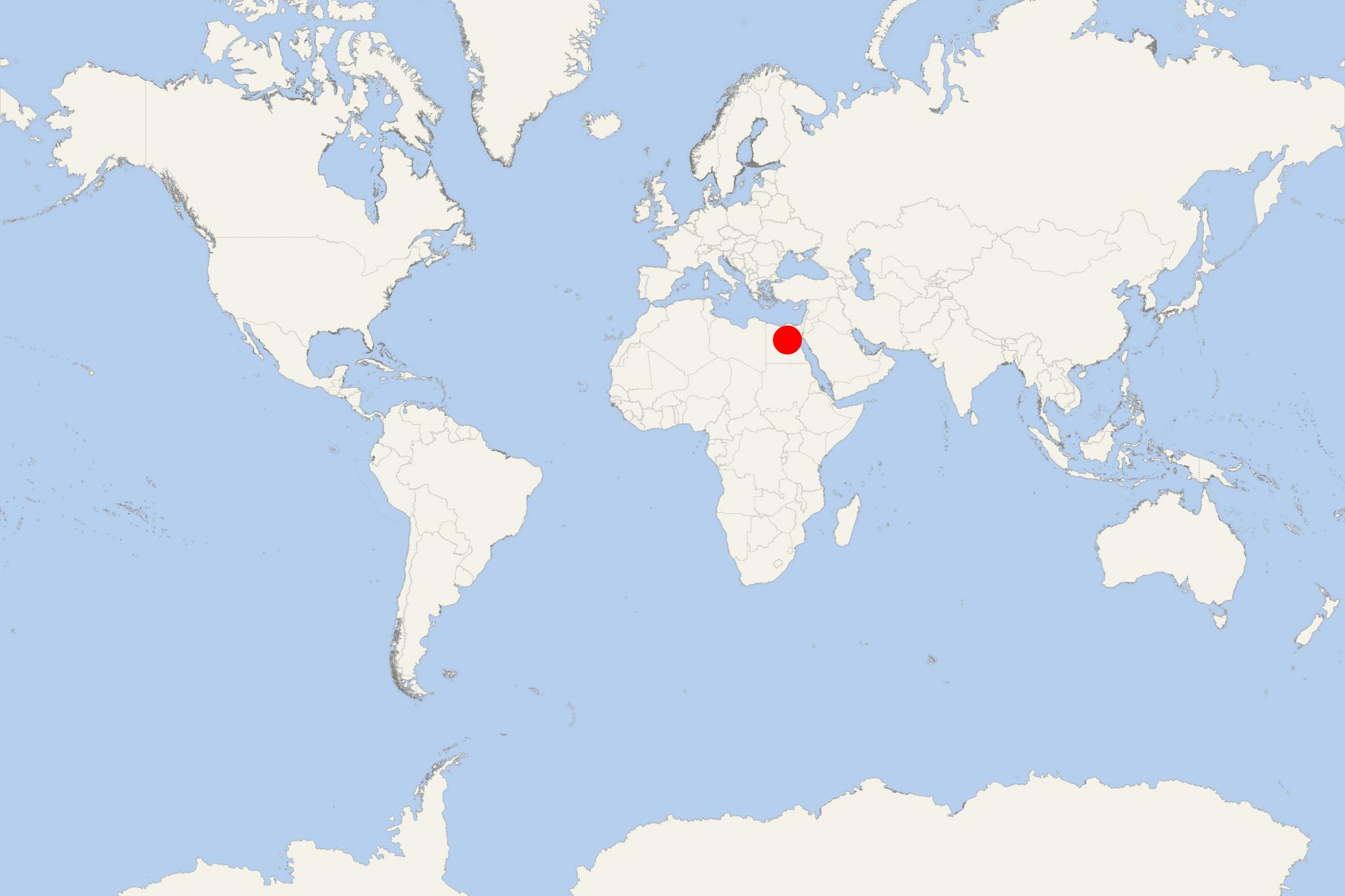
Amarna is on Nile's east bank and located approx 60 km (36 mi) south Al-Minya, approx 310 km (190 mi) south of Cairo and approx 400 km (250 mi) north of Luxor. The closest to Amarna modern city is Deir Mawas - approx 7 km to the west (directly across the river).
Amarna was intended as a capital dedicated to new worship - to Aten (Aton) - symbolized with the Sun Disc (an aspect of god Ra). Although the city was completed in 1341 BC, it started to function as capital in 1343 BC. Most buildings were made using mud-bricks, while only the most important ones were stone-faced.
As cruise port, Amarna is included in the regular schedule of the Movenpick Hotels and Resorts owned riverboat (hotel ship) Movenpick Darakum. The ship operates on 10-day and 14-day cruise tours between homeports Aswan and Luxor, with included domestic flights from or to Cairo. The next table shows the 10-day itinerary as a ports sequence.
| Date / Time | Port |
|---|---|
| 13-14-15 May (overnight) | Departing from Cairo, Egypt |
| 17-18 May (overnight) | Al-Minya, Egypt |
| 19 May | Amarna, Egypt |
| 21 May | Dendera/Qena, Egypt |
| 22-23 May (overnight) | Arriving in Luxor, Egypt |
Prices start from ~USD 2500 per person (double occupancy cabin rates).
Amarna is a specialist archaeological stop rather than a conventional port town. The remains of Akhenaten’s capital extend across a large desert site on the Nile’s east bank, and the principal monuments are too widely separated to explore on foot.
Organized excursion recommended. Cruise visitors normally need a vehicle, site admission arrangements and an Egyptologist or knowledgeable guide. Independent sightseeing is possible only with transport arranged in advance.
Getting from the River Landing
Nile vessels may use different local mooring or landing points, so passengers should follow the arrangements provided on board. The Amarna Visitor Centre is beside the Nile in El-Till, while the archaeological remains, ticket office and tombs are spread across the desert farther inland.
There is no conventional cruise terminal or dependable tourist transport network. Do not plan to find a taxi after disembarking. A cruise excursion or pre-arranged car with a driver is the practical way to visit the site, and the vehicle should remain with you throughout the tour.
Best Ways to Spend the Call
Guided Highlights of Ancient Amarna
Allow about 3–5 hours for a useful introduction, depending on the ship’s schedule and which monuments are open. A typical vehicle-based visit may combine the North Palace, Small Aten Temple area, North Tombs and one or more viewpoints across the ancient city.
The surviving remains are less monumental than those at Luxor, but a guide helps explain the ground plans, reliefs and unusual scenes from the reign of Akhenaten and Nefertiti. This is the best option for most cruise passengers.
North Tombs
The rock-cut tombs of Amarna’s officials preserve reliefs showing the royal family, Aten worship and buildings from the ancient city. Access involves high flights of stone steps, rough surfaces and additional walking along the cliff. Allow about 1–1.5 hours at the tomb area.
This visit is unsuitable for passengers with significant mobility limitations. Tomb access can depend on the availability of guardians and local site arrangements.
Royal Tomb and Central City
On a longer call, a guided circuit may add the Royal Tomb and the remains of the ceremonial center. The Royal Tomb requires a descent by stairs and a sloping passage, while the Central City is primarily an archaeological landscape of foundations and reconstructed outlines.
These sites add context but require more driving and time. They should be included only when the ship’s excursion schedule provides a comfortable return margin.
Amarna Visitor Centre
The visitor center in El-Till provides a useful introduction through Arabic- and English-language panels, models and a full-size reconstruction of an official’s house. It is the easiest part of Amarna for passengers with limited time or mobility, although the reconstructed house itself is not wheelchair accessible.
A focused visit takes approximately 45–60 minutes. Confirm that it is included and open during the ship’s call rather than attempting to reach it independently from an unspecified landing point.
Walking and Accessibility
A self-guided walking tour is not practical. The monuments are dispersed, the connecting routes cross exposed desert, and some areas require coordination with ticket staff, security and tomb guardians.
- The ground is largely unpaved, sandy or uneven.
- Shade, seating and handrails are limited.
- The North Tombs and Boundary Stela U require substantial stair climbing.
- The Royal Tomb involves stairs and a sloping descent.
- The visitor center has wheelchair access, but most of the archaeological site is difficult for passengers with impaired mobility.
Practical Tips
- Carry water, sun protection and a hat; much of the visit is in open desert.
- Wear closed shoes with reliable grip for sand, stone steps and uneven tomb floors.
- Bring a payment card as well as Egyptian cash, since accepted payment methods can vary.
- Use toilets when available at the visitor center or rest house near the ticket office.
- Do not separate from the guide or vehicle; distances between monuments make an independent return difficult.
- Allow extra time for local checks, guardian arrangements and reboarding. Follow the ship’s stated meeting time even if the site remains open later.