

Baa Atoll Maldives
Cruise Port schedule, live map, terminals, news
Region
Africa - Indian Ocean Islands
Local Time
2026-10-21 12:39
 81°F
81°F 27.4°C

 Mod. breeze
6.7 m/s
 84 °F / 29 °C
 80 °F / 27 °C
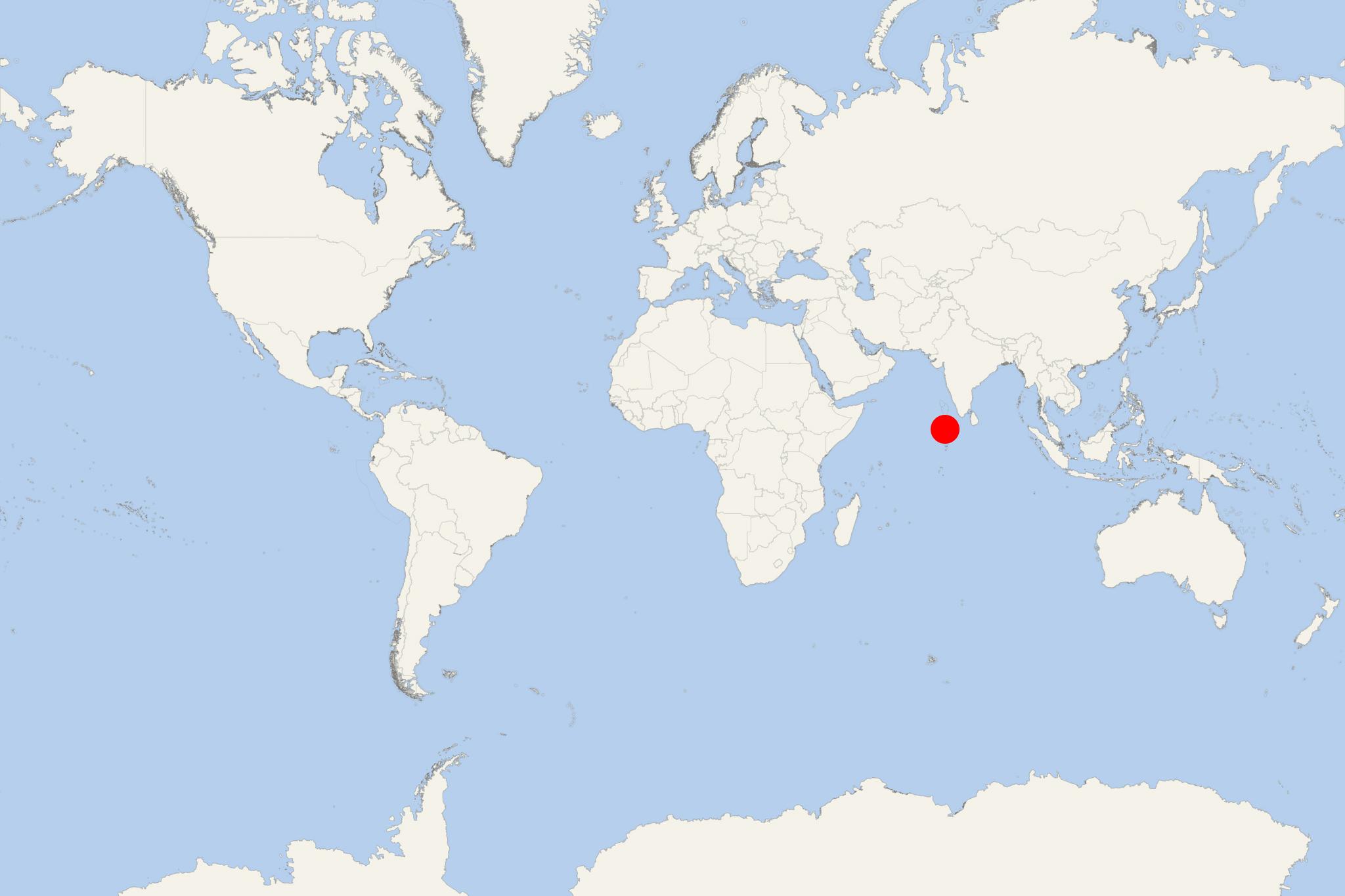
Baa Atoll (port locode MVBAL) is located in the Maldives' western part. It consists of 75 islands (57 uninhabited, 13 inhabited / population around 12,000), plus 8 island resorts. Baa Atoll is divided into 2 roughly circular sub-atolls, separated by the narrow Moresby Channel.
The atoll has a length of approx 46 km (29 mi), width approx 38 km (24 mi), covers a total area of 1127 km2 (435 mi2) and has a total population of around 9,000. Baa Atoll's marine area is sized approx 1397 km2 (539 mi2).
It is formed by over 105 coral reefs, with a total surface of 263 km2 (102 mi2). On 61 islands, the reefs are provided with vegetation and some sandy cays.
The biggest is the Dharavandhoo Island (0,46 km2 / 0,18 mi2, where the atoll's airport is located), followed by Kunfunadhoo Island (0,35 km2 / 0,14 mi2).
The atoll's highest elevation point is on Funadhoo Island - 3,19 m (10,5 ft) above sea level.
Kendhoo Island has a small harbour serving mainly cargo ferries and small boats.
Thulhaadhoo Island is known for its hand-made lacquer work crafts.
Maalhosmadulu Atoll is considered as one of the Maldives' richest biodiversity zones, featuring large mangroves and unique fauna (including benthic / found in the seabed). Its ring-shaped reef structure is unique to the Maldives.
Olhugiri Island (part of North Maalhosmadulu Atoll group) is the southernmost and uninhabited. It is located approx 13 km (8 mi) north of Goifulhafehendhu Atoll. Olhugiri Island has unique vegetation and provides 2 of the Maldives perching sites for great frigatebirds (large seabird species). Its fauna also features various marine species, including hawksbill sea turtles. Maldives Government has banned catching sea turtles or taking their eggs from Olhugiri Island. The ban additionally includes 11 more islands.
In 2011, Baa Atoll was designated a UNESCO World Biosphere Reserve, placing it in a list of the world's most popular tourist travel destinations, such as the Galapagos Islands (Ecuador), Komodo Island (Indonesia), Uluru (aka Ayer’s Rock, NT Australia).
Of all its islands, 38 are sized less than 0,1 km2 (0,04 mi2). These smaller islands constitute around 1/5 of the atoll's total land.
Baa Atoll consists of 3 separate island groups:
South Maalhosmadulu Atoll is the largest, with a length of 42 km (26 mi) and a width of 32 km (20 mi). It consists of 9 inhabited islands.
Fasduthere Atoll is between the Maalhosmadulu Atolls. It is separated from North Maalhosmasdulu Atoll by the Moresby Channel.
Goifulhafehendhu Atoll (aka Horsburgh Atoll) is the smallest.
Part of Baa Atoll is the Kuda Finolhu Island resort - just 30-min seaplane travel from Male Airport (Kaafu Atoll), or an alternatively 15-min flight to Baa Atoll's Dharavandhoo Airport and then a 20-min speedboat ride to Kuda Finolhu.
Baa Atoll Maldives cruise terminal
Usually, cruise ships to Baa Atoll Maldives dock (anchor) at Hanifaru Bay. Hanifaru Bay (aka Vandhumaafaru Adi). This location is one of the world's few where whale sharks gather in large numbers to mate. The bay is also famous as a gathering place for manta rays (up to 100).
The next photo is of Dharavandhoo Airport - a domestic flight terminal serving the entire atoll.
The following map of the atoll shows all the islands as names and locations.
Baa Atoll is an expedition-style destination rather than a conventional cruise port. There is no single cruise terminal: ships normally anchor offshore, and passengers go ashore or join marine activities by tender or excursion boat. The landing island and daily program depend on the ship, weather, sea conditions and protected-area regulations.
Independent sightseeing limited; organized excursion recommended. The atoll’s principal attractions are reefs, marine wildlife, sandbanks and small islands separated by open water. Walking is practical only after landing on an inhabited island such as Dharavandhoo or Eydhafushi.
Getting Ashore
- Ship access: Expect an offshore anchorage and tender operations. There is no walk-off cruise pier serving the entire atoll.
- Landing point: Confirm the tender destination in the ship’s daily program. Hanifaru Bay is a protected marine site, not a town or normal passenger terminal.
- Local transport: Boats are the essential form of transport between islands, reefs and sandbanks. Do not rely on finding an unscheduled water taxi after going ashore.
- Best approach: Reserve marine activities through the ship or a confirmed licensed local operator whose schedule matches the tender times.
Best Ways to Spend the Call
Snorkel at Hanifaru Bay
Hanifaru Bay is famous for seasonal feeding gatherings of manta rays, with occasional whale sharks. Sightings depend on plankton, tides and sea conditions and are never guaranteed. The most favorable period is generally during the southwest monsoon, broadly from May into November or December.
Access is controlled. Visitors must use an authorized operator and follow the guide’s briefing; numbers of boats and swimmers are limited. Scuba diving and fishing are prohibited inside the bay, so the wildlife experience is by guided surface snorkeling. For cruise passengers, a ship-organized or fully coordinated excursion is the practical choice.
Reef Snorkeling or Diving
Baa Atoll has coral reefs, channels and submerged pinnacles with reef fish, turtles and rays. A guided boat trip of approximately 2–4 hours fits many calls, but the site must be selected according to currents, visibility and passenger ability. Certified divers should use an established dive operator and allow time for equipment preparation and the return journey.
Hanifaru Bay itself is not a dive site. Diving excursions visit other reefs within the atoll.
Sandbank and Lagoon Trip
A boat excursion combining a sandbank, sheltered swimming and snorkeling is a less demanding alternative to a wildlife-focused trip. Conditions can change quickly, and sandbanks provide little or no shade, facilities or drinking water. Choose an operator supplying flotation equipment and confirm what sun protection and refreshments are included.
Visit a Local Island
If tenders land at Dharavandhoo, passengers can explore a compact inhabited island, see everyday Maldivian life and spend time at its designated tourist beach. Eydhafushi, the atoll’s administrative center, offers a more local urban experience but is not a conventional sightseeing town.
Local islands are Muslim communities. Dress modestly away from designated tourist beaches, covering shoulders and thighs. Swimwear is appropriate only in specifically designated beach areas. Alcohol is not available on inhabited local islands.
Resort Day Visit
A nearby resort may offer beach access, food, snorkeling or water sports, but entry is normally restricted to guests with a confirmed day arrangement. Do not travel to a resort without advance approval and coordinated boat transport. This option is most practical when offered by the cruise line.
Self-Guided Dharavandhoo Walk
This route is suitable only when the ship’s tender lands on Dharavandhoo and passengers are permitted to explore independently.
- Harbor: Begin at the confirmed tender landing and note the final return time.
- Village streets: Walk through the compact settlement, observing local homes, small shops and community life.
- Mosque area: View respectfully from public streets unless visitors are clearly invited inside.
- Western shoreline: Continue toward the island’s designated tourist beach.
- Bikini beach: Allow time for swimming or relaxing before returning through the village to the harbor.
Approximate route: 2–3 km (1.2–1.9 mi), about 30–45 minutes of walking or 1.5–2.5 hours with a beach stop. The terrain is flat, but heat, strong sun and sandy sections can make the walk tiring. Carry water and remain fully dressed between the harbor and the designated beach.
Practical Tips
- Bring reef-safe sun protection, a hat, water and secure footwear for wet tender landings.
- Passengers should be comfortable boarding small boats; tendering may be slow or suspended when seas are rough.
- Do not touch coral, stand on reefs, chase wildlife or approach manta rays and whale sharks independently.
- Ask whether snorkeling equipment, flotation aids, towels and drinking water are included before departure.
- Marine excursions may be unsuitable for passengers with limited mobility, weak swimming ability or difficulty climbing boat ladders.
- Keep a generous return margin. Boat journeys can be delayed by weather, currents, wildlife-search time and tender queues.
- If independent passengers use a local operator, arrange a return directly to the ship’s designated tender landing—not merely to another island in the atoll.