

Cardiff (Wales)
Cruise Port schedule, live map, terminals, news
Region
Ireland - UK - British Isles
Local Time
2026-10-05 03:21
 58°F
58°F 14.4°C

 Light breeze
3.2 m/s
 66 °F / 19 °C
 55 °F / 13 °C
Cardiff (port locode GBCDF) is the largest seaport and the capital city of Wales (UK). The port is located on Bristol Channel, at the mouths of Ely and Taff rivers. The city is also Wales' largest - with population around 360,000 (metro ~1,1 million).
Downtown (Cathays Park) houses baroque-style buildings, including Welsh Office, City Hall, Assize Courts, Temple of Peace, the National Museum of Wales. In the city's centre are also Cardiff Castle (11th-century, houses the Welch Regiment Museum and the Welsh School of Music and Drama), St John the Baptist Church (15th-century), Llandaff Cathedral (6th-century). At Cardiff Bay (old docks area) was created "Europe's most exciting waterfront development" incorporating shops, museums, restaurants, residences, boat marina.
Port Cardiff
Port Cardiff has a wide range of facilities to handle cargo ships, including dedicated terminals for liquid bulk carriers and container ships. The port (officially "Cardiff Docks") is located approx 4 km (2,5 mi) from downtown and approx 23 km (14 mi) from road Junctions 29 and 30 of motorway M4. The port has direct links to country's rail network.
Until the early-1920s, the port was among the world's largest by dock quay length (nearly 11 lm / 7 mi). Its current import and export shipping business are mainly TEU containers, steel and scrap metal, timber, dry and liquid bulk cargoes. Currently, the port has 3 operational docks (Queen Alexandra Dock, Roath Dock, Roath Basin) with capacity to handle vessels with max DWT 35,000 tons. Roath Basin is used only as alternative berth and is accessible only via Roath Dock.
ABP (Associated British Ports) has significant investments in port's infrastructure (container terminal, distribution terminal), indoor and outdoor storages, cold storage (for perishable goods), cargo handling equipment (7 quayside gantry cranes plus mobile cranes). ABP South Wales also manages the cruise terminal. ABP owns and operates 21x UK ports and a total of 9250 acres (3743 hectares / 37,4 km2) of freehold land, of which 960 hectares (9,6 km2) are strategic development lands in prime locations across the UK.
In late-June 2020, Port Cardiff signed a contract with Valero Energy Corporation (1980-founded, San Antonio Texas USA-headquartered company that specializes in manufacturing and marketing of transportation fuels, petrochemical products and natural-gas condensate/liquids).
- The long-term agreement includes Cardiff Docks' storage and distribution terminal (sized 12 acres / 5 hectares / 0,05 km2) which is adjacent to ABP's Roath Basin. The terminal is served by oil tankers importing Valero's road fuels (petrol, ULSD-ultralow sulphur diesel, biofuels) and heating fuels. From Port Cardiff, the fuels are distributed to South Wales' markets.
- Valero (via coastal tankers) links its refinery in Pembroke Dock with its storage and distribution terminals in the UK-Ireland, thus accessing ~1,5 million people living in Cardiff metro (~half of Wales' population).
- For the project, ABP Cardiff made significant investments in the port's infrastructure, including jetty upgrades (GBP 0,4 million) and replacing the port's inner and outer lock gates (GBP 5 million)â.
The port's cruising season runs from May through September. The best place to see passing cruise liners is Cardiff Bay Barrage.
For season 2018, the cruise port had scheduled 5 ship calls (3x by Marco Polo, 1x by MS Deutschland, 1x by Saga Pearl 2) and handled ~3500 passengers.
Cardiff cruise terminal
Cruise ships in Cardiff UK dock (anchor) in Cardiff Bay.
From the terminal, the distance to Cardiff International Airport is 16 km (10 mi). From the cruise port, Cardiff Central (train station) is approx 1,5 km (1 mi). The same is the distance between the port to downtown.
Cardiff combines a compact city centre with a separate regenerated waterfront at Cardiff Bay. Cruise ships normally use the secure docks rather than a central walk-off berth, but a complimentary shuttle is generally arranged into the city centre. Independent sightseeing is therefore practical once passengers leave the port.
At a Glance
- Independent sightseeing: Easy, using the port shuttle and walking within the city centre.
- Best first visit: Cardiff Castle, the Victorian shopping arcades, Cardiff Market and Bute Park.
- Alternative: Explore the architecture and waterfront promenade around Cardiff Bay.
- For a longer call: Visit St Fagans National Museum of History or Caerphilly Castle.
Getting from the Cruise Port
Small and medium-sized cruise ships normally berth within Cardiff Docks, commonly at Queen Alexandra Dock. This is a working port with controlled access, so passengers should not plan to walk independently through the dock estate.
The port normally provides a complimentary shuttle for independent passengers and crew between the ship and central Cardiff. Confirm the drop-off point, final return time and required identification onboard, as arrangements can vary by call.
Taxis may be useful for direct travel to Cardiff Bay or outlying attractions. The city centre and Cardiff Bay are distinct sightseeing areas, although they are connected by local buses and rail services. Allow extra time when moving between them rather than trying to cover both entirely on foot.
Best Ways to Spend Your Time
Cardiff Castle and the City Centre
Recommended time: 3–5 hours. This is the easiest independent option and works well from a central shuttle stop.
Visit Cardiff Castle, then explore the covered Victorian and Edwardian arcades, Cardiff Market and the pedestrian shopping streets. The Principality Stadium can be viewed from the surrounding streets, while nearby Bute Park offers an easy riverside walk. Allow roughly 1.5–2 hours if entering the castle and check current admission times before leaving the ship.
Cardiff Bay Waterfront
Recommended time: 2–3 hours. Independent with a taxi or local transport.
The main sights are grouped around Roald Dahl Plass and Mermaid Quay. They include the Wales Millennium Centre, the red-brick Pierhead Building, the Senedd and waterfront promenades. The area is largely level and suitable for a relaxed walk, but it is not the same as Cardiff city centre.
Local buses connect central Cardiff with the Wales Millennium Centre area. Rail services also link Cardiff Queen Street with Cardiff Bay station, a short walk from the waterfront. Check live schedules before travelling, especially if combining the Bay with the castle.
St Fagans National Museum of History
Recommended time: 3.5–5 hours including transport. An organized excursion, taxi or carefully planned public-transport journey is preferable.
This extensive open-air museum, approximately 6.5 km (4.0 mi) west of central Cardiff, contains historic buildings reconstructed from across Wales. The grounds require considerable walking, so allow at least two hours inside. Public transport is possible, but service frequency and the additional transfer from the cruise berth make a taxi or excursion safer for a limited port call.
Caerphilly Castle
Recommended time: About 4–5 hours including travel. Suitable for a longer call.
Caerphilly Castle is a large medieval fortress surrounded by water defences. Trains connect central Cardiff with Caerphilly, followed by a walk through town, but passengers should check the return schedule before departing. A guided excursion or taxi reduces the risk created by connections and waiting time.
Self-Guided City Centre Walk
Distance: Approximately 3 km (1.9 mi). Walking time: About 45 minutes without stops. Recommended total: 3–4 hours. Difficulty: Easy, mostly level urban streets.
- Central shuttle stop: Confirm its exact location and final departure time before beginning.
- Principality Stadium: Walk around the exterior of this prominent riverside sports venue.
- Cardiff Market: Browse the covered market and, if time permits, try a Welsh cake.
- Victorian arcades: Continue through one or two of the historic covered shopping passages.
- Cardiff Castle: Tour the interior or view the main entrance and walls from Castle Street.
- Bute Park: Take a short walk behind the castle along the River Taff.
- Return through the centre: Leave enough time to locate and board the port shuttle.
The route can be shortened by viewing the castle externally or omitting Bute Park. Add at least 1.5 hours if entering Cardiff Castle.
Cardiff Bay Walking Route
Distance: Approximately 2.5 km (1.6 mi). Walking time: 35–45 minutes without stops. Recommended total: 2–3 hours. Difficulty: Easy and mostly level.
- Wales Millennium Centre: Begin at the Bay’s most recognizable modern building.
- Roald Dahl Plass: Cross the broad public square toward the waterfront.
- Pierhead Building: View the ornate red-brick landmark beside the Senedd.
- Senedd: See the Welsh Parliament building and its waterside setting.
- Norwegian Church: Continue along the promenade to this former sailors’ church.
- Mermaid Quay: Return along the water for cafés, restaurants and transport connections.
A complete circuit of the Cardiff Bay Barrage is much longer and is not advisable unless the ship has an extended stay. For a normal call, remain around the central waterfront and return by the same transport used to reach the Bay.
Practical Tips
- Do not attempt to walk through the working docks unless port staff explicitly direct passengers to a pedestrian exit.
- Choose either the city centre or Cardiff Bay for a short call; combine them only when the schedule provides sufficient time.
- Check attraction opening times and any timed-entry requirements before leaving the ship.
- Weather can change quickly, so carry a light waterproof layer even when conditions appear settled.
- Allow at least 45–60 minutes of contingency before the required return time, particularly when using public transport or travelling outside central Cardiff.
Cardiff hotels
- Cruise Industry
Holyhead handles majority of Wales’ increased cruise shipping traffic
Wales recorded 84 cruise ship visits in 2025, a more than 100% increase compared to the 41 visits logged in 2021, underlining its growing stature as...
October 4, 2025 - Cruise Industry
P&O expands flight program for Caribbean fly-cruises from the UK
P&O Cruises has expanded its air program to enhance Caribbean fly-cruises scheduled between November 2025 and February 2026. This expansion aims...
June 30, 2024 - Cruise Industry
ABP-Associated British Ports restarts cruises in Cardiff, Wales with Hebridean Princess
ABP-Associated British Ports welcomed the return to cruising to its Port Cardiff Wales, with the homeporting of Hebridean Island Cruises UK's ship...
July 29, 2021 - Cruise Industry
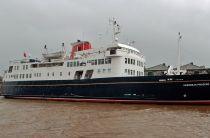
Hebridean Island Cruises’ flagship Hebridean Princess repositions to the south coast of England
The small UK-based luxury ship travel company Hebridean Island Cruises announced it would reposition Hebridean Princess to England's south coast for...
July 14, 2021 - Cruise Industry
Port of Cardiff Gets Ready for 2019 Cruise Season
Port Cardiff is getting ready for a busy cruise season which commences with the visit of CMV Marco Polo on Monday, April 22, the Associated British...
April 21, 2019 - show more news