

Chateauneuf-du-Pape (France)
Cruise Port schedule, live map, terminals, news
Region
France Rivers
Local Time
2026-10-23 22:57
 54°F
12°C

 Light breeze
2.8 m/s
 65 °F / 19 °C
45 °F / 7 °C
Port Chateauneuf-du-Pape cruise ship schedule shows timetable calendars of all arrival and departure dates by month. The port's schedule lists all ships (in links) with cruises going to or leaving from Chateauneuf-du-Pape, France. To see the full itineraries (ports of call dates and arrival / departure times) and their lowest rates – just follow the corresponding ship-link.
| Day | Ship | Arrival | Departure |
|---|---|---|---|
| 2 April, 2027 Friday |  Tauck MS Lumiere | ||
| 8 April, 2027 Thursday |  Scenic Sapphire | ||
| 8 April, 2027 Thursday | Scenic Azure | ||
| 16 April, 2027 Friday | Tauck MS Lumiere | ||
| 18 April, 2027 Sunday | Scenic Sapphire | ||
| 19 April, 2027 Monday |  MS Thomas Hardy |
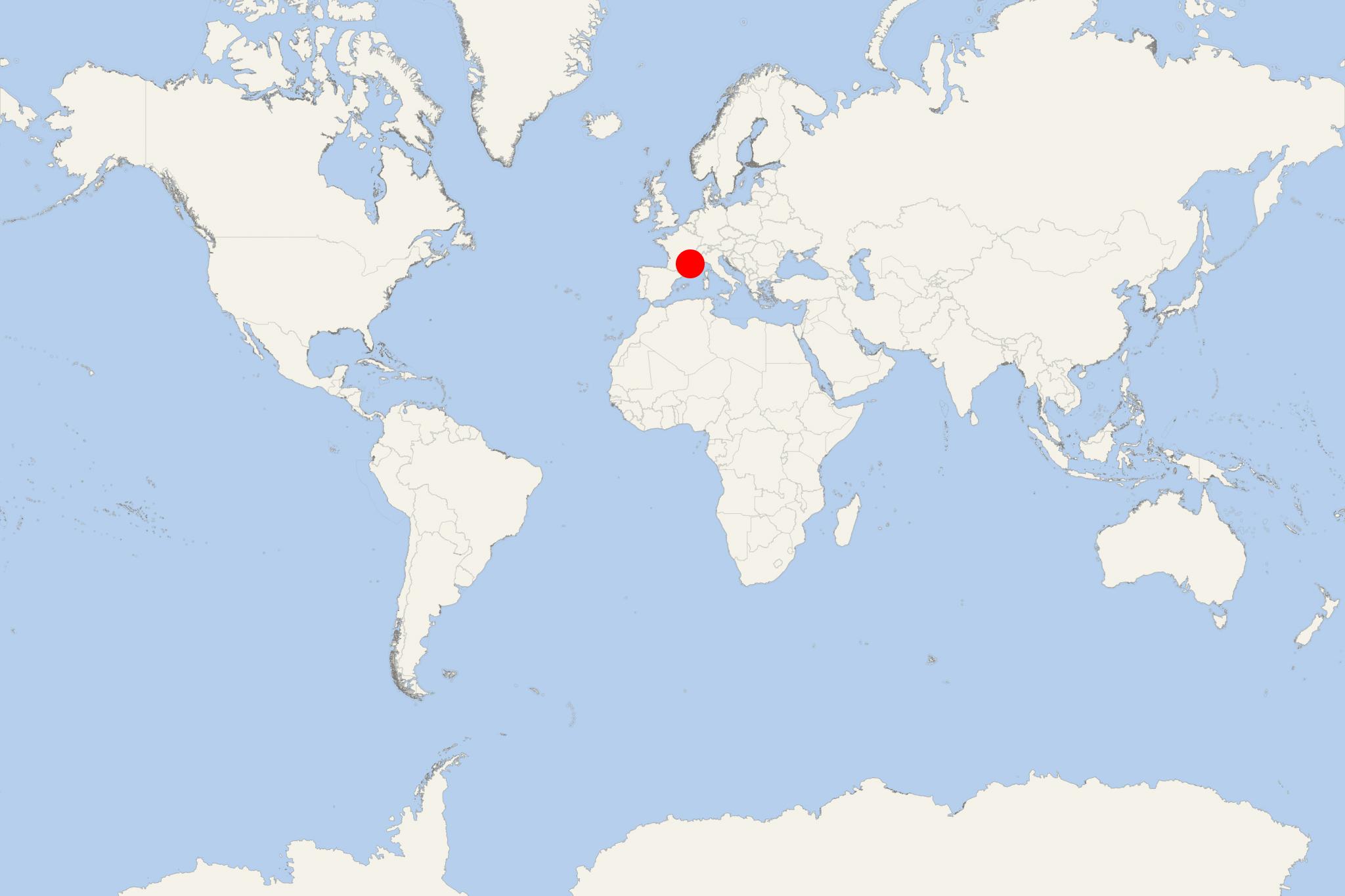
Chateauneuf-du-Pape is a Rhone River cruise port in southeastern France. The commune is in the Vaucluse department (Provence-Alpes-Cote d'Azur region). The village is located approx 3 km (2 mi) to the east of the river and 12 km (7,5 mi) north of Avignon. This small town has population of around 2,000 and covers a total area of 25,9 km2 (10 mi2).
A ruined mediaeval castle is still sitting at the top of the village, dominating the beautiful landscape to the south. The castle was built for Pope John XXII (1244-1334), who was the 2nd pope residing in Avignon during his papacy (August 1316 - December 1334). With the Pope leaving the castle, it passed to Avignon's archbishop. Being too large and expensive to maintain, its building stones were used for construction works in the town. During WW2 (1939-1945) the locals tried to demolish the castle's remains using dynamite, but succeeded in destroying only its northern half. Its southern half still remains intact.
Chateauneuf-du-Pape is famous worldwide for its production of red wine. Almost all cultivable land of the commune is planted with grapevines. The total annual wine production is about 13 million bottles (0,75 L), and of these 95% is red.
Châteauneuf-du-Pape is a small hilltop wine village about 3 km (1.9 mi) east of its Rhône landing. The main sights are compact once you reach the village, but the uphill transfer from the river makes this an independent visit requiring some planning or transport. For a short call or a scheduled winery visit, the cruise line’s excursion or transfer is usually the most practical choice.
At a Glance
- Best for: wine tasting, vineyard scenery, a compact historic village and panoramic views.
- Minimum useful time: approximately 2–3 hours, including transport from the river.
- Walking: easy distances within the village, but steep streets, steps and uneven surfaces around the castle.
- Independent sightseeing: practical if transport and any winery appointment are arranged in advance.
- Organized excursion recommended: for very short calls, visits to several estates or passengers who prefer not to arrange a taxi.
Getting from the River Landing
River vessels can use the Châteauneuf-du-Pape landing on the left bank of the Rhône, but the village itself is inland and uphill. It is not a walk-off town-center berth. The exact landing and transfer arrangements can change with the vessel’s itinerary and river conditions, so confirm the gangway location and any included transportation onboard.
The village is approximately 3 km (1.9 mi) from the river. A cruise-line coach, prearranged taxi or private tour is preferable to walking, particularly in hot weather. The approach follows rural roads rather than a convenient sightseeing promenade, and taxis should not be expected to wait at the landing without a booking.
Some itineraries list Châteauneuf-du-Pape as an excursion destination while the ship remains at another Rhône berth, such as Avignon. In that case, follow the transport information supplied by the cruise line rather than planning from the mapped village location.
Best Ways to Spend the Call
Explore the Village and the Popes’ Castle
Allow 1.5–2 hours after arriving in the village. Walk through the compact center, pass the church and climb to the ruins of the Popes’ Castle. The castle esplanade is freely accessible and provides broad views across the vineyards and Rhône Valley. The final approach includes slopes and steps.
Combine the Village with a Wine Tasting
Allow approximately 2–3 hours. Several tasting rooms are located in or close to the center, making one tasting easy to combine with the castle walk. For a cellar tour or a particular producer, reserve ahead and confirm the duration. Many vineyard estates lie outside the center and require a vehicle.
Visit the Wine Museum
Maison Brotte’s wine museum is near the southern approach to the village. Its self-guided displays explain local vineyards and winemaking, with visits typically taking at least 30–40 minutes before any tasting. It is a useful option in poor weather or for passengers wanting more context than a tasting alone.
Take a Guided Vineyard Tour
A half-day excursion can combine a drive through the appellation, a vineyard or cellar visit and time in the village. This is preferable when visiting estates scattered through the countryside, as public transport is not suited to moving efficiently between wineries during a cruise call.
Visit Avignon
Avignon is roughly 18 km (11.2 mi) from the village by road and normally takes around 25–30 minutes each way, depending on traffic. It is realistic only on a longer call with reliable transportation. A cruise excursion or prearranged driver is safer than trying to coordinate infrequent local transport, especially when the ship is sailing the same day.
Self-Guided Village Walk
Village Center, Castle and Wine Quarter
Distance: approximately 1.5 km (0.9 mi)
Pure walking time: 25–35 minutes
Recommended total time: 1.5–2 hours
Difficulty: Moderate because of the climb, steps and uneven paving.
- Tourist Office: Begin near Rue de la République and collect a current village map if the office is open.
- Village center: Walk through the narrow streets around the fountain and central square.
- Notre-Dame-de-l’Assomption Church: Pass the Romanesque church while climbing toward the upper village.
- Popes’ Castle: Follow the signs and steps to the castle ruins.
- Castle esplanade: Pause for views over the vineyards, Rhône Valley and surrounding hills.
- Wine quarter: Descend through the center and stop at one tasting room if time permits.
- Return point: Finish at the agreed coach or taxi pickup location; do not assume transportation will collect passengers at the castle.
Passengers with reduced mobility can explore parts of the lower village, but the steep castle approach may be difficult. Ask whether the arranged vehicle can use the parking area near the castle, which reduces the climb but may still leave steps between the esplanade and village center.
Vineyard Walking
The official heritage-and-vineyard circuit is a 10 km (6.2 mi) loop taking about three hours of walking, with exposed sections, stony paths, slopes and a road crossing. A shorter 5 km (3.1 mi) village loop is possible, but even this requires more time than a brief wine stop. These routes are appropriate only during a long call and should not replace a prearranged return transfer.
Carry water and sun protection. Summer access to some natural areas can be restricted during periods of high fire risk.
Practical Tips
- Check the ship’s actual landing, transfer arrangements and all-aboard time before leaving.
- Reserve cellar tours in advance; tasting rooms may have different hours from vineyard estates.
- Choose one substantial tasting rather than attempting several distant wineries during a short call.
- Arrange both outbound and return transport, as on-demand taxis may be limited.
- Allow extra time for the transfer, traffic, wine purchases and the walk back to the pickup point.
- For calls of about one hour, independent sightseeing is not realistic; remain with the cruise line’s operational arrangements.
- Leave a sensible return margin because the ship may depart immediately after passengers reboard.