

Chiloe Island Chile (Castro)
Cruise Port schedule, live map, terminals, news
Region
South America
Local Time
2026-10-14 17:42
 62°F
62°F 16.6°C

 Very Light
1.6 m/s
 70 °F / 21 °C
 49 °F / 10 °C
Port Chiloe Island Chile cruise ship schedule shows timetable calendars of all arrival and departure dates by month. The port's schedule lists all ships (in links) with cruises going to or leaving from Chiloe Island Chile, Castro. To see the full itineraries (ports of call dates and arrival / departure times) and their lowest rates – just follow the corresponding ship-link.
| Day | Ship | Arrival | Departure |
|---|---|---|---|
| 20 October, 2026 Tuesday |  MS Fridtjof Nansen MS Fridtjof Nansen |
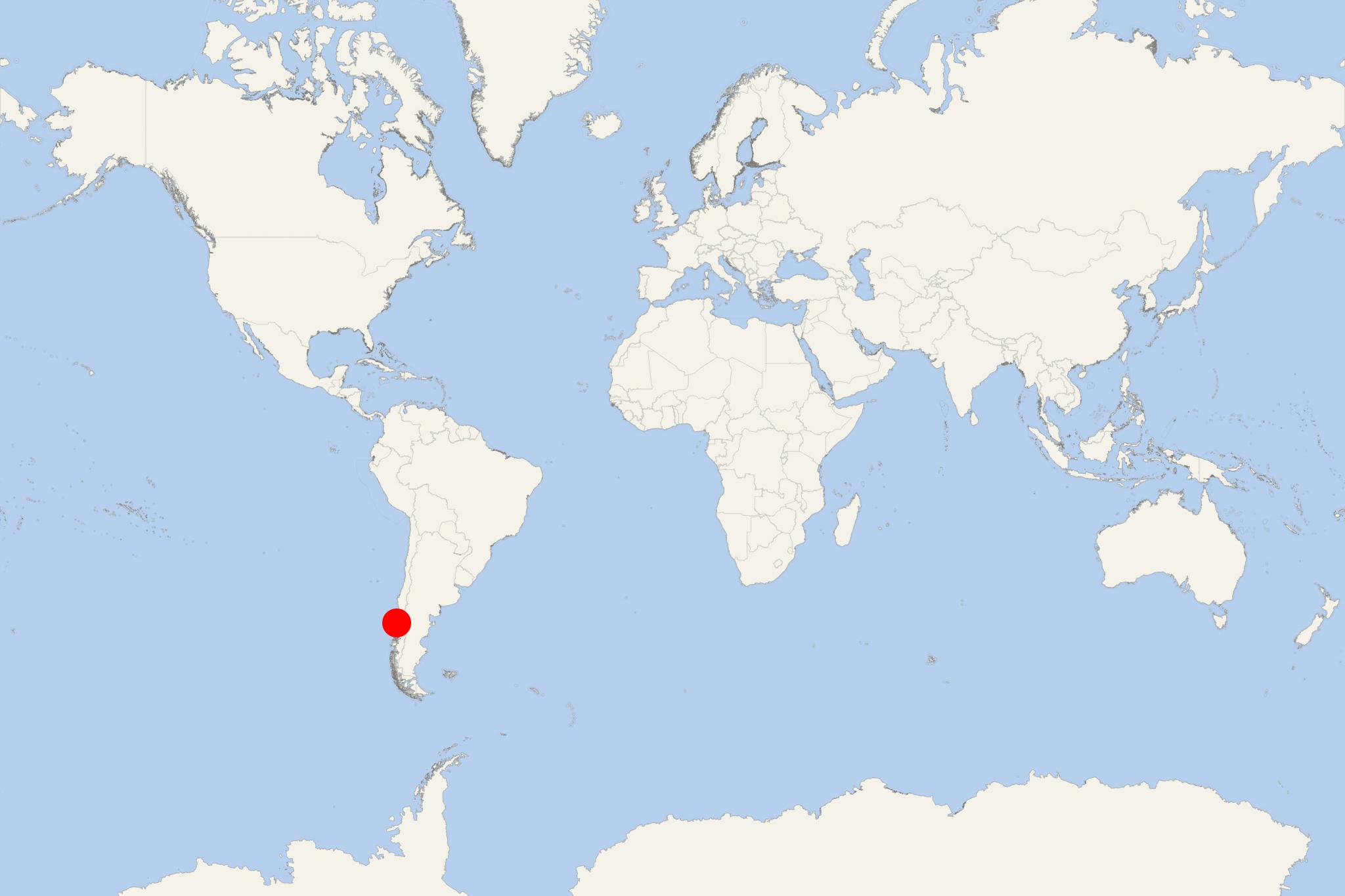
Chile's Chiloe Island (officially Isla de Chiloe, aka "Greater Island of Chiloe"/Isla Grande de Chiloe) is the largest in Chile's Chiloe Archipelago (Pacific Ocean). Castro is the principal port and the capital city of Chile's Chiloe Province (Los Lagos Region) with population around 40,000. Castro City is on Chiloe Island's central-eastern coast, which location provides it with access to the Archipelago's eastern islands.
Isla de Chiloe has total area approx 8394 km2 (3241 mi2), ranking it Chile's 2nd largest island - after Isla Grande de Tierra del Fuego. It is also South America's 4th-largest island - following Grande de Tierra del Fuego, Ilha de Marajo (Para Brazil), and Ilha do Bananal (Araguaia River, Tocantins Brazil).
As cruise port, Castro/Chiloe Island is often included in the seasonal Antarctic cruise schedule of Hurtigruten Expeditions. Itineraries usually include Puerto Natales, Puerto Eden, Chilean Fjords/Patagonia (coastal cruising), Cape Horn and Drake Passage, the Antarctic Peninsula and the South Shetland Islands, Punta Arenas (homeport, with flights to/from Valparaiso-Santiago).
The island's population is around 155,000 people. In the northwestern part of the Island is the Chiloe National Park. It features a huge diversity of marine fauna, including sei whales, blue whales, Peale's amd Chilean dolphins, marine otters, sea lions, Humboldt and Magellanic penguins. Nevertheless, this comparatively undisturbed area faces plenty of threats, including habitat degradation, urban development, marine and land pollution.
Conducted by Cetacean Conservation Center, the blue whale project "Alfaguara project" is based at Punihuil - on the island's northwest coast. It combines long term capacity building, research and educational programs for marine conservation. Islotes de Punihuil Natural Monument is a group of 3 islets located to the north and west of Punihuil. The monument is the only shared breeding site for Magellanic and Humboldt penguins. It is also the breeding area for other species like kelp gulls and red-legged cormorants.
Chiloe Island Chile cruise terminal
Most cruise ships to Chiloe Island dock (anchor) at Castro - port town on the eastern coast. Smaller ships may dock (anchor) at Ancud - port town in the island's northern coast.
Most cruise ships anchor off Castro on Chiloé Island’s eastern coast and tender passengers to the town waterfront. Castro is practical to explore independently, although streets rise steeply from the harbor. Smaller expedition ships may instead call at Ancud, so confirm the landing point before planning transport or meeting a private guide.
At a Glance
- Castro call: Easy independently for the town center; transport is needed for villages, additional UNESCO churches and nature sites.
- Ancud call: The central sights are walkable, but the Puñihuil penguin colony requires a road transfer and boat trip.
- Landing: Normally by tender. Tender operations can be delayed or cancelled by wind and sea conditions.
- Terrain: Castro is compact but notably hilly, with steep streets between the waterfront and Plaza de Armas.
- Best short-call choice: Explore Castro’s church, waterfront viewpoints and palafito neighborhoods on foot.
Getting from the Cruise Port
At Castro, tenders normally land near the central waterfront. Plaza de Armas and the Church of San Francisco are about a 5–10-minute walk away, but the route is uphill. Taxis are useful for passengers with limited mobility and for reaching Nercón, Dalcahue or other places outside town.
Local buses and minibuses connect Castro with nearby communities, including Dalcahue and Chonchi. They can work for independent visitors with a sufficiently long call, but schedules and boarding points should be checked locally. A taxi, prearranged driver or organized tour provides more control over the return time.
Best Ways to Spend the Call
Explore Central Castro
Recommended time: 2–3 hours. Independent: Easy, apart from the hills.
Walk from the tender landing to Plaza de Armas and the brightly colored Church of San Francisco, one of the wooden Churches of Chiloé included in the UNESCO World Heritage site. Continue through the commercial center and toward viewpoints over the bay and the town’s traditional wooden buildings.
The church should still be appreciated from outside if its interior is closed for services, maintenance or other local reasons.
See Castro’s Palafitos
Recommended time: 1.5–2.5 hours. Independent: Practical on foot or by short taxi ride.
Castro is known for its colorful palafitos—wooden houses raised on stilts along the tidal shore. The Gamboa district offers some of the most familiar views. It can be combined with the town center, although the walk includes slopes and the appearance of the shoreline changes considerably with the tide.
Visit Dalcahue
Recommended time: 3–4 hours from Castro. Independent: Possible with planning; a taxi or tour is more dependable.
Dalcahue is approximately 20 km (12.4 mi) north of Castro. The town has a waterfront craft market and the UNESCO-listed Church of Our Lady of Sorrows. Allow roughly 30 minutes each way by road, depending on traffic and the vehicle used. Market activity varies by day, so the visit should not depend entirely on finding every stall open.
Combine Nercón and Chonchi
Recommended time: 3–4.5 hours. Independent: Best by taxi, private driver or organized excursion.
Nercón is about 4 km (2.5 mi) south of central Castro and has another UNESCO-listed wooden church. Chonchi, farther south, combines a waterfront setting with its own World Heritage church. This is a practical half-day heritage route when transport and return arrangements are confirmed in advance.
Chiloé National Park and Cucao
Recommended time: At least 6–7 hours. Organized excursion recommended.
The national park lies on the island’s Pacific side, approximately 1.5 hours from Castro by road. Its forests, wetlands and wooden boardwalk trails provide a very different experience from the eastern towns, but the long transfer makes it unsuitable for a short or tender-delayed call. A guided excursion or private vehicle is preferable to local transport.
Self-Guided Castro Walking Tour
Waterfront, UNESCO Church and Gamboa Palafitos
Distance: Approximately 3 km (1.9 mi). Pure walking time: About 45–55 minutes. Recommended total time: 2–3 hours. Difficulty: Moderate because of steep streets.
- Tender landing and waterfront: Begin beside Castro Bay and identify the route back to the tender pier.
- Plaza de Armas: Walk uphill into the civic center.
- Church of San Francisco: View the distinctive exterior and, when access is available, its timber interior.
- Central Castro: Continue through the nearby shopping streets and look for traditional wood-shingled buildings.
- Gamboa viewpoint: Walk toward the elevated public viewpoints overlooking the palafitos and tidal inlet.
- Palafitos de Gamboa: Continue along the neighborhood’s accessible streets for closer views of the stilt houses.
- Return to the tender pier: Retrace the route through the center or use a taxi if the hills or weather make the return uncomfortable.
Allow extra time after rain because slopes and wooden surfaces may be slippery. Passengers with limited mobility may prefer a taxi between the plaza and the palafito viewpoint.
If the Ship Calls at Ancud
Ancud should be treated as a separate landing point rather than as a convenient starting point for Castro. In town, passengers can independently combine the central waterfront, Plaza de Armas, the regional museum area and Fort San Antonio in approximately 2–3 hours. The route is manageable on foot but includes some slopes.
The Puñihuil Islets, known for nesting Humboldt and Magellanic penguins, are reached from Ancud by road followed by a small local boat. Wildlife is seasonal, and boat operation depends on sea conditions. A ship excursion or properly timed private tour is the safest choice during a port call. The journey is considerably less practical from Castro.
Practical Tips
- Dress for rapidly changing weather and carry a waterproof outer layer, even when the morning appears clear.
- Use shoes with reliable grip for Castro’s hills, wet pavements and possible wooden walkways.
- Carry some Chilean pesos for small markets, local transport and businesses that may not accept cards.
- Confirm the final tender time before leaving the landing area. Returning to the waterfront is not the same as being aboard the ship.
- For independent trips outside Castro, agree on the return time with the driver and leave a substantial margin for traffic and tender queues.
- If tendering begins late, prioritize Castro itself rather than attempting a distant island circuit.