

Coimbra (Portugal)
Cruise Port schedule, live map, terminals, news
Region
Europe Rivers
Local Time
2026-10-06 03:19
 65°F
65°F 18.1°C
 Very Light
1.5 m/s
 74 °F / 24 °C
 60 °F / 16 °C
Port Coimbra cruise ship schedule shows timetable calendars of all arrival and departure dates by month. The port's schedule lists all ships (in links) with cruises going to or leaving from Coimbra, Portugal. To see the full itineraries (ports of call dates and arrival / departure times) and their lowest rates – just follow the corresponding ship-link.
| Day | Ship | Arrival | Departure |
|---|---|---|---|
| 1 October, 2026 Thursday |  MS Douro Elegance MS Douro Elegance | ||
| 8 October, 2026 Thursday | MS Douro Elegance | ||
| 9 October, 2026 Friday |  Tauck MS Andorinha Tauck MS Andorinha | ||
| 15 October, 2026 Thursday | MS Douro Elegance | ||
| 16 October, 2026 Friday | Tauck MS Andorinha | ||
| 30 October, 2026 Friday | Tauck MS Andorinha |
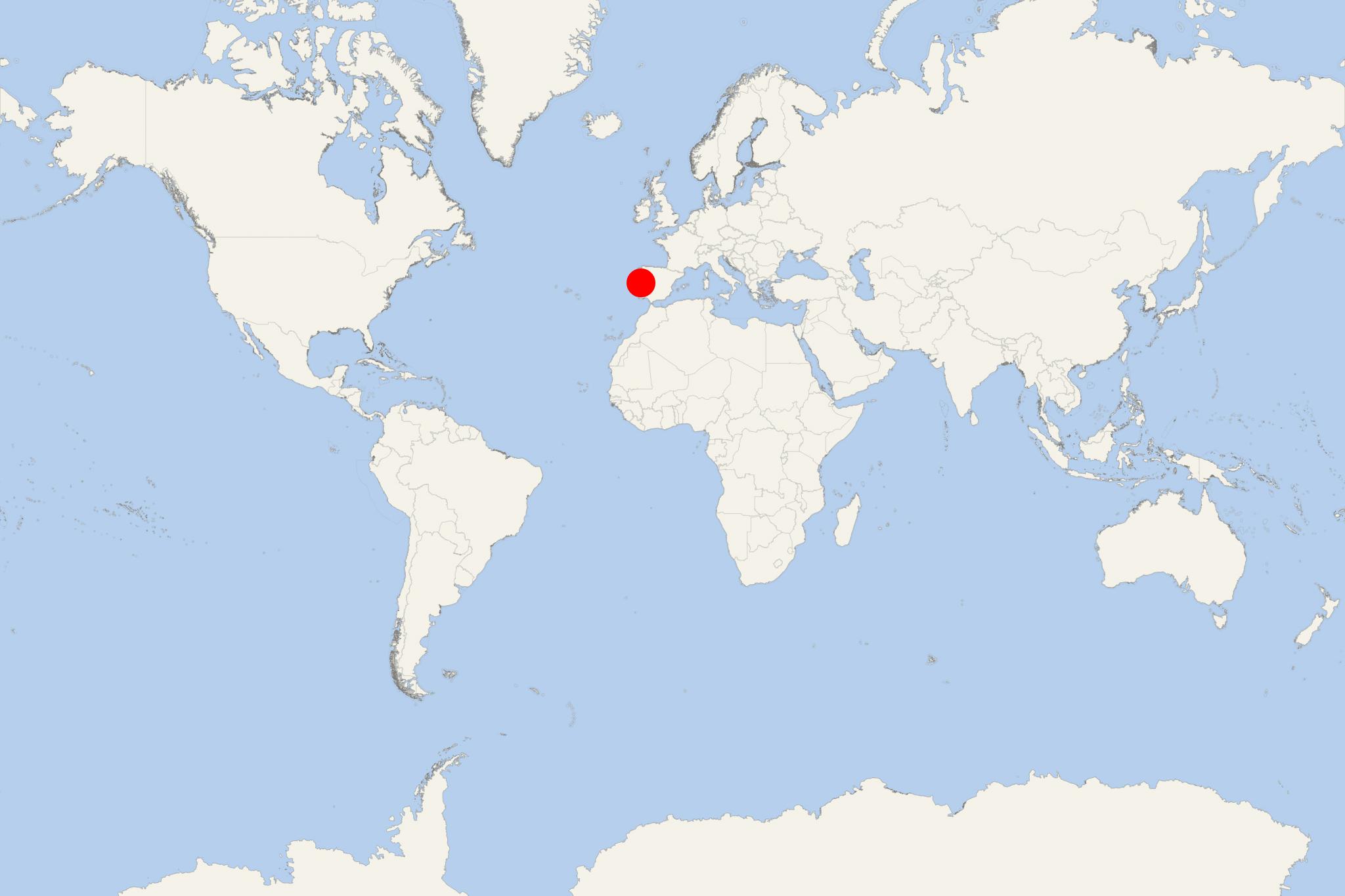
Coimbra (port locode PTCIB) is a Douro River cruise destination and a major city in Portugal, with municipality land area ~320 km2 (123 mi2) and population around 140,000. By land area (~4335 km2/1674 mi2), Regiao de Coimbra/Metro Area is Portugal's fourth-largest (following Lisbon, Oporto, and Braga), grouping 20 municipalities and population around 0,5 million.
As a cruise port destination, Coimbra was included in the 2024 schedule of Tauck Travel USA with the chartered from Scylla Cruises riverboat Andorinha.
The next table shows Tauck's 12-day cruisetour itinerary "Exploring the Douro, plus Lisbon and Madrid".
| Date / Time | Port |
|---|---|
| DAY 1-2 (overnight hotel) | Departing from Lisbon |
| DAY 2 | Coimbra, Portugal (bus travel to Oporto) |
| DAY 2-4 (embarkation) | Oporto, Portugal |
| DAY 5 | Entre-os-Rios, Portugal |
| DAY 6 | Regua/Lamego, Portugal |
| 03 Jun | Folgosa, Portugal |
| DAY 7 | Pinhao/Favaios, Portugal |
| DAY 8-9 (overnight) | Pocinho, Portugal |
| DAY 9-10 (overnight) | Barca d'Alva, Portugal |
| DAY 10 (debarkation) | Vega de Terron, Spain (bus travel to Salamanca and Madrid) |
| DAY 10-12 (overnight hotel) | Arriving in Madrid, Spain |
Tauck's prices started from EUR 7290 (USD 7880/GBP 6240) per stateroom, inclusive of 7-day cruising on the Douro River, bus travel, and overnight hotels in Lisbon and Madrid.
The current-day city's economy is largely based on higher education (38000+ students), retail shopping, IT technology, health sciences, health care industry, and administrative and financial services. Large companies headquartered in Coimbra include Critical Software, Ciberbit, Active Space Technologies, Feedzai, ISA Machinery, CIMPOR Souselas, Olympus Corporation, Bluepharma, BASI Laboratories, Fucoli-Somepal, major manufacturers of ceramics, food processing companies, large businesses specializing in textiles, wines, architecture design and construction, handicrafts (tapestry, pottery, porcelain).
Direct train and highway routes link Coimbra to Lisbon and Oporto.
The city is popular among its citizens and domestic tourists for its numerous nature parks and gardens, outdoor playgrounds, and forests. The University of Coimbra's Botanical Garden (1772-established) is among the world's oldest.
In the 12th-13th century, Coimbra was the Kingdom of Portugal's capital city (in the period 1131-1255) but during the Middle Ages, the city declined as the monarchy's political center and evolved into a cultural center. In the 14th century, Portugal's first university (1290-established in Lisbon) was relocated to Coimbra (in 1308). The university's historical buildings and monuments are a major tourist attraction, and in 2013 was classified as a UNESCO World Heritage Site.
During the Muslim era/Moors (8th-11th centuries) Coimbra (named Qulumriyah) was the largest settlement in the Northern Tagus and the principal city with population around 5,000.
In the 12th century, the Portuguese fortified the city. Portugal's most important religious institution at the time (Santa Cruz Monastery) was founded in 1131. In the 12th century also started the construction of Se Velha de Coimbra (the Old Cathedral). In 1139, Prince Afonso I Henriques The Conqueror (1106-85) declared himself King of Portugal and made Coimbra its capital.
During the Middle Ages, the city was divided (by Mondego River) into two areas - Cidade Alta/Almedina (housing the aristocracy and the clergy) and Cidade Baixa/Arrabalde (housing the merchants, artisans and workers). In the surrounding areas were built monasteries and convents.
Coimbra is normally a land-based stop on a wider Portugal or Douro River itinerary, not a port where Douro cruise ships berth. Passengers generally arrive by coach, often while travelling between Lisbon and Porto. Sightseeing is easy independently once in the city, but requires some planning because the principal monuments occupy a steep hill.
Getting to Coimbra
- Douro river cruises: Ships remain on the Douro; Coimbra is reached by road as part of a cruise-tour transfer or organized excursion.
- Coach arrival: The drop-off and meeting point depend on the operator. Confirm both before leaving the group, as the coach may not remain where passengers disembark.
- From Figueira da Foz: Small coastal vessels may use Figueira da Foz as the regional gateway. Coimbra is approximately 50 km (31.1 mi) inland, normally requiring about 45–60 minutes each way by road.
- Within Coimbra: The riverside and lower town are relatively easy to explore, but the university, Old Cathedral and upper town stand well above them. A taxi or local sightseeing vehicle uphill can save time and effort.
Best Ways to Spend Your Time
University of Coimbra and the Upper Town
Allow about 2–3 hours for the university complex and surrounding streets. The main visitor circuit includes the Palace of Schools, Saint Michael’s Chapel and the Joanina Library. Library entry is timed, so booking ahead is advisable when independent time is limited.
The historic setting is rewarding, but access involves slopes, cobbles and steps. Visitors with limited mobility should arrange transport to the upper town and check accessibility for individual university buildings.
Historic Centre Highlights
A compact visit can combine the university exterior, Old Cathedral, Almedina Arch, the pedestrian streets of Baixa and Santa Cruz Monastery. Allow 2–3 hours, excluding an extended university interior visit. Walking downhill from the university is considerably easier than approaching it from the river.
Mondego Riverside and Santa Clara
For a gentler outing, walk beside the Mondego and cross to Santa Clara. Possible stops include the Pedro and Inês footbridge, the exterior of Santa Clara-a-Velha and Portugal dos Pequenitos, which is most suitable for families. Allow around 1.5–3 hours depending on admissions.
Coimbra from the River
Local sightseeing boats operate on the Mondego, with some trips lasting approximately 50 minutes. These are city attractions rather than transfers from a cruise ship. Verify the departure point and same-day schedule before relying on a boat trip during limited free time.
Self-Guided Historic Centre Walk
Route: University of Coimbra and Palace of Schools – Old Cathedral – Quebra Costas lanes – Almedina Arch – Praça do Comércio – Santa Cruz Monastery – riverside.
- Distance: Approximately 2.5 km (1.6 mi), mainly downhill when started at the university.
- Pure walking time: About 40–50 minutes.
- Recommended total time: 2.5–4 hours with monument visits.
- Difficulty: Moderate because of steep cobbled lanes, stairs and uneven surfaces.
Taking a taxi or arranged coach transfer to the university and walking downhill is the most efficient approach. From Santa Cruz, continue through the level shopping streets or return directly to the operator’s designated meeting point.
Short, Easier Riverside Walk
Route: Central riverfront – Santa Clara Bridge – Santa Clara-a-Velha area – Pedro and Inês footbridge – riverside park.
- Distance: Approximately 3 km (1.9 mi), depending on the starting point.
- Pure walking time: About 45 minutes.
- Recommended total time: 1.5–2.5 hours.
- Difficulty: Easy to moderate, with mostly level riverside paths but possible uneven surfaces around historic sites.
This route offers good views toward the hillside city but does not include the university. Check the exact coach meeting point before crossing the river.
Practical Tips
- Do not expect a passenger terminal or a ship within walking distance of Coimbra’s monuments.
- Prioritize the university if this is your first visit, but reserve any timed entry before the day of arrival.
- Wear shoes suitable for polished cobbles, steep lanes and stairs.
- Use a taxi uphill if time or mobility is limited, then explore downhill on foot.
- Allow extra time to locate the coach meeting point; it may differ from the arrival point.
- For visits involving a long road transfer, follow the cruise operator’s stated return time and retain a sensible margin for traffic.