

Dar-es-Salaam (Tanzania)
Cruise Port schedule, live map, terminals, news
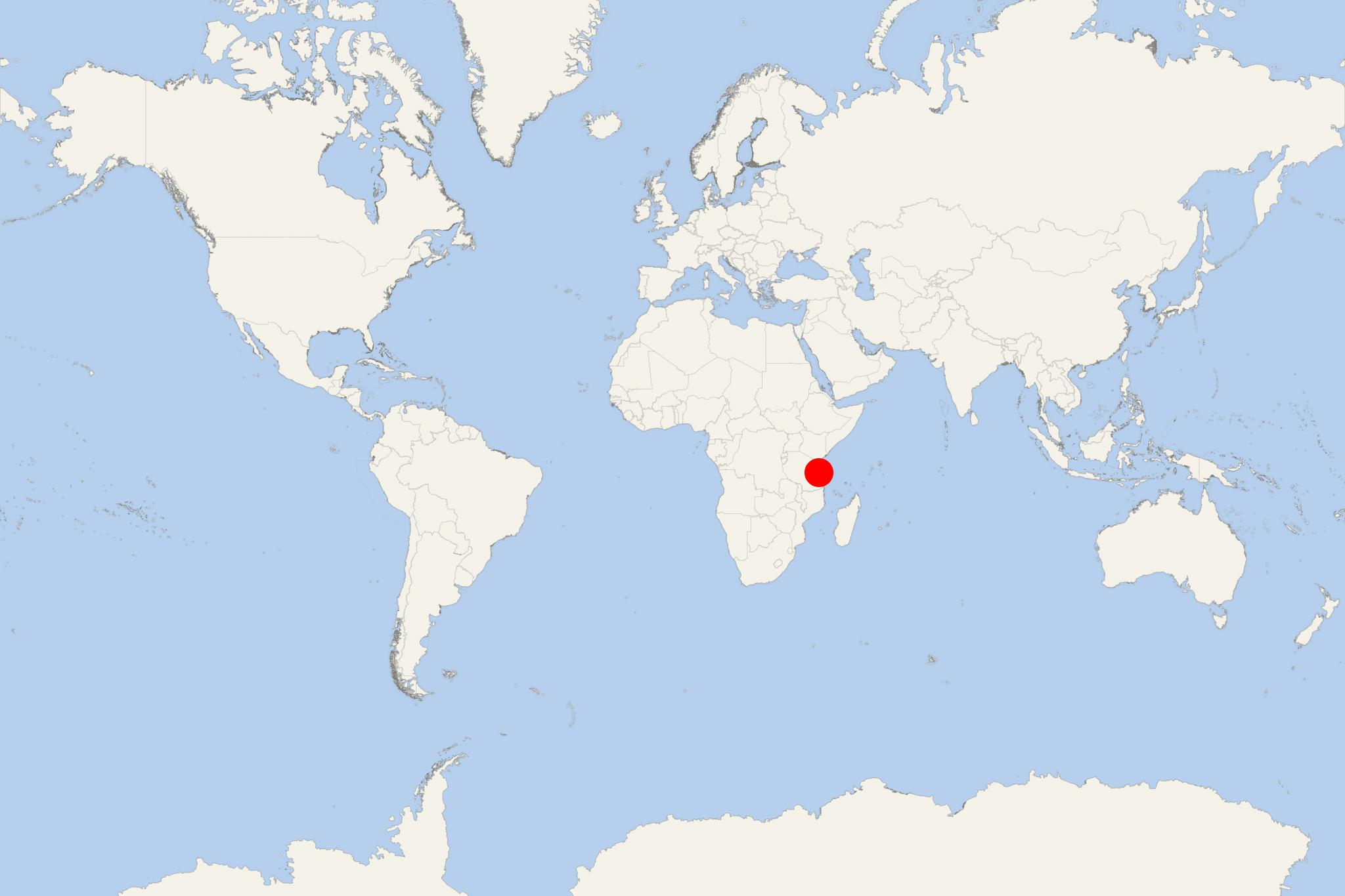
Region
Africa - Indian Ocean Islands
Local Time
2026-11-01 08:52
 83°F
28.4°C

 Light breeze
2.6 m/s
 95 °F / 35 °C
72 °F / 23 °C
Port Dar-es-Salaam cruise ship schedule shows timetable calendars of all arrival and departure dates by month. The port's schedule lists all ships (in links) with cruises going to or leaving from Dar-es-Salaam, Tanzania. To see the full itineraries (ports of call dates and arrival / departure times) and their lowest rates – just follow the corresponding ship-link.
| Day | Ship | Arrival | Departure |
|---|---|---|---|
| 11 January, 2027 Monday |  Seven Seas Voyager | 07:00 | 16:00 |
Dar-es-Salaam (port locode TZDAR) is Tanzania's largest port and city on the Indian Ocean and the country's east coast. From here, trains go inland to Arusha, to the lakes Victoria and Tanganyika, and to Zambia. The city's metropolitan population is around 4,4 million.
Dar es Salaam (meaning "haven of peace" in Arabic) was established in the 1860s as a summer residence for the sultan of Zanzibar. In 1896 it was developed by German colonists and became capital of German East Africa. The city fell to the British in 1916. in 1961, it became the capital of independent Tanganyika (1961-1964). In 1964, Tanganyika and Zanzibar merged to form Tanzania. In 1974, Dar es Salaam was replaced with Dodoma as Tanzania's new designated capital city.
Dar es Salaam is the most important city in Tanzania for both government and business. The city features high concentrations of trade, manufacturing and other services compared to other parts of the country, which has around 80% of its population in the rural areas.
Downtown includes a wealth of small businesses, many of which are run by proprietors and traders whose families originated from India and the Middle East.
The port of Dar es Salaam operates as an outlet for copper exports from Zambia. The city has the busiest port in the country, which handles 90% of Tanzania's cargo. Due to the huge influx of cargo and slow pace of expansion a new cargo port 60 km (37 mi) north of Dar es Salaam was proposed at Bagamoyo.
Among the city's main attractions are its Botanical Gardens, Kariakoo market, National Central Library, the National Museum of Tanzania. Here are also 2 of the 5 museums that comprise the National Museum of Tanzania consortium (Village Museum and National Museum) dedicated to the country's history. The Village Museum (in the outskirts, on the road to Bagamoyo) showcases traditional huts from 16 Tanzanian ethnic groups. Examples of traditional cultivations are also exhibited, and traditional dance and music shows are held daily.
In the mid-2016, there was a breakthrough discovery in Northern Tanzania of footprints thought to be of an early man, the one who evolved to the present species, Homo Sapiens. Not far from the National Museum are located the botanical gardens, with tropical trees and plants.
There are beaches on the Msasani peninsula north of the city of Dar es Salaam and to the south in Kigamboni. Trips from the city to nearby islands of Dar es Salaam Marine Reserve are very popular. The Reserve is a spot for swimming, sunbathing and snorkelling. Bongoyo Island is easily reached by boat from Msasani Slipway.
Independent with some planning or transport. Dar es Salaam is best explored with a prearranged transfer into the city, followed by a short walk around the central sights. For a typical 7–8-hour call, choose the historic center and National Museum, or a driver-led outing to the Village Museum and Msasani waterfront. Heavy traffic makes combining several distant stops less practical.
Getting from the Cruise Port
Cruise ships normally dock within the working commercial port. The assigned berth and approved passenger exit determine how you reach the city; do not assume the Zanzibar ferry terminal is your cruise landing point.
Confirm onboard whether a shuttle operates, where it drops passengers, and whether walking through the port is permitted. Arrange a taxi or private guide through a reliable operator, with a pickup point that matches the port’s access arrangements. The central sights are close together once you reach downtown, but a walk from the gangway cannot be assumed.
Agree the fare, waiting arrangements and return pickup before setting off. Local buses and minibuses are less convenient for a short visit because reaching the correct stop, identifying services and managing connections can consume valuable time.
Best Ways to Spend Your Time
Central sights and the National Museum
This is the most manageable first visit. Combine St Joseph’s Cathedral, Azania Front Lutheran Church and the Askari Monument with the Museum and House of Culture on Shaaban Robert Street. The museum covers archaeology, human evolution, Tanzanian history and cultural traditions; allow approximately 1–1.5 hours inside.
Allow 3–4 hours downtown for the museum, a walking circuit and a refreshment stop, plus transfers from and back to the ship. Independent walking is practical for confident pedestrians, although uneven pavements, busy crossings and heat make a local guide useful. Church interiors depend on access and services.
Village Museum and traditional architecture
The open-air Village Museum at Makumbusho displays traditional dwellings from different Tanzanian communities. Allow 1–1.5 hours to explore the buildings and grounds. Performances may be offered, but confirm arrangements rather than planning around an assumed show.
The museum is roughly 10 km (6.2 mi) north of the city center and requires road transport. A private driver or organized city tour is the practical choice. Keep this as the main cultural stop if traffic is slow; the distance alone does not indicate how long the journey will take.
Slipway waterfront and souvenir shopping
The Slipway on the Msasani Peninsula offers craft shopping, waterfront restaurants and ocean views. It suits passengers who prefer a relaxed lunch and browsing to an extended city walk. Allow 1.5–2 hours there, plus road transfers.
Arrange a return driver and avoid leaving the journey back until late afternoon. Slipway is a waterfront leisure stop rather than a swimming beach. Combining it with the Village Museum can work with a driver, provided the call length and traffic allow.
Bongoyo Island beach outing
Bongoyo is an offshore alternative for beach time, swimming and possible snorkeling. Boats depart from Slipway, so the outing involves both road and sea transfers. Treat it as the main activity for the day rather than an addition to downtown sightseeing.
An organized excursion is recommended for a cruise call. Before booking independently, confirm both boat departures, minimum passenger requirements, marine-reserve fees and the road transfer back to the port. Shared boats may depend on sufficient passengers, and sea conditions can affect the outing. Allow most of the available shore time and choose it only when the return arrangements leave a generous margin.
Self-Guided Walking Tour
Central Dar es Salaam circuit
Start: Museum and House of Culture entrance on Shaaban Robert Street, reached by an arranged transfer. If your shuttle stops elsewhere downtown, adapt the circuit to its confirmed pickup point.
- Museum and House of Culture: Begin with the galleries while you are fresh.
- Botanical Gardens: Make a short detour through the nearby gardens if open.
- Askari Monument: Continue toward the Samora Avenue junction and view the monument from the pavement rather than stepping into traffic.
- Azania Front Lutheran Church: Walk toward the harbor for an exterior stop; ask before entering.
- St Joseph’s Cathedral: Follow the public streets along the Sokoine Drive area to the cathedral.
- Return to the museum: Retrace the central streets to your agreed pickup point, allowing time for a drink or lunch if your schedule permits.
Approximate distance: 3 km (1.9 mi), depending on garden access and detours. Pure walking time: 45–60 minutes. Total recommended time: 3–4 hours including the museum and stops.
Difficulty: Mostly flat, but moderate in hot weather. Pavements can be uneven or interrupted, and crossings require care. This is a city-street route, with limited shade in places. Passengers with limited mobility should consider a vehicle-based tour with short stops.
Excursions That Need More Time
Zanzibar is a separate destination, not a nearby city attraction. Reaching Stone Town involves transfers to the ferry terminal, check-in, two sea crossings and another transfer back to the cruise berth. For a normal 7–8-hour call, an independent ferry day trip leaves little useful sightseeing time and too much dependence on transport connections. Consider it only through an excursion specifically arranged for your ship’s schedule.
Bagamoyo and safari destinations also require substantial travel. They are better considered as organized excursions when explicitly offered for the call, rather than improvised taxi trips.
Practical Tips
- Choose one main area and one optional addition; cross-city traffic can consume a large part of the day.
- Carry water, sun protection and comfortable shoes. Dress modestly for churches and cultural visits.
- Keep valuables discreet and ask before photographing people. Avoid photographing port operations or security facilities.
- Confirm attraction opening arrangements before paying for a transfer.
- For city outings, aim to be back at the port at least an hour before all-aboard, allowing additional time for traffic and any transfer from the gate to the gangway.
- Keep the ship’s local contact details and your confirmed pickup instructions with you.