

Gironde Estuary (France)
Cruise Port schedule, live map, terminals, news
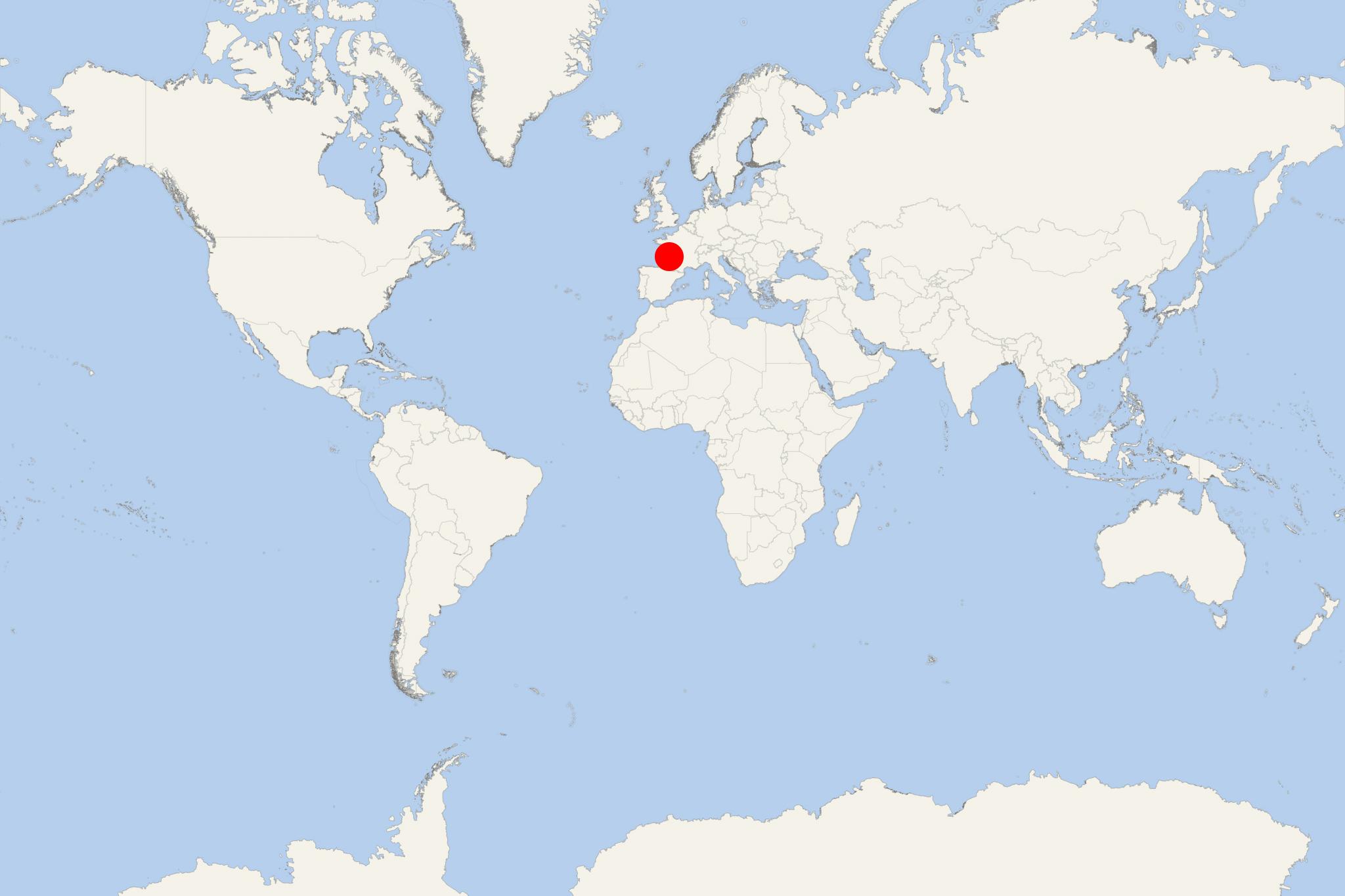
Region
France Rivers
Local Time
2026-11-12 14:38
 55°F
12.7°C

 Mod. breeze
6.7 m/s
 57 °F / 14 °C
48 °F / 9 °C
Port Gironde Estuary cruise ship schedule shows timetable calendars of all arrival and departure dates by month. The port's schedule lists all ships (in links) with cruises going to or leaving from Gironde Estuary, France. To see the full itineraries (ports of call dates and arrival / departure times) and their lowest rates – just follow the corresponding ship-link.
| Day | Ship | Arrival | Departure |
|---|---|---|---|
| 3 April, 2027 Saturday |  ms Cyrano de Bergerac | 09:00 | 18:00 |
| 19 April, 2027 Monday | ms Cyrano de Bergerac | 09:00 | 18:00 |
The Gironde Estuary is a major navigable waterway (falsely referred to as a river) located in southwestern France. It is formed from the meeting of two rivers (Dordogne and Garonne) downstream of the centre of Bordeaux. This estuary covers a total area of approx 635 km2 (245 mi2), ranking it the largest one in western Europe.
Gironde Estuary is a coastal (usually fresh) water area where one or more rivers meet. It also has a direct connection to the sea / ocean. River Gironde is nearly 80 km (50 ml) long and 3–11 km (2–7 ml) wide. Its estuary is subject to strong tidal currents from the Atlantic Ocean. Great care is needed while navigating the estuary by any type or size of marine vessels.
Within the estuary, between Pointe de Grave at the seaward end, and Bec d'Ambes, there are a series of small islands. Ile de Patiras (200 hectares) has a lighthouse to aid navigation in the estuary. Maize and vines are grown there. Ile Sans-Pain and Ile Bouchaud are virtually joined due to silting and are referred to as "Ile Nouvelle". They have a total area 265 hectares and are owned by Conservatoire du Littoral.
Ile Cazeau, Ile Verte, and Ile du Nord have a combined area of about 800 hectares. Due to their pristine state, these isles provide a fine stopping off-site for migrating birds. Ile Margaux (25 hectares) had 14 ha devoted to vines. It is part of the famous Medoc wine region.
Ile Pate (13 hectares) is a privately owned island. It features a historic fort built in the end of the 17th century as part of a national fortification program by Marquis de Vauban (1633-1707). The building is oval, nearly 12 m high, and was originally equipped with 30 cannons. Fort Pate, along with Fort Medoc and the Blaye Citadelle, defended Bordeaux and the Gironde Estuary. During the French Revolution (1789-1799), Fort Pate was used as prison for priests.
In 2006, Conseil General took a decision to make Ile Pate a "zone de pre-emption espace naturel sensible" (ZPENS). This status protects the island from further developments. If the owner decides to sell it, the Department has pre-emptive right. After 2 months the Conservatoire National du Littoral has next pre-emptive right and after another 2 months, the town of Blaye has the final pre-emptive right to buy the island.
“Gironde Estuary” describes a cruising area rather than a single passenger terminal. Your itinerary may include scenic sailing, a riverside stop or an excursion departing from a named town. Check the ship’s daily programme before planning transport: Bordeaux, Blaye, Pauillac and Le Verdon offer very different days ashore.
Independent with some planning or transport. Walking is practical at central riverboat stops such as Blaye. Vineyard visits, island trips and sightseeing from Le Verdon usually require advance arrangements. If the itinerary lists scenic cruising without a landing, there is no independent shore visit during that segment.
Check Your Landing Point
- Blaye: The riverboat pontoon is in the town centre below the citadel. This is a straightforward place for independent sightseeing on foot.
- Pauillac: Confirm whether you use a town riverboat mooring or the separate Pauillac-Trompeloup cruise terminal. The latter is approximately 1.6 km (1.0 mi) from the centre, but that distance does not establish a permitted pedestrian route from the ship.
- Le Verdon: This is an outer-estuary port serving larger ships. Arrange transport for sightseeing and confirm passenger exit procedures. Soulac-sur-Mer is generally under 20 minutes away by road; Bordeaux is approximately two hours each way.
- Other river stops: Follow the named landing place in your daily programme. Do not use an estuary map marker as the starting point for a walking route.
Shuttles and taxis should be confirmed for your particular call. Do not assume a shuttle is included or that public transport departs beside the gangway.
Best Ways to Spend Your Time
Enjoy the Estuary from the Ship
If this is a scenic sailing segment, spend time on deck watching for islands, vineyards, riverside settlements and traditional fishing huts. Some features are best appreciated from the water. Use the onboard commentary or daily programme to identify landmarks; a listed estuary passage does not necessarily include island landings.
Explore Blaye and Its Citadel
Easy independently from a Blaye riverboat stop. Allow two to three hours for the waterfront, citadel lanes and estuary viewpoints. The citadel grounds can be explored independently; underground passages require a guided visit. Expect sloping approaches, cobbles and uneven surfaces.
Visit the Médoc Vineyards
Organized excursion or prearranged transport recommended. From Pauillac or Cussac-Fort-Médoc, a half-day outing can combine a scenic vineyard drive with a booked château visit. Estates are spread out, and tastings should be reserved rather than treated as walk-in stops. From Le Verdon, reaching the Pauillac vineyard area takes approximately an hour each way, so allow additional travel time.
Choose Soulac-sur-Mer from Le Verdon
Independent with a confirmed return transfer. Allow roughly three to four hours including transport for the basilica of Notre-Dame-de-la-Fin-des-Terres, villa-lined streets, lunch and the seafront. The centre suits a relaxed walk. Beach time is possible in suitable weather, but swimming depends on sea conditions and local safety flags.
Take a Guided Island or Nature Trip
Île Nouvelle and Patiras can be visited on arranged boat outings, subject to operating dates and departure points. These are booked activities rather than places to reach spontaneously from any estuary berth. Check the complete trip duration: some island experiences occupy much of the day.
Self-Guided Walk: Blaye Citadel and Waterfront
Start: Blaye riverboat pontoon, only if your ship actually lands there. Distance: approximately 2–3 km (1.2–1.9 mi), depending on the lanes explored. Walking time: around 40–60 minutes. Total time: two to three hours. Difficulty: moderate, with slopes and cobbled or uneven ground.
- Walk from the pontoon along the waterfront below the citadel.
- Follow the signed pedestrian approach into the fortress.
- Explore the former barracks lanes, now containing shops and places to eat.
- Pause at the Place d’Armes.
- Continue to accessible estuary viewpoints inside the citadel.
- Return downhill to the town and waterfront, then retrace your route to the pontoon.
Add a guided underground visit only if its departure and finishing times fit your call. Passengers avoiding slopes can keep to a shorter waterfront stroll.
Planning Your Return
River itineraries may move the ship while passengers are on an excursion. Before leaving independently, confirm both the return time and the reboarding location.
From Le Verdon, a Bordeaux visit consumes approximately four hours in road travel alone; an organized excursion is preferable if Bordeaux is your priority. Avoid adding an unplanned ferry crossing or island trip to a short call. For independent road outings, build a substantial margin before all-aboard time and agree the return pickup in advance.