

Aegina Island (Greece)
Cruise Port schedule, live map, terminals, news
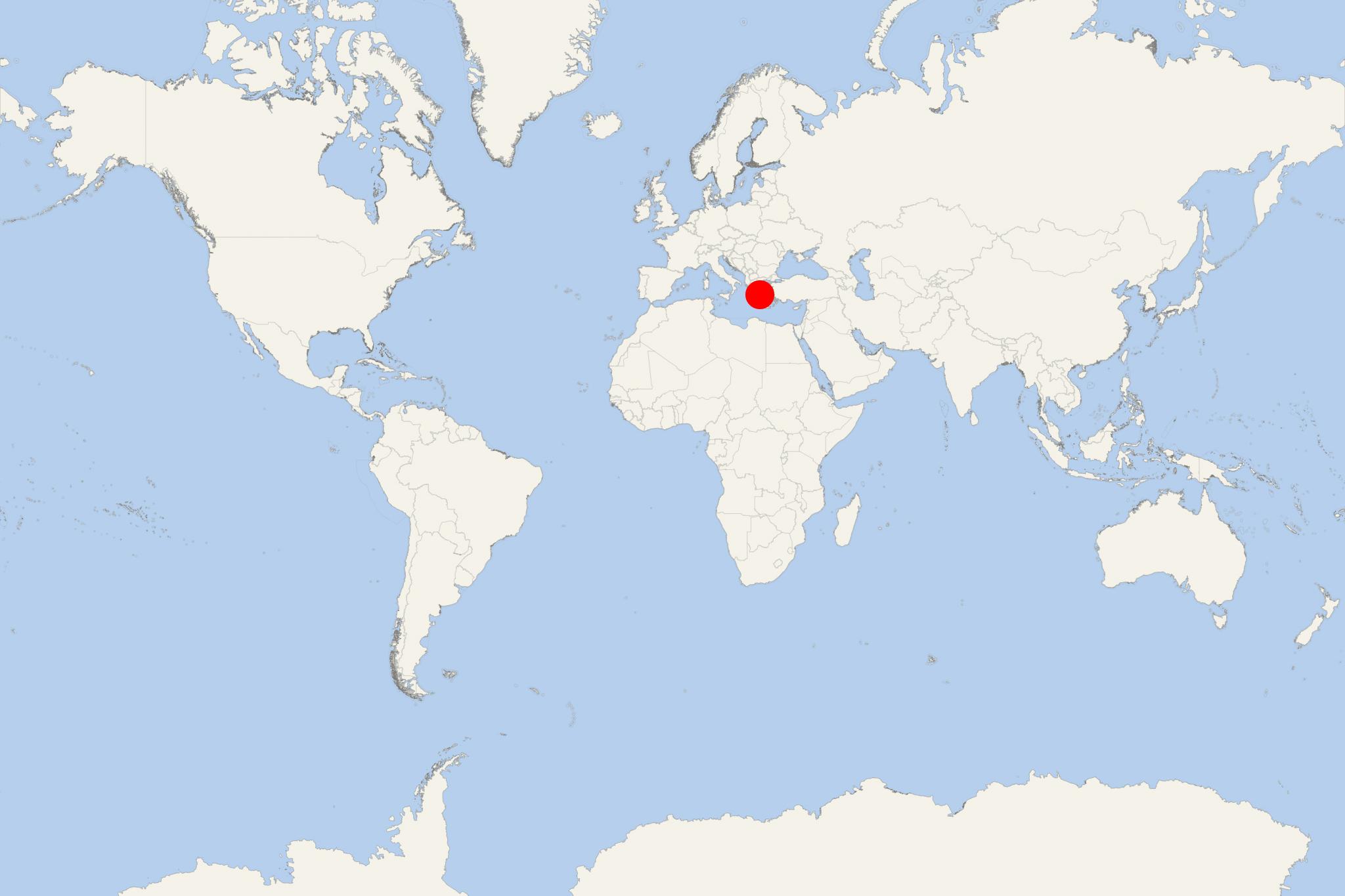
Region
Mediterranean - Black Sea
Local Time
2026-10-06 09:58
 70°F
70°F 21.3°C
 Gentle breeze
5.5 m/s
 74 °F / 24 °C
 60 °F / 16 °C
Aegina Island (port locode GRAEG), aka Aigina/Egina, is in the Saronic Gulf and part of Greece's Saronic Islands group. The island is approx 27 km / 17 mi to the southwest of Piraeus-Athens. The island has total population around 13,000, and its largest settlements are the towns Aegina (west), Kypseli (northwest), Vathy/Souvala (north), Mesagros (northeast), and Perdika (south).
As a cruise port, Aegina is visited exclusively by smaller-sized ships and superyachts from the fleets of ultra-luxury travel company brands like Azamara, Silversea, Windstar, SeaDream.
Regularly scheduled ferries connect Piraeus with the island's principal port (Aegina) as well as Souvala (the island's second-largest port, on the northern coast). The ferry service (daily crossings the whole year round) includes between 40-70 min of sea travel (depending on vessels) and is perfect for day-trippers from Greece's capital city. The Piraeus-Aegina ferry route is currently operated by four companies - two with conventional/large-capacity Ro-Pax ships (Blue Star Ferries, and ANES Ferries) and two with smaller-sized high-speed boats (Saronic Ferries, and Aegean Flying Dolphins/hydrofoil ships).
The Athens-Aegina ferry route is operated by both direct crossings as well as with longer itineraries also visiting Methana (a resort town on the Peloponnese peninsula/mainland Greece) and the islands Agistri and Poros. Saronic Ferries connect Piraeus with the island's both ports (Aegina Town and Souvala). Egina is also popular as a vacation destination visited via luxury boats and yachts.
By land area (~87 km2 / 34 mi2), Aegina is the largest in the Saronic Islands. Besides summer tourism, the island's economy is also based on agriculture (mainly the production of pistachios, as well as grain, cotton, vines, olives, figs, almonds) and sponge fishing.
Aegina Island's main tourist attractions are its beaches, but it is also popular as a cultural destination housing the Temple of Aphaea/Afea (dedicated to the goddess Aphaia who was worshipped only on this island and later associated with Athena/Athene), the Zeus Hellanios Temple (13th-century church, built over an ancient greek temple), and the Agios Nectarios Monastery (dedicated to Saint Nectarios of Aegina).
Aegina is a compact Saronic island where cruise visitors can combine a walkable harbour town with ancient sites, monasteries and beaches. Aegina Town is easy to explore independently; reaching the Temple of Aphaia, Agios Nektarios, Agia Marina or Perdika is also practical, but requires a taxi or careful use of the island's limited bus timetable.
At a Glance
- Independent sightseeing: Easy in Aegina Town; independent with some planning for the rest of the island.
- Cruise access: Cruise calls are normally handled by tender, with passengers brought into Aegina Town harbour. Very small vessels may occasionally berth directly, so check the ship's onboard information.
- Town access: The waterfront, shops, tavernas and historic center begin immediately at the harbour.
- Local transport: Taxis wait near the harbour exit. KTEL buses leave from the main stop opposite the port for Agios Nektarios, the Temple of Aphaia, Agia Marina, Perdika and other parts of the island.
- Best for a short call: Aegina Town, Kolona archaeological site and nearby Avra Beach.
- Best with more time: Temple of Aphaia combined with Agios Nektarios, or Perdika and Moni Island in summer.
Getting from the Cruise Port
Tender boats normally arrive in the main harbour of Aegina Town, putting passengers directly beside the waterfront. There is no lengthy transfer into town. Cafes, pistachio shops, the fish market and the historic streets are all within a few minutes' walk.
The main bus stop is opposite the harbour, while taxis can normally be found near the port exit. Bus services cover the principal island destinations but departures are much less frequent than urban public transport. Check the current timetable and, especially, the return departure before relying on a bus for a cruise call.
Best Ways to Spend Your Time
Aegina Town and Kolona
Allow: 2–3 hours. Difficulty: Easy. Independent: Very easy.
This is the safest choice for a short or tender-restricted call. Walk the harbour, browse the narrow streets behind the waterfront, see the Markellos Tower and buildings associated with Ioannis Kapodistrias, and continue to the archaeological site of Kolona and the Archaeological Museum. The site stands immediately north of the town, so no transport is required.
Avra Beach lies beside Kolona and can be added for a swim without committing to an island transfer.
Temple of Aphaia and Agios Nektarios
Allow: About 3–4 hours. Difficulty: Easy to moderate. Independent: Practical by taxi; possible by bus with timetable planning.
Agios Nektarios is about 6 km (3.7 mi) inland from Aegina Port. The Temple of Aphaia is approximately 12.5 km (7.8 mi) by road from the port and stands on a pine-covered hill on the eastern side of the island.
Both are served by the bus corridor toward Agia Marina, but bus frequency makes a taxi the more flexible choice for cruise passengers. The archaeological site itself involves exposed, uneven ground, and summer shade is limited.
A taxi itinerary linking the monastery, Aphaia and the return to Aegina Town is preferable if the port call is not long enough to accommodate waiting for scheduled buses.
Temple of Aphaia and Agia Marina Beach
Allow: 4–5 hours. Difficulty: Easy. Independent: Good with taxi or carefully timed bus transport.
Agia Marina is around 14 km (8.7 mi) from Aegina Town on the island's east coast. Buses between Aegina Town and Agia Marina take roughly 35 minutes, while a taxi is considerably faster.
Aphaia is close enough to combine with the resort, making this one of the best options for passengers who want both archaeology and beach time. Confirm the archaeological site's current opening schedule before making it the centerpiece of the day.
Perdika and Moni Island
Allow: At least 4–5 hours. Difficulty: Easy, but dependent on transport and boats. Independent: Practical in summer with careful timing.
Perdika is approximately 9.5 km (5.9 mi) south of Aegina Town and can be reached by bus in around 20 minutes or more flexibly by taxi. The small fishing village has a waterfront lined with tavernas and is the usual departure point for local boats to nearby Moni Island.
The crossing from Perdika to Moni takes about 10 minutes. Small boats operate primarily during the summer season and their frequency can depend on demand and weather. Cruise passengers should confirm the final return boat before crossing. A taxi back from Perdika provides more flexibility than relying on the last suitable bus connection.
Self-Guided Walking Tour of Aegina Town
Harbour, Historic Center and Kolona
Distance: Approximately 2.9 km (1.8 mi) round trip. Pure walking time: About 50–60 minutes. Recommended total time: 2–3 hours with sightseeing. Difficulty: Easy, with some uneven paving and rougher ground inside Kolona.
- Harbour and Agios Nikolaos Chapel: Start where the tender lands and walk along the waterfront toward the small white sailors' chapel at the harbour.
- Aegina Waterfront: Follow the quay past fishing boats, cafes, produce boats and shops selling local pistachio products.
- Markellos Tower: Turn into the compact streets behind the harbour to see the distinctive historic tower.
- Governor's House and Metropolis: Continue through the Kapodistrian quarter. Several historic government buildings are principally exterior sightseeing stops rather than conventional museums.
- Kolona Archaeological Site: Walk north toward the ancient acropolis, recognizable by the surviving column of the Temple of Apollo.
- Archaeological Museum: Visit the compact museum beside the archaeological site if its opening hours fit the port call.
- Avra Beach: Descend toward the beach immediately beside Kolona for a short swim or waterfront break.
- Return to the harbour: Follow the seafront directly back to the tender landing.
The town section is mostly level and straightforward. The archaeological area has uneven surfaces and is less suitable for passengers with significant mobility limitations.
Beaches
Avra Beach is the easiest choice for cruise passengers because it is beside Aegina Town and can be reached on foot from the harbour. It works particularly well when tender schedules or a short port call make a longer island trip undesirable.
Agia Marina provides a more substantial beach outing but requires a cross-island taxi or bus. Moni Island offers clear water and a more natural setting, but the additional road transfer to Perdika and seasonal boat crossing make it suitable only when the call provides a comfortable time margin.
When an Organized Excursion Makes Sense
An organized excursion or prearranged taxi tour is useful for passengers wanting to see several inland highlights in one call, particularly a combination of Agios Nektarios, the Temple of Aphaia and other archaeological or scenic stops. Public buses are inexpensive but their limited frequency can waste valuable port time if connections do not align.
For Aegina Town and Kolona, an excursion is unnecessary unless a guide is wanted for historical interpretation.
Practical Tips
- Check the ship's actual tender arrangements and published last-tender time before leaving the harbour area.
- For independent trips outside Aegina Town, plan to return to the harbour with a substantial buffer rather than relying on the final possible bus or boat connection.
- If using KTEL, confirm both outbound and return departures at the bus station before boarding.
- Taxis are especially useful for combining Aphaia and Agios Nektarios because they eliminate waiting between limited bus departures.
- Summer heat can make exposed archaeological sites tiring; carry water and sun protection.
- Tender operations can be affected by sea conditions, and boarding small boats may be difficult for passengers with limited mobility.
Aegina Island hotels
- Accidents
Silver Spirit ship suffers engine failure during a roundtrip cruise from Piraeus-Athens Greece
Silversea's ship Silver Spirit encountered engine difficulties during the final leg of a 7-night roundtrip itinerary from Piraeus-Athens Greece...
October 18, 2023 - Cruise Industry
Saronic Ferries to build Greece's first fully-electric Ro-Pax ferry
C-Job Naval Architects was selected by Saronic Ferries (Greek fast-ferry company) to design a fully electric Ro-Pax (roll-on/roll-off passenger...
July 17, 2022 - Cruise Industry
Saronic Ferries partners with C-Job Naval Architects for the first all-electric ro-pax ship in...
Saronic Ferries (Greece) announced a partnership with C-Job Naval Architects (naval engineering firm) for the design of what will be the first all...
July 12, 2022 - show more news