

Alghero (Sardinia Italy)
Cruise Port schedule, live map, terminals, news
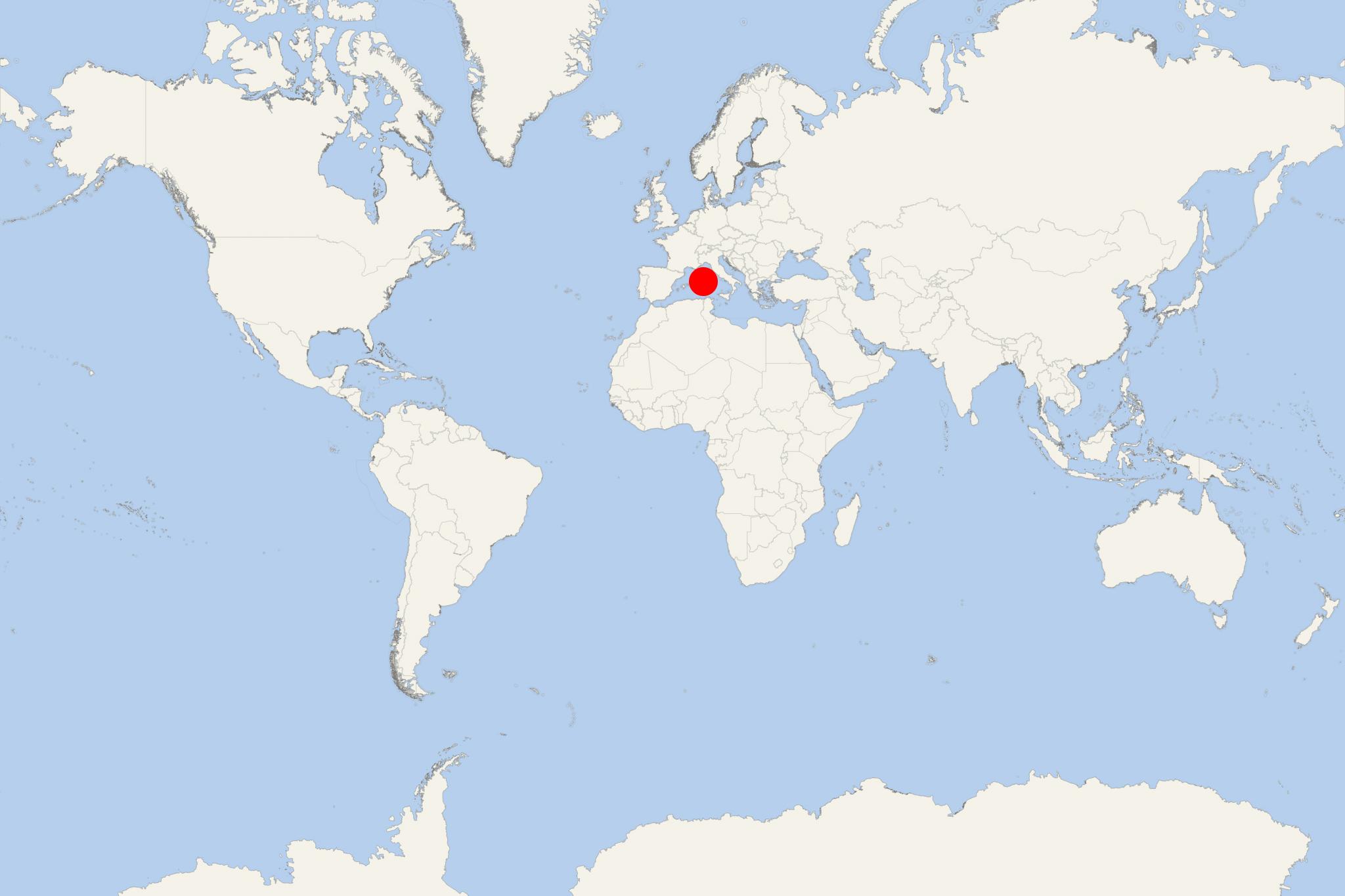
Region
Mediterranean - Black Sea
Local Time
2026-10-15 00:41
 67°F
67°F 19.5°C

 Very Light
1.4 m/s
 76 °F / 25 °C
 59 °F / 15 °C
Port Alghero cruise ship schedule shows timetable calendars of all arrival and departure dates by month. The port's schedule lists all ships (in links) with cruises going to or leaving from Alghero, Sardinia Italy. To see the full itineraries (ports of call dates and arrival / departure times) and their lowest rates – just follow the corresponding ship-link.
| Day | Ship | Arrival | Departure |
|---|---|---|---|
| 19 October, 2026 Monday |  MS Hamburg MS Hamburg | 08:00 | 21:00 |
| 21 October, 2026 Wednesday |  Enchanted Princess Enchanted Princess | 08:00 | 16:00 |
Alghero is a port town in Mediterranean Sea. It is located on Italy's Sardinia Island and in Sassari (an Italian insular province in the island's northwestern part). Alghero has population around 44,000, part of which descends from Catalan conquerors from the end of Middle Ages. Back then, Sardinia Island was part of the Kingdom of Aragon. That is why Catalan language is co-official in the town (unique in Italy), taking the name of algueres dialect. The city name itself comes from the medieval Latin word Aleguerium, which means stagnation of algae (Posidonia oceanica - seagrass species endemic to the Mediterranean Sea).
Alghero is the 5th university center in the island, following Cagliari and Sassari. It hosts the headquarters of Universita degli Studi di Sassari’s Architecture and Design department. Alghero was the 10th most visited city by tourists in Italy in 2012.
Alghero has total area approx 224 km2 (87 mi2). Ozieri culture was present during the 4th millennium BC (Necropolis of Anghelu Ruju), and Nuraghe civilization settled here around 1,500 BC. Historically, the city of Alghero was founded in the early 12th century between 1102-1112, when the aristocratic Doria family of Genoa was permitted to build the first ever historical nucleus into the empty coast of Nulauro parish in Judicature of Torres (Sassari). It's uncertain whether it was some prior settlement, probably linked to the events of Saracen invasions.
The many historical dominances that occurred in Alghero have produced a wide variety of buildings, monuments and sights. From the Neolithic period with many settlements that still remain, up to nowadays, during the last decades the town has become a major tourist point not only due to its coast and natural beauty but also because of a well preserved patrimony.
There is a fishing and pleasure port in the heart of Alghero. Passenger traffic is handled via Porto Torres, some 30 km (18,6 ml) north. From there, ferry services are offered to Barcelona, Civitavecchia and Genoa.
At a Glance
Easy independently. Alghero is normally an anchorage port, with passengers transferred ashore by tender. Tenders usually arrive at the marina beside the historic center, placing the old town, waterfront and main sights within easy walking distance.
The compact center suits a relaxed independent visit. Transport is needed for Neptune’s Grotto, the archaeological sites, Porto Conte and most beaches beyond the town waterfront.
Getting from the Cruise Port
There is generally no need for a shuttle after landing. The old town begins beside the harbor, while the cathedral, defensive towers and seafront ramparts are approximately 5–15 minutes away on foot.
Most central streets are pedestrian-friendly, but old paving stones, steps and uneven surfaces can make walking difficult for passengers with limited mobility. Taxis and local buses are useful for beaches and attractions outside Alghero.
Because this is a tender port, rough seas can delay or prevent passengers from going ashore. Allow additional time for the return tender and follow the ship’s stated last-tender time.
Best Ways to Spend Your Time
Explore Alghero Old Town
Allow 2–3 hours for the historic lanes, Cathedral of Santa Maria, Church of San Francesco, small squares and shops selling local coral jewelry. Continue along the waterfront walls for views across the bay. This is the easiest and most reliable independent option.
Walk the Ramparts and Waterfront
A shorter visit can combine the harbor, Torre di Porta Terra, the sea walls and the Bastioni Marco Polo promenade. The route is scenic and close to the tender landing, making it suitable when time ashore is limited.
Visit Neptune’s Grotto
Boat trips normally leave from Alghero harbor and provide the most convenient independent route to the cave. Allow roughly half a day, including the cruise along the coast and the cave visit. Boat operations and cave access depend on wind and sea conditions, so confirm departures after arriving and avoid an option that returns too close to the final tender.
The alternative is a road transfer to Capo Caccia followed by the Escala del Cabirol, a cliffside staircase of about 660 steps each way. This version is physically demanding and requires carefully coordinated transport. A ship excursion or organized local tour is preferable when the port call is short.
Nuraghe Palmavera and Porto Conte
The Nuraghe Palmavera archaeological complex is about 10 km (6.2 mi) northwest of Alghero. It can be combined with coastal scenery or Porto Conte, but transport is required. A taxi or organized excursion is more practical than relying on infrequent regional buses during a cruise call.
Self-Guided Walking Tours
Easy Old Town and Ramparts Circuit
Distance: approximately 2 km (1.2 mi). Pure walking time: about 30 minutes. Recommended total time: 2–3 hours. Difficulty: easy, with uneven paving and occasional steps.
- Start at the marina tender landing and walk toward Piazza Civica.
- Continue through the old lanes to the Cathedral of Santa Maria.
- Reach the seafront at Torre di Sant’Elmo.
- Follow the ramparts toward Bastioni Marco Polo.
- Turn inland for the Church of San Francesco and its surrounding lanes.
- Pass Torre di Porta Terra, once a principal entrance to the fortified town.
- Return through the shopping streets and harbor promenade to the tender landing.
The route remains close to the harbor throughout and can be shortened easily. Passengers who find cobblestones difficult can concentrate on the harbor and wider rampart promenade.
Moderate Old Town and Coastal Walk
Distance: approximately 5 km (3.1 mi) round trip. Pure walking time: 70–80 minutes. Recommended total time: 3–4 hours. Difficulty: moderate because of the longer distance, sun exposure and uneven old-town paving.
- Follow the easy old-town circuit to Bastioni Marco Polo.
- Continue south along the waterfront toward the seafront promenade.
- Walk as far as the Las Tronas coastal area for open views back toward the fortified town.
- Return by the same waterfront route or use parallel streets through the modern center.
- Finish at the marina with ample time for the return tender.
This route is better for passengers interested in scenery than indoor attractions. There is limited shade on parts of the waterfront.
Beaches
San Giovanni and Lido Beach
The nearest practical sandy shoreline lies north of the harbor, beginning roughly 1.5 km (0.9 mi) from the old town. It is reachable on foot along the waterfront and works well for a brief swim combined with sightseeing.
Maria Pia Beach
Maria Pia is approximately 4 km (2.5 mi) north of the historic center and is known for pale sand, shallow water and a pine-backed shoreline. Use a taxi or check the current local bus service rather than spending much of a short call walking there. Allow extra return time during the busy summer season.
Practical Tips
- Wear shoes suitable for polished cobbles, uneven paving and steps.
- Check current opening times before planning visits inside churches, museums or the cave.
- For Neptune’s Grotto, verify both the boat departure and the cave’s operating status because conditions can change quickly.
- Do not depend on a tightly timed public-bus connection for Capo Caccia or rural attractions.
- Keep a generous margin for the tender queue and return to the landing point earlier than the ship’s final tender time.
Alghero hotels
- Cruise Industry
Windstar announces second Solar Eclipse-themed cruise for August 2026
A total solar eclipse is a rare and remarkable phenomenon, and observing it at sea—particularly at sunset—offers an unobstructed and...
April 2, 2025 - show more news