

Antarctic Peninsula
Cruise Port schedule, live map, terminals, news
Region
Arctic - Antarctica
Local Time
2026-09-13 02:35
 8°F
8°F -13.1°C

 Mod. breeze
7.5 m/s
 14 °F / -10 °C
 5 °F / -15 °C
Port Antarctic Peninsula cruise ship schedule shows timetable calendars of all arrival and departure dates by month. The port's schedule lists all ships (in links) with cruises going to or leaving from Antarctic Peninsula. To see the full itineraries (ports of call dates and arrival / departure times) and their lowest rates – just follow the corresponding ship-link.
| Day | Ship | Arrival | Departure |
|---|---|---|---|
| 15 March, 2026 Sunday |  Douglas Mawson Douglas Mawson | ||
| 22 March, 2026 Sunday |  World Voyager World Voyager | ||
| 23 March, 2026 Monday |  MS Fridtjof Nansen MS Fridtjof Nansen |
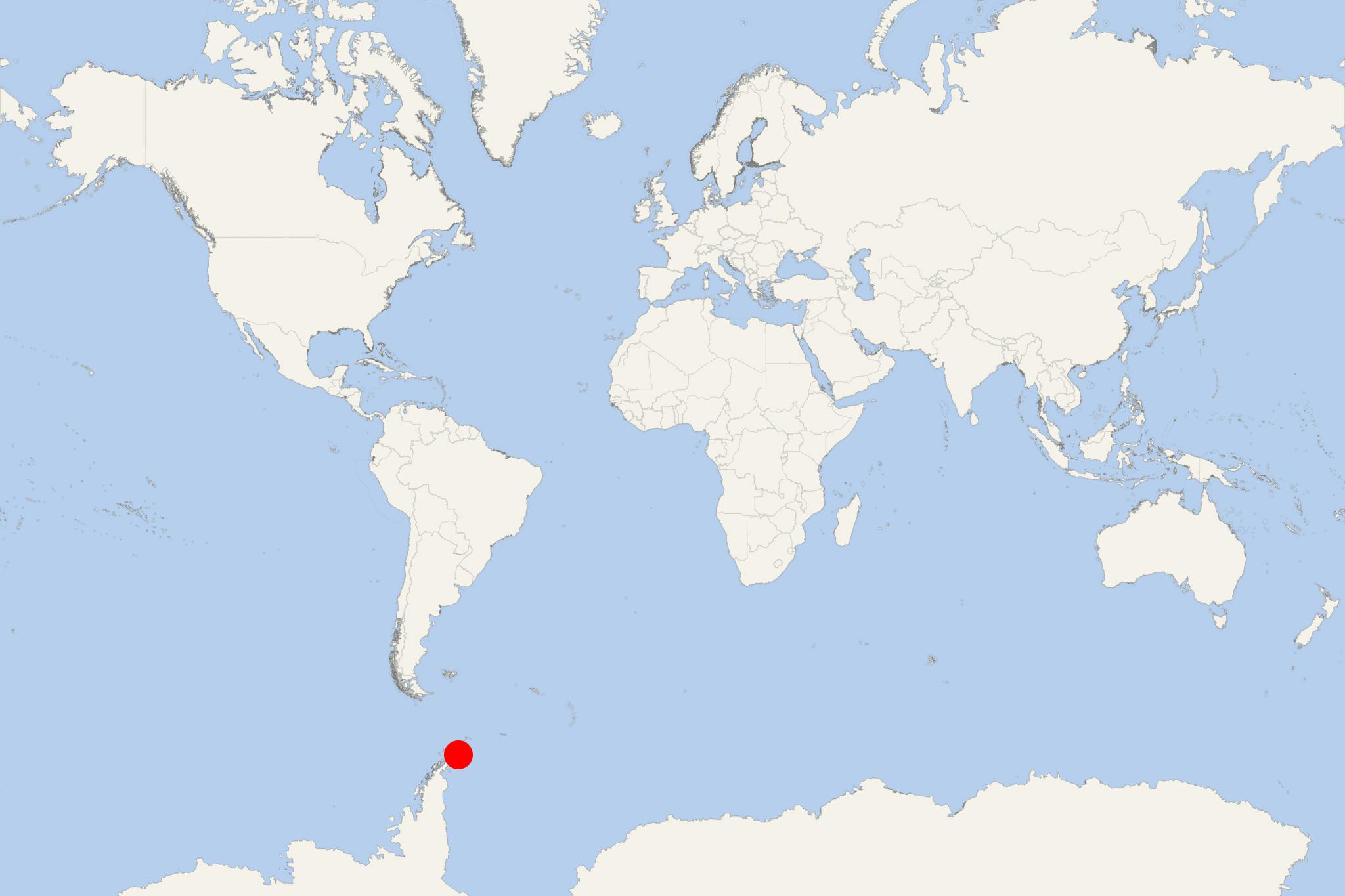
The Antarctic Peninsula is Antarctica's mainland's northernmost part, located at the base of the Southern Hemisphere. It is the largest, most prominent peninsula in Antarctica, extending 800 mi (1300 km) from a line between Cape Adams (Weddell Sea) and a mainland point south of the Eklund Islands.
Under the ice sheet covering it, the Antarctic Peninsula consists of bedrock islands, separated by deep channels. The bottoms of these channels lie at depths substantially below the current sea level and are joined by a grounded ice sheet. South America's southernmost tip, Tierra del Fuego, lies just about 620 mi (1000 km) away across the Drake Passage.
The Antarctic Peninsula is dotted with research stations. This territory is part of disputed claims by the UK, Argentina, and Chile. None of the claims, however, has international recognition. Under the Antarctic Treaty System, respective countries don't attempt to enforce their claims. Argentina has the most personnel and bases stationed on the Antarctic Peninsula. Tourism to this destination started in the 1950s and most ship-based tourists depart from Ushuaia Argentina.
In May 2019, Members of IAATO (International Association of Antarctica Tour Operators) met in Cape Town (South Africa) and unanimously voted in mandatory measures in order to prevent whale strikes in Antarctic waters. The new measures instruct IAATO members to commit to either a 10-knot (18,5 kph / 11,5 mph) cruising speed limit within the Antarctic Peninsula's geofenced time-area or one extra watchman on the Wheelhouse (Navigation Bridge) to record and monitor whale sightings (during whale mitigation training voyages). These measures are compulsory and took effect on July 1, 2019. Antarctica's cruising season officially starts in October.
The most visited cruise regions combined with Antarctic Peninsula destinations are South Georgia Island (British Antarctic Territory), Falkland Islands UK (Islas Malvinas), South Orkney Islands, South Shetland Islands (including King Goerge Island), cruising in the Ross Sea and Weddell Sea (to access the South Pole), scenic cruising through Beagle Channel (Tierra del Fuego Archipelago, South America).
Most Antarctic itineraries include stops at Port Stanley (East Falkland Island), Neko Harbor and Paradise Bay (both in Graham Land, Antarctic Peninsula), Port Lockroy (on Wiencke Island). In South Georgia, polar cruise ships usually stop at Stromness, Grytviken, Gold Harbour, St Andrew's Bay, Newark Bay, and King Haakon Bay.
What to Expect
The Antarctic Peninsula is not a conventional cruise port. There is no central terminal, passenger exit or independent transport network. Ships anchor or remain offshore, and expedition vessels use Zodiac boats for supervised landings and small-boat cruises.
Independent sightseeing is not possible. All activities are arranged and controlled by the ship’s expedition team. Conventional cruise ships may offer scenic cruising without putting passengers ashore, while expedition ships generally plan landings and Zodiac outings when conditions permit.
Weather, wind, sea ice, wildlife activity and landing-site capacity can change the day’s program at short notice. A scheduled location should therefore be treated as an intended operating area rather than a guaranteed stop.
Best Ways to Experience the Peninsula
Join a Guided Shore Landing
Landings may visit a penguin colony, historic site, research-station area or scenic beach surrounded by glaciers and mountains. Passengers normally travel ashore by Zodiac and follow marked or staff-supervised routes.
Most visits involve uneven snow, ice, loose rock, wet beaches and potentially slippery boarding points. Depending on the site, walking may range from a short level circuit to a steeper climb toward a viewpoint. Follow the expedition team’s instructions and return to the Zodiac at the assigned time.
Take a Zodiac Cruise
A small-boat cruise is often the most practical activity where landing is unsafe or environmentally restricted. Typical sights include icebergs, glacier fronts, rocky coastlines, penguins, seals and occasionally whales. These outings require little walking but can be cold, wet and bumpy.
Watch from the Ship
Deck viewing can be rewarding while the ship travels through channels and along glacier-lined coasts. It is also the principal experience aboard cruise-only vessels that do not conduct landings. Keep binoculars, warm layers and a camera accessible because wildlife sightings may occur without much warning.
Join Optional Expedition Activities
Some expedition vessels may offer kayaking, snowshoeing, camping, photography groups or a brief polar plunge. Participation depends on the operator, advance booking, local conditions and passenger ability. These activities cannot be arranged independently after arrival.
Walking Ashore
There is no fixed self-guided walking tour for the Antarctic Peninsula because landing sites vary from voyage to voyage. At each approved site, expedition staff establish the permitted walking area after assessing conditions.
Passengers should remain within marked boundaries, avoid closed areas and use only the route described during the landing briefing. Do not leave the group to explore beyond the supervised site, even if the terrain appears accessible.
Wildlife and Environmental Rules
- Give penguins, seals and other wildlife the right of way.
- Maintain the distance specified by expedition staff and move farther away if an animal changes its behavior.
- Never touch, feed or deliberately approach wildlife.
- Do not remove stones, feathers, bones, plants or historic objects.
- Clean and inspect boots, outer clothing, bags and equipment as directed before every landing to reduce biosecurity risks.
- Do not bring food ashore or leave any waste behind.
Practical Tips
- Follow the daily briefing: Landing place, departure time and activity order may be confirmed only shortly before operations begin.
- Dress for rapid changes: Use waterproof outer layers, insulated clothing, gloves, a warm hat and the expedition boots specified or supplied by the operator.
- Protect electronics: Zodiac spray, snow and wet landings can damage unprotected cameras and phones.
- Assess mobility carefully: Zodiac embarkation, unstable footing and steep or slippery ground can be more demanding than the walking distance suggests. Passengers may usually remain aboard if conditions are unsuitable for them.
- Respect recall instructions: Conditions can deteriorate quickly, and the expedition leader may shorten or cancel an outing. Return immediately when requested.
- Keep expectations flexible: Wildlife sightings, station visits, exact landing sites and the number of daily outings are never guaranteed.
Antarctic Peninsula hotels
- Cruise Industry
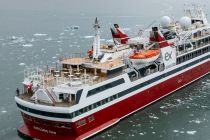
Heritage Expeditions expands global schedule with Heritage Discoverer ship’s maiden 2027–2028 season
The Christchurch, New Zealand-based Heritage Expeditions has unveiled the inaugural 2027–2028 programme for its newest expedition vessel...
July 29, 2026 - Cruise Industry
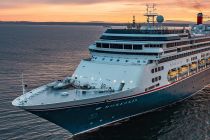
Fred. Olsen Cruise Lines schedules 87-night Amazon & Antarctica Grand Voyage for 2028
The UK-based Fred Olsen Cruise Lines has scheduled an 87-night Grand Voyage combining the Amazon and Antarctica on a single round-trip sailing from...
July 23, 2026 - Cruise Industry
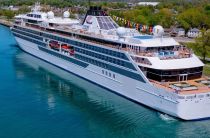
Viking Expeditions cruise schedule 2028–2029 opened for booking
Viking Expeditions has opened reservations for its 2028–2029 voyages, releasing a new series of departures across the Arctic, Antarctica and...
May 8, 2026 - Cruise Industry
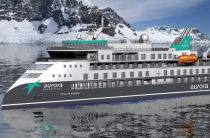
Aurora Expeditions expands Antarctic operations
In the Southern Ocean, the Australia-based company and polar travel brand Aurora Expeditions has completed its largest Antarctic program to date...
May 1, 2026 - Cruise Industry
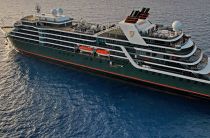
Seabourn schedules expanded 2028–2029 expeditions with pole-to-pole cruise
Seabourn has opened bookings for its 2028–2029 expedition program, presenting an extended series of voyages shaped by increased activity in...
April 24, 2026 - Cruise Industry
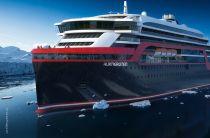
HX Expeditions reports record Antarctica season with expanded operations and scientific output
HX Expeditions has reported that its October 2025 to March 2026 Antarctic season was the most successful in its history, reinforcing its position as...
April 12, 2026 - Cruise Industry
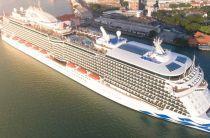
Princess Cruises schedules 2027–2028 South America and Antarctica program
Princess Cruises has introduced its 2027–2028 South America program for Majestic Princess, outlining a series of voyages scheduled between...
March 25, 2026 - Cruise Industry
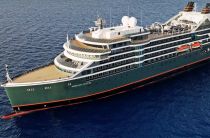
Seabourn Venture boasts new southern milestones during Antarctica Exploration voyage
During the 12-day Antarctica Exploration voyage from January 28th to February 9th, 2026, Seabourn Venture established a series of new southern...
February 8, 2026 - Cruise Industry
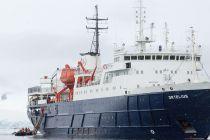
MV Ortelius advances polar cruise record in the Weddell Sea
In early February 2026, the ice-strengthened expedition vessel Ortelius established a new benchmark for the southernmost latitude attained by a non...
February 7, 2026 - Accidents
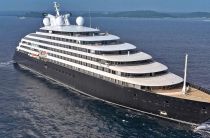
Icebreaker support for Scenic Eclipse II amid shifting pack ice near McMurdo Sound
In the shifting pack ice of Antarctica, the luxury expedition ship Scenic Eclipse II encountered constricted conditions while progressing through...
January 26, 2026 - show more news