

Awendaw SC (South Carolina, Francis Marion Forest)
Cruise Port schedule, live map, terminals, news
Region
East Coast USA and Canada New England
Local Time
2026-10-15 04:29
 71°F
71°F 21.7°C

 Light breeze
2.2 m/s
 89 °F / 32 °C
 67 °F / 20 °C
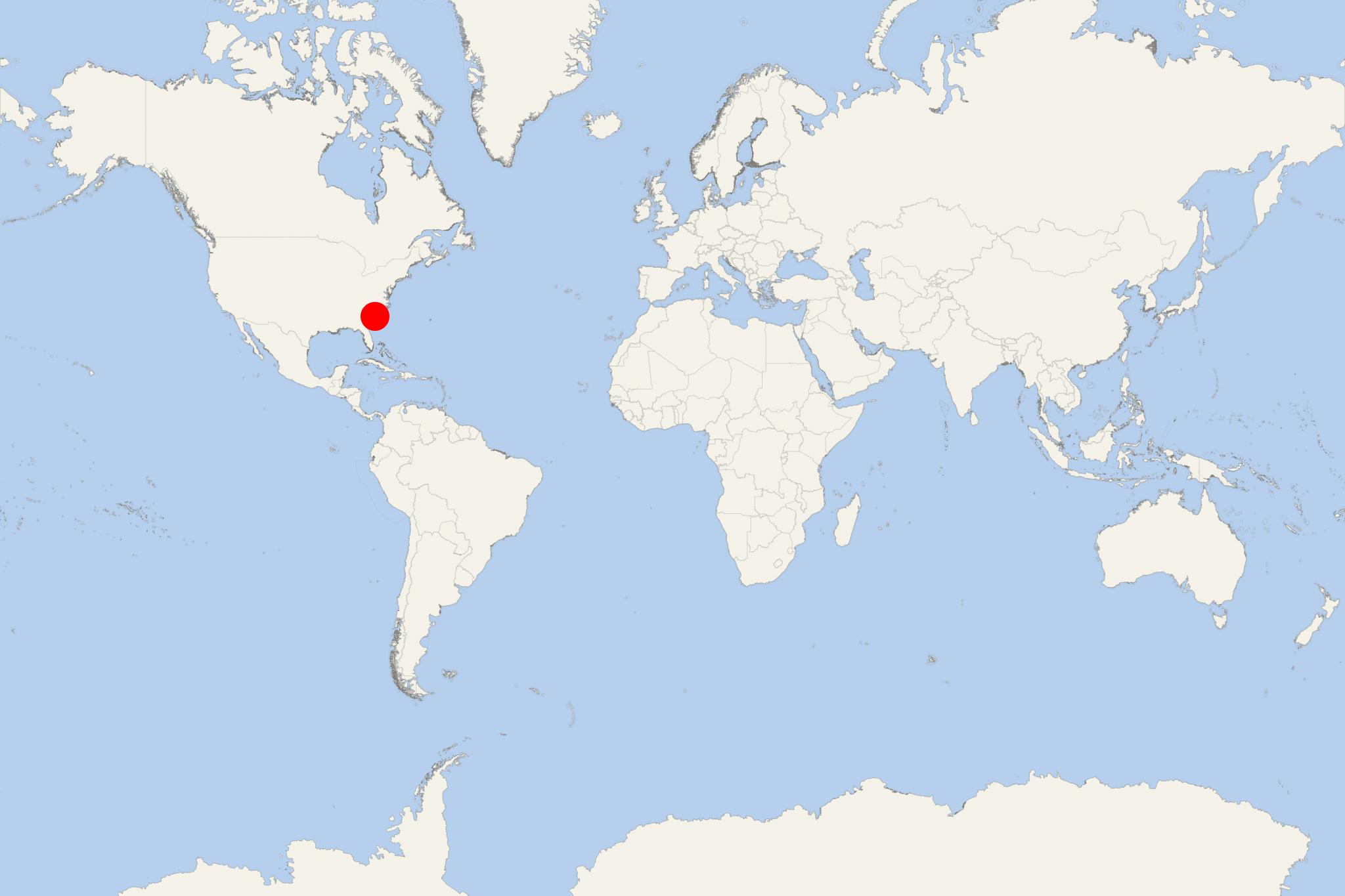
Awendaw SC (port locode USAEN) is a small town in South Carolina USA's Charleston County, with land area approx 10 mi2 (25 km2) and population around 1,500. The town is also part of Charleston Metro and is approx 30 mi (45 km) from Charleston City (state's capital).
The town's economy is largely based on commercial fishing and crabbing. The annual Blue Crab Festival takes place in the summer.
Awendaw is the gateway to Francis Marion National Forest, accessed by cruise ship tourists via bus tours. The National Forest is named after Francis Marion (1732-95, aka Swamp Fox/American military officer acting with the Continental Army and South Carolina militia during the American War of Independence 1775-83). The Park has total area approx 258860 acres (104760 hectares / 1050 km2) and consists of mainly old-growth baldcypress trees. The Park includes four towns (Awendaw, Huger, Jamestown, McClellanville), with four ranger offices in Cordesville.
Unfortunately, Hurricane Hugo in 1989 (September 10-25) nearly destroyed the Park as only the young growth survived. The Park's recreation facilities and amenities include campsites, shooting ranges, boat ramps. Tourist activities include mountain biking/trailing/hiking (Palmetto Trail), off-road ATV and motorcycling (Wambaw Cycle Trailhead), horseback riding, hunting.
As a cruise port, Awendaw was first included in the 2022 schedule of Lindblad Expeditions with the ship National Geographic Sea Lion.
The next table shows the boat's 5-night/6-day itinerary (themed "Wild South Carolina Escape. Beaufort and the Barrier Islands Cruise"), with prices from USD 4000 per person with double occupancy.
| Date / Time | Port |
|---|---|
| Day 1 | Departing from Charleston SC |
| Day 2 | Beaufort, North Carolina |
| Day 3 | St Phillips Island and Edisto Island, South Carolina |
| Day 4 | Cape Romain National Wildlife Refuge |
| Day 5 | Awendaw (bus tour to Francis Marion Park) |
| Day 6 | Arriving in Charleston SC |
The town was named by the indigenous Sewee tribe, Awendaw meaning "Red Clay", Sewee Mound (aka Old Fort/1970-included in the USA's National Register of Historic Places) is near Awendaw and one of 20 prehistoric shell rings along the coasts of South Carolina and Georgia. Having diameter 45 m (149 ft) and height 3 m (10 ft), the Sewee Mound is largely composed of oyster shells and was created by the Sewee Indians.
At a Glance
Organized excursion recommended. Awendaw is a rural expedition destination rather than a conventional cruise port. There is no walk-off passenger terminal or compact sightseeing center beside the ship. Calls are generally arranged for small expedition vessels, with landing and onward transport organized by the cruise operator.
The main attractions are the wetlands, forests and wildlife of Francis Marion National Forest and Cape Romain National Wildlife Refuge. Independent exploration is possible only with prearranged road transport and, for the refuge islands, a reserved boat trip.
Getting Ashore and Around
Landing arrangements can vary with the vessel, itinerary, tides and weather. Follow the ship’s instructions for the exact landing point and whether passengers transfer by expedition craft.
- Walking from the landing: Not a practical sightseeing option. Attractions are dispersed and local roads are not designed as pedestrian routes.
- Ship excursion: Usually the simplest option, particularly for a guided forest visit or nature program.
- Independent transport: A prearranged taxi, rideshare or private driver is advisable. Do not rely on finding transport at a remote landing.
- Public transport: Too limited and time-consuming for a short port call.
Best Ways to Spend the Call
Francis Marion National Forest
The forest is the principal inland excursion from Awendaw. Guided outings may explore longleaf-pine habitat, wetlands and sections of the Palmetto Trail while explaining the area’s wildlife and ecology. Trails are generally low and relatively flat, but surfaces can be muddy, wet or uneven.
Best for: Nature walks, birdwatching and passengers interested in the Lowcountry landscape. An organized excursion is preferable because the recreation sites and trailheads are widely separated.
Sewee Visitor and Environmental Education Center
The Sewee Center introduces the ecosystems of Francis Marion National Forest and Cape Romain National Wildlife Refuge. Its grounds include ponds, a short nature trail and a red-wolf viewing area. Allow approximately 1–2 hours, excluding transfers.
Opening is normally limited to selected days and depends on staff availability, so access should be confirmed before setting out. The outdoor grounds may remain accessible when the building is closed. Bring water and insect repellent.
Cape Romain and Bulls Island
Cape Romain’s barrier islands and estuaries are accessible only by boat. Scheduled trips to Bulls Island normally depart from Garris Landing and include a roughly 30-minute boat journey through tidal creeks. Once ashore, visitors can hike through maritime forest, watch birds and explore undeveloped beaches.
This is not suitable as a spontaneous shore activity. Ferry space must be reserved, schedules vary seasonally, and the entire outing must fit comfortably within the ship’s landing and departure times. A cruise-organized visit is the safest choice when offered.
Short Nature Visit at Garris Landing
Passengers with arranged road transport can visit the public pier at Garris Landing for views across Sewee Bay, birdwatching and photography without taking a ferry. This is a modest stop rather than a full-day attraction, but it can work well when boat schedules do not match the port call.
Walking and Hiking
There is no useful self-guided walking tour from the cruise landing. Hiking should begin at an established trailhead reached by arranged transport.
Sewee Center Nature Walk
- Begin at the Sewee Center parking and information area.
- Follow the nature trail toward Sewee Pond.
- Pause at the pond and wetland observation areas.
- Continue past the red-wolf enclosure.
- Complete the loop back to the visitor center.
The loop is approximately 1.6 km (1.0 mi), with about 25–35 minutes of pure walking. Allow 1–1.5 hours with wildlife viewing and exhibits. The route is mostly level but may be damp, and mosquitoes and other biting insects can be troublesome.
Bulls Island Nature Walk
After arriving by reserved ferry, visitors can combine the island’s unpaved roads and marked trails with a walk to the beach. The 3.2 km (2.0 mi) Turkey Walk Trail passes salt marsh, freshwater impoundments and maritime forest before connecting with Beach Road. Allow at least 2–3 hours ashore for an unhurried visit.
Conditions are flat but rustic, with heat, soft ground, insects and little shelter. Carry drinking water, wear closed walking shoes and remain well clear of alligators and other wildlife. Return to the dock well before the ferry’s stated boarding time.
Practical Tips
- Wear lightweight outdoor clothing, sturdy shoes and sun protection.
- Carry water and insect repellent; services are limited away from the main roads.
- Expect heat, humidity, mosquitoes and muddy trails during warmer or wetter periods.
- Respect temporary beach and island closures protecting nesting birds and sea turtles.
- Do not approach or feed alligators, red wolves or other wildlife.
- Charleston is roughly 47 km (29.2 mi) away by road and ordinarily requires about 40 minutes each way without delays. It is not the best independent choice from an expedition landing unless transport and ample time have been arranged.
- Allow a generous return margin because remote transfers, boat operations, tides and weather can affect timing.