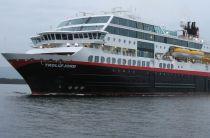
Bjornoya-Bear Island (Svalbard Norway)
Cruise Port schedule, live map, terminals, news
Region
Baltic - Norwegian Fjords - Russia
Local Time
2026-09-11 02:30
6.3°C
4.5 m/s
43 °F / 6 °C
Port Bjornoya-Bear Island cruise ship schedule shows timetable calendars of all arrival and departure dates by month. The port's schedule lists all ships (in links) with cruises going to or leaving from Bjornoya-Bear Island, Svalbard Norway. To see the full itineraries (ports of call dates and arrival / departure times) and their lowest rates – just follow the corresponding ship-link.
| Day | Ship | Arrival | Departure |
|---|---|---|---|
| 22 October, 2026 Thursday | |||
| 26 October, 2026 Monday |
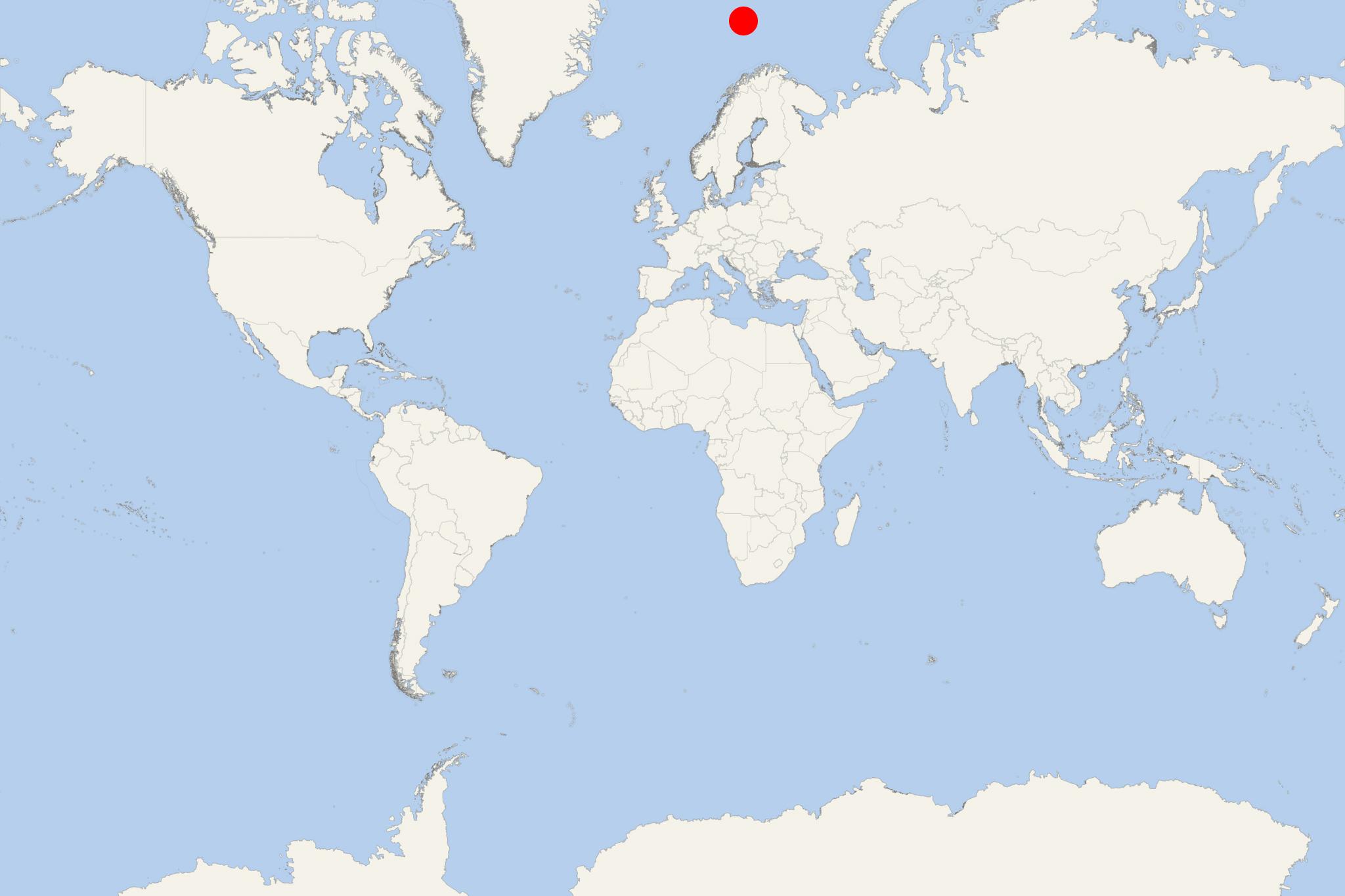
Bjornoya (aka Bear Island) is one of the Lofoten islands group. It was named by the Dutch navigator Willem Barents (1550-1597) in order to commemorate his first sighting of Far North's white polar bears. Bjornoya Island is more like a huge rock in the sea, located between mainland Norway and Spitsbergen Island (Svalbard Archipelago). This is a rather mysterious destination due to the perpetual fog hovering over the rocky shores. While approaching the southern coast, the cliff wall appears like a moving wall of seabirds, with thousands of kittiwakes and murres on the narrow ledges and glaucous gulls breeding at the top.
Cruise passengers to Bear Island can visit the remains of an old whaling station. It was active between 1905-1908 and located in the abandoned mining settlement of Kvalrossbukta (Tunheim). The Arctic and Great Skuas (seabirds) can be seen during a walk across the tundra. Zodiacs (inflatable boats) are used for observation of the colossal tunnels and caves at the foot of the cliffs.
Cruise ships to Bjornoya usually stop at Herwighamna (meteo station, radio station) and Sorhamna Bay (southern Bear Island) from where via Zodiacs passengers explore the cave.
Bjørnøya, or Bear Island, is a remote nature reserve between mainland Norway and Spitsbergen. It has no cruise terminal, settlement, roads, shops or independent transport. Expedition ships normally treat it as a flexible wildlife stop, with any landing or Zodiac cruise determined by wind, swell, visibility, wildlife and environmental restrictions.
At a Glance
- Independent sightseeing: Not practical or recommended.
- Access: By expedition tender or Zodiac; there is no pier for cruise ships.
- Best experience: A ship-operated Zodiac cruise beneath the seabird cliffs.
- Going ashore: Possible only when the expedition team selects and supervises a suitable landing site.
- Main limitations: Exposed coastline, rapidly changing weather, protected wildlife and possible polar-bear presence.
Best Ways to Experience Bjørnøya
Zodiac Cruise Along the Southern Cliffs
The island’s most rewarding excursion is usually a guided small-boat cruise below its high southern cliffs. Passengers may see large colonies of guillemots, kittiwakes and fulmars, together with sea caves, rock pillars and sharply eroded coastal scenery.
There is no fixed route or duration. The expedition team chooses the safest side of the island according to sea conditions and keeps an appropriate distance from nesting birds. Waterproof outer layers and protection for cameras are useful because spray is common.
Supervised Shore Landing
If conditions and local rules permit, the expedition staff may arrange a short landing on one of the more accessible beaches or bays. The experience is generally a guided nature or heritage walk rather than independent exploration.
Possible points of interest include tundra vegetation, driftwood, coastal wildlife and remains associated with earlier hunting, mining or scientific activity. The exact landing place cannot be predicted in advance, and passengers should follow only the route established by the guides.
Wildlife Watching from the Ship
When landing or Zodiac operations are unsafe, viewing from the outer decks may still be worthwhile. The southern coastline offers the most dramatic cliffs and seabird activity, while marine mammals may occasionally be observed offshore. Binoculars and a telephoto lens are useful.
Walking and Terrain
No self-guided walking tour is appropriate on Bjørnøya. There are no maintained visitor trails, signs or public facilities, and landing surfaces may include wet rocks, loose stones, mud or uneven tundra. Even a short shore walk can involve a wet Zodiac landing and difficult footing.
Passengers must remain with the expedition team. Guides manage wildlife distances, route selection and polar-bear safety, and may shorten or cancel the walk at any time.
Practical Tips
- Treat every activity as weather-dependent; cancellation is common at exposed Arctic islands.
- Wear waterproof clothing, warm layers, gloves and sturdy boots suitable for a wet landing.
- Do not approach nesting birds, wildlife, historic remains or scientific installations.
- Remain inside the guides’ marked area and return immediately when instructed.
- There are no visitor toilets, cafés, shops, taxis or other services ashore.
- If the expedition team offers both a landing and a Zodiac cruise, the Zodiac outing usually provides the best view of the cliffs and bird colonies.
Bjornoya-Bear Island hotels
- Cruise Industry

Hurtigruten introduces "Svalbard Express” and “North Cape Express" cruiseferry routes in 2023
The Norwegian cruiseferry company Hurtigruten marks its Biggest Product Evolution with two Premium Journeys to be introduced in 2023. The &ldquo...
June 19, 2022 - show more news