

Casablanca (Marrakesh, Morocco)
Cruise Port schedule, live map, terminals, news
Region
Mediterranean - Black Sea
Local Time
2026-09-23 20:52
 75°F
75°F 24°C

 Light breeze
2.7 m/s
 91 °F / 33 °C
 71 °F / 22 °C
Port Casablanca cruise ship schedule shows timetable calendars of all arrival and departure dates by month. The port's schedule lists all ships (in links) with cruises going to or leaving from Casablanca, Marrakesh, Morocco. To see the full itineraries (ports of call dates and arrival / departure times) and their lowest rates – just follow the corresponding ship-link.
| Day | Ship | Arrival | Departure |
|---|---|---|---|
| 17 June, 2026 Wednesday |  Crown Princess Crown Princess | 07:00 | 20:00 |
| 22 June, 2026 Monday |  Arcadia Arcadia |
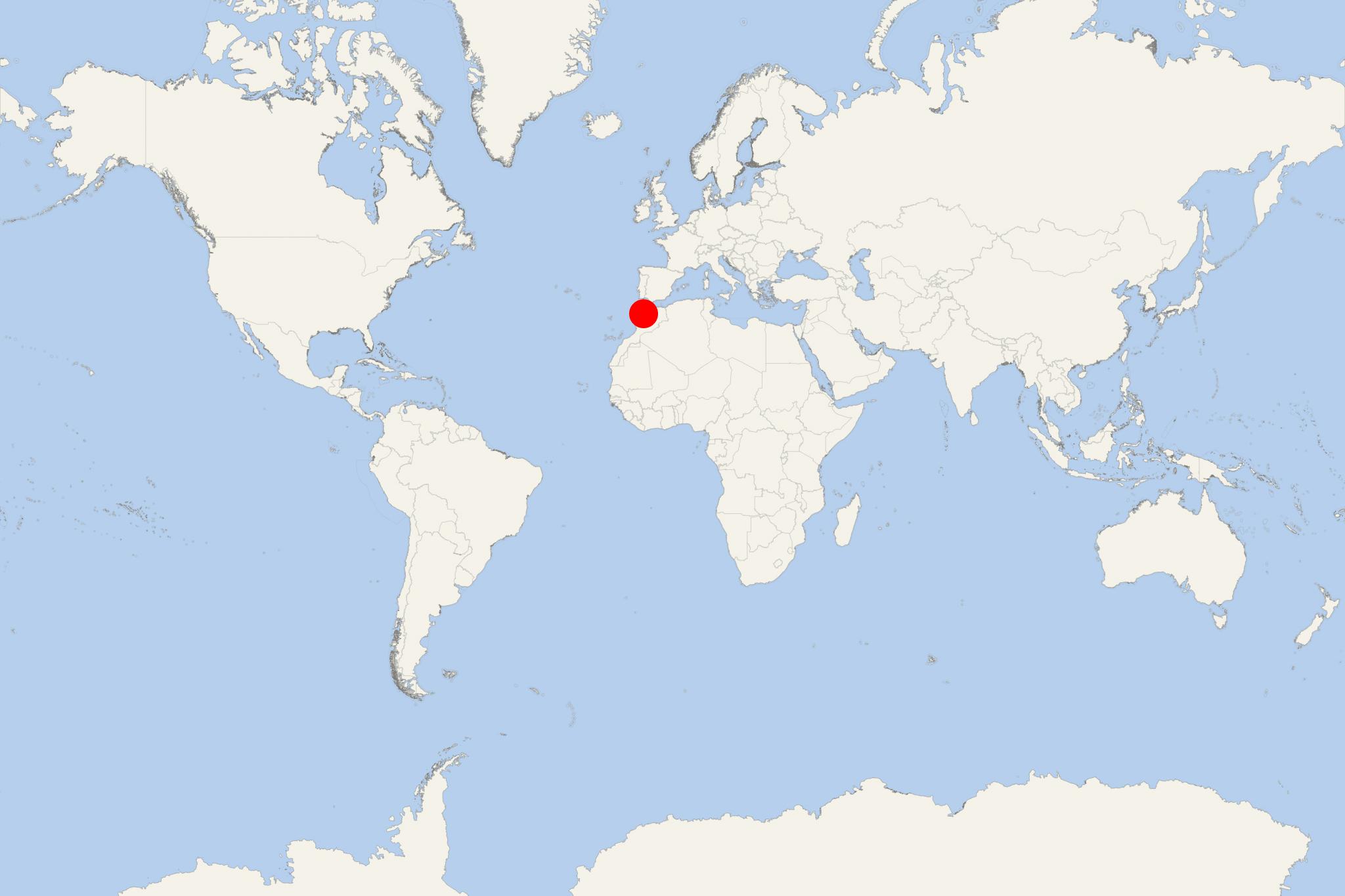
Casablanca (port locode MACAS) is Morocco's principal/largest port and city, with population over 3,36 million (metro over 2,3 million). This is also Morocco's biggest industrial center. Port Casablanca is located on the Atlantic Ocean and is one of the world's largest man-made ports. This is also the cruise port to Marrakesh/Marrakech (Morocco's 4th-largest city and Marrakesh-Safi region's capital).
In 2023, Casablanca Cruise Port underwent an infrastructure development. By the EUR 60 million project was constructed a new cruise ship dock/pier, a new cruise terminal and a maritime station. Now the cruise port can accommodate the world's largest cruise ships (with max LOA length 350 m/1148 ft) and has an annual capacity to handle max 400,000 tourists.
In April 2024, GPH/Global Ports Holding Plc (2003-founded, UK-based corporation ranked the world's largest cruise port management company), through its consortium (a joint venture of GPH and Steya & Ocean Infrastructures Management Co), was awarded the preferred bidder for the 15-year concession of Casablanca Cruise Port's new terminal.
The consortium (in which GPH has 51% stake) and ANP (Agence Nationale des Ports/Morocco's National Ports Agency) signed the concession agreement in October 2025, with operations beginning in January 2026. The new cruise terminal was inaugurated on September 18th, 2025. ANP invested ~EUR 72 million in the terminal infrastructure development.
Even though it has a history going back several centuries and was colonized by the Portuguese until 1755, it declined insignificantly by the mid-1880s. The Renaissance came with the French protectorate under the first resident general, Lyautey. He decided to establish Casablanca as the administrative center of the new protectorate. Lyautey gave Casablanca its public parks, fountains, wide boulevards, and imposing Mauresque civic buildings. Don't miss the Hassan II Mosque, gleaming, white medium high-rise 1930s architecture, many Art-Deco touches, and pedestrian precincts thronged with fashion-conscious young people. From here, tourists can visit the Imperial City of Rabat, and the fantastic Marrakech is within reach.
Casablanca is the most cosmopolitan of Morocco's cities, with a palpably French mood, but reflecting the paradox at Morocco's heart - its unique fusion of modern and ancient, of Arabia, Africa and Europe. The beguiling Casablanca of Bogart and Bergman may be no more, but you'll still find endless enigmas here amid vibrant bazaars and busy boulevards.
Casablanca cruise terminal
Until 2025, the Port of Casablanca had no dedicated cruise ship terminal facilities at its docking pier.
The inaugurated on Sept 18, 2025, new cruise terminal features a 650-m/2133-ft long quay, 3 passenger boarding bridges, coach parking (capacity 44 vehicles) and a maritime station. The terminal can handle the world's largest cruise vessels (with max LOA length 350 m/1148 ft) and has annual passenger capacity of 450,000+.
The distance from the terminal to downtown is approx 1 km (0,07 mi).
The port provides free of charge shuttle buses for passenger transportation from the terminal to the city center.
Casablanca is best approached as a city sightseeing port rather than a beach stop. The Hassan II Mosque is the essential landmark, while the Old Medina, central Art Deco district and Habous Quarter can be combined during a typical full-day call.
Independent sightseeing with some planning or transport. Central Casablanca is reasonably walkable once reached, but the cruise terminal is inside a large working port and the main sights are spread across the city. A shuttle or taxi is normally the practical way to leave the port.
Getting from the Cruise Port
Cruise ships dock at the dedicated terminal on the Jetée Moulay Youssef platform. Ships normally berth alongside rather than tendering, although operational arrangements can change.
- Shuttle: Cruise lines may provide transport from the terminal to central Casablanca. Confirm the drop-off point and final return time onboard; United Nations Square is a convenient central stop when used.
- Taxi: The most flexible option for the Hassan II Mosque, Habous Quarter and Corniche. Agree on the destination and fare before departure unless the meter is being used.
- Walking: Although the city is close geographically, walking through or around the working port is inconvenient and depends on the permitted passenger exit. Do not plan the day around walking directly from the ship.
Casablanca traffic can be slow, particularly during weekday rush periods. Allow extra time when returning from Habous, the Corniche or any destination outside the center.
Best Ways to Spend the Call
Hassan II Mosque and the Old Medina
Allow about 3–4 hours for Casablanca’s principal sights. Take a taxi or ship shuttle toward the Hassan II Mosque, which stands directly beside the Atlantic. Non-Muslim visitors may enter the prayer hall only during designated guided visits, so check the current tour times before leaving the ship. Clothing should cover shoulders and knees.
After the mosque, continue along the waterfront toward the Old Medina. Its compact lanes offer markets, small shops and everyday street life, but the area is less monumental than the medinas of Fez or Marrakech. United Nations Square lies beside its southeastern edge and is a practical place to find onward transport.
Central Casablanca and Its Art Deco Streets
Allow 2–3 hours for United Nations Square, Mohammed V Square, the streets around Boulevard Mohammed V and Arab League Park. This area is suitable for independent exploration and offers the clearest view of Casablanca’s mixture of early 20th-century European and Moroccan architecture.
The Central Market can be added when open. Pavements are generally manageable, but major road crossings require care and traffic is persistent.
Habous Quarter
Habous, also called the New Medina, is approximately 5 km (3.1 mi) southeast of the central waterfront and is best reached by taxi. Allow 1.5–2 hours for its arcaded streets, craft shops, food stalls and the exterior of the Royal Palace area. Mahkama du Pacha is nearby, but interior access is not consistently available and should not be assumed.
This is a calmer and easier shopping area than the Old Medina. Combining Habous with the mosque and central district usually requires a taxi tour, private driver or organized excursion.
Corniche and Atlantic Coast
Aïn Diab and the Corniche are appropriate for a scenic drive, seaside lunch or promenade rather than a quick visit on foot from the port. The main Corniche area is roughly 8–10 km (5.0–6.2 mi) from the cruise terminal, depending on the destination. Use a taxi and arrange the return carefully.
The coast is exposed to Atlantic surf, and many swimming facilities belong to private beach clubs. For a short call, the mosque waterfront provides a more convenient coastal experience.
Self-Guided City Walk
Hassan II Mosque to Central Casablanca
Distance: approximately 4 km (2.5 mi)
Pure walking time: about 55–65 minutes
Recommended total time: 3–4 hours
Difficulty: Easy to moderate; mostly level, but with busy crossings, uneven paving and crowded market lanes.
- Hassan II Mosque: Arrive by taxi and allow time for the exterior, waterfront and a guided interior visit if its schedule matches the port call.
- Atlantic waterfront: Follow the coast toward the city, keeping to established pedestrian routes.
- Rick’s Café exterior: Pass the film-inspired restaurant near the Old Medina; dining generally requires more time and advance planning.
- Old Medina: Enter the market lanes and continue generally southeast. Use an offline map because the narrow streets can be confusing.
- United Nations Square: Pause at the boundary between the old quarter and modern center.
- Boulevard Mohammed V: Continue through the central commercial district and look for its Art Deco and neo-Moorish façades.
- Mohammed V Square: Finish among the city’s principal civic buildings.
- Arab League Park: Add a short park circuit if time permits.
Return by taxi or from the cruise-line shuttle point rather than walking back through the port. Verify the pickup location before beginning the route.
Excursions Beyond Central Casablanca
A guided city excursion is useful for passengers who want to combine the mosque, central district, Habous and the Corniche without negotiating several taxis. It is especially sensible when the mosque’s visitor schedule leaves little flexibility.
Rabat can be considered during a long port call, but the journey normally takes about 1–1.5 hours each way by road or train, excluding transfers and waiting time. An organized excursion or carefully planned independent rail trip is preferable.
Marrakech is around 240 km (149.1 mi) from Casablanca and consumes several hours in travel each way. It is not a sensible independent choice for an ordinary port call; consider it only on a long ship-operated excursion with protected return arrangements.
Practical Tips
- Carry the ship’s contact details and the exact cruise terminal information for the return journey.
- Confirm taxi fares before departure and keep small-denomination Moroccan dirhams available.
- Use an offline map in the Old Medina and watch for pickpocketing in crowded areas.
- Do not rely on entering mosques, palaces or administrative buildings without confirming visitor access.
- Allow at least 60–90 minutes between finishing independent sightseeing and the ship’s all-aboard time, with more time during heavy traffic.
Casablanca hotels
- Cruise Industry
Explora Journeys unveils 2 new Journey Collections for Winter 2027–2028
Explora Journeys has announced two new Journey Collections/ship deployments for the Northern Winter 2027–2028 season. EXPLORA I is scheduled to...
September 18, 2026 - Cruise Industry
Explora II ship to remain in the Mediterranean for Winter 2026-2027
Explora Journeys has announced that Explora II will remain deployed in the Mediterranean throughout the 2026-2027 winter season, marking the first...
June 16, 2026 - Cruise Industry
Explora Journeys opens bookings for EXPLORA II ship's winter 2026-2027 Mediterranean cruises
Explora Journeys has opened reservations for the “A Serene Mediterranean” winter 2026–2027 schedule for the EXPLORA II ship, along...
May 26, 2026 - Cruise Industry
Explora Journeys schedules winter 2026-2027 Mediterranean itineraries for ship EXPLORA II
Explora Journeys has presented a new seasonal deployment titled A Mediterranean Winter, which will see the vessel EXPLORA II operating exclusively in...
April 5, 2026 - Cruise Industry
Princess Cruises unveils 115-day 2028 World Cruise (ship Coral Princess)
Princess Cruises has announced plans for its 2028 World Cruise, a 115-day global voyage to be operated by the Coral Princess. The itinerary will...
March 11, 2026 - Cruise Industry
GPH secures 15-year concession for Casablanca Cruise Terminal
Global Ports Holding (GPH) has signed a 15-year concession agreement with Agence Nationale des Ports (ANP) of Morocco to operate the newly...
October 22, 2025 - Cruise Industry
P&O Cruises unveils Winter 2027–Spring 2028 programme
P&O Cruises announced its forthcoming cruise programme for the winter 2027 through spring 2028, introducing new itineraries, ports of call, and...
October 16, 2025 - Cruise Industry
Swan Hellenic unveils 2026 West Africa Grand Voyages
Swan Hellenic has announced two comprehensive West African Grand Voyages for 2026, offering in-depth exploration along the continent's Atlantic/East...
April 11, 2025 - Cruise Industry
Viking OCEAN announces World Cruises for 2026-2027
Viking OCEAN planned four world voyages for 2026-2027, inclusive of business class flights and land transfers. Passengers booking before March 31st...
February 3, 2025 - Cruise Industry
P&O Cruises UK unveils 2026-2027 winter itineraries with 100+ global destinations
P&O Cruises has unveiled its winter 2026-2027 programme, offering voyages to 100+ distinct destinations. Notably, the schedule introduces two new...
October 16, 2024 - show more news