

Chongqing (China)
Cruise Port schedule, live map, terminals, news
 64°F
64°F 
 Very Light
Port Chongqing cruise ship schedule shows timetable calendars of all arrival and departure dates by month. The port's schedule lists all ships (in links) with cruises going to or leaving from Chongqing, China. To see the full itineraries (ports of call dates and arrival / departure times) and their lowest rates – just follow the corresponding ship-link.
| Day | Ship | Arrival | Departure |
|---|---|---|---|
| 8 June, 2027 Tuesday |  Century Legend Century Legend |
Chongqing is an embarkation / disembarkation port for Yangtze River cruises between Wuhan and Chongqing. These China river cruise deals are usually inclusive of internal flights between Beijing-Xian-Chongqing and between Shanghai-Wuhan. Lhasa Tibet is visited on 13-15-day Yangtze River cruisetours with flights from Xian to Lhasa, then return flights from Lhasa to Chongqing.
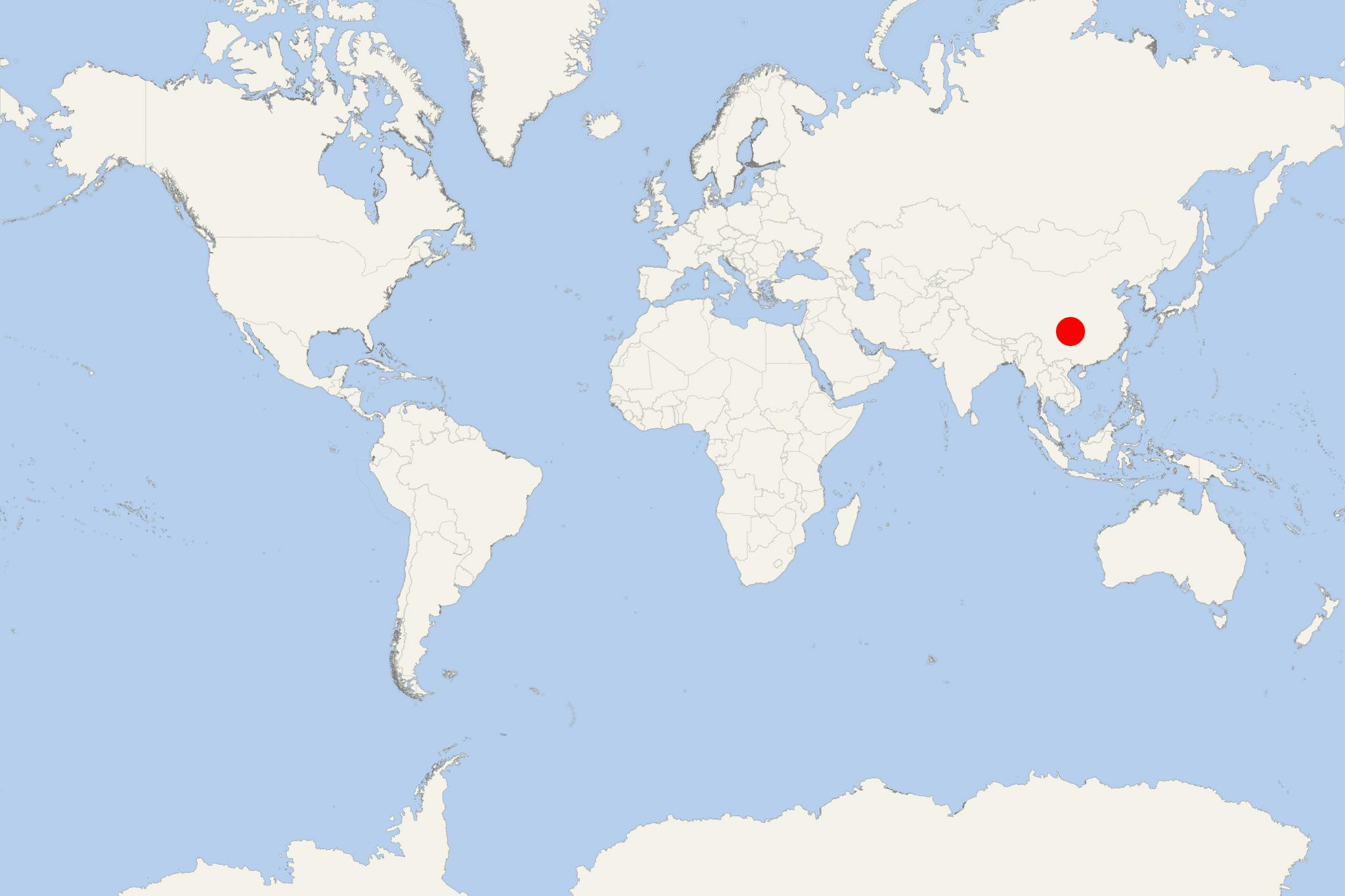
Chongqing is one of the Southwest China's major cities. Administratively, it's one of the 4 direct-controlled municipalities (together with Beijing, Shanghai and Tianjin). The Chongqing municipality was created in 1997 succeeding the sub-provincial administration (part of the Sichuan Province). The municipality has a population of over 30 million, with urban population of around 19 million. The city's population is around 9 million. The total urban area of Chongqing is 5,472.8 km2 (2,113.1 ml2).
The official abbreviation of Chongqing city, Yu, was approved on April 18, 1997 by the State Council. The abbreviation is derived from an old name of part of Jialing River which runs through Chongqing and feeds into Yangtze River. Chongqing city was also a municipality of the ROC (Republic of China) administration. During the Second Sino-Japanese War (1937–1945) it served as its wartime capital.
Chongqing features a significant history and culture and is also the economic centre of upstream Yangtze basin. It is an important manufacturing centre and transportation hub. In 2012, Chongqing was described as one of China's "13 emerging megacities" by the Economist Intelligence Unit.
Chongqing cruise terminal
According to the Yangtze River cruise itinerary route, passengers board the ships docked at either Yichang-Chongqing or Shanghai-Chongqing terminals.
Chongqing Chaotianmen Cruise Terminal
Chaotianmen Cruise Terminal is located at the junction of Jialing River with Yangtze River. All Yangtze-based cruise ships are anchored at this terminal, regardless departing or arriving from/in Chongqing. Sometimes, in dry season, due to low river levels some boats can't dock at the Chaotianmen terminal. Then they are berthed either at the Fuling Wharf or at the Fengdu Wharf - both located outside Chongqing. In such cases, cruise companies provide shuttle buses to transfer their passengers between the wharf and Chongqing.
Yichang Cruise Terminal
The Yichang cruise ship terminal has 2 main wharves used for docking of Yangtze cruise boats. These are the Taohuacun Wharf and the New Century Wharf. During flood season (or in cases when the waterway is controlled), the ships are docked at the Maoping Wharf.
The Taohuacun Wharf is located at approx 36 km from the Yichang Airport and approx 19 km from the Yichang East Railway Station. All boats berthed here are managed by the Changjiang Cruise Overseas Travel Company.
The New Century Wharf is approx 38 km away from the Yichang Airport, and approx 23 km from the Yichang East Railway Station. Here are berthed all other Yangtze River based cruise boats (excepting those managed by the Changjiang Cruise Overseas Travel Company).
Shanghai Wusong Wharf
Shanghai Wusong Wharf is located in Shanghai City's Baoshan District (at Chenghua Road, number 271, Wusong Passenger Centre). This cruise ship terminal is used only by Yangtze ships operating on the Shanghai-Chongqing itinerary route.
Chongqing is primarily the embarkation or disembarkation point for multi-day Yangtze River cruises rather than a conventional ocean-cruise call. Chaotianmen Port is in the central Yuzhong district, close to several major sights, but Chongqing’s steep terrain, layered streets and heavy traffic make distances more demanding than they appear.
Independent sightseeing with some planning or transport. The Chaotianmen riverfront, Jiefangbei and Hongya Cave can be explored independently. Use the metro or a taxi for sights farther west, and choose an organized tour for destinations outside central Chongqing.
Getting from the Cruise Port
Yangtze cruise vessels normally use one of several numbered piers around Chaotianmen, near the meeting point of the Yangtze and Jialing rivers. The precise pier can change according to the ship and river level, so confirm the number with the cruise operator before setting out or returning.
- Walking: Central sights are nearby, but reaching street level from some piers involves long ramps, steps or uphill passages. Allow more time when carrying luggage.
- Metro: Chaotianmen station on Line 1 serves the port district. Xiaoshizi station, served by Lines 1 and 6, is useful for Hongya Cave, Jiefangbei and the northern cableway station.
- Taxi or ride-hailing: Usually the simplest option for luggage or limited time. Keep the attraction name, port name and exact pier number written in Chinese.
- Possible port change: When river conditions prevent normal operations, cruise companies may use another port, such as Fengdu, with a coach transfer. Follow the instructions issued for the individual sailing rather than travelling independently to Chaotianmen.
Best Ways to Spend Your Time
Chaotianmen and the Central Riverfront
Allow 45–90 minutes to see the confluence of the two rivers, the city skyline and the Chaotianmen waterfront. This is the easiest option before embarkation or after disembarkation, although the exact walking distance depends on the assigned pier.
Jiefangbei and Hongya Cave
Allow 2–3 hours for Chongqing’s most practical independent city visit. Jiefangbei is a busy pedestrian shopping and dining district uphill from the port. Hongya Cave is a large contemporary commercial complex built vertically against the riverside cliff; its upper and lower entrances open onto different streets.
The three areas are close enough to combine on foot, but expect slopes, steps, crowded lifts and confusing changes of level. Hongya Cave is particularly busy in the evening. If returning by taxi, arrange collection away from the congested lower riverside entrance.
Yangtze River Cableway
The cableway provides a short aerial crossing of the Yangtze and views over the dense riverside city. Its northern station is near Xiaoshizi, approximately 2 km (1.2 mi) from Chaotianmen. Allow about 1.5–2.5 hours including travel and possible queues. Treat it as optional during a short call because waiting times can be substantial, especially on weekends and holidays.
Liziba Monorail and Central Chongqing
Liziba station, where Line 2 passes through a high-rise building, is best reached by metro or taxi. Combine the public viewing area with a Line 2 ride and, if time permits, Eling Park or another central viewpoint. Allow 3–4 hours from Chaotianmen. This is practical independently but should not be combined with too many other sights.
Ciqikou or an Out-of-City Excursion
Ciqikou Ancient Town is a longer urban outing requiring the metro or a taxi and at least half a day. Dazu Rock Carvings and the Wulong Karst landscapes are far outside central Chongqing and consume much of a day in road travel. For cruise passengers, these destinations are sensible only with a long stay and pre-arranged transport; an organized excursion is preferable.
Self-Guided Walking Routes
Easy Riverfront Walk
Route: assigned pier exit – Chaotianmen Square – riverside promenade – river-confluence viewpoints – return to the pier area.
Distance: approximately 1.5–2.5 km (0.9–1.6 mi), depending on the berth. Pure walking time: 30–50 minutes. Recommended total: 1–1.5 hours.
The waterfront sections are generally manageable, but access from the floating piers may include ramps and steps. Confirm the correct return entrance before leaving the port area.
Moderate Old-Centre Circuit
Route: Chaotianmen – Raffles City area – Jiefangbei Pedestrian Street – Liberation Monument – Hongya Cave upper entrance – riverside promenade – Chaotianmen.
Distance: approximately 4 km (2.5 mi). Pure walking time: about 1–1.25 hours. Recommended total: 3–4 hours.
This route includes sustained slopes, stairs and several changes of street level. Enter Hongya Cave from the upper side, descend through the complex if lifts and pedestrian routes are operating normally, and follow the signed waterfront route back toward Chaotianmen. Travellers with limited mobility should use a taxi between the port and Jiefangbei instead.
Practical Tips
- Chongqing is a three-dimensional city: two locations that look adjacent on a map may be separated by a cliff, elevated road or several building levels.
- Use Chinese-language place names and an offline map. English is not consistently spoken by taxi drivers or at smaller businesses.
- Metro travel is usually predictable, while road journeys can be delayed by central-city congestion.
- Heat, humidity and frequent stairs make summer walking tiring. Carry water and allow additional rest time.
- Allow a generous return margin for traffic, finding the correct pier and descending from street level to the vessel. Passengers travelling independently should follow the ship’s stated all-aboard time.
Chongqing hotels
- Cruise Industry
Century Vision ship to debut on Yangtze River cruises in China ahead of global expansion
Century Cruises is preparing to introduce its newest river cruise vessel, Century Vision, on its signature 4-day Yangtze River itineraries between...
July 26, 2026 - Cruise Industry
Vodohod signs strategic partnership agreement to provide direct presence in Asia
Vodohod Russian River Cruises signed on Wednesday, October 21, a strategic partnership agreement with Tam Wing Kun Holdings Ltd to provide the...
October 23, 2020 - Cruise Industry
Swan Hellenic signs with Tam Wing Kun Holdings to provide direct presence in Asia
Swan Hellenic announced it had signed a partnership agreement with Tam Wing Kun Holdings Ltd to provide a direct presence in Asia. Tam Wing Kun...
October 3, 2020 - show more news