

Delfzijl (Netherlands Groningen)
Cruise Port schedule, live map, terminals, news
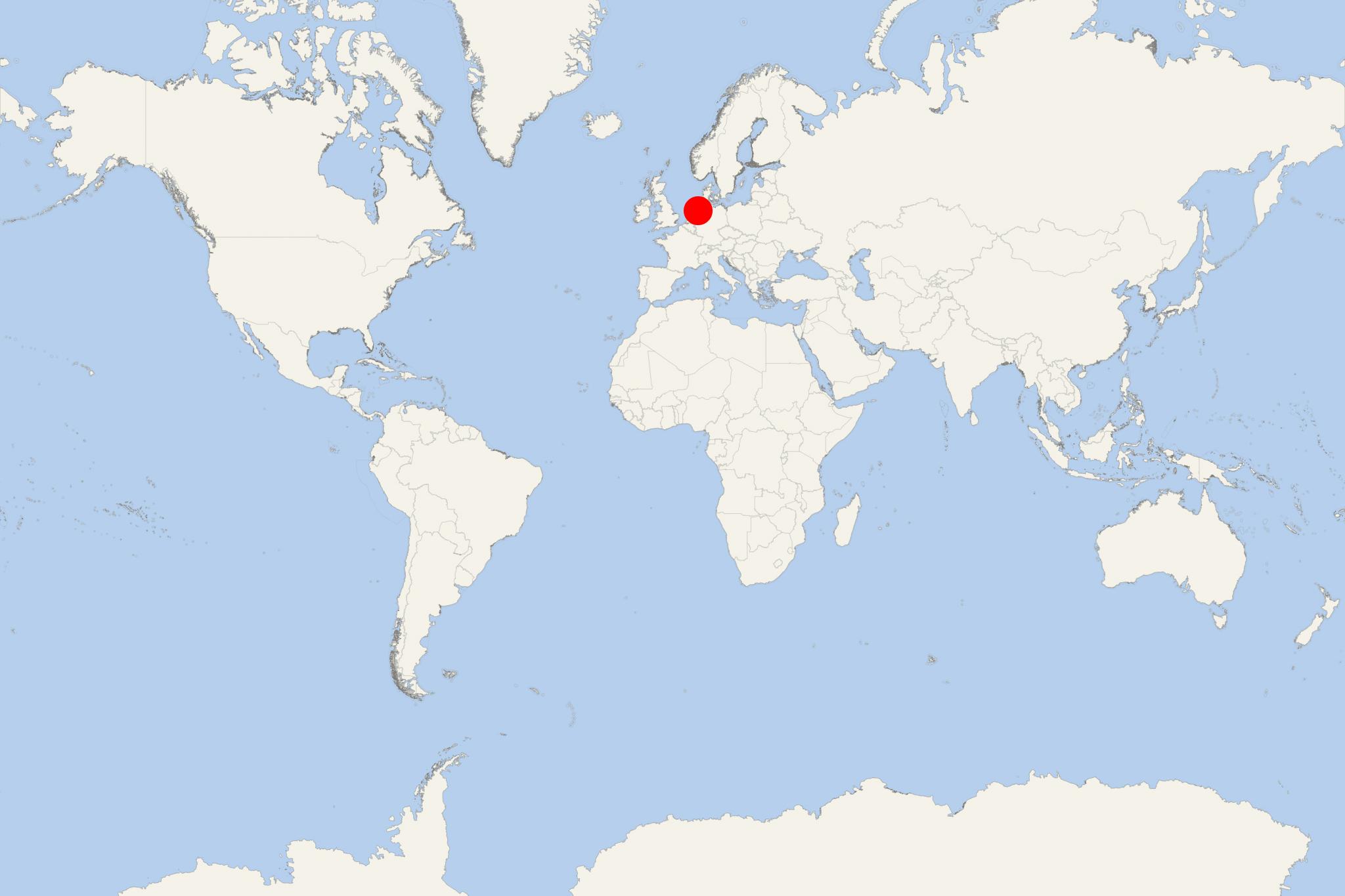
Region
Europe Rivers
Local Time
2026-10-26 15:17
 54°F
12.3°C

 Mod. breeze
6.1 m/s
 56 °F / 14 °C
49 °F / 10 °C
Port Delfzijl cruise ship schedule shows timetable calendars of all arrival and departure dates by month. The port's schedule lists all ships (in links) with cruises going to or leaving from Delfzijl, Netherlands Groningen. To see the full itineraries (ports of call dates and arrival / departure times) and their lowest rates – just follow the corresponding ship-link.
| Day | Ship | Arrival | Departure |
|---|---|---|---|
| 1 June, 2027 Tuesday |  ms Mona Lisa | 18:00 | 18:00 |
Delfzijl (port locode NLDZL) is a major North Sea/Baltic Sea port, river cruise port and city in the Netherlands' Groningen province, with population around 25,000. Port Delfzijl is one of the gateways to Groningen City (the province's capital) - together with Eemshaven.
By annual cargo shipping traffic, Port Delfzijl (locode NLDZL) is ranked Holland's 5th largest seaport - after Rotterdam, Amsterdam, Moerdijk, and Terneuzen. For larger (ocean-going) passenger liners, Delfzijl is the cruise port for Groningen (the province's capital city). Groningen Seaports is the Delfzijl port authority (terminal operator). The company provides all standard port services to its industrial and commercial clients, including tugboat assistance, berthing, logistics, infrastructure, site maintenance.
The settlement was founded around the former sluice (gate-controlled water channel, now part of Damsterdiep) connecting the rivers Ems and Delf. In the 16th-century, Delfzijl became a fortified town, but its fortifications were dismantled in the late-19th-century.
Most major construction works were conducted in late-16th-century when the here were built a square sconce (small protective fortification/earthwork) and a church. Ba late-16th-century, the fortifications were expanded with 6 stone-made bastions (bulwarks). During Kerstvloed 1717 (Christmas Flood of 1717), the town's fortifications and sluices were severely damaged and finally removed in 1875 to free space for the new train station.
The town's economy was based on grain milling, straw-made paper, and clay-made bricks. The current-day town's economy is based on cargo shipping and Aluminium Delfzijl (a plant owned by the Indian corporation Tata Steel Europe Ltd). In 2004, the plant reported record production of 112,400 tons of liquid aluminum and 157,700 tons of raw metal castings.
As cruise port, Delfzijl is regularly included in the schedules of some of Europe's largest river cruise companies - like CroisiEurope, Phoenix Reisen, Nicko Cruises.
Delfzijl offers a manageable local outing combining the town centre, harbour views, a windmill and the seafront. Appingedam is the closest alternative for historic streets and canals; Groningen is a larger city outing requiring more travel time.
Independent with some planning or transport. Local sightseeing is easy on foot once you reach the centre, but the practicality of walking from the ship depends on its berth and the permitted passenger exit. Confirm these before setting off.
Getting from the Cruise Port
Delfzijl has both inner and outer harbour areas. Handelshaven lies near the town centre, but the wider port includes extensive commercial and industrial quays. Do not assume that the port map marker identifies your landing point or that every berth has a direct pedestrian route into town.
Check the ship’s instructions for the gangway location, passenger exit and any arranged transfer. If your vessel is alongside near the centre and walking is permitted, local exploration is straightforward. From a more distant commercial berth, use the transport arranged for your call or book a taxi rather than walking through operational port areas.
Delfzijl railway station is convenient for the town centre. Arriva trains connect with Appingedam and Groningen. Check the day’s timetable and engineering works, and include the journey between the ship and station when calculating your available sightseeing time.
Best Ways to Spend Your Time
Delfzijl centre and seafront
Allow 2–3 hours; easy independently after reaching the centre. Combine the shopping streets around Landstraat with the exterior of Adam windmill, then head to the boulevard and town beach. This is the most flexible choice for a short call, with cafés and opportunities to shorten the walk if the weather deteriorates.
The town is mostly flat, although reaching the elevated seafront involves slopes or steps depending on your route. The waterfront is exposed to wind.
MuzeeAquarium
Allow 1–1.5 hours inside, plus walking or transfer time. Near the beach, this museum combines local maritime and regional exhibits with an aquarium featuring Wadden Sea and North Sea species in a former wartime bunker. It fits easily into a local walk and is a useful option for families or wet weather. Check opening arrangements for your call, particularly if arriving late in the day.
Appingedam’s canals and hanging kitchens
Allow approximately 3 hours including local travel; independent with transport planning. Appingedam offers a compact historic centre with the hanging kitchens above the Damsterdiep, small bridges, the Nicolaïkerk and the old town hall.
Take a short train ride from Delfzijl, followed by roughly 10–15 minutes on foot from Appingedam station to the historic centre, or arrange a taxi. Explore Dijkstraat and Solwerderstraat, viewing the hanging kitchens from Vlintenbrug and Vrouwenbrug. Most of the centre is flat, with some uneven paving and bridge approaches. Check the return service before leaving Delfzijl.
Groningen city outing
Allow at least 5–6 hours ashore; independent with planning, or choose an organized excursion. Groningen is a separate destination, not part of the port-side town. Allow roughly 40 minutes each way by train, or around 35–45 minutes by road depending on the berth and traffic. Station access, waiting and the return margin add to that travel time.
For a focused visit, walk from Groningen station past the Groninger Museum and through Folkingestraat to Vismarkt and Grote Markt. See the Martinitoren from the square, then choose either a museum visit or a longer centre walk. Avoid trying to fit several indoor attractions into the same call. An organized excursion is preferable when the ship’s berth requires a transfer or the available time is tight.
Self-Guided Walking Route
Delfzijl centre, windmill and beach
Start and finish: Delfzijl railway station, or join the route in the centre after your port transfer. Approximate distance: 2.5–3 km (1.6–1.9 mi), excluding the journey from the ship. Pure walking time: 40–50 minutes. Total time: 1.5–2.5 hours, or longer with a museum visit. Difficulty: easy, with slopes or steps at the sea dike.
- Landstraat: Walk into the central shopping area, with cafés suitable for a short stop.
- Molenberg: Continue to Adam windmill for an exterior view; do not depend on interior access.
- Town-side harbour frontage: Look across the harbour from publicly accessible paths, staying outside working quays.
- Boulevard and town beach: Follow the seafront for estuary views and a short beach walk.
- Eemshotel: View the distinctive hotel standing on supports over the water.
- MuzeeAquarium: Visit if time permits, then return towards the station or your agreed transfer meeting point.
Use the ship’s approved route for the final return to the berth. If a transfer is required, finish at its designated pickup point rather than navigating directly towards the vessel’s mapped position.
Practical Tips
- Beach expectations: Delfzijl’s beach is convenient for sand, views and a break beside the water. Swimming depends on weather, tides and current local advice; check posted notices.
- Weather: Bring a windproof layer. The exposed boulevard can feel considerably cooler than the sheltered town streets.
- Choose one main outing: Delfzijl and its museum suit a short call; Appingedam requires a modest transfer; Groningen consumes substantially more time in travel.
- Return margin: For independent train trips, choose a return that leaves a later service as a backup and still allows time to reach the berth before all-aboard. Prearrange taxi pickups where needed.