

Frankfurt an der Oder (Germany Brandenburg)
Cruise Port schedule, live map, terminals, news
Region
Europe Rivers
Local Time
2026-11-17 03:00
 43°F
6.1°C

 Gentle breeze
4.3 m/s
 48 °F / 9 °C
38 °F / 4 °C
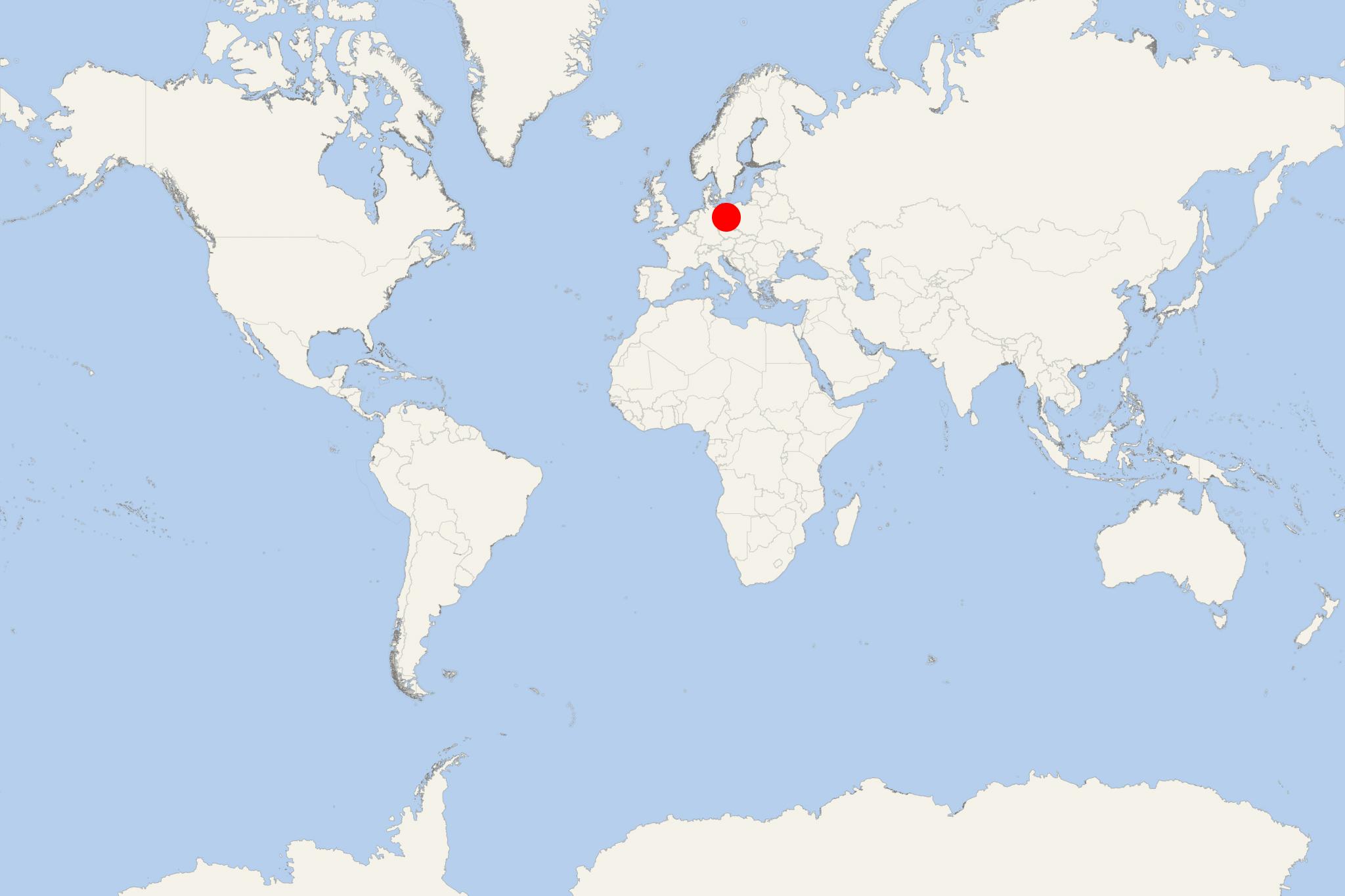
Frankfurt an der Oder is an Oder River cruise port and town in Germany's Brandenburg state (Urban district) with population around 60,000. The town is located approx 80 km (50 mi) to the east of Germany's capital Berlin and on the Germany-Poland border. Until 1945, SÅubice (Poland) was a part of the city. Town's namesake is the large German city Frankfurt am Main (Hesse state, on Main River).
The settlement was established in the early-13th century and initially named Zliwitz (Polish village) and received town status in 1253 (as SÅubice). During the Middle Ages (5th-15th centuries) the town developed via river shipping on the trade route linking Szczecin (river port city located near Baltic Sea) and WrocÅaw (approx 350 km / 220 mi from Baltic Sea). Frankfurt-Oder became a Hanseatic city in 1430 AD.
The current-day city is served by the cross-border railway BWE (Berlin-Warszawa-Express). The service is operated jointly by DB Fernverkehr (Deutsche Bahn) and PKP Intercity (Polish State Railways) and runs four times daily (in each direction). Train travel time between Berlin and Warsaw (Poland's capital and largest city) is 5,5 hours. Trains also connect Frankfurt with Magdeburg and Cottbus (Brandenburg state's 2nd-largest city, on Spree River).
Frankfurt (Oder), on Germany’s border with Poland, suits a relaxed river-cruise stop: the compact center, brick churches and Oder waterfront can be explored on foot. This is Frankfurt on the Oder, not Frankfurt am Main.
Easy independently if your ship uses the central Holzmarkt landing. Add a walk across the Stadtbrücke to Słubice in Poland if time and travel documents allow.
Getting from the Ship
The central passenger landing is beside Holzmarkt on the German riverbank. It has fixed and floating berthing facilities, with shore access rather than a tender trip. Confirm your ship’s actual landing and return point, since river conditions can affect arrangements.
From Holzmarkt, the market square, town hall and St. Mary’s Church are approximately 5–10 minutes away on foot. A shuttle or taxi is generally unnecessary for central sightseeing from this landing. If your itinerary uses another berth or a coach transfer, obtain the precise drop-off and collection details before setting out.
The waterfront is mostly level, but routes into the center can involve slopes, uneven paving or steps. Gangway gradients vary with the river level; passengers with limited mobility should check shore access with the crew.
Best Ways to Spend Your Time
Explore the Market Square and St. Mary’s Church
Allow 1.5–2.5 hours for the central streets, the brick town hall and St. Mary’s Church, whose medieval stained-glass windows are the main interior highlight. The German-Polish Tourist Information in the Bolfrashaus is a useful first stop. This is the simplest independent choice for a short call.
Check church access on the day. If a tower visit is available, treat it as an optional extra involving stairs rather than part of the easy walking route.
Walk Across to Słubice
The Stadtbrücke connects the two town centers and can be crossed on foot. Allow approximately 1.5–2 hours from the German waterfront for a short look around the Polish bridgehead, river views and a café stop, returning across the same bridge.
This is practical independently, but carry a valid passport or other travel document accepted for your nationality and confirm your eligibility to enter Poland. Border checks can delay the crossing. Skip this option if the remaining time ashore is tight.
Choose a Museum Visit
The Kleist Museum near the waterfront focuses on writer Heinrich von Kleist; Museum Viadrina offers an alternative centered on the town’s history. Allow roughly 45–90 minutes for one museum alongside a short city walk.
Check opening arrangements before planning around an interior visit. The Kleist Museum has announced refurbishment closures and reduced access between December 2026 and May 2027.
Take a Riverside Nature Walk
For a quieter outing, follow the Oder promenade south toward Ziegenwerder, an island reached by footbridge with parkland and more natural riverside areas. Allow 1.5–2.5 hours for an unhurried out-and-back walk from the central waterfront, turning around earlier if necessary.
Use accessible, open paths and avoid low-lying sections after flooding. Nature paths can be muddy or uneven. Lennépark offers an alternative green-space visit within the town.
Self-Guided Walking Route
Central Frankfurt and the Oder Waterfront
Start and finish: Holzmarkt passenger landing, if used by your ship. Distance: approximately 2 km (1.2 mi). Walking time: 30–40 minutes. Recommended total: 1.5–2.5 hours, depending on interior visits. Difficulty: easy, with some uneven paving and gentle changes in level.
- Holzmarkt waterfront: identify the ship’s gangway and return access before leaving.
- Museum Viadrina: walk inland to the museum area; choose an interior visit if it interests you and is open.
- Market square and town hall: see the brick façade and surrounding central streets.
- Bolfrashaus: stop at the tourist information for a local map and current access advice.
- St. Mary’s Church: visit the stained-glass windows when accessible.
- Europa-Universität Viadrina: continue past the university’s main building toward the river.
- Kleist Museum: view the historic building or substitute a museum visit for another stop.
- Oder promenade: follow the waterfront north back to Holzmarkt.
For a shorter outing, omit museum interiors and concentrate on the market square, church and waterfront.
Practical Tips
- Use the ship’s all-aboard time to set your turnaround point. Keep additional time for border checks if visiting Słubice.
- Confirm whether the ship remains at the same landing throughout your visit.
- Germany uses euros; Poland uses złoty. Check the currency before paying in Słubice.
- For a short call, local sightseeing is more practical than an independent trip to Berlin. Consider a distant excursion only when the itinerary provides sufficient time and suitable transport.