

Rome City
Cruise Port schedule, live map, terminals, news
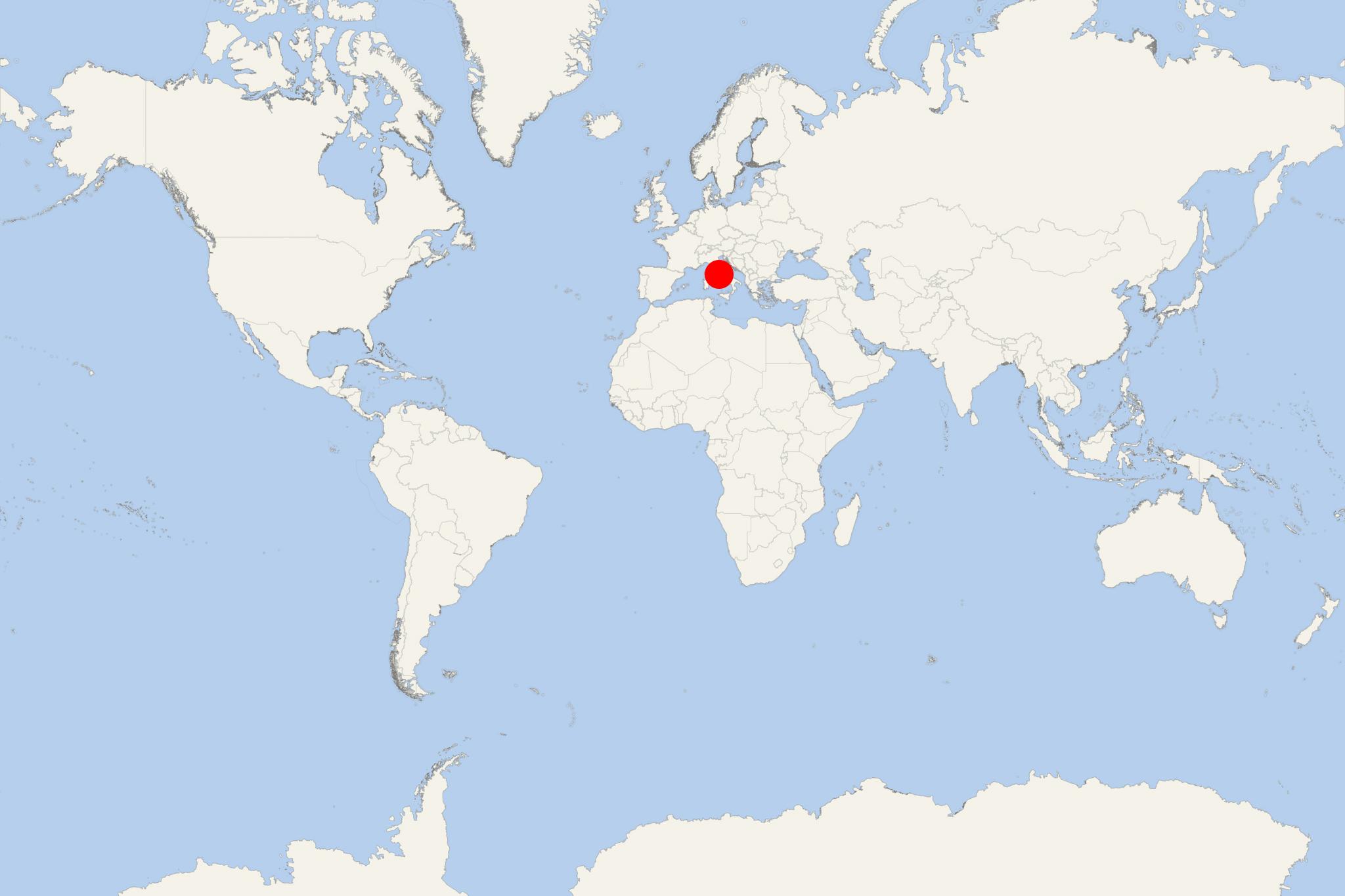
Region
Europe Rivers
Local Time
2026-09-08 23:09
 78°F
78°F 25.3°C

 Light breeze
1.7 m/s
 94 °F / 35 °C
 72 °F / 23 °C
Port Rome City cruise ship schedule shows timetable calendars of all arrival and departure dates by month. The port's schedule lists all ships (in links) with cruises going to or leaving from Rome City. To see the full itineraries (ports of call dates and arrival / departure times) and their lowest rates – just follow the corresponding ship-link.
| Day | Ship | Arrival | Departure |
|---|---|---|---|
| 18 October, 2026 Sunday |  SS La Venezia SS La Venezia | ||
| 19 October, 2026 Monday | SS La Venezia | ||
| 20 October, 2026 Tuesday | SS La Venezia | ||
| 21 October, 2026 Wednesday | SS La Venezia | 01 Jan, 02:00 | |
| 27 October, 2026 Tuesday |  Emerald Azzurra Emerald Azzurra |
Port Civitavecchia is the cruise port to Rome/Roma - Italy's capital and largest city. By population (around 2,9 million, metro around 4,4 million) the city is ranked Europe's 4th largest (by city limits residents) - after London, Berlin and Madrid.
The road distance between Civitavecchia and Rome is 82 km (51 ml), or travel time ~1 hour 15 min.
Regarded as the Western civilization's first metropolis, Rome is ranked (stats 2023) Italy's 1st (10+ million), Europe's 5th (after London, Paris, Istanbul, Antalya) and the world's 17th most-visited by tourists city (the top-5 are Hong Kong, Bangkok, London, Macau, Singapore).
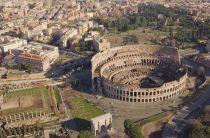
The entire Old Town (Rome'shistoric downtown) is a UNESCO Site. The best known attractions are Vatican City and the Colosseum, both receiving millions of tourists annually.
Metropolitan City of Rome (2015-established) replaced the old province (the entire metro area until Civitavecchia). Rome Metro is Italy's ever largest city, covering an area of 5352 km2 (2066 mi2) and in size comparable to Liguria (Italian Riviera).
The Colosseum is the world's largest amphitheater ever constructed, with capacity around 60,000 seats, Other ancient attractions include Forum Romanum (rectangular plaza), Domus Aurea (landscaped palace), Pantheon (former temple, now church), Trajan's Column and Market, the Catacombs (underground burial places), Circus Maximus (chariot-racing stadium), Caracalla Baths (public thermae), Castel Sant Angelo (in Parco Adriano), Augustus Mausoleum, Ara Pacis Augustae (altar dedicated to Pax / goddess of Peace), Constantine's Arch (between Colosseum and Palatine Hill), Cestius Pyramid (near Porta San Paolo), Bocca della Verità (marble mask).
The city has numerous parks and gardens/villas (Borghese, Ada, Doria Pamphili, Sciarra, Celimontana), fountains, aqueducts, statues, Egyptian and Roman obelisks and columns, bridges (across River Tiber).
The city's economy is based on services related to Italian government institutions (Presidency, Parliament, judicial Courts), foreign embassies, Vatican City State (independent state within Italy), international institutions cultural, scientific, academic, archaeological), political and cultural global organizations. In Rome are headquartered many international corporations and banks. Its business district houses the headquarters of major international companies in the industries of oil and gas, pharmaceuticals, financial services.
The city is recognized as the world's fashion and design capital with many renowned brands having their largest luxury boutiques in the city (Valentino, Bulgari, Fendi, Laura Biagiotti, Brioni, Renato Balestra, Chanel, Prada, Dolce-Gabbana, Armani, Versace). Cinecittà Studios is Italy's largest movie producer. Largest industries include high-tech companies (IT, aerospace, defence, telecom), research and construction companies, banking, tourism. In Rome are the head offices of all major Italian companies, including 3 of the world's top 100 largest companies - Enel (electricity and gas manufacturer and distributor), Eni (oil and gas company) and Telecom Italia.
Rome City is served by Fiumicino Airport (Italy's largest and Europe's 6th largest).
Rome is a gateway destination rather than a walk-off cruise port. Ships normally berth at Civitavecchia, roughly 70 km from central Rome, so a Rome sightseeing day requires a substantial transfer in each direction. Independent visits are practical, but only with careful timing and a generous return margin.
At a Glance
- Independent sightseeing: Independent with some planning or transport.
- Best for: Full or long port calls.
- Main challenge: Around 2–3 hours of the day can be consumed by transfers between Civitavecchia and Rome.
- Organized excursion recommended: If you want to combine several major attractions with timed admission, or if the ship has a relatively early departure.
Getting from the Cruise Port
Cruise ships normally dock alongside in Civitavecchia. Passengers are generally transferred from the cruise berths by the port's free shuttle to Largo della Pace, the main cruise passenger transport area. The shuttle journey can take around 10–15 minutes depending on the berth.
From Largo della Pace, Civitavecchia railway station is approximately 1.5 km away, around 20 minutes on foot. A dedicated cruise-passenger bus also links the port area with the station on cruise days.
Regional trains are usually the most practical independent way to reach Rome. Roma San Pietro, useful for the Vatican, is about 45–50 minutes by train from Civitavecchia. Services to Roma Termini vary considerably by train type and can take roughly 50–80 minutes. Allow additional time for the port shuttle, reaching the station and waiting for the train.
A taxi, private transfer or organized coach can reach Rome in about an hour in light traffic, but congestion can substantially increase the journey. Road transport therefore needs a larger return buffer.
Best Ways to Spend Your Time
Classic Rome Highlights
Allow: about 5–6 hours in Rome, plus transfers.
A good first visit can combine St. Peter's Square, Castel Sant'Angelo, Piazza Navona, the Pantheon, Trevi Fountain and the Spanish Steps. Most of this can be done on foot once in central Rome.
This works well independently if you concentrate mainly on exterior sights. Trying to add lengthy interior visits to both the Vatican and Colosseum makes the day much less predictable.
Vatican and St. Peter's
Allow: about 4–5 hours in the Vatican area, plus transfers.
Take the train to Roma San Pietro and walk roughly 15–20 minutes to St. Peter's Square. St. Peter's Basilica, the Vatican Museums and Sistine Chapel can easily occupy most of the sightseeing day.
Security queues at St. Peter's can be significant. The Vatican Museums are best treated as a pre-booked visit rather than something to fit spontaneously between other Rome attractions.
Colosseum and Ancient Rome
Allow: about 4–5 hours in Rome, plus transfers.
Concentrate on the Colosseum, Roman Forum, Palatine Hill and the area around Piazza Venezia. Colosseum entry uses timed reservations, so book before the cruise and build the rest of the day around that appointment.
This is practical independently, but attempting a full Vatican visit on the same port day is usually too ambitious unless the ship has an exceptionally long stay and transport is carefully arranged.
Stay in Civitavecchia
Allow: 2–4 hours.
For a short port call, or for passengers who prefer to avoid several hours of travel, Civitavecchia itself is easy to explore independently. The historic port, Fort Michelangelo, waterfront, old center and local market are all relatively close to the cruise shuttle area.
Self-Guided Rome Walking Tour
Vatican to the Historic Center
Difficulty: Moderate. Approximately 4.5–5 km including the approach from Roma San Pietro station, with around 70–90 minutes of pure walking. Allow 3.5–5 hours with sightseeing stops. Expect cobbled streets, crowds and little shade during summer.
- Roma San Pietro Station – arrive from Civitavecchia and walk toward Vatican City.
- St. Peter's Square – see the basilica and square; add an interior visit only if queues and your schedule allow.
- Castel Sant'Angelo – walk toward the Tiber for exterior views of the fortress and bridge.
- Piazza Navona – continue into the historic center.
- Pantheon – a short walk through narrow central streets.
- Trevi Fountain – continue east through the historic center. Since February 2026, access to the closest basin area requires a small admission ticket; the fountain can still be included without spending much time here.
- Spanish Steps – finish at Piazza di Spagna.
From the Spanish Steps, use Metro line A from Spagna toward Roma Termini, then take a train back to Civitavecchia. Do not plan around the last train that could theoretically get you back to the ship.
Easy Civitavecchia Walking Tour
Historic Port and Waterfront
Difficulty: Easy. Around 2.5–3 km, mostly flat, with 40–50 minutes of pure walking. Allow 1.5–2.5 hours with stops.
- Largo della Pace – start at the cruise shuttle drop-off.
- Porta Livorno – enter the historic harbor area.
- Darsena Romana and Vanvitelli Fountain – explore the older part of the port.
- Fort Michelangelo – the principal landmark beside the harbor.
- Marina and waterfront promenade – continue along the seafront before returning toward the cruise shuttle area.
This is a useful option for passengers with limited time ashore and carries far less transport risk than travelling to Rome.
Practical Tips
- Check the day's train timetable before leaving the ship; summer engineering works and service changes can affect journey times.
- For an independent Rome day, aim to be travelling back toward Civitavecchia well before the minimum time theoretically required to reach the ship.
- Pre-book attractions with fixed entry times, especially the Colosseum and Vatican Museums.
- Do not schedule major timed attractions immediately after your expected arrival in Rome; port shuttles, trains and traffic can all introduce delays.
- Rome involves substantial walking even when using public transport. Comfortable footwear is particularly important because many central streets are paved with uneven cobbles.
- For passengers with mobility limitations or anyone uncomfortable managing trains and transfers under a deadline, a cruise-line or organized Rome excursion is the simpler option.
Rome City hotels
- Cruise Industry
RSSC-Regent Seven Seas Cruises expands Mediterranean 2026 holiday schedule
RSSC-Regent Seven Seas Cruises has expanded its 2026 holiday programme with the introduction of 5 new multi-day pre- and post-cruise land programmes...
July 13, 2026 - Cruise Industry
Avalon Waterways expands European schedule with 3 new cruisetours
Avalon Waterways expanded its European cruise-and-tour schedule with the introduction of three combo itineraries developed in partnership with sister...
June 17, 2026 - Cruise Industry
Virgin Voyages unveils expanded Eat & Drink Festival across fleet
Virgin Voyages presents its Eat & Drink Festival, slated for July across all its vessels, promising an amalgamation of award-winning dining...
March 24, 2024 - Cruise Industry
Costa Cruises is the “Official Cruise Line” of the Ryder Cup 2023
Costa Cruises was named "Official Cruise Line" of Ryder Cup 2023, which is the most important team competition in golf, and will be held for the...
January 20, 2022 - show more news