

Angers (France)
Cruise Port schedule, live map, terminals, news
Region
France Rivers
Local Time
2026-10-23 06:26
 53°F
53°F 11.9°C

 Near gale
13.9 m/s
 58 °F / 15 °C
 52 °F / 12 °C
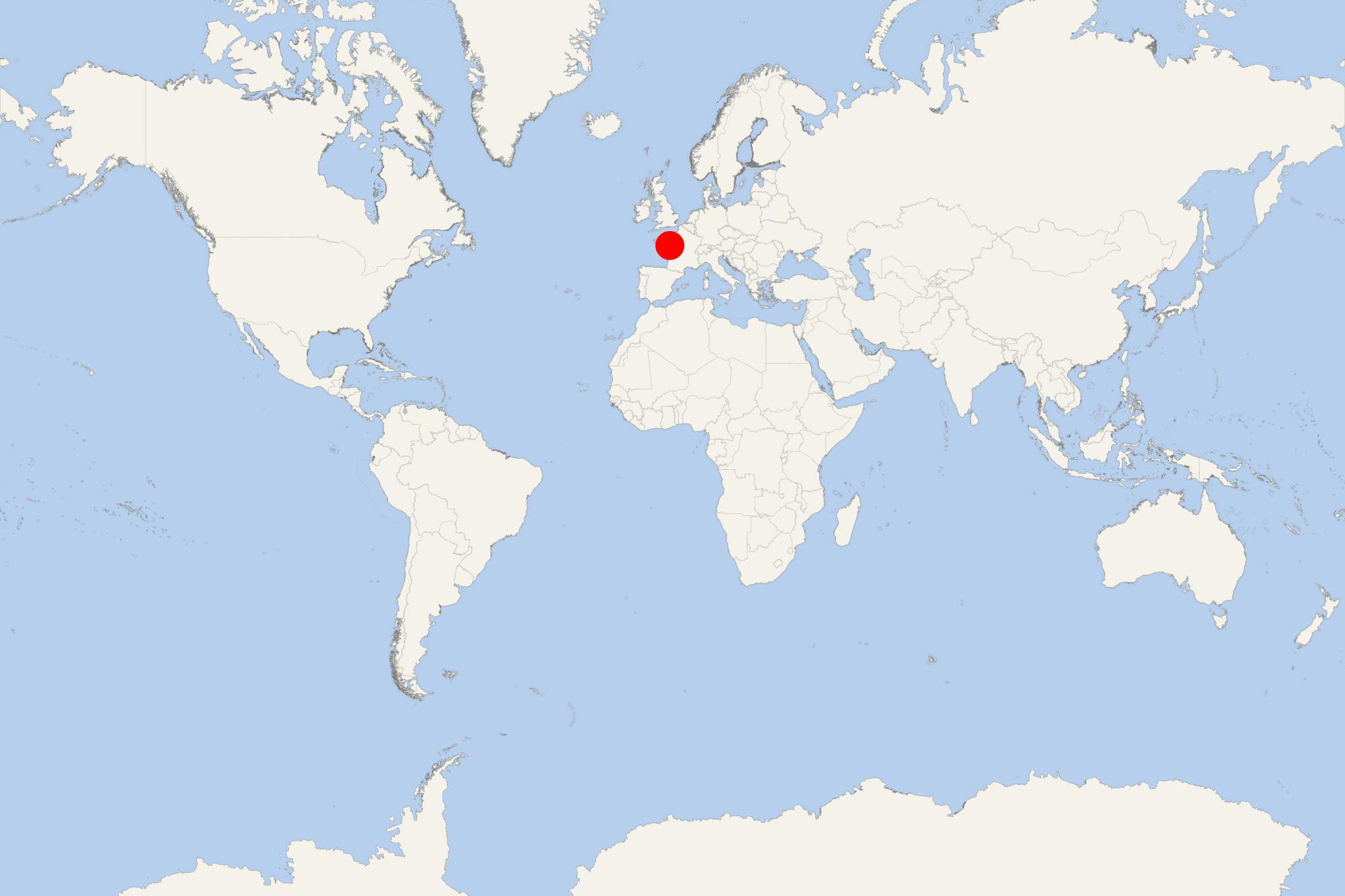
Angers is a Maine River/Loire River cruise port and a city located in France's Pays de la Loire region (Maine-et-Loire département), located approx 300 km (190 mi) southwest of Paris City.
Angers is at the confluence of three rivers (Loire, Mayenne, Sarthe) - all flowing north to south and among Loire River's tributaries. Their confluence is north of Angers and creates Maine River which flows into the Loire. The city has total area approx 43 km2 (17 mi2) and population around 150,000 (metro around 410,000).
Before the French Revolution (1789-1799), Angers was Anjou province's capital. The city (without its metro area) is ranked northwestern France's 3rd largest and most populous - following Nantes and Rennes. It is also ranked as the 17th largest in France. The Angers Loire metropolis includes 33 communes and covers a total area of approx 540 km2 (208 ml2).
The city is Anjou's historical capital. For centuries, it was an important river port and stronghold. It is also the cradle of the House of Plantagenet (French royal house). During the reign of Rene of Anjou (1409-1480), it was one of Europe's most prominent intellectual centers.
The city has numerous museums and universities. Its old medieval center is dominated by the huge Plantagenets chateau, housing the Apocalypse Tapestry - the world's largest medieval tapestry. Angers is as well both at the edge of the World Heritage Site "Val de Loire" (Loire Valley) and the "Loire-Anjou-Touraine" natural park.
The Angers metro area is an important economic center in western France, especially active in the industrial sector, business tourism and horticulture.
At a Glance
Independent sightseeing: Easy if the vessel moors in central Angers; independent with transport if passengers disembark at Bouchemaine. Angers’ castle, cathedral and historic streets form a compact sightseeing area, although the climb from the river includes slopes, steps and cobbled surfaces.
The main priority for a short call is the Château d’Angers and its Apocalypse Tapestry. With additional time, combine the castle with the old town, La Doutre district or a riverside walk.
Getting from the River Port
River vessels and local boats may use the Cale de la Savatte or nearby quays on the Maine River. From this central waterfront, the château is about 1 km (0.6 mi) away on foot, depending on the exact landing point. The route crosses the river and climbs toward the historic center.
Some Loire itineraries use Bouchemaine, near the confluence of the Maine and Loire rivers, rather than central Angers. Bouchemaine is approximately 7 km (4.3 mi) southwest of the city. If the cruise operator provides a transfer, it is normally the simplest option. Local buses and taxis can also connect the area with Angers, but schedules and the location of the nearest stop should be checked before leaving the vessel.
Confirm the day’s landing place and return arrangements onboard. Angers and Bouchemaine should not be treated as the same walk-off location.
Best Ways to Spend Your Time
Château d’Angers and the Apocalypse Tapestry
Allow about 1.5–2.5 hours for the city’s principal attraction. The massive medieval fortress contains gardens, ramparts, historic rooms and the monumental 14th-century Apocalypse Tapestry. Access to elevated areas may involve steps, and sections of the ramparts can close during extreme heat or poor conditions.
This visit is easy to arrange independently from a central landing. Check the official opening schedule before the call, particularly for an early arrival, late departure or holiday visit.
Historic Center and Cathedral
Allow 1–1.5 hours for the streets around the château, Saint-Maurice Cathedral, Maison d’Adam and Place du Ralliement. The center is largely pedestrian-friendly, but the old quarter occupies higher ground above the river and includes cobbles, slopes and steps.
This is a good independent option for passengers who prefer an exterior sightseeing walk or do not have enough time for a full castle visit.
La Doutre and the Maine Waterfront
Allow 1–2 hours for a quieter walk through the district west of the river. A practical circuit can include the Cale de la Savatte, Pont de Verdun, medieval streets around Place du Tertre Saint-Laurent and the exterior of the former Saint-Jean Hospital, now home to the Jean-Lurçat and Contemporary Tapestry Museum.
The waterfront portions are relatively easy, while the neighborhood streets have some inclines and uneven surfaces. A museum visit requires additional time.
Loire Confluence, Villages and Vineyards
Bouchemaine, Béhuard and the vineyards around Savennières offer river scenery, small villages and wine-related visits outside central Angers. These places are best reached by a cruise-organized excursion, prearranged tour or taxi. Public transport may work for a longer call, but it leaves less flexibility for the return.
Allow at least half a day for an excursion that combines transfers with a village, vineyard or guided river experience. Tastings and boat trips should be reserved in advance rather than assumed to be available on arrival.
Self-Guided Walking Tour
Castle and Old Angers Loop
Route: Cale de la Savatte or central river landing – Pont de Verdun – Château d’Angers – Promenade du Bout-du-Monde – Saint-Maurice Cathedral – Maison d’Adam – Place du Ralliement – return to the river.
- Distance: approximately 3 km (1.9 mi), depending on the berth and chosen streets
- Pure walking time: about 45–55 minutes
- Recommended time: 2–3 hours without entering the château; 3.5–4.5 hours with a substantial castle visit
- Difficulty: Moderate
- Terrain: Riverfront paths and pedestrian streets, followed by an uphill section, cobbles and possible steps around the cathedral
- Begin at the Maine waterfront and walk toward Pont de Verdun, with views of the château above the opposite bank.
- Cross the river and climb toward the Château d’Angers. Enter if the available time and opening schedule permit.
- Continue to the Promenade du Bout-du-Monde for views over the river and La Doutre.
- Walk through the old quarter to Saint-Maurice Cathedral.
- Descend toward Place Sainte-Croix and see the elaborately timber-framed Maison d’Adam.
- Continue to Place du Ralliement, the pedestrian center of modern Angers.
- Return by the château and Pont de Verdun, or take a more direct route to the confirmed landing point.
Passengers who prefer fewer gradients can remain beside the river, cross Pont de Verdun for exterior château views and return along the waterfront.
Practical Tips
- Verify whether the vessel is landing in central Angers or at Bouchemaine before planning an independent walk.
- Give priority to the château if this is a first visit; its Apocalypse Tapestry is the city’s most distinctive attraction.
- Wear suitable shoes for cobbles, slopes and occasional steps in the historic quarter.
- Check attraction hours on the day of the call and allow time for admission procedures.
- For trips outside Angers, use a prearranged transfer when the port stay is short.
- Leave a comfortable return margin, especially when relying on buses, taxis or a cruise transfer from Bouchemaine.
Angers hotels
- Cruise Industry

VIDEO: CroisiEurope’s paddlewheel riverboat Loire Princesse especially built for France’s Loire...
MS Loire Princesse is the only large riverboat on France’s Loire River due to her unique paddlewheel propulsion system. The CroisiEurope-owned...
August 14, 2021 - show more news