

Auckland Island NZ (Musgrave Harbour)
Cruise Port schedule, live map, terminals, news
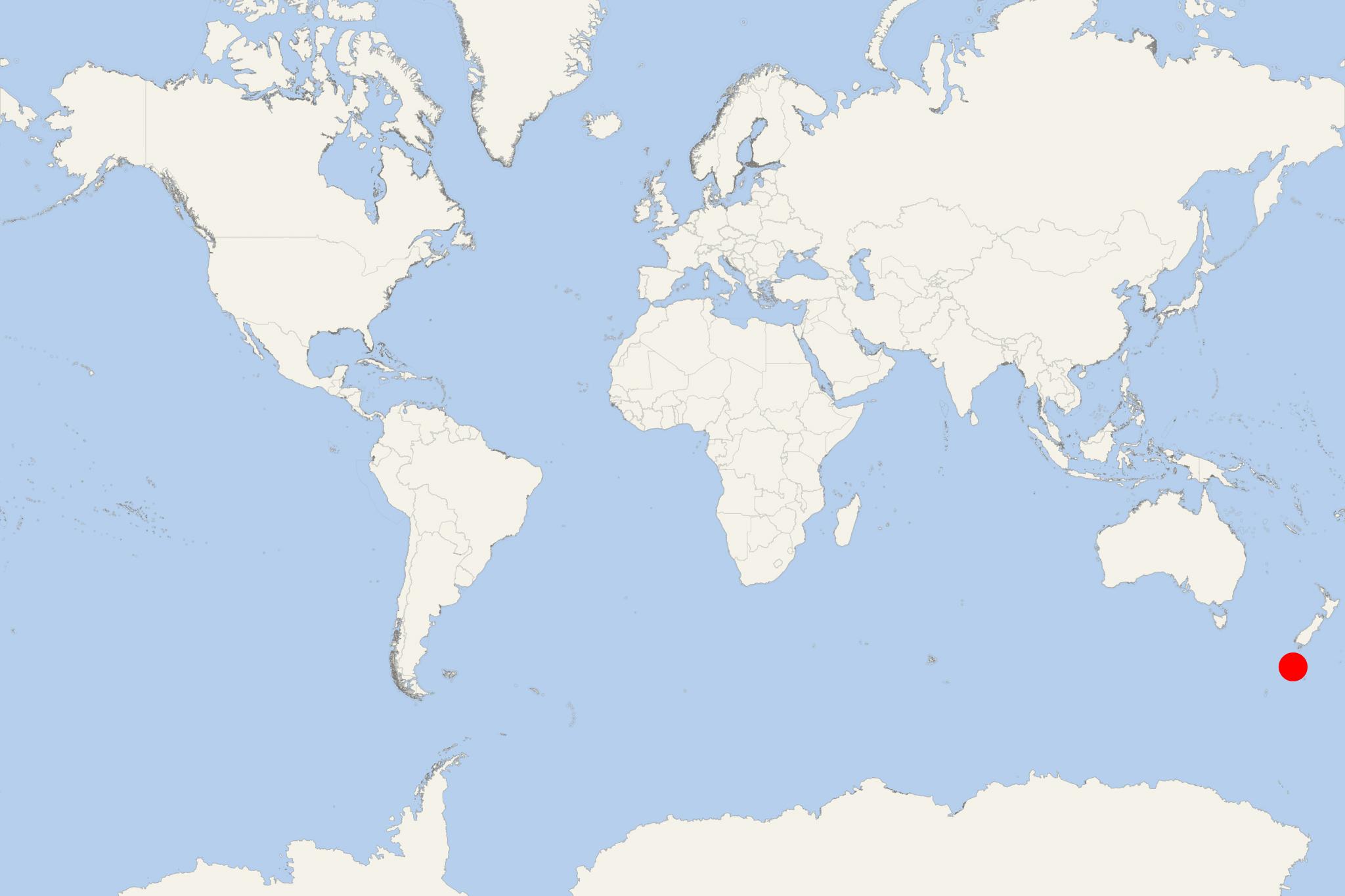
Region
Australia - New Zealand - Pacific Ocean Islands
Local Time
2026-10-27 02:13
 42°F
42°F 5.5°C

 Near gale
15.5 m/s
 46 °F / 8 °C
 41 °F / 5 °C
Port Auckland Island NZ cruise ship schedule shows timetable calendars of all arrival and departure dates by month. The port's schedule lists all ships (in links) with cruises going to or leaving from Auckland Island NZ, Musgrave Harbour. To see the full itineraries (ports of call dates and arrival / departure times) and their lowest rates – just follow the corresponding ship-link.
| Day | Ship | Arrival | Departure |
|---|---|---|---|
| 2 January, 2027 Saturday |  Le Soleal Le Soleal | ||
| 5 January, 2027 Tuesday |  Greg Mortimer Greg Mortimer | ||
| 16 January, 2027 Saturday | Le Soleal |
Auckland Island is the main (largest) of New Zealand's Auckland Islands. The archipelago is located in the south Pacific Ocean. Auckland Island covers a total area of approx 443 km2 (171 mi2) and is uninhabited.
Enderby Island is located very close (3 km / 2 mi) off Port Ross (a natural harbour at Auckland Island's northeastern coast). In the strait between Enderby and Auckland are located several smaller isles, including Rose and Ewing.
Most cruise ships to Auckland Island NZ, anchor at Musgrave Harbour and transport their passengers via tender boats or Zodiacs (RIBs).
The island is included in UNESCO's World Heritage list. The terrain is notably rugged, with cliffs rising to over 600 m (1970 ft). The most prominent peaks are named Cavern Peak (highest elevation point, 650 m / 2133 ft), Mt Raynal (635 m / 2083 ft) ) and Mt D'Urville (630 m / 2067 ft).
The island's southern end broadens to a width of 26 km (16 mi). Here, a narrow sea channel (Carnley Harbour, aka Adams Straits) divides the main island from the smaller Adams Island. Adams Island and the main island's southern part from the crater rim.
Cape Lovitt (NZ's westernmost point) is approx 3 km (2 mi) north of Carnley Harbour.
Auckland Island is part of an IBA (Important Bird Area) identified by BirdLife International due to the Auckland Islands' significance as breeding grounds for seabird species, among which are the endemic Auckland rail, Auckland shag, Auckland snipe, and Auckland teal. Introduced animals are cats, mice, and pigs.
In the 19th century, to the Aucklands were also introduced goats, to serve as a food source for castaway sailors. By the 1970s, just one population of goats remained (on Port Ross' northwest side). By 1992, all the remaining goats were eliminated.
Auckland Island is a remote expedition-cruise destination, not a conventional port. Ships normally anchor in a sheltered inlet and explore by Zodiac. There is no cruise terminal, town, road transport or independent sightseeing infrastructure.
Independent sightseeing limited or not recommended: access is controlled to protect the New Zealand Subantarctic Islands, and visitors must follow their ship’s permitted, guide-led program. Activities depend heavily on wind, swell, visibility and wildlife conditions.
Getting Ashore and Around
- Ship access: Expedition ships anchor offshore; passengers transfer into rigid inflatable Zodiac boats.
- Musgrave Inlet: Landing is prohibited, so visits normally consist of a guided Zodiac cruise rather than time ashore.
- Other locations: If the itinerary includes Carnley Harbour, Port Ross or Enderby Island, permitted landings and walks may be offered there.
- No independent transport: There are no taxis, buses, rental vehicles, shops or visitor facilities.
- Schedule flexibility: Captains and expedition leaders may change the landing site, shorten activities or cancel operations when conditions are unsuitable.
Best Ways to Spend the Visit
Zodiac Cruise in Musgrave Inlet
This is the principal activity when the ship calls at Musgrave Inlet. Guided boats can explore beneath steep basalt cliffs, around kelp-fringed shores and near sea caves when sea conditions allow. Wildlife sightings may include eastern rockhopper penguins, Auckland Island shags, Antarctic terns and light-mantled sooty albatrosses.
Allow roughly 1.5–2 hours, depending on conditions. Passengers remain in the Zodiac, making warm waterproof clothing and secure camera protection important.
Carnley Harbour Exploration
Some itineraries continue into the large flooded volcanic harbour at the southern end of Auckland Island. Possible activities include Zodiac cruising along Adams Island, Victoria Passage and the Western Arm, with views of rugged coastlines, seabirds and historic shipwreck or castaway sites.
Any landing or hike is selected by the expedition team and covered by the vessel’s permits. More demanding walks may involve steep, wet and uneven ground.
Enderby Island Wildlife Landing
If the cruise itinerary includes nearby Enderby Island, it usually provides the archipelago’s best opportunity for walking. Guided routes from Sandy Bay may pass New Zealand sea lions, yellow-eyed penguin habitat, southern rātā forest, megaherb fields and nesting albatrosses.
Walking choices can range from a short guided visit near the landing area to a longer boardwalk circuit. Routes, distances and access vary by operator, wildlife activity and weather.
Wildlife Watching from the Ship
If Zodiac operations are delayed or cancelled, remain alert on open decks. Albatrosses, petrels, penguins, seals and sea lions may be visible around the coast, although sightings are never guaranteed.
Walking and Difficulty
There is no practical self-guided walking tour at Musgrave Inlet because passengers cannot land there. At approved sites elsewhere in the Auckland Islands, all walks are controlled by the expedition team.
- Easy option: A Zodiac cruise or short guided landing, where offered.
- Moderate option: A guided boardwalk or coastal walk over wet and sometimes uneven terrain.
- Demanding option: Longer hikes offered only when weather, permits and group ability allow; expect mud, steep sections and rapid weather changes.
Practical Tips
- Attend the expedition briefing; Zodiac boarding procedures and the day’s destination may change at short notice.
- Wear waterproof outer layers, warm insulation, gloves and a close-fitting hat. Conditions can become cold, wet and windy quickly.
- Use sturdy waterproof boots if a landing is planned. Follow the operator’s biosecurity cleaning procedures before and after going ashore.
- Keep the required distance from sea lions, penguins and nesting birds. Never block an animal’s route between land and water.
- Carry no food ashore and leave all plants, rocks and historic objects undisturbed.
- There are no toilets, refreshments or shelters available during most activities.
- Return timing is managed by the expedition staff; remain with the assigned group and Zodiac throughout the visit.
Auckland Island NZ hotels
- Cruise Industry
Coral Expeditions launches a new voyage visiting Macquarie Island at latitude 55 degrees
Coral Expeditions announced a new voyage that will call on Macquarie Island (Tasmania Australia). The island sits halfway between Tasmania and...
December 13, 2022 - Cruise Industry
Heritage Expeditions launches 2022-2023 cruise season of MS Heritage Adventurer/RCGS Resolute
Pioneering New Zealand-based small-ship cruise company Heritage Expeditions (under-charter ship operator) released its 2022-2023 expedition season...
September 1, 2021 - Cruise Industry
Heritage Expeditions introduces 2 new summer 2021 New Zealand cruises
The small-ship cruise company Heritage Expeditions introduced 2 new summer expedition cruises targeting "adventurous Kiwis." The Christchurch-based...
January 15, 2021 - show more news