

Austral Islands (French Polynesia)
Cruise Port schedule, live map, terminals, news
Region
Australia - New Zealand - Pacific Ocean Islands
Local Time
2026-09-23 11:13
 69°F
69°F 20.5°C

 Gentle breeze
4.9 m/s
 70 °F / 21 °C
 68 °F / 20 °C
Port Austral Islands cruise ship schedule shows timetable calendars of all arrival and departure dates by month. The port's schedule lists all ships (in links) with cruises going to or leaving from Austral Islands, French Polynesia. To see the full itineraries (ports of call dates and arrival / departure times) and their lowest rates – just follow the corresponding ship-link.
| Day | Ship | Arrival | Departure |
|---|---|---|---|
| 26 October, 2026 Monday |  Le Jacques Cartier Le Jacques Cartier | 12:00 | 30 Oct, 16:00 |
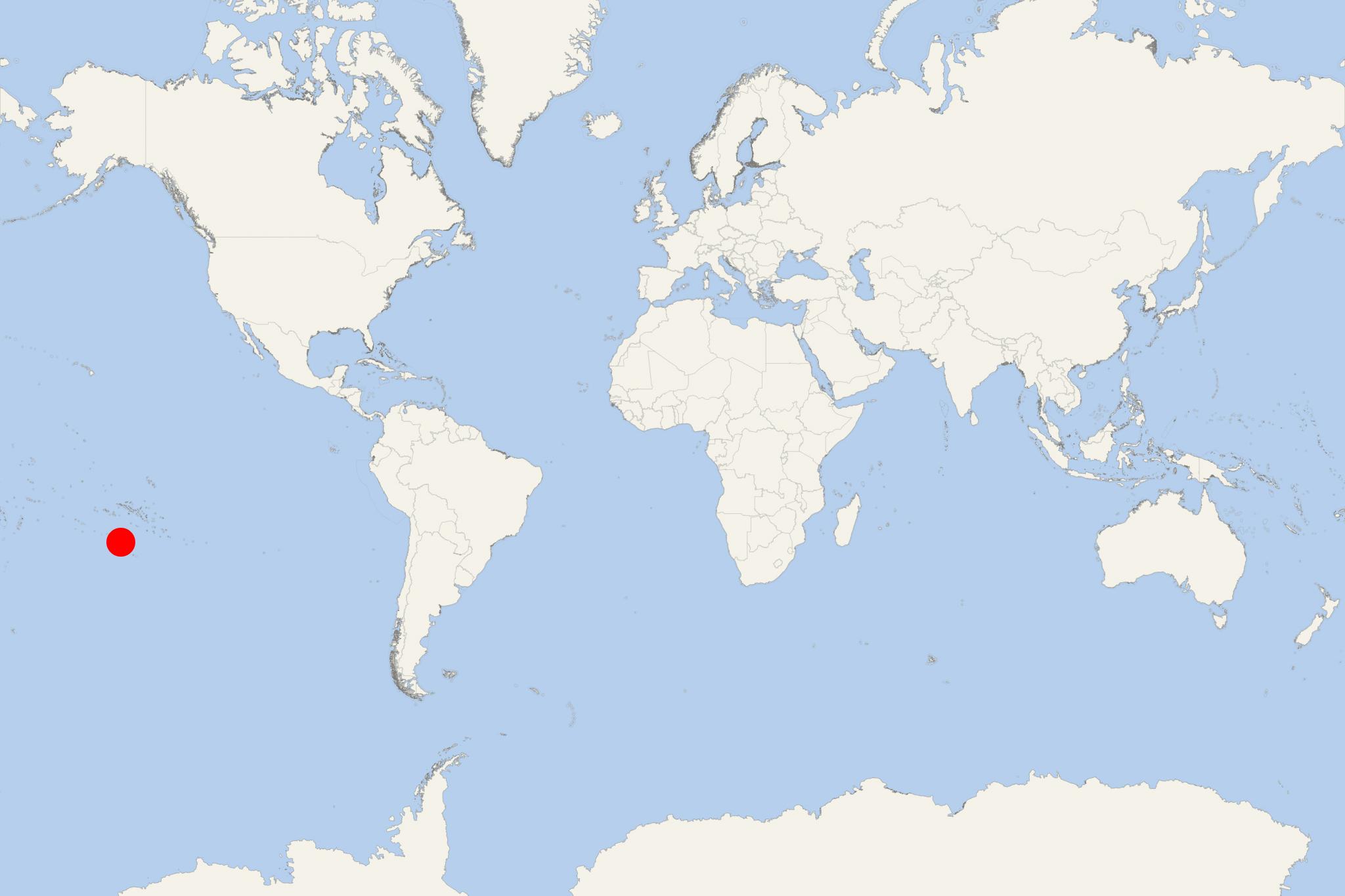
Austral Islands (Iles Australes) are French Polynesia's southernmost archipelago that groups the islands Maria (Hull Island), Rimatara, Rurutu, Tubuai/Tupuai, Raivavae, also the Bass Islands group (Rapa Iti, Marotiri) plus several uninhabited off-coast islets. The Australs have total land area approx 152 km2 (59 mi2) and total population around 7,000.
French Polynesia is one of France's overseas territories/collectivities. The Australes' capital is Tubuai.
Austral Islands are accessed mainly by regularly scheduled boats and via light airplanes from Papeete Tahiti Island (Faa'a Airport/Tahiti Airport). Four islands (Rurutu, Tubuai, Raivavae, Rimatara) have their own airports/airfields.
- Rimatara Island (land area 8,6 km2 / 3,3 mi2, population around 900) is approx 550 km (340 mi) south of Tahiti and approx 150 km (93 mi) west of Rurutu.
- Tubuai Island (land area 42 km2 / 16,2 mi2, population around 2200) is approx 640 km (400 mi) south of Tahiti. Tubuai is ringed by an encircling coral reef-formed lagoon, with a reef break (shipping channel) on the island's northern side.
- Rurutu Island (land area 32,7 km2 / 12,6 mi2, population around 2500) is approx 572 km (355 mi) south of Tahiti.
- Raivavae Island (land area 17,9 km2 / 6,9 mi2, population around 900) is approx 710 km (440 mi) south of Tahiti.
- Rapa Island/Rapa Iti (Bass Islands) has land area 40,5 km2 (15,6 mi2) and population around 500.
- Marotiri (aka Bass Rocks) is a group of 4x uninhabited above-sea rocks (plus several submerged).
- Iles Maria (aka Hull Island) is an uninhabited atoll located approx 205 km (127 mi) from Rimatara.
The Australs' economy is based mainly on subsistence agriculture (vegetables, yams, taro, fruits), livestock farming (chickens, pigs), and fishing. Export products (mainly for Tahiti) include copra (dried coconut kernels), coffee, vanilla. The tourism industry is rather underdeveloped due to the lack of proper infrastructure and facilities.
The islands were discovered by the Europeans in the late-18th-century. The British Captain James Cook discovered Rurutu Island in 1769 and Tubuai island in 1777. The Spanish Captain Tomas de Gayangos discovered Raivavae Island in 1775 (en route to Tahiti). The British Captain George Vancouver discovered Rapa Island in 1791. The British Captain George Bass discovered Marotiri Island in 1800. The British trader Samuel Pinder Henry discovered Rimatara Island in 1811.
At a Glance
Independent sightseeing with some planning or transport. “Austral Islands” may refer to calls at Raivavae, Rurutu, Tubuai, Rimatara or remote Rapa Iti. These are separate islands, so check the ship’s daily program before planning. Facilities and independent transport are limited, while many of the best experiences require a boat, local guide or arranged vehicle.
Most visiting cruise and expedition ships remain offshore and transfer passengers by tender or Zodiac. The precise landing place can change with the island, sea conditions and local operations. Wet or uneven landings are possible at remote stops.
Getting Ashore and Around
- Landing: Follow the ship’s instructions for the confirmed tender or Zodiac point. Weather and swell can delay, relocate or cancel landings.
- Walking: Villages are generally small, but major natural and archaeological sights may be scattered around the island.
- Transport: There is no dependable tourist-oriented public transport network. Pre-arranged local tours, ship excursions and transfers are the practical choices for island circuits.
- Facilities: Expect few shops, limited card acceptance and little transport available on demand. Carry water, sun protection and some CFP francs.
Best Ways to Spend the Call
Join an Island Circuit
Recommended on most calls. A guided circuit is the most efficient way to combine villages, coastal scenery, archaeological sites and local craft demonstrations. Vehicles and guides are scarce, so arranging this through the ship is usually safer than looking for transport after landing.
Raivavae: Lagoon, Motu and Cultural Sites
Raivavae is known for its broad lagoon, small motu, marae and distinctive stone figures, including the often-mentioned smiling tiki. A circular island tour gives the best cultural overview. A lagoon boat trip to a motu offers swimming and a picnic-style beach experience but requires an organized boat excursion.
Rurutu: Caves, Coast and Whales
Rurutu’s uplifted limestone landscape contains caves, cliffs and viewpoints that are best reached with a local guide and vehicle. A typical visit may combine a cave, a village, traditional crafts and a beach stop. Humpback whales visit Austral waters seasonally, generally during the southern winter and early spring, but sightings and boat departures are never guaranteed.
Tubuai: Lagoon or Scenic Interior
Choose between a lagoon excursion with snorkeling and a motu stop or a land tour covering coastal scenery, cultural remains and farming areas. Hiking Mount Taitaa is more demanding and suitable only when the ship’s schedule, weather and a knowledgeable guide allow sufficient time.
Rimatara: Village and Nature
Rimatara is compact and particularly suited to a guided cultural and nature visit. Local guides may help visitors look for the endemic Rimatara lorikeet while explaining conservation rules and village life. Avoid approaching or disturbing nesting birds.
Rapa Iti: Guided Cultural Exploration
Rapa Iti has no airport and is one of the most isolated inhabited islands in French Polynesia. Shore access and activities are normally coordinated locally by the ship. Guided village visits and hikes may be offered, but steep terrain, changeable weather and limited infrastructure make unsupported independent exploration unsuitable.
Walking Independently
A fixed self-guided route cannot be recommended for the generic Austral Islands call because each island uses different landing points and may have different access arrangements. Where passengers land beside a village, a short waterfront and village walk can be pleasant, but confirm the permitted area and tender deadline before leaving the landing site.
Do not set off toward caves, mountain trails, archaeological remains or distant beaches without confirmed directions and enough time. Trails may be unsigned, private land may be involved, and mobile coverage can be unreliable.
Beaches, Lagoons and Hiking
- Lagoon outings: Best at Raivavae and Tubuai, normally by pre-arranged boat.
- Swimming: Use the beach or motu selected by local operators; reefs, currents and landing conditions vary.
- Snorkeling: Bring personal equipment if advised by the cruise line, as rental equipment may not be available ashore.
- Hiking: Choose a guided outing for caves, ridges and mountain routes. Rain can make steep paths slippery.
- Whale watching: Seasonal and weather-dependent, with no guarantee of sightings.
Practical Tips
- Wear secure footwear suitable for tenders, coral surfaces, mud or uneven ground.
- Use reef-conscious sun protection and bring drinking water and rain protection.
- Ask permission before photographing residents, ceremonies or craft demonstrations.
- Do not touch archaeological remains or remove shells, coral, plants or cultural objects.
- Allow a generous return margin. Tender queues, swell and local transport delays can affect the journey back to the ship.
- For remote landings and excursions, follow the ship’s stated return time rather than relying on phone time or an independently arranged schedule.
Austral Islands hotels
- Cruise Industry
Ponant deploys two cruise ships in French Polynesia in 2026–2027
Ponant Explorations Group is set to expand its presence in French Polynesia beginning with the 2026–2027 winter season through the deployment...
January 19, 2026 - Cruise Industry
Aranoa joins Aranui fleet to expand French Polynesia cargo-passenger cruises
Aranui Cruises will introduce its second passenger-freighter vessel, Aranoa, in 2027. The new ship will join the fleetmate Aranui 5 to enable year...
September 21, 2025 - Cruise Industry
Ponant schedules French Polynesia itineraries (2026-2027) for Le Jacques Cartier ship
Ponant Explorations Group will introduce winter voyages aboard Le Jacques Cartier in French Polynesia for the 2026–2027 season, complementing...
July 17, 2025 - Cruise Industry
Aranui 5 opens Australian bookings with 20% off Austral Islands voyages
The hybrid cargo-and-passenger vessel Aranui 5 is poised to open the secluded Austral Islands to voyagers seeking an authentic French Polynesian...
July 7, 2025 - Cruise Industry
Aranui Cruises introduces 'Tiki Club' Loyalty Program to celebrate 40th Anniversary
Aranui Cruises/fleet, renowned for its unique cargo cruise ship Aranui 5, has unveiled its new loyalty program, the 'Tiki Club,' as a gesture of...
April 21, 2024 - Cruise Industry
Aranui Cruises' 2024 program includes return to Bora Bora
The French Polynesian company Aranui Cruises (fleet) released its 2024 program which includes a return to Bora Bora Island (Society Islands) along...
November 14, 2022 - show more news