Bad Breisig (Germany Rhineland-Palatinate)

Cruise Port schedule, live map, terminals, news
Rating:
Bad Breisig cruise port

Region
Europe Rivers

Local Time
2026-09-11 07:37

min: 48 °F (9 °C) / max: 71 °F (22 °C) 52°F
11.2°C
Wind: 203°/ 1.1 m/s  Gust: 1.2 m/sWind: 203°/ 1.1 m/s  Gust: 1.2 m/sVery Light
1.1 m/s
Min / Max Temperature71 °F / 22 °C
48 °F / 10 °C

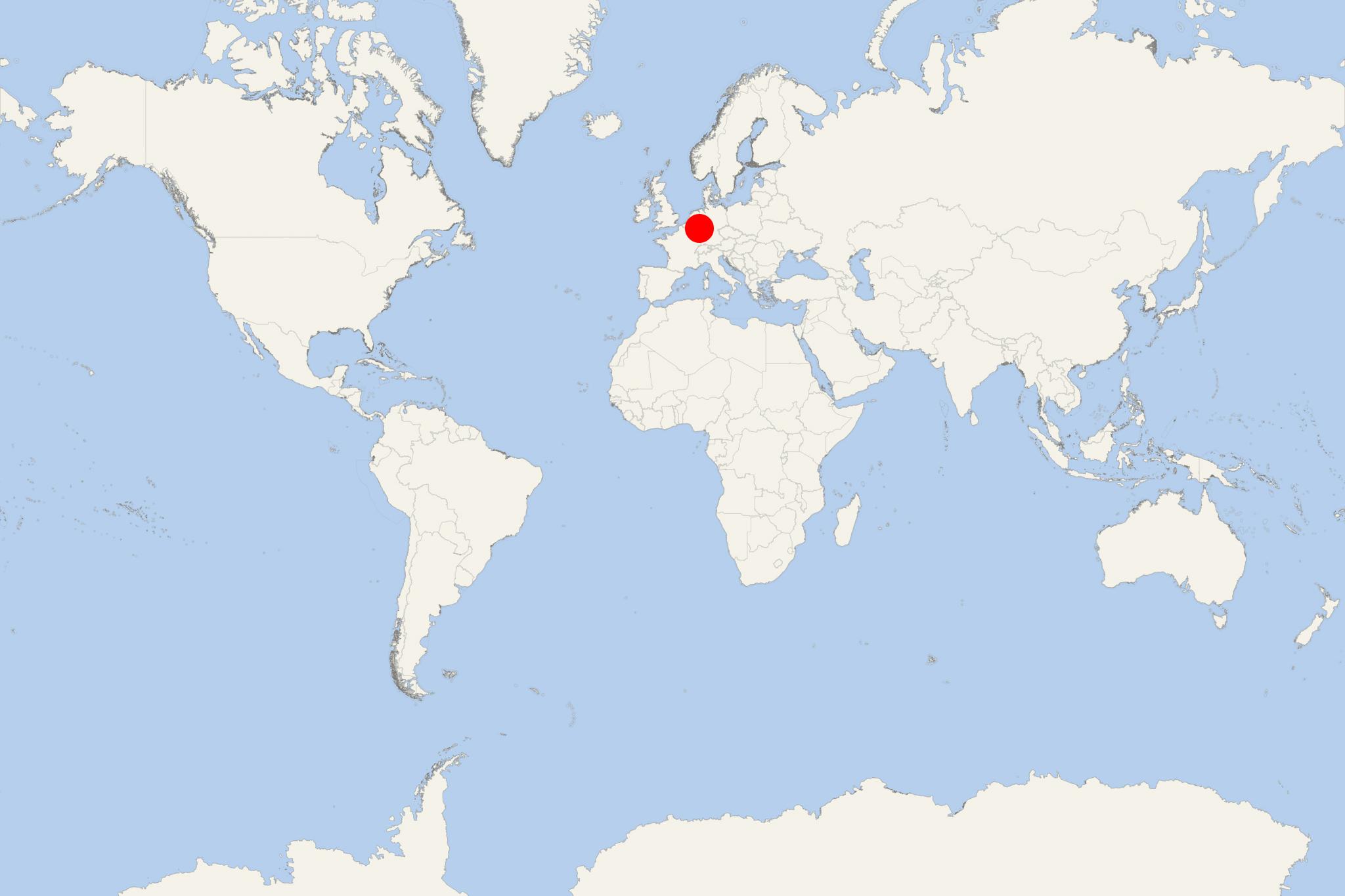
Bad Breisig is a Rhine River cruise port and spa town in Germany's Rhineland-Palatinate state (Ahrweiler district) with population around 10,000. Bad Breisig is divided into three districts (Oberbreisig, Niederbreisig, Rheineck). The city's economy is heavily based on tourism (mainly spa tourism) and benefits greatly from the proximity to major port cities like Koblenz (30 km / 19 mi), Bonn (31 km) and Koln/Cologne (65 km / 40 mi) which makes it a popular day-trip leisure destination. Most spa complexes are fitted with modern wellness centers (with fitness and indoor/outdoor sports facilities) offering contemporary hotel amenities and services.

The settlement (as Brysich) was founded in the early-13th-century by Templerorden (Knights Templar) being a donation to the knight order from the Florinsstift (Florins Church in Koblenz). With Templerorden's persecution and abolition (1307-12 AD), its possessions became Roman church property (St Marien Kirke) for the next 500 years. In the late-13th-century, the town was fortified with a moat and a stone wall.

The town (later renamed Niederbreisig) received its market rights (under the Marktrecht/Market Law) from King Karl IV (Charles IV / Holy Roman Emperor since 1355). Niederbreisig became part of Prussia in 1815 (after the Congress of Vienna) and part of Rhineland-Palatinate after WW2 (1939-1945). The town was renamed "Bad Breisig" (Bath Breisig) in 1958, due to its spa facilities using the water from the local warm springs. In 1969, to Bad Breisig were merged the neighboring towns Oberbreisig and Rheineck. Bad Breisig received city ​​rights in 1970.

Popular attractions for tourists include St Viktor Kirke (13th-century church in Oberbreisig district), St Marien Kirke (18th-century church), Rathaus (19th-century Town Hall, now a museum), well-preserved 17th-century houses (including the Templar Court, now with a restaurant), spa hotels and resorts, annual festivals and street parades.

As cruise port, Bad Breisig is included in the regular schedule of the riverboat DCS Alemannia (operated by the German company DCS Touristik). Next table shows the company's 5-day cruise tour itinerary (roundtrip from Koln) as port sequence and arrival/deparure times.

Date / TimePort
02 Sep 17:00Departing from Cologne
03 Sep 08:30 - 20:00Cochem
04 Sep 07:00 - 13:00Piesport-Mosel
04 Sep 15:00 - 05 Sep 01:00Bernkastel-Kues
05 Sep 14:00 - 06 Sep 05:00Winningen-Mosel
06 Sep 07:00 - 13:00Koblenz
06 Sep 14:30 - 07 Sep 05:00Bad Breisig
07 Sep 08:00Arriving in Cologne

Prices in 2021 started from EUR 690 (USD 840) per person with double occupancy.

Bad Breisig is a compact Rhine spa town where sightseeing is generally easy independently. River vessels normally dock at landing stages directly on the waterfront in Niederbreisig, placing passengers beside the Rhine promenade and within a short walk of the historic center. The town suits a relaxed call rather than a packed sightseeing itinerary.

At a Glance

  • Best for: Rhine views, historic buildings, an easy riverside walk, cafés and thermal bathing.
  • Independent sightseeing: Easy in the waterfront and town center; some planning is needed for hillside walks or regional trips.
  • Terrain: Mostly level beside the river, with slopes beyond the railway and toward Rheineck.
  • Typical local visit: Around 2–4 hours, depending on whether time is included for lunch or the thermal baths.

Getting from the River Landing

The principal landing stage is on the left bank of the Rhine, directly beside the promenade. Shops, restaurants and the oldest part of Niederbreisig can be reached on foot without a shuttle. Bad Breisig railway station is approximately a 15-minute walk from the landing and provides regional connections along the Rhine toward Bonn, Andernach and Koblenz.

Some vessels may use another nearby landing stage, so confirm the exact gangway location and required return time before leaving. Taxis are useful mainly for outlying sights, but availability may be limited when several river vessels visit.

Best Ways to Spend Your Time

Explore the Rhine Promenade and Old Town

Allow 1.5–2.5 hours. This is the simplest option for a short call. Walk along the largely traffic-free waterfront, stop at the half-timbered Old Customs House and explore the lanes around St. Mary’s Church. The promenade has cafés and restaurants with river views, making it easy to combine sightseeing with a meal.

Relax at Römer-Thermen

Allow 2.5–4 hours. Bad Breisig developed as a spa town around its mineral springs. Römer-Thermen has indoor and outdoor thermal-water facilities and a sauna area. It is walkable from the riverfront, but the final approach lies beyond the railway and is less convenient than the promenade. Check current admission arrangements and opening times before committing, and allow time to change before returning to the vessel.

Cross the Rhine to Bad Hönningen

Allow 2–3 hours. The local vehicle ferry also carries pedestrians and provides an inexpensive way to enjoy views from the river. The ferry crossing is south of central Bad Breisig, so include the walk to and from the terminal. On the opposite bank, Bad Hönningen offers another waterfront and spa-town atmosphere. Verify that the ferry is operating before setting out, as Rhine water levels can affect service.

Take a Hillside Walk toward Rheineck

Allow at least 3–4 hours. Paths south of town climb through wooded slopes and provide elevated Rhine views, including views toward Rheineck Castle. This is a more demanding choice involving gradients, uneven woodland paths and potentially slippery ground. The castle is privately owned and cannot normally be toured, so the attraction is the landscape and exterior views rather than an interior visit.

Ride the Vulkan-Express

Independent with careful planning. The historic narrow-gauge railway begins at Brohl, south of Bad Breisig, and travels inland through the volcanic Brohl Valley. Reaching its departure point requires a regional train or taxi, and services operate on selected days rather than as frequent everyday transport. Attempt this only when the published timetable fits comfortably within the port call; otherwise, remain in Bad Breisig.

Self-Guided Bad Breisig Walking Tour

Promenade, Historic Center and Kurpark

Distance: approximately 2.5 km (1.6 mi) round trip
Pure walking time: about 35–45 minutes
Recommended total time: 1.5–2.5 hours
Difficulty: Easy, mostly level, with several road crossings.

  1. River landing: Begin beside the Rhine and follow the promenade, keeping track of your vessel’s exact berth.
  2. Old Customs House: See the distinctive late-medieval half-timbered building and the flood-level marks on its exterior.
  3. Old Customs Courtyard and customs table: Turn inland briefly through the historic lanes to find reminders of the tolls once collected here.
  4. St. Mary’s Church: Continue through Biergasse to the parish church, whose older tower remains a local landmark. Interior access depends on services and opening arrangements.
  5. Schultheißenhaus: Pass the 17th-century former administrative residence in Biergasse.
  6. Kurpark: Walk through the small spa park, where the tourist information office is located.
  7. Rhine promenade: Return to the waterfront for river views, refreshments and an easy walk back to the ship.

The route can be shortened at any point by returning directly to the promenade. Passengers with limited mobility should take care at cobbled or uneven sections and when crossing the busy B9 road.

Longer Excursions

Regional trains make Andernach, Koblenz and Bonn possible on a sufficiently long call, but the station walk, train schedules and sightseeing transfers consume a substantial part of the day. Koblenz is the most practical larger-city option, with the rail journey taking roughly 20–25 minutes each way before local walking time is added.

For most passengers, Bad Breisig itself offers a more relaxed and lower-risk visit. Use a ship excursion or a carefully planned independent itinerary for destinations requiring connections, and avoid relying on the final convenient train back.

Practical Tips

  • Wear comfortable shoes; the promenade is easy, but woodland and castle-view routes are steeper and may be muddy.
  • Carry some euros for small purchases, ferry tickets and cafés that may not accept every card.
  • Check same-day ferry, railway and attraction information before leaving the vessel.
  • Rheineck Castle is best treated as a viewpoint and exterior landmark because it is privately owned.
  • Allow a sensible return margin, especially when using trains, the cross-river ferry or hillside trails.

Bad Breisig hotels