

Bayonne (France)
Cruise Port schedule, live map, terminals, news
Region
France Rivers
Local Time
2026-10-25 07:46
 58°F
58°F 14.2°C

 Gentle breeze
3.6 m/s
 65 °F / 19 °C
 49 °F / 10 °C
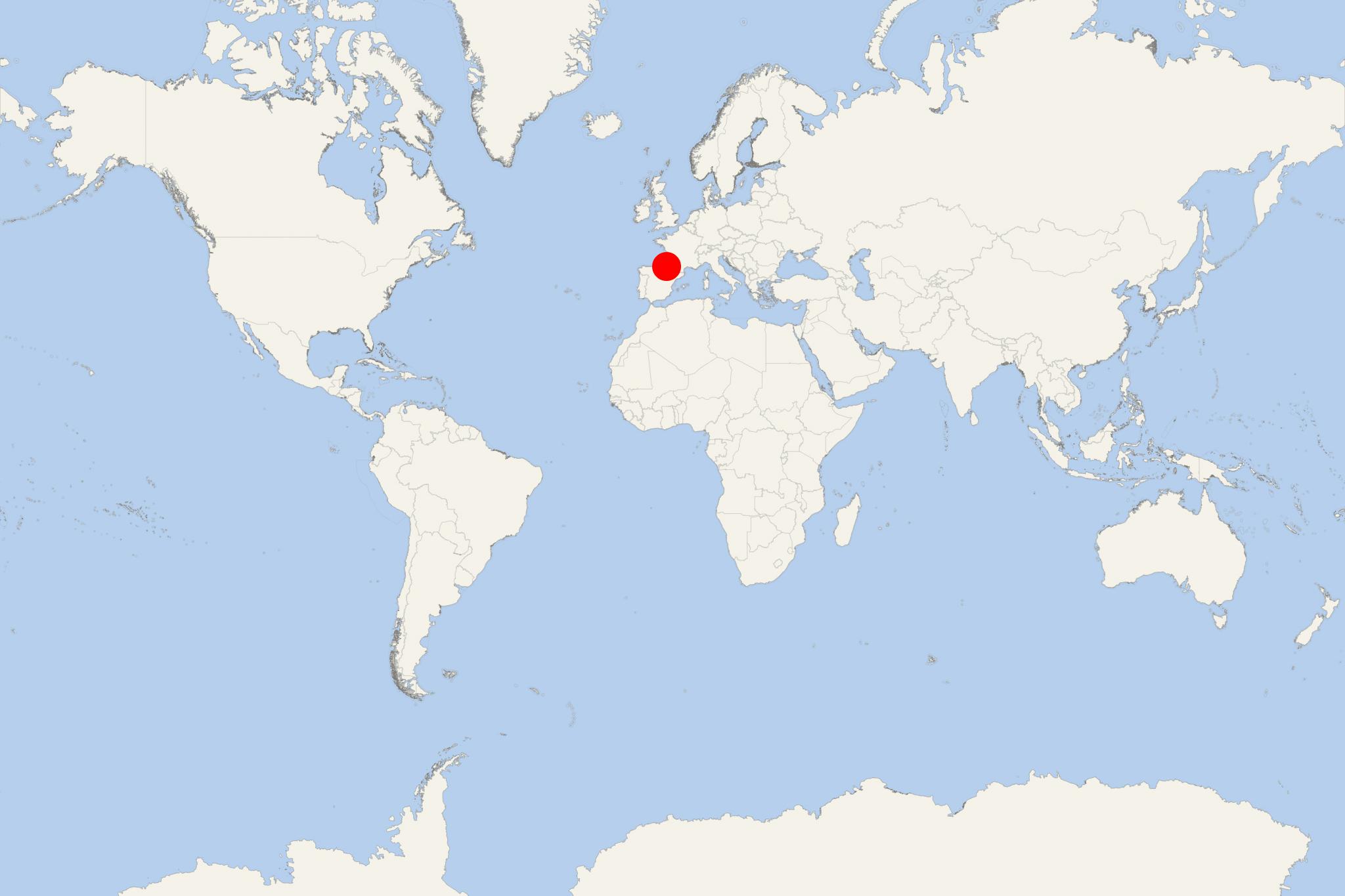
Bayonne (port locode FRBAY ), aka Baiona/Bayona, is a river port city in France's Basque Country (Pyrenees-Atlantiques department, Nouvelle-Aquitaine region) with population around 50,000. The city is at the confluence of two rivers (Nive and Adour).
The city is also part of Eurociudad Vasca Bayonne-San Sebastian/Eurocity - a cross-border region (between Spain and France, along the Bay of Biscay's coast) that integrates 42 communities (total population around 650,000) in both countries. These integrated communities share common projects (tourism, freight transportation, infrastructures) based on their common Basque cultural base. The largest cities (with population 10,000+) in this "eurodistrict" are France's Bayonne, Anglet, Biarritz, Hendaye, Saint-Jean-de-Luz, and Spain's Donostia-San Sebastian, Renteria, Hernani, Fuenterrabia, Passages, Andoain, Lasarte-Oria, Zarauz. The Agglomeration Cote Basque-Adour includes the French cities Anglet and Biarritz.
Nive and Adour in Bayonne are crossed by several bridges linking the city's districts, and some of them carrying railway traffic. In the Saint-Esprit district is Port Bayonne (Amiral-Bergeret dock, at the Adour River's mouth) and occupies part of Anglet, Boucau and Tarnos. The Port is pipeline-connected to the Lacq (natural gas field). By annual shipping traffic (4,2 million tonnes/~2,8M export) the Port is ranked France's 9th largest. Main exports are metallurgical products and maize. Main imports are refined oil products (from Total's refinery at Donges) and fertilizers.
The city's economy is based on light industries, construction, trade, logistics and transportation, services, education, healthcare, agriculture, and commercial fishing. Bayonne is at the intersection of Highway A63 (linking Bordeaux with Spain) and at the D1-extension of Highway A64/E80 (linking Bayonne with Toulouse via Tarbes and Pau).
Gare de Bayonne (train station in Saint-Esprit district) serves TGVs (intercity high-speed trains) and is one of the main stops on the Bordeaux-Irun line (235-km / 146 mi- long railroad linking Bordeaux with Spain) - together with Bordeaux-Saint-Jean, Dax, Hendaye and Irun (Spain). Gare de Bayonne is also the terminus of two railways - Toulouse to Bayonne and Saint-Jean-Pied-de-Port to Bayonne.
Bayonne is served by the Biarritz Pays Basque Airport (aka Biarritz-Parme Airport) located just 5 km (3 mi) southeast of Biarritz City. The airport serves regular flights linking to domestic airports (Lyon, Paris) as well as international flights linking to Belgium (Charleroi) and the UK-England (London). Seasonal flights connect to Switzerland (Geneva, Basel), Ireland (Dublin), Corsica Island (Bastia), Germany (Berlin), Luxembourg City.
Bayonne is a compact historic city at the meeting of the Adour and Nive rivers, but its commercial port extends through several industrial areas toward the Atlantic. The practical starting point ashore therefore depends on the berth assigned to the ship.
Independent sightseeing with some planning or transport. Central Bayonne is easy to explore on foot once reached, while Biarritz and the beaches of Anglet require a bus, taxi or excursion transfer.
Getting from the Cruise Port
- Cruise vessels dock when their size and port conditions permit; Bayonne is primarily a working cargo port rather than a regular passenger terminal.
- Berths can be several kilometers from the historic center, and pedestrian access through operational port areas may be restricted.
- Check the ship’s information for the exact berth, permitted passenger exit and any shuttle arrangements. Do not assume that walking from the gangway is allowed.
- If a shuttle is provided, its central drop-off is the most practical starting point for independent sightseeing.
- Taxis are useful for direct trips to central Bayonne, Anglet or Biarritz, but return transport should be arranged early because availability near an occasional cruise berth may be limited.
- The TXIK TXAK network connects Bayonne with Anglet and Biarritz. Routes and departure times should be checked on the day because the closest useful stop depends on where passengers leave the port.
Best Ways to Spend the Call
Explore Historic Bayonne
Allow about 3–4 hours for the old town. Grand Bayonne contains Sainte-Marie Cathedral, the cathedral cloister, narrow shopping streets, the city ramparts and Les Halles market. Across the Nive, Petit Bayonne has lively streets, riverside views and the Musée Basque.
This is the easiest independent option. Most central sights are close together, although cobbles and occasional slopes can make the route less comfortable for passengers with limited mobility.
Visit Biarritz
Biarritz offers an Atlantic waterfront, beaches, the Rocher de la Vierge and walks around the old fishing port. From central Bayonne, the T1 Tram’bus reaches central Biarritz in approximately 30 minutes under normal conditions. A taxi or organized transfer may be faster from some port berths.
Allow at least 4–5 hours including transport. Biarritz is practical independently when the call is long and public-transport timings are convenient, but an organized excursion is safer for short visits. Expect hills, steps and exposed coastal paths.
Anglet Beaches and Coastal Walks
Anglet’s beaches begin approximately 6 km (3.7 mi) from central Bayonne. A taxi or local bus is normally required. The seafront suits a relaxed beach visit or coastal walk, but swimming conditions on the Atlantic coast can be strong and changeable.
Allow about 3–4 hours including transfers. Confirm seasonal lifeguard coverage and sea conditions before entering the water, and arrange the return journey before settling at the beach.
Tour the Wider French Basque Country
Saint-Jean-de-Luz, Espelette and inland Basque villages are better suited to a half-day guided excursion or prearranged vehicle. Combining several destinations independently can consume too much of a short call, especially when the ship’s berth is distant from Bayonne station.
Self-Guided Historic Center Walk
Distance: approximately 3 km (1.9 mi). Pure walking time: about 45–55 minutes. Recommended time with visits: 2.5–3.5 hours. Difficulty: easy to moderate, with cobbles, bridge crossings and a few gentle slopes.
- Place des Basques: Begin here if it is used as the shuttle stop, or reach it from the city-center drop-off.
- Jardin de la Poterne and the ramparts: Walk through the garden and follow the fortified edge of the old city.
- Porte d’Espagne: Enter Grand Bayonne through the historic gateway.
- Sainte-Marie Cathedral and cloister: Visit the cathedral precinct, allowing additional time if the cloister is open.
- Les Halles and the Nive quays: Descend through the old streets to the market and riverside.
- Petit Bayonne: Cross the Nive for traditional streets, murals and the exterior of the Musée Basque.
- Place de la Liberté: Return across the river to the town hall and the confluence of the Nive and Adour.
- Return point: Walk back to the confirmed shuttle stop or taxi meeting place rather than attempting to enter the port on foot.
Practical Tips
- Confirm the gangway location and final shuttle departure before leaving the ship; facilities differ considerably between port sectors.
- Opening days for markets, museums, the cathedral and cloister vary, so treat interior visits as optional additions to the walking route.
- Allow at least 60–90 minutes of contingency when returning from Biarritz, Anglet or another town.
- Choose a ship excursion or prearranged transfer if the call is short, port access is controlled or several Basque Coast destinations are planned.
- Wear shoes suitable for cobbled streets and carry rain protection, as Atlantic weather can change quickly.
Bayonne hotels
- Cruise Industry
Container shipping company CMA-CGM invests EUR 25M into Brittany Ferries
The world's third-largest container shipping company CMA-CGM Group announced it is taking e a “quasi-equity” stake in Brittany...
September 14, 2021 - show more news