

Asyut (Egypt)
Cruise Port schedule, live map, terminals, news
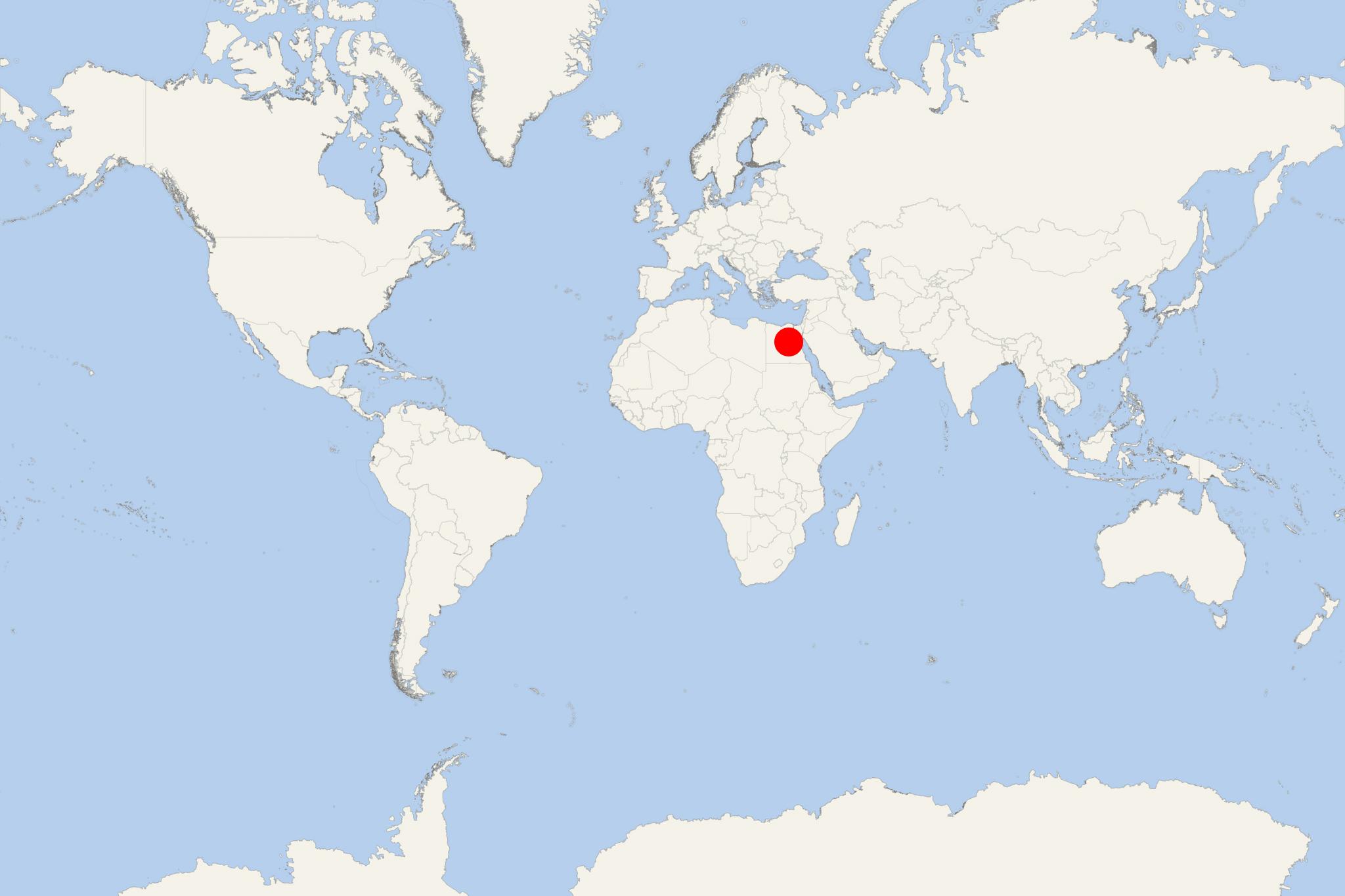
Region
Nile River
Local Time
2026-10-26 16:11
 85°F
85°F 29.6°C

 Mod. breeze
5.9 m/s
 87 °F / 31 °C
 69 °F / 21 °C
Asyut is a Nile River cruise port and a large city in Upper Egypt's Asyut Governorate. It is also the province's capital and largest city with a population of around 300,000. The city is located approx 390 km (240 mi) to the south of Egypt's capital Cairo, at ~4,5 hours drive distance.
Asyut is best known for being the capital city of Ancient Egypt's Lycopolites Nome (the 13th out of 22) in the 3100 BC. The city's two main gods for worship were Anubis (god of death, depicted as a man with a dog head) and Wepwawet (aka Upuaut, the god of war). The current-day city has Egypt's largest collection of early Christian / Coptic buildings (churches, caves) and manuscripts (has around 1/2 of all present in the country). Coptic Christianity (an orthodox religion) is still practiced today.
As cruise port, Asyut is included in the regular schedule of the Travco Group-owned (operated via Travco-Jaz Hotels and Resorts) riverboat Jaz Royale (hotel ship). The next table shows the 14-day cruise tour itinerary as ports sequence.
| Date / Time | Port |
|---|---|
| 02-03-04-05 Apr (overnight hotel) | Departing from Cairo, Egypt (flight) |
| 06 Apr | Al-Minya, Egypt |
| 07 Apr | Amarna, Egypt |
| 07 Apr | Al-Minya, Egypt |
| 08 Apr | Asyut, Egypt |
| 08 Apr | Amarna, Egypt |
| 09 Apr | Asyut, Egypt |
| 11-12 Apr (overnight) | Luxor, Egypt |
| 13 Apr | Kom Ombo, Egypt |
| 13 Apr | Edfu, Egypt |
| 13 Apr | Luxor, Egypt |
| 14 Apr | Aswan, Egypt |
| 14 Apr | Kom Ombo, Egypt |
| 15 Apr | Arriving in Aswan, Egypt |
| 16 Apr | Flight to Cairo |
Prices start from ~USD 4100 per person (double occupancy cabin rates) and are inclusive of 2-3-night Cairo hotel stays and two domestic flights (Cairo-Luxor and Aswan-Cairo).
At a Glance
Independent sightseeing with some planning or transport. Asyut is an occasional Nile cruise stop rather than a developed cruise-tourism port. The city offers an authentic Upper Egyptian atmosphere, while its most important archaeological and Coptic sites lie outside the center and are best visited on a guided excursion.
Getting from the Cruise Landing
Nile vessels normally use a riverside landing rather than a dedicated passenger terminal. The precise mooring point can vary, so confirm the landing location, departure time and access arrangements with the ship before going ashore.
Walking may be possible if the vessel lands near central Asyut, but the city is large, busy and not arranged around a compact tourist district. For anything beyond the immediate riverfront, use transportation organized by the cruise operator or a prearranged car with a driver. Local taxis exist, but negotiating routes and arranging a reliable return can be difficult without Arabic.
Best Ways to Spend the Call
Explore Central Asyut and the Nile Waterfront
Allow about two to three hours for a modest introduction to the city. Depending on the landing point, combine a riverside walk with local streets, markets, mosques and Coptic churches. This is primarily an opportunity to observe everyday Upper Egyptian life rather than visit a sequence of major monuments.
Practical independently: possible for confident travelers during daylight, but easier with a local guide. Traffic is busy, crossings can be challenging and tourist signs are limited. Ask before photographing people or religious buildings, and dress conservatively.
Meir Necropolis and Deir al-Muharraq
Meir contains decorated rock-cut tombs belonging to provincial officials of Egypt’s Old and Middle Kingdoms. Nearby Deir al-Muharraq is an important Coptic monastery traditionally associated with the Holy Family’s journey through Egypt.
Both sites are roughly an hour’s drive north or northwest of Asyut, depending on traffic and the starting point. A combined visit generally requires about five to six hours. Access arrangements at the tombs and monastery can change, making an organized excursion or prearranged guide strongly preferable.
Virgin Mary Monastery at Durunka
This prominent Coptic pilgrimage site stands against the mountain southwest of Asyut and offers broad views over the Nile Valley. The complex includes churches and spaces connected with local Holy Family traditions.
Allow approximately three to four hours for the round trip and visit. Road transport is essential, and some slopes or steps may be involved within the complex. A guided visit is recommended, particularly during religious festivals when the area can become extremely busy.
Choose a Ship-Organized Cultural Tour
For a short call, a cruise-organized city or monastery tour is usually the simplest option. It removes uncertainty over the vessel’s landing place, local transport, site access and the return deadline. This is especially useful when the itinerary includes rural archaeological sites or more than one monastery.
Self-Guided Riverside Walk
This short route is suitable only when the ship confirms that passengers may leave independently and the landing is close to central Asyut.
- Begin at the passenger landing and note the exact access point.
- Walk along the Nile waterfront for views of the river and surrounding farmland.
- Continue into nearby central streets to observe shops and everyday city life.
- Visit an accessible mosque or church only where visitors are clearly welcome.
- Return by the same route rather than relying on unfamiliar local transport.
Recommended time: 1.5–2 hours. Difficulty: easy to moderate, mainly because of heat, uneven pavements and busy road crossings. This is not a formal heritage trail, and the exact distance depends on the vessel’s mooring position.
Practical Tips
- Confirm the ship’s actual landing point; the mapped port location may not represent the passenger exit.
- Carry the vessel’s contact details and its name written in Arabic if leaving independently.
- Use bottled water, sun protection and breathable clothing; midday heat can make even short walks tiring.
- Wear clothing covering shoulders and knees, particularly when visiting churches, monasteries or mosques.
- Do not assume that archaeological sites or religious buildings will accept unscheduled visitors.
- For out-of-town trips, use ship transport or a prearranged driver and guide rather than attempting public transportation.
- Leave a generous return margin for traffic, security checks and possible changes to riverside access.