

Dijon (France)
Cruise Port schedule, live map, terminals, news
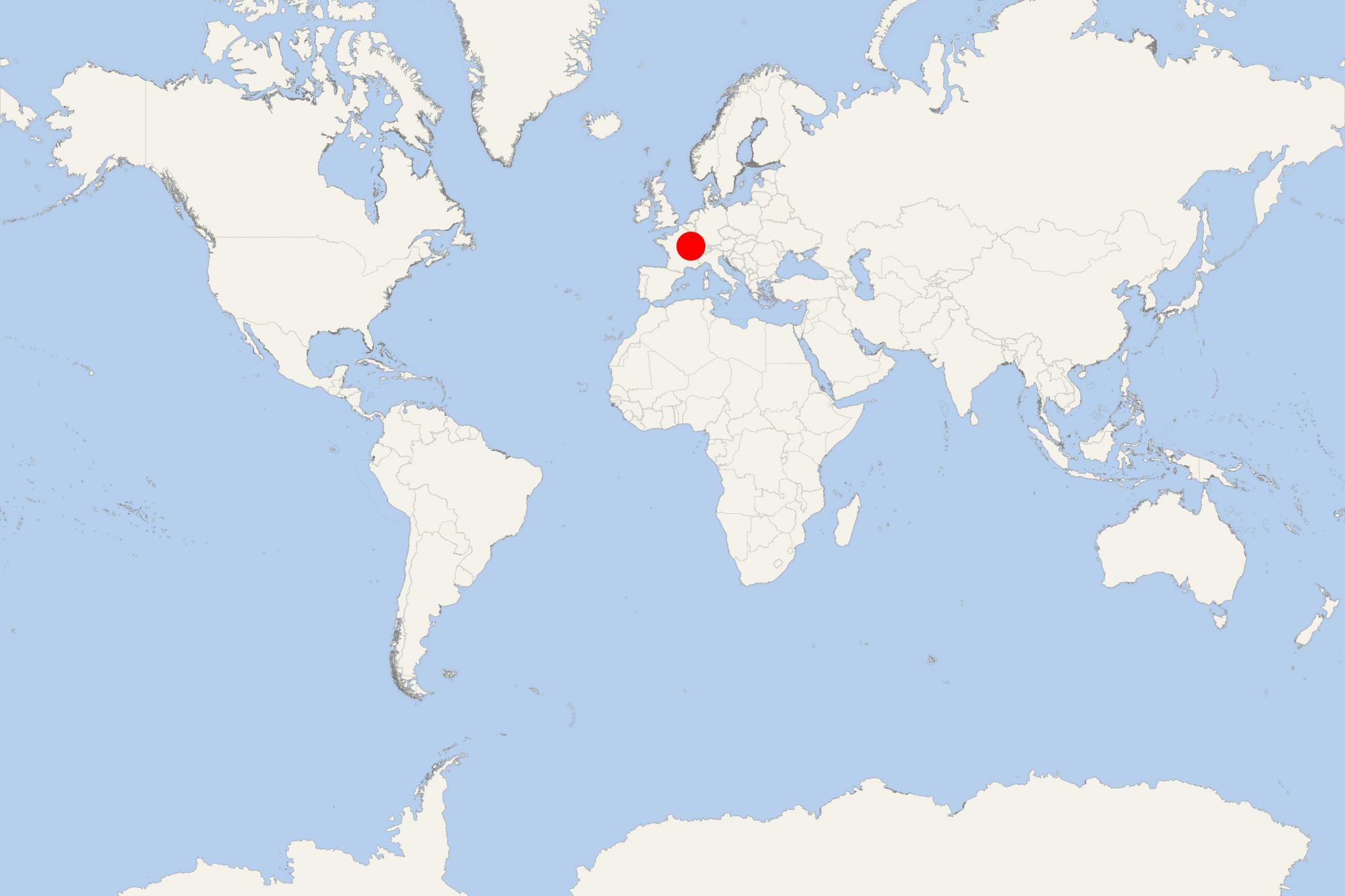
Region
France Rivers
Local Time
2026-10-24 08:51
 45°F
7.3°C
 Light breeze
2.8 m/s
 52 °F / 11 °C
43 °F / 6 °C
Port Dijon cruise ship schedule shows timetable calendars of all arrival and departure dates by month. The port's schedule lists all ships (in links) with cruises going to or leaving from Dijon, France. To see the full itineraries (ports of call dates and arrival / departure times) and their lowest rates – just follow the corresponding ship-link.
| Day | Ship | Arrival | Departure |
|---|---|---|---|
| 6 October, 2026 Tuesday |  Avalon Tapestry II | ||
| 6 October, 2026 Tuesday | Avalon Poetry II | ||
| 20 October, 2026 Tuesday | Avalon Tapestry II | ||
| 20 October, 2026 Tuesday | Avalon Poetry II | ||
| 30 October, 2026 Friday |  AmaCello |
Dijon city is located in eastern France, in a plain drained by two converging rivers - Suzon (crossing it north to south, mostly underground) and Ouche (on the city's southern side). Dijon is the capital of Cote-d'Or departement and also of the French region Bourgogne-Franche-Comte. The city covers a total area of 40 km2 (16 mi2) and has population of around 155,000.
The earliest archaeological finds within city limits date to the Neolithic period. Later, Dijon became a Roman settlement called Divio, situated on the road out of Lyon to Paris. From the early 11th until the late-15th centuries the province was home to the Dukes of Burgundy and the city was a place of tremendous power and wealth, one of the greatest European centers of learning, science and art.
The city of Dijon has retained various architectural styles from a lot of the main periods of the past millennium, including Capetian, Gothic, Renaissance. Many still-inhabited houses in the central district date from the 18th century and earlier. The architecture of Dijon is distinguished by Burgundian polychrome roofs (toits bourguignons) made of tiles glazed in green, yellow, black and terracotta and arranged in geometric patterns. The city has a large number of churches, such as Notre Dame de Dijon, Saint Michel, Saint Philibert and Dijon Cathedral, dedicated to apocryphal Saint Benignus, which crypt is more than 1,000 years old.
Every year in autumn Dijon holds the International and Gastronomic Fair. With more than 200,000 visitors and 500 exhibitors per year, it is one of the 10 most important French fairs. Every 3 years Dijon is also home to the famous international flower show Florissimo. The city is famous with the Dijon mustard (since 1856). The historical downtown Dijon became UNESCO Site in 2015.
From Dijon, cruise passengers are offered bus tours to Chateau de Longecourt en Plaine (13th-century built fortified mansion / castle with gardens).
Dijon’s compact historic center suits a few hours of independent sightseeing, with pedestrian streets, the Palace of the Dukes, churches and food shops close together. The main planning issue is where your vessel actually docks: a cruise itinerary marked “Dijon” may involve a transfer from Saint-Jean-de-Losne rather than a berth in the city.
Independent with some planning or transport. Once in central Dijon, exploring on foot is straightforward. Confirm the actual mooring and return arrangements before setting out.
Getting from the Cruise Port
River cruises using Saint-Jean-de-Losne
Some larger river-cruise itineraries use Saint-Jean-de-Losne on the Saône as the embarkation port for Dijon. It is approximately 30 km (18.6 mi) from the city; allow roughly 40–50 minutes each way by road, depending on the berth and traffic. This is a transfer destination, not a walk from the ship. A cruise-line transfer or prebooked taxi is the simplest option. Confirm whether transport is included in your booking. :chatgpt-content-reference{index="0"}
TER trains connect Saint-Jean-de-Losne with Dijon, with the fastest journeys taking about 27 minutes. However, reaching the station from the mooring adds time, and departures must fit your return deadline. Check both journeys before choosing the train; do not assume the station is beside your vessel. :chatgpt-content-reference{index="1"}
Canal-barge itineraries
Small canal-barge cruises also operate from Dijon along the Burgundy Canal. Use the mooring address in your boarding documents rather than assuming that every Dijon cruise uses the same passenger exit. Ask the crew whether walking into the center is practical from that day’s berth and where the vessel will be when you return. :chatgpt-content-reference{index="2"}
Best Ways to Spend Your Time
Historic center and the Owl Trail
Allow 2–3 hours in the city. Follow the bronze owl markers through the old town, taking in Rue de la Liberté, the ducal palace, Notre-Dame and streets of traditional houses. The official trail has 22 stages; a shorter highlights walk works well when your transfer leaves limited free time. Walking is easy overall, although paving can be uneven. :chatgpt-content-reference{index="3"}
Palace, art museum and a tower climb
Allow 1–2 hours for the museum, or add a booked tower visit. The Musée des Beaux-Arts occupies part of the ducal palace and makes a useful indoor option. Permanent collections are free, and the museum normally closes on Tuesdays. Choose a few galleries rather than trying to see everything. :chatgpt-content-reference{index="4"}
The Tour Philippe le Bon offers rooftop views on a 45-minute guided visit. Advance booking is essential, and the climb involves 316 steps. It is a demanding addition rather than part of an easy walking route. Book only a slot that leaves comfortable time for your return transfer. :chatgpt-content-reference{index="5"}
Market browsing and Burgundy food
Allow 1–2 hours. Visit Les Halles when the market is operating, then browse central shops for mustard, gingerbread and other local specialties. The covered market normally operates on Tuesday, Thursday, Friday and Saturday mornings; an afternoon visit should focus on the surrounding shops and cafés. :chatgpt-content-reference{index="6"}
For a more substantial food-focused visit, choose the Cité Internationale de la Gastronomie et du Vin, southwest of the historic core. Its exhibitions, food shops and wine experiences can fill approximately 1½–3 hours. Check individual activities and reservations before committing your limited shore time. :chatgpt-content-reference{index="7"}
Burgundy vineyard excursion
Organized excursion recommended. The Route des Grands Crus offers an alternative to city sightseeing, with vineyard villages and cellar visits between Dijon and Beaune. Choose a tour whose duration and pickup arrangements match your call. Cellar appointments and travel between villages make a guided excursion or prearranged driver more practical than an improvised public-transport outing. Treat this as your main activity rather than adding it to a full city visit. :chatgpt-content-reference{index="8"}
Self-Guided Walking Route
Central Dijon highlights loop
Start and finish: Place Darcy, after reaching the city center. This route begins in town, not at an assumed cruise-terminal exit.
Approximate distance: 2.5 km (1.6 mi). Pure walking time: 40–50 minutes. Recommended total: 2–3 hours, excluding a substantial museum visit. Difficulty: easy, with mostly level streets, some uneven paving and optional steps at attractions.
- Place Darcy and Darcy Garden: begin with a short look around the square and garden.
- Porte Guillaume: pass the arch and continue along Rue de la Liberté.
- Place François Rude: pause among the traditional façades and cafés.
- Place de la Libération: view the Palace of the Dukes; add the art museum if time permits.
- Rue des Forges: walk past historic townhouses toward Notre-Dame.
- Notre-Dame and Rue de la Chouette: look at the church façade and find the small owl carving on its exterior.
- Les Halles: browse the market if open, then return to Place Darcy via the central shopping streets.
This is a shortened highlights loop rather than the complete official Owl Trail. Use the bronze markers and a city map to orient yourself. If your coach uses another pickup point, allow extra time to reach it instead of automatically returning to Darcy. :chatgpt-content-reference{index="9"}
Practical Tips
- Check whether the vessel moves: on a canal itinerary, your return mooring may differ from your departure point.
- Separate sightseeing time from transfer time: a visit from Saint-Jean-de-Losne uses a significant part of the outing on transport.
- Keep a return margin: for an independent road transfer, add at least 45–60 minutes beyond the expected journey time before the required onboard time, with more allowance if conditions warrant it.
- Choose one main plan: the historic center plus a museum or food stop is a manageable combination; a vineyard excursion should usually replace that plan.
- Wear comfortable shoes: pedestrian streets are convenient, but older paving and prolonged standing can be tiring.
Dijon hotels
- Cruise Industry
AmaWaterways unveils new back-to-back cruises in Europe debuting 2025
AmaWaterways has unveiled its plans for a new series of combination/back-to-back cruises (B2Bs) in Europe set to debut in 2025. These extended 14...
October 21, 2023 - Cruise Industry
AmaWaterways announces 2024 voyages in Europe, Egypt, Asia, Colombia and Africa
AmaWaterways has released its 2024 "Heart of the River brochure" providing details on the extraordinary river cruise travel experiences that await...
June 9, 2023 - show more news