

Fernandina Island (Galapagos)
Cruise Port schedule, live map, terminals, news

Region
Galapagos Islands
Local Time
2026-11-04 12:40
 81°F
27.3°C

 Mod. breeze
6 m/s
 83 °F / 29 °C
73 °F / 23 °C
Port Fernandina Island cruise ship schedule shows timetable calendars of all arrival and departure dates by month. The port's schedule lists all ships (in links) with cruises going to or leaving from Fernandina Island, Galapagos. To see the full itineraries (ports of call dates and arrival / departure times) and their lowest rates – just follow the corresponding ship-link.





Fernandina Island, formerly known as "Narborough Island" in English (after John Narborough), is the 3rd largest and youngest of the Galapagos Islands. Just like the others, it was formed by the Galapagos hotspot.
Fernandina Island is an active shield volcano, erupting since April 2009. Captain Benjamin Morrell recorded one of the biggest eruptions in the history of Galapagos at Fernandina Volcano, while on the ship anchored in Banks Bay. The vessel successfully escaped to safety, and the account of the eruption was preserved.
Fernandina Island has an area of 642 km2 (248 mi2) and height 1476 m (4842 ft), with a summit caldera 6.5 km (4 mi) wide. In 1968, parts of the caldera floor dropped 350 m, and a small lake occupies the northern caldera floor.
Due to recent volcanic activity, Fernandina does not present much plant life. The island has a mostly rocky surface.
Cruise ships to Fernandina Island dock (anchor) at Punta Espinoza - the primary landing point on the northern coast. Some boats may stop at Punta Mangle (on the eastern coast) - a good anchorage for snorkeling with manta rays and turtles.
Fernandina Island, in Ecuador’s Galapagos Islands, is a wildlife and lava-landscape stop explored through your ship’s expedition program. The main landing site, Punta Espinoza, offers close views of marine iguanas, flightless cormorants and volcanic terrain.
Independent sightseeing limited: visitors must remain with an authorized naturalist guide on designated routes. There is no town, public transport or walk-off sightseeing area.
Getting Ashore
Ships remain offshore, with passengers transferred by small expedition boats, often called pangas or Zodiacs. Punta Espinoza normally involves a dry landing onto a rocky landing area rather than wading ashore. Tides and sea conditions affect the transfer, and rocks can be slippery.
Follow the expedition team’s instructions for footwear, boarding and landing. Anyone with reduced mobility should discuss the boat transfer and uneven lava surfaces with the team before joining. A short trail does not necessarily mean an easy landing.
Best Ways to Spend Your Time
Guided Wildlife Walk at Punta Espinoza
Allow roughly 1.5–2 hours ashore for a slow naturalist-led walk, depending on your ship’s program. Marine iguanas gather on the dark coastal rocks, while flightless cormorants, sea lions and Sally Lightfoot crabs provide further wildlife-watching opportunities. Penguins may also be seen, but sightings are not guaranteed.
The emphasis is on observation and photography rather than covering distance. Walking is generally moderate because of broken lava, uneven footing and exposed conditions, rather than steep climbing.
Lava Fields and Lava Cactus
Where included in the guided landing, the inland portion of the trail crosses rope-textured lava toward the edge of a rougher lava flow. Look for lava cactus and compare the different rock surfaces. This is usually part of the Punta Espinoza visit, rather than a separate excursion.
Stay on the designated route and follow the guide’s pace. La Cumbre volcano forms the backdrop; its summit is not a practical cruise-call hike.
Guided Snorkeling
If included in your vessel’s authorized itinerary and conditions permit, snorkeling offers another perspective on the island’s marine wildlife. Sea turtles, fish and feeding marine iguanas are possible encounters. Some operators schedule approximately 45 minutes in the water, with additional time needed for preparation and boat transfers.
These western Galapagos waters can be cold, and currents or swell may make the activity demanding. Ask the expedition team about entry arrangements, swimming ability requirements and wetsuits. There is no independent beach-swimming alternative.
Coastal Wildlife by Expedition Boat
A guided panga ride may be offered within the ship’s program, allowing observation of the rocky shoreline and coastal wildlife. Availability depends on the itinerary and sea conditions. If you prefer this to walking, confirm the options with the expedition team; a boat ride still requires boarding a moving small craft.
Practical Tips
- Follow the scheduled program: walking, snorkeling and boat outings are coordinated activities, not independently bookable choices ashore.
- Prepare before leaving: use onboard toilets and bring drinking water, sun protection and secure footwear with good grip.
- Protect the wildlife: keep the required distance, never touch or feed animals, and let the guide manage any wildlife blocking the trail.
- Observe biosecurity procedures: clean footwear and equipment as instructed and take all belongings and litter back aboard.
- Return with your group: follow the guide’s turnaround time and assigned boat transfer. Allow time for boarding procedures rather than planning around the ship’s departure time alone.
- Expect changes: swell, tides, volcanic activity or park restrictions can alter or cancel a landing.
Fernandina Island hotels
- Cruise Industry
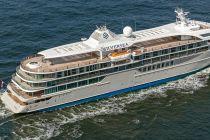
Silversea restarts Galapagos Islands' cruises on June 19
Silversea Cruises announced its return to service in the Galapagos Islands aboard the new ship Silver Origin, which arrived in San Cristobal on April...
May 12, 2021 - Cruise Industry

Adventures by Disney launches first-ever Antarctica and Galapagos cruises
New "Adventures by Disney" Expedition Cruises provide families with the opportunity to sail to some of the world's most popular travel destinations...
January 14, 2021 - show more news