

Franz Josef Land (Arctic Russia)
Cruise Port schedule, live map, terminals, news
Region
Arctic - Antarctica
Local Time
2026-11-09 10:06
 16°F
-9.1°C

 Gentle breeze
5.5 m/s
 24 °F / -4 °C
4 °F / -15 °C
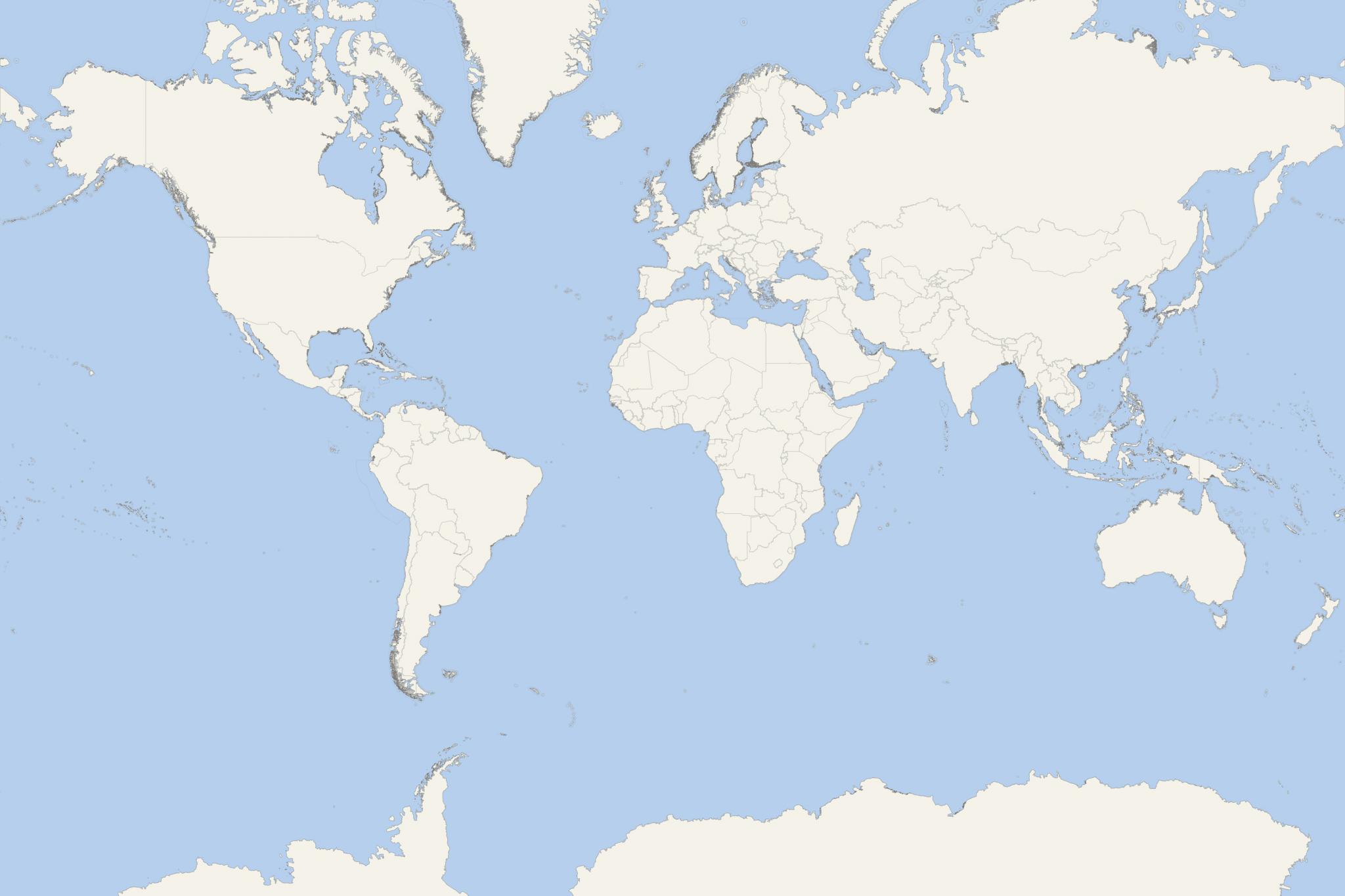
Franz Josef Land (aka Franz Joseph Land) is a Russian Arctic archipelago located in northern Asia (Arctic Ocean, Barents Sea, Kara Sea). The archipelago consists of a total of 191 islands, which are inhabited by Russian military personnel only.
The islands cover a total land area of 16134 km2 (6229 mi2) stretching east to west 375 km (233 mi) and north to south 234 km (145 mi). The archipelago is divided into three groups (western, central, eastern) separated by two sea channels - British Channel and Austrian Strait. The central group is divided into northern and southern (divided by Markham Strait). The largest islands are George Land (total area 2741 km2 / 1058 mi2), Wilczek Land (2203 km2 / 851 mi2), Graham Bell (1557 km2 (601 mi2) and Alexandra (1095 km2 / 423 mi2).
Cape Fligely (Rudolf Island) is the Eastern Hemisphere's northernmost point. Franz Josef Land islands have a total of 4425 km (2750 mi) coastline. The archipelago's highest elevation point is on Wilczek Land (670 m / 2200 ft above sea level). The archipelago was first discovered in 1865 by Norwegian sailors but was first reported in 1873 during a North Pole expedition. The area was named after Franz Joseph I of Austria (1830-1916).
Franz Josef Land was annexed by the USSR (Soviet Union) in 1926 when were settled several Russian research outposts (military bases). After WW2 (1939-1945) were built military airfields (on Alexandra Land and Graham Bell Island) and the archipelago was closed off for foreigners until 1990. Since April 1994, the archipelago is a nature reserve park, part of the Russian Arctic National Park. Franz Josef Land has rare marine mammals, including 3 seal species, walruses, whales (Minke, humpback, beluga, fin, orca and narwhales).
In 2012, the Graham Bell Airfield was reopened for military purposes.
Cruise travel to Franz Josef Land is very limited as the archipelago has no infrastructure to support it and these islands can only be reached by an icebreaker ship. Typically, these Arctic cruises are operated with departures from Murmansk. The first tourist landings (8) were made in 2012. The most common is the 3-week (21-day) North Pole cruise itinerary offered by the Russian nuclear-powered icebreaker 50 Let Pobedy stopping here en-route.
The most popular polar cruising destinations here are bird cliffs and the walrus colonies on Northbrook Island (Cape Flora) and Hooker Island (Cape Rubini). Another destination are the Nansen's hut remains (Jackson Island). Cruise passengers are commonly landed by the icebreaker's helicopter.
In September 2016, Franz Josef Land was visited by the Hapag-Lloyd Cruises ship Hanseatic (now Heritage Adventurer) as part of its "Northeast Passage" itinerary (CruiseMapper news link).
Franz Josef Land is an expedition destination rather than a conventional cruise port. Time ashore centers on guided landings, polar exploration sites and wildlife viewing, with the day’s program determined by ice, weather and local permissions.
Independent sightseeing limited or not recommended. There is no town to explore from a cruise terminal. Visits take place through an authorized expedition, and passengers must follow the expedition team’s instructions and approved landing arrangements.
Getting Ashore
There is no single passenger terminal or standard landing point for the archipelago. Ships generally remain offshore, with passengers transferred by Zodiac or another expedition boat. Some icebreaker itineraries may use helicopters, but this depends on the vessel and its operating program.
Expect a safety briefing before each outing. Landings may involve stepping into shallow water or onto a rocky beach, followed by walking over uneven ground, loose stones, mud or snow. Ask the expedition team about boarding requirements and walking difficulty before joining.
There are no practical taxi, public transport or independent sightseeing transfers at the expedition landing sites. A scheduled visit to Franz Josef Land does not guarantee a landing on any particular island.
Best Ways to Spend Your Time
Tikhaya Bay: Polar Station and Visitor Center
Tikhaya Bay on Hooker Island offers a shore visit focused on the former polar station and its historic buildings. The national park maintains a visitor center and museum displays here, giving useful context to life and scientific work in the High Arctic.
This is a guided landing rather than a self-guided village walk. Follow the designated paths and boardwalks where provided. A post office and souvenir shop form part of the visitor facilities, but access and service during your visit should be confirmed onboard. Keep the whole assigned landing window available rather than planning a separate activity afterward.
Rubini Rock: Seabirds from the Water
Rubini Rock, near Tikhaya Bay, is a major seabird cliff. An expedition boat cruise can provide views of nesting birds and the rock face without requiring a substantial walk. Binoculars are useful, and the guides determine the approach according to sea conditions and wildlife disturbance.
This can suit passengers who prefer less walking, although boarding a small boat and sitting in cold, exposed conditions still require consideration. A visit may be combined with other activities around Hooker Island if conditions allow.
Cape Flora: Exploration History and Arctic Vegetation
Cape Flora is a possible landing for seeing historic expedition sites, seabirds and the archipelago’s low-growing vegetation. Its appeal is a guided walk through a remote polar landscape, rather than a developed attraction with conventional visitor facilities.
Expect uneven ground and potentially wet or slippery footing. Swell can prevent landing even when the coast is clearly visible. Join only the route opened by the guides; historic remains and wildlife areas should not be approached independently.
Scenic Cruising and Wildlife Watching
Glaciers, ice-covered islands and wildlife can make time aboard an important part of the visit. Watch from the ship’s permitted observation areas, or join a guided boat outing when offered. Polar bears, walruses, seals and whales are possible sightings, but none is guaranteed.
Keep binoculars, warm layers and a camera ready for expedition announcements. Wildlife sightings or changing ice conditions may replace a planned shore visit, and viewing from the ship may be the most practical option when landing is unsafe.
Walking and Activity Planning
Self-guided walking tours are unsuitable here. Polar bear risk, protected habitats and the absence of ordinary visitor infrastructure require controlled access. Walking distances, routes and time ashore are set locally after the expedition team assesses conditions.
Choose between the available guided walks according to the team’s description of terrain and pace. A short landing can still be demanding because of unstable footing, cold wind and boat transfers. Ask whether a shorter shore option or shipboard viewing is available if mobility is limited.
Practical Tips
- Confirm the voyage is operating: access to Russian Arctic destinations and expedition availability can change. Check your operator’s current arrangements before relying on a published itinerary.
- Check permissions in advance: confirm that the operator arranges the required park access and entry formalities for your nationality.
- Dress for exposed conditions: use warm layers, waterproof outerwear, gloves and the footwear specified by the expedition team. Protect cameras and other electronics from spray.
- Stay within the approved area: do not wander away from guides or cross the landing perimeter. Follow instructions immediately if wildlife approaches.
- Protect the sites: leave stones, plants, bones and historical objects in place, and take all litter back to the ship.
- Follow the return instructions: be at the landing point by the team’s stated time. Boat transfers may be brought forward if wind, swell or ice changes; the ship’s departure time is not your shore-return deadline.
Franz Josef Land hotels
- Cruise Industry
PONANT’s icebreaker Le Commandant Charcot becomes first to set foot on North Pole of Inaccessibility
Le Commandant Charcot has achieved a historic maritime milestone, becoming the first vessel to reach the North Pole of Inaccessibility under the...
September 23, 2024 - Accidents
Poseidon Expeditions cancels Summer 2022 polar programs in Russian territorial waters
Poseidon Expeditions (fleet) announced that it had cancelled its Summer 2022 polar programs in Russian territorial waters. This affects a total of 7...
March 20, 2022 - Cruise Industry
Scenic Cruises to visit all 7 continents in 2023-2024 season
The ultra-luxury, full all-inclusive travel brand Scenic Yacht Cruises introduced its 2023-2024 itinerary collection. With the introduction of...
January 13, 2022 - Cruise Industry
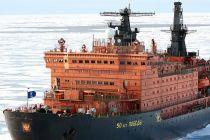
Poseidon Expeditions restarts North Pole icebreaker cruises aboard 50 Years of Victory on July 10
Poseidon Expeditions announced the resumption of its North Pole icebreaker cruises aboard the nuclear-powered 50 Let Pobedy (50 Years of Victory...
July 3, 2021 - Cruise Industry
Lindblad Expeditions announces new extraordinary adventures
Lindblad Expeditions announced new extraordinary adventures into wildness and the seldom-seen. Each adventure promises epic opportunities, whether...
March 20, 2021 - Cruise Industry
Scenic Cruises introduces new Scenic Eclipse 2022-2023 Worldwide Voyages
The ultra-luxury travel brand Scenic Cruises released Scenic Eclipse yacht’s 2022-2023 program (Worldwide Discovery Voyages) featuring new...
December 8, 2020 - Cruise Industry
Poseidon Expeditions introduces 2022 Arctic and 2022-2023 Antarctic cruise schedule
Announcing the new 2022 Arctic and 2022-2023 Antarctic polar cruise seasons 3 months earlier than usual and unveiling a return to West Greenland for...
October 23, 2020 - Cruise Industry
Quark Expeditions introduces 17 cruises for the Arctic 2022 season
The leader in Polar Adventures, Quark Expeditions, released details of its Arctic 2022 season line-up of cruises that are designed to immerse...
September 6, 2020 - Cruise Industry
Poseidon Expeditions extends Sea Spirit ship's charter through 2024
Poseidon Expeditions announced that it had signed an agreement with shipowner SunStone Ships, Inc. to extend the charter of the 114-passenger cruise...
April 11, 2020 - Cruise Industry
Scenic Luxury Cruises & Tours Introduces New Russian High Arctic Cruise
Scenic Cruises released a new itinerary to the Russian High Arctic and Novaya Zemlya. "Franz Josef Adventure" is an 18-day cruisetour roundtrip...
February 18, 2020 - show more news