

Djupavik (Iceland, Westfjords)
Cruise Port schedule, live map, terminals, news
Region
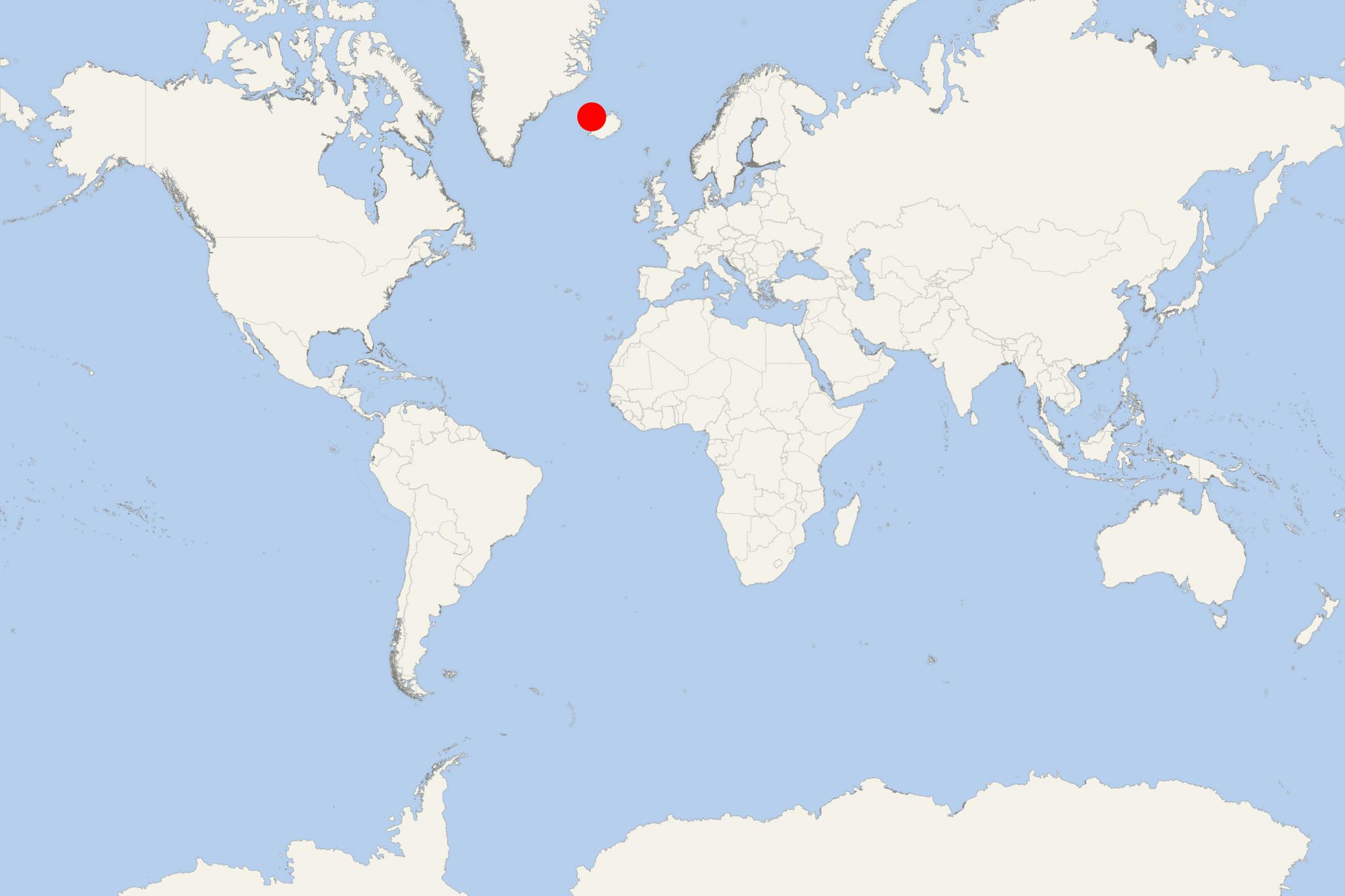
Iceland - Greenland - Faroe Islands
Local Time
2026-10-19 19:11
 35°F
1.8°C

 Light breeze
2.9 m/s
 40 °F / 5 °C
32 °F / -0 °C
Port Djupavik cruise ship schedule shows timetable calendars of all arrival and departure dates by month. The port's schedule lists all ships (in links) with cruises going to or leaving from Djupavik, Iceland, Westfjords. To see the full itineraries (ports of call dates and arrival / departure times) and their lowest rates – just follow the corresponding ship-link.
| Day | Ship | Arrival | Departure |
|---|---|---|---|
| 14 June, 2027 Monday |  World Voyager | ||
| 22 June, 2027 Tuesday |  Silver Wind | 14:00 | 20:00 |
| 27 June, 2027 Sunday |  National Geographic Explorer | ||
| 29 June, 2027 Tuesday |  Hanseatic Inspiration |
Djupavik is a cruise port (on Reykjarfjordur bay) and a small village (population under 100). The settlement is part of Iceland's Vestfirdir/Westfjords (Strandir coastal region) and of the Arneshreppur District. The nearest town is Holmavik (Strandir's largest) at approx 70 km (40 mi) to the south along the coast. The largest port town in Westfjords (Isafjordur) is approx 280 km (170 mi) to the west. Iceland's capital city (Reykjavik) is approx 340 km (210 mi) to the south.
Djupavik can be reached by ship, car and by plane. Arneshreppur district is served by Gjogur Airport (located on Hunafloi bay / between Strandir and Skagastrond). The airport is operated by ISAVIA (Iceland's national flight and airport operator) and serves domestic flights (connecting with Reykjavik) scheduled twice a week (winter schedule) and once a week (summer schedule).
Djupavik was settled (a family of five) in 1917 after building the salted fish salting factory (for processing cod and herring) which went bankrupt in 1919. Djupavik was again resettled in 1934 when was established Djupavik Ltd, which built a new herring factory after loaning money from Solberg Bank (Stockholm Sweden). The new plant was inaugurated in 1935 as Iceland's largest concrete building (90 m / 295 ft in length) and Europe's first fully automated fish-processing plant. After WW2 (1939-1945), herring catches started to decline. In 1954 the factory closed, and in 1968 Djupavik Ltd was dissolved. In 1984 was opened the Djupavik Hotel. The fishing factory is now serving as a museum.
Next table shows a 10-day "Iceland Circumnavigation" cruise itinerary that was scheduled by the Hurtigruten company for 2022.
| Date / Time | Port |
|---|---|
| 08 Aug | Departing from Reykjavik |
| 09 Aug | Stykkisholmur |
| 10 Aug | Patreksfjordur |
| 11 Aug | coastal cruising |
| 12 Aug | Djupavik |
| 13 Aug | Akureyri (Lake Myvatn) |
| 14 Aug | Grimsey Island |
| 14 Aug - 15 Aug | Husavik |
| 15 Aug | coastal cruising |
| 16 Aug | Bakkargerdi (Borgarfjordur Eystri) |
| 17 Aug | Heimaey Island |
| 18 Aug | Arriving in Reykjavik |
The voyage (officially themed as "Circumnavigating Iceland- The Land of Elves, Sagas Volcanoes") was operated by the ship MS Fram and priced from USD 5050 (EUR 4150) per person with double occupancy
Djúpavík is a small expedition landing in Iceland’s Westfjords, best explored through its old herring factory, waterfront and waterfall scenery. Most visitors can combine the village sights in a relaxed couple of hours; a hillside walk adds a more active option.
Independent with some planning: the main sights are close together once ashore, but landing arrangements, factory access and any freedom to walk independently depend on your ship’s programme. Travel beyond the village requires transport arranged in advance.
Getting Ashore and Around
Ships normally anchor in Reykjarfjörður and bring passengers ashore by Zodiac or tender. This is a small coastal landing rather than a conventional cruise terminal. The exact landing point and whether you step onto a beach depend on conditions and the expedition team’s arrangements.
The factory, hotel and waterfront are within a short walk of one another. No shuttle is needed for the village sights, but expect gravel, uneven ground and some slopes. There is no local public bus service; do not count on finding a taxi or rental car on arrival.
Passengers with limited mobility should check both boat-transfer requirements and access ashore. Factory and exhibition areas can involve rough floors and stairs.
Best Ways to Spend Your Time
Visit the Old Herring Factory
The large concrete factory is Djúpavík’s main attraction. A guided visit explains the machinery and working conditions of the former fishing settlement. Parts of the building also host seasonal art exhibitions, although access and displays vary.
Allow roughly 1–1.5 hours for a factory visit and nearby photographs. Check the arrangements through your ship or Hótel Djúpavík; do not assume the interior is freely accessible whenever you arrive.
Explore the Waterfront and Village
For a gentler visit, walk between the factory, the rusting Suðurland shipwreck and Hótel Djúpavík, with views across the fjord and up to the waterfall. Allow 45–90 minutes, or longer with refreshments if the hotel is serving visitors.
This is practical independently when your expedition team permits it. View the wreck from outside and respect the privacy of the village’s houses.
Walk Towards Djúpavíkurfoss
The waterfall above the settlement can be admired from below without a climb. For a closer view and a higher perspective over the fjord, ask the expedition team or hotel about the current trail beside it.
Allow approximately 1–1.5 hours for a short uphill outing with photographs, depending on your turnaround point. Expect uneven ground, steeper sections and potentially slippery footing. A guided walk is preferable in poor visibility or if you want to continue onto the higher ground.
Self-Guided Village Walk
Factory, Shipwreck and Fjord Views — Easy to Moderate
Start: your designated landing point, following the team’s directions into the settlement. Allow approximately 1 km (0.6 mi) of walking, depending on the landing location and small detours. Pure walking takes around 20–30 minutes; allow 1–1.5 hours with stops, excluding a guided factory tour.
- Waterfront: pause for views across Reykjarfjörður and identify your return landing point.
- Old herring factory: view the building from outside, or join your arranged interior visit.
- Suðurland shipwreck: photograph the rusting hull beside the factory without climbing onto it.
- Hótel Djúpavík: see the former workers’ accommodation and check whether refreshments are available.
- Waterfall view: enjoy Djúpavíkurfoss from the village before retracing your way to the landing point.
The village route avoids the hillside climb, but gravel, small gradients and the landing itself mean it is not a fully accessible promenade. Keep any uphill extension separate so that you can shorten the walk easily.
Practical Tips for Your Call
- Wear waterproof layers and sturdy footwear with good grip. Follow the ship’s footwear instructions if a beach landing is planned.
- Carry water and essentials ashore. Food, toilets and indoor shelter are limited; check hotel availability rather than relying on it.
- For most short calls, the factory and village are the most practical combination. Longer hikes or drives along the Strandir coast need advance arrangements.
- Follow the expedition team’s permitted walking area and return instructions. Be at the landing point before the announced final boat, allowing extra time if conditions deteriorate.
Djupavik hotels
- Cruise Industry
Lindblad Expeditions' ship National Geographic Explorer returns to Iceland in July
Lindblad Expeditions announced it is reactivating its National Geographic Explorer ship for a series of cruises in Iceland this summer. The 148...
May 29, 2021 - show more news