

Cabo Rojo-Pedernales (Dominicana)
Cruise Port schedule, live map, terminals, news
Region
Bahamas - Caribbean - Bermuda
Local Time
2026-10-21 19:09
 80°F
26.9°C

 Very Light
1.1 m/s
 89 °F / 32 °C
70 °F / 21 °C
Port Cabo Rojo-Pedernales cruise ship schedule shows timetable calendars of all arrival and departure dates by month. The port's schedule lists all ships (in links) with cruises going to or leaving from Cabo Rojo-Pedernales, Dominicana. To see the full itineraries (ports of call dates and arrival / departure times) and their lowest rates – just follow the corresponding ship-link.
| Day | Ship | Arrival | Departure |
|---|---|---|---|
| 8 October, 2026 Thursday |  Allure Of The Seas | 11:00 | 17:00 |
| 14 October, 2026 Wednesday | Freedom Of The Seas | 07:00 | 16:00 |
| 25 October, 2026 Sunday | Freedom Of The Seas | 09:00 | 17:00 |
| 27 October, 2026 Tuesday |  Norwegian Viva | 07:00 | 14:00 |
| 29 October, 2026 Thursday |  MSC Poesia | 07:00 | 15:00 |
Cabo Rojo (port locode DOCBJ) is in Dominicana's Pedernales province. The Port is private and owned by Alcoa Corporation (1888-founded, headquartered in Pittsburgh, Pennsylvania USA). Alcoa (Aluminum Corporation of America) uses Puerto de Cabo Rojo for exporting bauxite (rock with a high aluminum content) and limestone.
The Port's cargo terminal is currently operated by Cementos Andino SA (1998-founded Colombian company) which exports cement clinker and concrete, as well as bauxite and limestone.
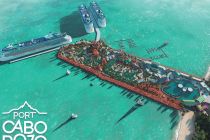
On June 1, 2022, officially started the construction works on Cabo Rojo Cruise Port (~US$100 million project). The port was completed in December 2023 (Phase 1) and officially inaugurated on January 4, 2024. The project includes building two docking facilities/piers, a modern passenger terminal, a premium yacht marina, a large water park.
When fully completed, Cabo Rojo Cruise Port has projected annual capacity to receive/handle up to 1 million cruise tourists.
The project's Phase I (June 2022 thru December 2023) included building two piers and the cruise terminal. Phase II (planned for completion in 2024-Q2) includes the expansion of the terminal, adding two more cruise piers and a pier dedicated to fishing boats.
The cruise port's annual passenger capacity is ~1 million, targeting predominantly international tourists.
Cabo Rojo cruise port is managed by APORDOM (Dominican Port Authority) and ITM Group (based in Cancun Mexico). ITM also operates the cruise ports Costa Maya (Yucatan, Quintana Roo Mexico) and Taino Bay/Puerto Plata (Dominicana). According to ITM, Cabo Rojo's cruise shipping activities could generate annually between US$120-150 million.
The Cabo Rojo Cruise Port project's cost was estimated at ~RD$ 7,1 billion (Dominican pesos/~USD 126 million) and the entire money (a private investment) was provided via a loan from Banco Central de la Republica Dominicana (the country's Central Bank). Reportedly, the project was expected to generate 5000+ local jobs (direct and indirect) thus boosting Pedernales province's economy.
In 2022, Dominicana's investments in the Pedernales region were ~US$80-90M, and an additional ~US$150-200M was invested in 2023. The Government's RD$ 15B (~USD 270M) development plan included the construction of three coastal hotels near the cruise port (combined capacity 1600 rooms), building six more hotels, an advanced wastewater treatment plant, supporting infrastructure, internal roads, as well as repairs and expansion of the Barahona Enriquillo Coastal Highway and a new airport (cost ~US$70M).
In February 2023, NCL-Norwegian Cruise Line included Cabo Rojo Pedernales in its 2024 schedule as a new Caribbean destination. NCL's itineraries that visited Cabo Rojo in 2024 (January, March, April) were roundtrips from La Romana (Dominicana) scheduled for Norwegian Sky. In January 2025 NCL's ship Norwegian Jewel was also listed in Cabo Rojo Port's schedule. Norwegian Sky's 14-day "Panama Canal: Costa Rica and the Dominican Republic" itinerary (Jan 3-17) was a roundtrip from Tampa Florida USA. The Panama Canal segment was a partial transit (Gatun Lake cruising).
In 2023, the Dominican Republic also made investments in upgrades to Port Samana, which is often visited by ships of NCL-Norwegian and RCI-Royal Caribbean International.
The road distance from Cabo Rojo Port to Pedernales City is approx 20 km / 12 mi. Pedernales is on the Dominican-Haiti border and has a border crossing to Anse-a-Pitres. The municipality's economy is based on agriculture (beans, coffee), beef cattle and goats, mining (bauxite), commercial fishing (lobster, lambi) and domestic tourism. The most visited tourist destinations are Bahia de las Aguilas Beach and Sierra de Bahoruco National Park, both a short distance from Pedernales.
Cabo Rojo Airport is approx 16 km / 10 mi southeast of Pedernales City (population around 30,000). The airport serves only domestic flights.
Cabo Rojo (translated Cape Red) signifies both the cape and the beach (Playa Cabo Rojo). This part of Dominicana is known for its bauxite mines, pristine turquoise waters and scenic white-sand beaches, the most popular of which are Cabo Rojo and Bahia de las Aguilas (8-km/5-mi long beach).
Dominican Republic's Cabo Rojo has namesakes in Mexico's Veracruz state (a sand barrier approx 55 km / 34 mi south of Tampico, Tamaulipas, that encloses Laguna de Tamiahua) and Puerto Rico (a city and municipality part of the San German-Cabo Rojo metro area).
Following its official opening in 2024, the Port received a total of 5 cruise ship calls.
For 2025 were booked a total of 27 cruise ship berthings by 5 major companies (HAL/Holland America, RCI/Royal Caribbean, NCL/Norwegian, MSC, Costa).
Cabo Rojo-Pedernales cruise terminal
The october 2024- inaugurated Puerto Cabo Rojo has only one floating pier plus several anchorage areas.
When fully completed, the cruise port will have two large concrete piers with four docks/berthing positions (two on each pier) with capacity to accommodate four large ships simultaneously. Another fixed pier will serve fishing vessels.
Cruise Terminal's facilities include a passenger reception hall, aquapark (lazy river, ATV track), interactive play zone (merry-go-round, ferris wheel), outdoor playgrounds for kids, recreational and commercial facilities (entertainment venues, shops, wellness complex), a large-capacity restaurant, a boutique hotel and an exclusive beach area with cabanas.
Cabo Rojo's first cruise ship was scheduled to dock on December 14th (2023).
Close to the facilities is the popular Baby Beach.
Cabo Rojo is a purpose-built cruise destination on the remote southwest coast of the Dominican Republic. Ships normally dock directly at the pier, and the terminal provides pools, a lazy river, restaurants, shops and recreational areas. The region’s outstanding attractions lie outside the port and require road or boat transport.
At a Glance
- Independent sightseeing: Independent with advance planning or transport.
- Best for: Beaches, protected landscapes and guided nature excursions.
- Port day: Easy independently; most facilities are within a short, level walk of the ship.
- Beyond the terminal: A ship excursion or prearranged local tour is usually the most practical option.
- Walking: Suitable inside the port, but not for reaching Pedernales or the principal natural attractions.
Getting from the Cruise Port
Passengers walk from the ship along the pier into the terminal complex. The developed port area is designed as a self-contained destination, with swimming and leisure facilities, food outlets and shopping close to the berth.
There is no major sightseeing district immediately outside the terminal. Pedernales is the nearest town, while Bahía de las Águilas, Hoyo de Pelempito and Laguna de Oviedo are dispersed across a lightly developed region. Public transport is not a practical basis for a short cruise call. Confirm taxi availability before leaving the terminal, agree on the complete round trip and arrange a firm collection time.
Best Ways to Spend Your Time
Relax at the Cruise Port
The simplest option is to remain within the terminal and use its pools, lazy river, recreational areas, restaurants and shops. Allow two to four hours, depending on which facilities are operating during the call. The port is exposed to strong sun, so shade, water and sun protection are important.
Bahía de las Águilas
This undeveloped white-sand beach lies inside Jaragua National Park and is the region’s principal natural attraction. There are no large resorts or urban facilities on the protected beach. Access normally combines a road transfer with either a small boat ride from the Cabo Rojo coast or travel over a rough track in a suitable vehicle.
Allow approximately four to six hours for transport, beach time and the final boat or overland approach. Because the logistics are more complicated than a normal beach transfer, a ship excursion or reputable prearranged tour is recommended. Bring sun protection and drinking water, and expect limited shade and facilities.
Pedernales and the Border Region
A visit to Pedernales offers a look at everyday life in the far southwest rather than a concentrated group of major landmarks. It is best combined with a scenic drive, a local meal or another nearby attraction. Allow approximately three to four hours for a relaxed visit. Arrange round-trip transport in advance rather than expecting to explore the town on foot from the ship.
Hoyo de Pelempito
This mountain viewpoint overlooks a large geological depression in Sierra de Bahoruco National Park. The approach climbs for about 32 km (19.9 mi) from sea level through dry forest, pine forest and cooler mountain vegetation. Road conditions and travel times can vary, making a guided excursion the practical choice.
Allow at least four to five hours for the round trip and viewpoint stop. This option suits passengers interested in scenery and ecology more than swimming, but the long road journey makes it unsuitable for a short call.
Laguna de Oviedo and Jaragua National Park
Laguna de Oviedo is a large saltwater lagoon known for mangroves, water birds and native iguanas. Visits generally involve a guided boat trip and a substantial road transfer from Cabo Rojo. Wildlife sightings vary with season and conditions.
This is usually a five- to seven-hour outing and is best booked as an organized excursion. It should only be considered when the ship’s schedule leaves ample time for both the activity and the return journey.
Walking at Cabo Rojo
The practical walking area is the cruise terminal itself. A simple circuit can begin at the passenger exit, continue through the retail and restaurant area, pass the pools and recreational facilities, and return along the waterfront toward the pier. The route is generally level and can take 30–60 minutes without extended stops.
There is no recommended self-guided walk from the port to Pedernales, Bahía de las Águilas or the national parks. Distances, heat, limited shade and the lack of a compact sightseeing area make vehicle transport necessary.
Choosing an Excursion
- For an easy day: Use the port’s leisure facilities and stay close to the ship.
- For the signature beach: Choose Bahía de las Águilas with organized transport and boat or off-road access included.
- For mountain scenery: Visit Hoyo de Pelempito on a guided drive.
- For wildlife: Select a Laguna de Oviedo boat excursion if the port call is long enough.
- For local culture: Combine Pedernales with a scenic stop or regional attraction rather than treating it as a full-day walking destination.
Practical Tips
- Check which terminal attractions are operating on the day of the call, as this is a developing destination.
- Reserve independent tours before arrival and use operators experienced with cruise schedules.
- Carry sun protection, water, insect repellent and suitable footwear for nature excursions.
- Expect limited shade and services at remote beaches and inside protected areas.
- Allow extra time for rough access roads, small-boat transfers and possible delays at the terminal.
- For independent trips, plan to return well before the ship’s all-aboard time; only cruise-line excursions normally provide ship-coordinated delay protection.
Cabo Rojo-Pedernales hotels
- Cruise Industry
Puerto Plata leads February 2026 cruise arrivals in the Dominican Republic
The Dominican Republic is projected to receive more than 100 cruise vessels during February 2026, calling at ports and anchorages throughout the...
February 2, 2026 - Cruise Industry
Valiant Lady and MSC World America make inaugural calls to Dominicana's Taino Bay
The Dominican Port Authority (APORDOM) has reported the inaugural arrivals of two large ships to Dominicana. Virgin Voyages’ ship Valiant Lady...
September 26, 2025 - Cruise Industry
Santo Domingo (Dominicana) eyes homeport status with new cruise terminal analysis
The Dominican Port Authority (APORDOM), under the leadership of Jean Luis Rodríguez, is conducting a feasibility appraisal for a purpose-built...
July 28, 2025 - Cruise Industry
ITM Group (Mexico) to develop cruise ship terminal at Melilla Marina (Spanish Morocco)
The Mexican firm ITM Group has secured a 25‑year concession with the Port Authority of Melilla (Spanish Morocco) to construct a cruise passenger...
July 21, 2025 - Cruise Industry
Puerto Plata’s Northern Coast surges in cruise traffic
The northern Dominican cruise port Puerto Plata/Taíno Bay—aptly named the "Bride of the Atlantic"—has received around 300 cruise...
June 8, 2025 - Cruise Industry
MSC Poesia to offer extended Caribbean voyages for winter 2026–2027 season
MSC Cruises has announced that MSC Poesia will operate a series of extended Caribbean itineraries during the winter 2026–2027 season, targeting...
May 10, 2025 - Cruise Industry
Dominican Republic prepares to welcome Ambassador's ship Ambience for inaugural call
The Port of Sans Souci in Dominicana is set to receive the MS Ambience ship (operated by the British company Ambassador Cruise Line) during her...
January 20, 2025 - Cruise Industry
Dominicana projects 3+ million cruise ship tourists by 2024
Authorities project that Dominicana will surpass 3 million cruise passengers by 2024, driven by the expansion of port infrastructure to accommodate...
June 25, 2024 - Cruise Industry
NCL-Norwegian Cruise Line to introduce second ship at Cabo Rojo/Pedernales (Dominicana)
On February 1st, the NCL-Norwegian Cruise Line will introduce the second ship to the newly established Puerto Cabo Rojo/Pedernales (Dominicana...
January 29, 2024 - Cruise Industry
Dominicana welcomes 2024's first cruise ship to the new Cabo Rojo Port
Dominicana eagerly anticipates the arrival of the inaugural cruise ship of 2024 at the newly completed first phase of Port Cabo Rojo/Pedernales...
December 31, 2023 - show more news