

Oden icebreaker
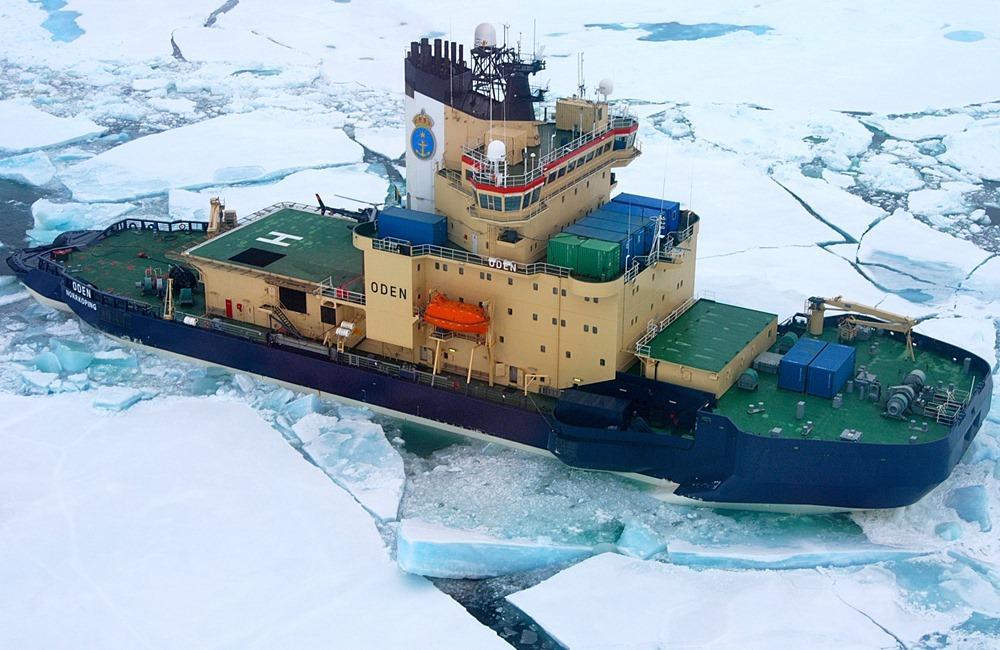
Oden icebreaker current position
The current location of Oden icebreaker is in Baltic Sea cruising en route to Helsingborg. The AIS position was last reported 5 minutes ago.
Current PositionSpecifications of Oden icebreaker
| Year of build | 1988 / Age: 38 |
| Flag state | Sweden |
| Builder | Gotaverken (Arendal, Sweden) |
| Class | Swedish diesel icebreaker (Polar research vessel, expedition ship) |
| Engines (power) | Wartsila-Sulzer (18 MW / 24138 hp) |
| Propulsion power | 5.4 MW / 7242 hp |
| Speed | 16 kn / 30 km/h / 18 mph |
| Length (LOA) | 107 m / 351 ft |
| Beam (width) | 31 m / 102 ft |
| Gross Tonnage | 9605 gt |
| Passengers | 65 |
| Crew | 15 |
| Decks | 8 |
| Cabins | 66 |
| Owner | Sweden |
| Operator | Sjofartsverket (Swedish Maritime Administration) |
Oden icebreaker Review
Review of Oden icebreaker
The 1988-built MV Oden is a Swedish icebreaking vessel owned by the Swedish state and operated by Sjöfartsverket (the Swedish Maritime Administration). The ship is homeported in Luleå, Sweden. The current Swedish icebreaker fleet includes Ale (1973), Frej (1975), Oden (1982), and Ymer (1977).
The vessel (IMO number 8700876) is currently Sweden-flagged (MMSI 265182000) and registered in Stockholm.
The ship’s operator is a Swedish government agency providing services to the country’s transportation sector. The agency’s main responsibilities include pilotage, maintenance of Sweden’s shipping lanes (including icebreaking and ensuring safe navigation), lighthouse maintenance, and maritime search and rescue. Most of the agency’s budget is financed through fees paid by commercial cargo and passenger vessels (ferries and cruise ships).
On polar cruises (Antarctic and Arctic scientific expeditions), the ship is chartered by the Swedish Polar Research Secretariat, a government agency under Sweden’s Ministry of Education and Research.
The icebreaker Oden was originally built to maintain ice-free cargo shipping passages through the Gulf of Bothnia (the northernmost arm of the Baltic Sea, located between Finland and Sweden). She was later modified to also serve as a scientific research vessel. The ship routinely operates independently in heavy pack-ice conditions, without the need for additional icebreaking support.

This icebreaker is named after Odin, the Norse god of wisdom and the father of all gods in Norse mythology. Odin is also associated with knowledge, prophecy, and magic. In his quest for wisdom, he travels the realms of gods and men, carrying Gungnir (the never-missing spear) and Draupnir (the magical ring). Together with his brothers Ve and Vili, Odin slew the primeval giant Ymir, the father of the giants, and later created the first human couple, Ask and Embla, from wood. The name Odin (Old Norse: Óðinn) means “furious” or “inspired.” From its Proto-Germanic form Wōdanaz (Old English: Woden/Wodan) originates the name of the fourth day of the week, Wednesday (counting from Sunday). The icebreaker’s namesake is the Viking River Cruises vessel Viking Odin (launched in 2012).
Arctic and Antarctica cruise expeditions (itineraries)
Oden’s scientific cruise itineraries operate in both polar regions—the European Arctic and Antarctica. In 1991, Oden became the world’s first diesel-powered icebreaker to reach the North Pole. During this Arctic expedition, she was accompanied by the German icebreaker RV Polarstern (launched in 1982). Since then, Oden has participated in numerous Arctic and Antarctic scientific expeditions.
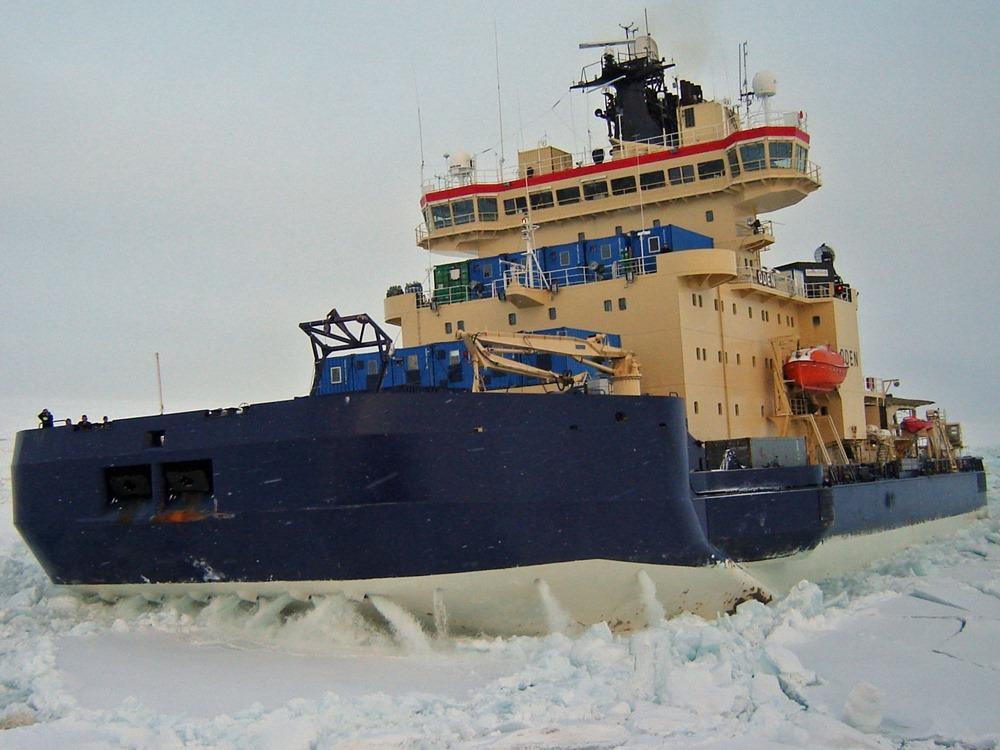
European Arctic itineraries usually include the Laptev Sea (between Siberia, the Taymyr Peninsula, Severnaya Zemlya, and the New Siberian Islands), the East Siberian Sea (between Siberia, the New Siberian Islands, and the Chukotka Peninsula), and the Chukchi Sea (between Wrangel Island and Point Barrow, Alaska).
The ship has also participated in numerous Canadian Arctic expeditions. During the most recent one (in 2016), Oden assisted the Canadian Coast Guard icebreaker CCGS Louis S. St-Laurent on a Canadian Arctic undersea mapping expedition.
Between 2006 and 2011, the ship was chartered for five Antarctic cruises during the 2007–2008, 2008–2009, 2009–2010, and 2010–2011 seasons.
In Antarctica, the icebreaker frequently visits the United States’ McMurdo Station (Ross Island). In Queen Maud Land, the following research stations are currently operated and maintained by: Norway (Troll, Tor), Russia (Novolazarevskaya), South Africa (SANAE IV), Sweden (Svea, Wasa), Finland (Aboa), Germany (Neumayer III, Kohnen), India (Maitri), Japan (Showa, Dome Fuji), and Belgium (Princess Elisabeth).
Oden’s Antarctic cruises are usually focused on research in biology, oceanography, and biogeochemistry.
Oden icebreaker’s schedule includes the following planned Arctic expeditions for the 2021–2024 period:
- (2021) Synoptic Arctic Survey
- (2022) Arctic Ocean Paleoceanography (Lomonosov Ridge)
- (2023) Atmospheric rivers and the onset of sea-ice melt
- (2023) Eurasian Arctic shelf–basin interactions of climate, cryosphere, carbon, and contaminants
- (2024) North Greenland Earth–Ocean–Ecosystem Observatory
Oden vessel details and technology
The icebreaker features an aft-located helideck (helicopter landing platform) with one onboard helicopter, as well as a forward cargo deck equipped with a gantry crane for loading and unloading cargo, including laboratory equipment and containerized (mobile) laboratories.
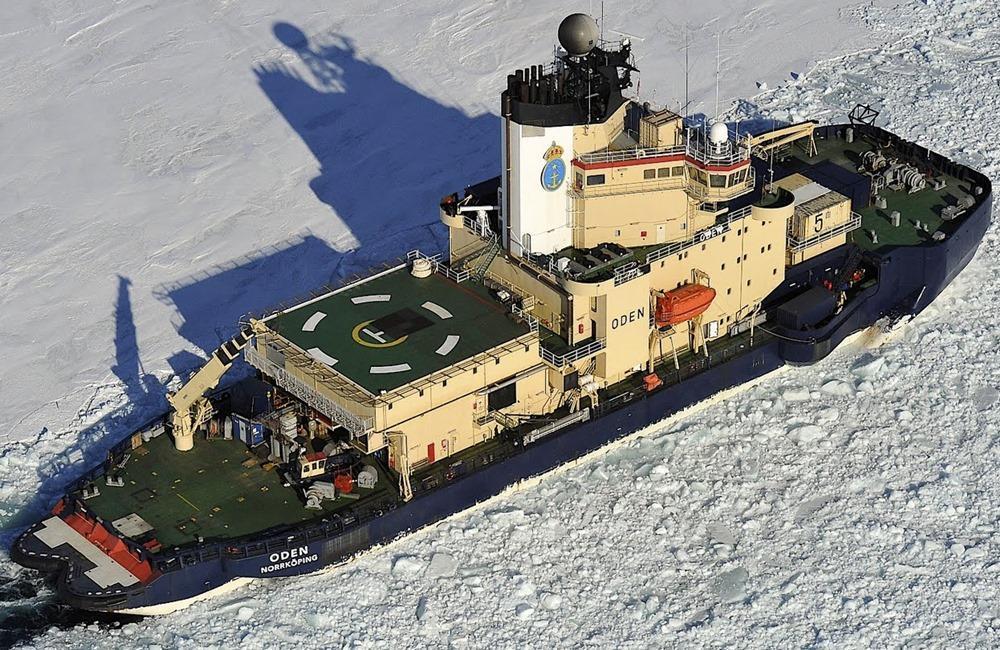
The ship is powered by four Wärtsilä-Sulzer marine diesel engines (model 8ZAL40S), each rated at 4.5 MW, for a combined maximum output of 18 MW (24,500 hp). The primary fuel is heavy fuel oil (HFO). The powerplant also includes four Sulzer diesel generators (model AT-25-H, each 1.2 MW, combined output 4.8 MW) and one Cummins emergency generator (model KTA-38G2, output 600 kW). Propulsion is provided by two controllable-pitch propellers (CPPs) manufactured by LIPS BV.
- Maximum draught: 8.5 m (28 ft) fully loaded
- Deadweight tonnage (DWT): 4,906 tons
- Displacement: 13,000 tons
- Icebreaking capability: 1.9 m (6 ft) at a speed of 3 knots (5.5 kph / 3.5 mph)
- Bollard pull: emergency pulling up to 250 tonnes; towing up to 150 tonnes
- Cargo capacity: 40 TEU (containers)
- Range: 56,000 km (35,000 mi) at 13 knots (24 kph / 15 mph)
- Endurance: up to 100 days
- 24-hour HFO consumption: 30 m³ (at 11 knots); 60–70 m³ (at 16 knots)
- Tank capacities: 310 m³ freshwater; 3,380 m³ HFO; 990 m³ diesel; 100 m³ lubricating oil
The ship accommodates a total of 66 staterooms (22 double cabins and 44 single cabins) and features two sauna rooms, a gym, an infirmary/hospital, a mess hall/dayroom, a conference room, and a helideck. Potable water is produced onboard.
Lifesaving equipment includes two fully enclosed lifeboats (Harding MCBR24, capacity 43 persons each) and six inflatable liferafts (capacity 25 persons each).
Navigational equipment includes GMDSS (Global Maritime Distress and Safety System, Sea Area A4), ARPA radar (Consilium Selesmar T-340), ECDIS (Consilium Maris), echo sounder (Skipper GDS-101), gyro compass (SIMRAD), GPS compass (Furuno), weather station (SMHI), AIS (SAAB R4), and GPS systems (Javad DGPS and SAAB R4).
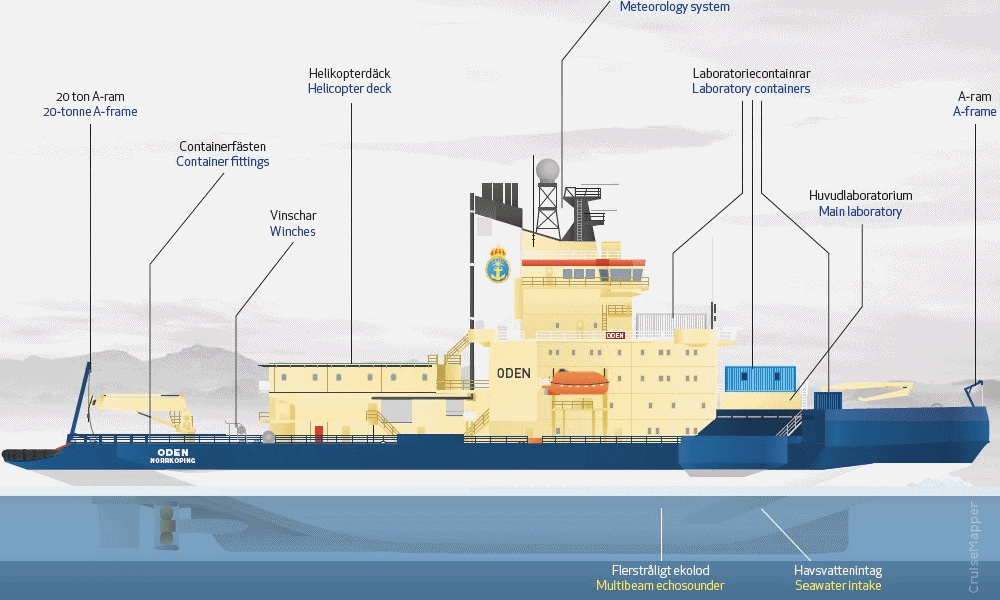
Scientific equipment includes a multibeam echo sounder (Kongsberg EM122), a sub-bottom profiler (Kongsberg SBP120, operational depth range 50–1,100 m / 164–3,610 ft), open-deck structures (A-frames, winches, container laboratories, storage containers), indoor scientific laboratories, and freezer storage. The containerized research laboratories are equipped with connections for water, sewage, electricity, and compressed air.
The forward main laboratory is multifunctional, with customizable fixtures and fittings. It is permanently equipped with a clean-air system, refrigerator, ultra-low-temperature freezer (-80°C / -112°F), fume hoods, gas lines, seawater supply, and a multibeam echosounder for three-dimensional seabed mapping. Collected research data are stored on the ship’s onboard computer servers.
Note: In areas with poor AIS coverage, tracking the vessel’s current position may not be possible. You can view CruiseMapper’s list of all icebreakers and icebreaking research vessels in the “itinerary” section of our Icebreakers hub, which also lists national fleets by country.
Photos of Oden icebreaker