

Viktor Chernomyrdin icebreaker
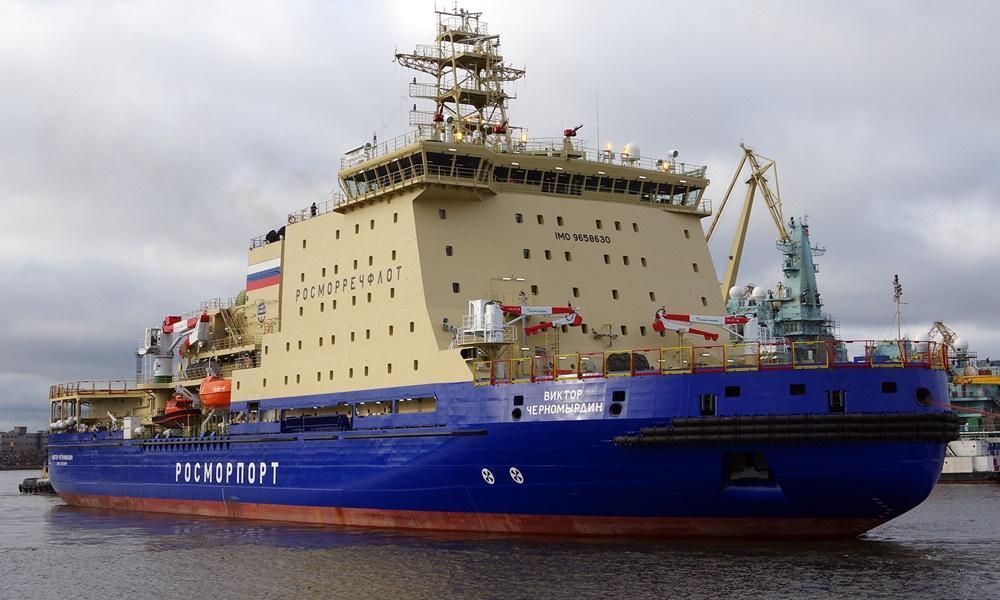
Viktor Chernomyrdin icebreaker last position
The last location of Viktor Chernomyrdin icebreaker is in Baltic Sea cruising en route to ICEBREAKER CH 77. The AIS position was last reported 1 week ago.
Current PositionSpecifications of Viktor Chernomyrdin icebreaker
| Year of build | 2018 / Age: 8 |
| Flag state | Russia |
| Builder | Baltiysky Zavod/Baltic Shipyard (St Petersburg, Russia) |
| Class | Russian diesel icebreaker (LK-25 class, Project 22600) |
| Building cost | RUB 12 billion (USD 186M / EUR 166M) |
| Propulsion power | 25 MW / 33526 hp |
| Speed | 17 kn / 31 km/h / 20 mph |
| Length (LOA) | 147 m / 482 ft |
| Beam (width) | 29 m / 95 ft |
| Gross Tonnage | 16000 gt |
| Passengers | 90 |
| Crew | 38 |
| Owner | Russian Federation |
| Operator | Rosmorport |
Viktor Chernomyrdin icebreaker Review
Review of Viktor Chernomyrdin icebreaker
MS Viktor Chernomyrdin ("ледокол Виктор Черномырдин") is a new-design Russian diesel icebreaker and the world's largest of her kind. "MS" stands for "motor ship". The vessel is owned and operated by Rosmorport. Rosmorport is a Russian FSUE ("Federal State Unitary Enterprise") created in 2012 by the Russian Federation's Ministry of Transport.
The vessel (IMO number 9658630) is Russia-flagged (MMSI 273428690) and registered in Sankt-Petersburg.

Among the newest Russian icebreaker ships, Viktor Chernomyrdin is named after Viktor Stepanovich Chernomyrdin (1938-2010), a Russian politician, the longest-serving Prime Minister (1992–1998) and the first chairman of Gazprom (natural gas and oil production corporation).
The current "Project 22600" design (aka LK-25) was produced by the Russian Petrobalt Design Bureau in cooperation with Finland's Aker Arctic. On December 2, 2011, Rosmorport signed a RUB 7.5 billion (USD ~120 million) contract with Baltic Shipyard for the construction of the 25-megawatt icebreaker.
The ship's keel-laying ceremony on October 10, 2012, was attended by Russia's Prime Minister Dmitry Medvedev. The Viktor Chernomyrdin ship was initially planned to enter service in late 2015. However, due to design flaws resulting in 2500 tons of excess weight and a 0.7 m / 2.3 ft increase in draught, the LK25 project was delayed by over 2 years.
The shipbuilding yard signed a new design contract with Vympel. The contract with Nordic Yards (for construction of the ship's superstructure) was also canceled. The icebreaker's delivery was rescheduled for July 2017. In January 2017, the delivery was rescheduled again for early 2018. The shipowner Rosmorport suffered financial losses because it had to charter a Finnish icebreaker at a daily charter rate of RUB 3 million (USD ~47000).
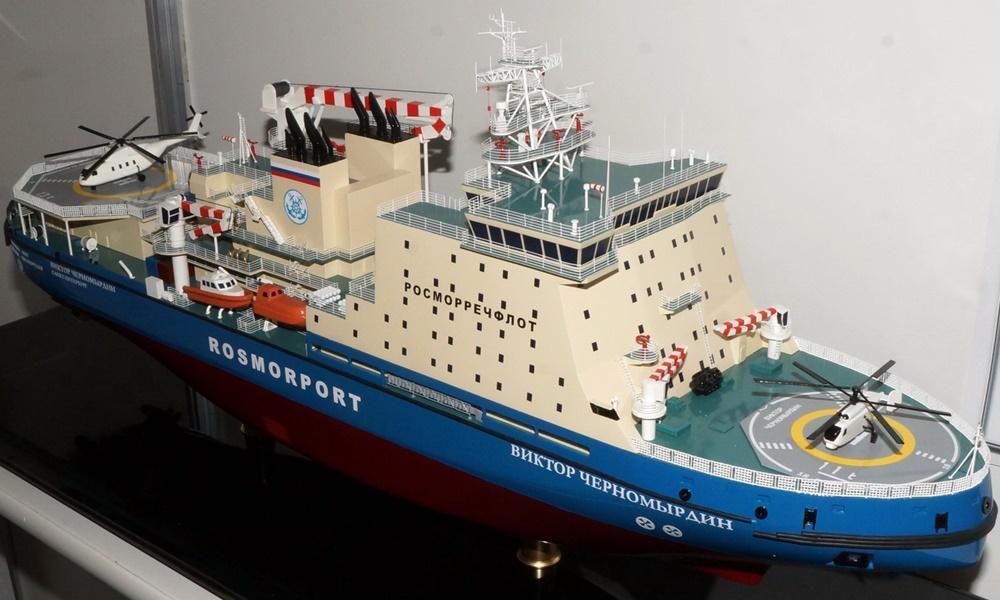
Rosmorport's Viktor Chernomyrdin itinerary program includes Russian Arctic expeditions.
Viktor Chernomyrdin icebreaker vessel details
This Project 22600 vessel is the world's largest diesel-powered icebreaker. Only Russia's nuclear-powered icebreakers are bigger.
The development of the LK-25 icebreaker design dates back to the first plans for rebuilding the Russian fleet after the dissolution of the Soviet Union (USSR). Several nuclear-powered and conventional icebreaking ship designs were proposed. They ranged from 7-megawatt LK-7 auxiliary vessels to 110-megawatt LK-110N nuclear ships with icebreaking capacity up to 3.5 m (11 ft).
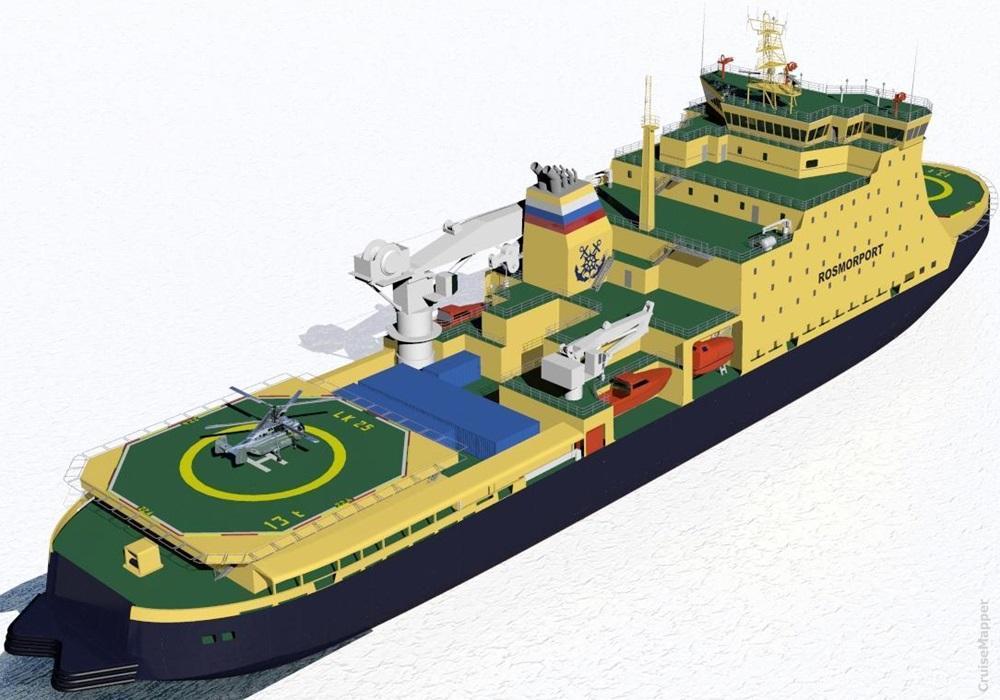
Of these, the 25-megawatt LK-25 ships were intended to escort merchant vessels and lead convoys through the freezing Arctic waters, as well as to operate as auxiliary icebreakers along the Northern Sea Route, assisting complex cargo shipping convoys.
This vessel is RMRS-classified (Russian Maritime Register of Shipping) as "Icebreaker8" class. According to the project's specifications, it is designed to operate continuously in compact ice fields with thickness up to 2 m (7 ft) and freezing temperatures down to -35 Celsius (-31 Fahrenheit) for 60 days.
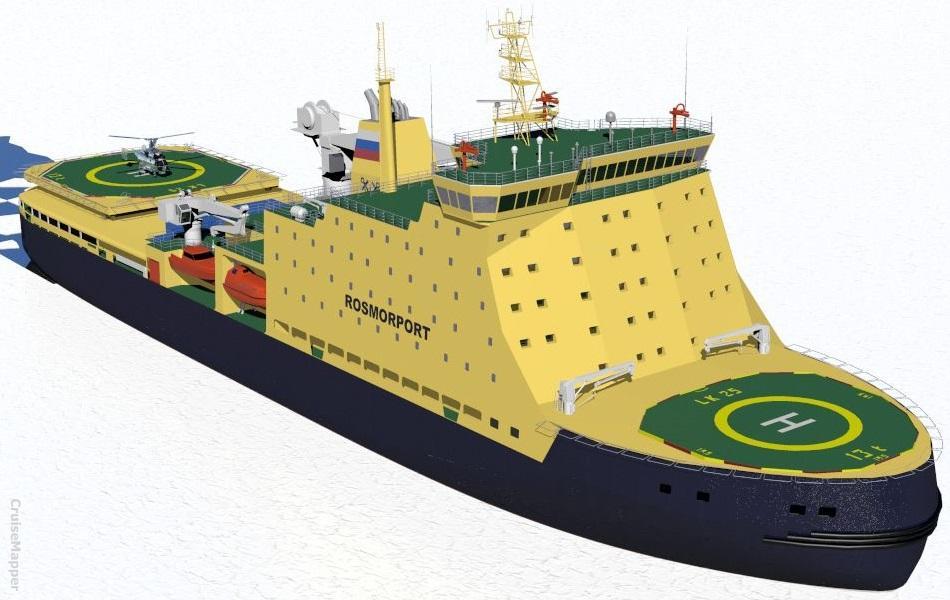
In terms of power output, the ship is slightly less powerful than the USCG (US Coast Guard) Polar-class icebreakers (also diesel-powered). However, Chernomyrdin is designed as a double-acting vessel, meaning she can fully operate in both directions. Additionally, her propulsion system features the latest azimuth-thruster technology. These are podded marine propellers able to rotate to any horizontal angle, thus making the rudder obsolete. Azipod propulsion gives the ship superior maneuverability in comparison to all older designs, whose propulsion consists of shaft lines and rudders.
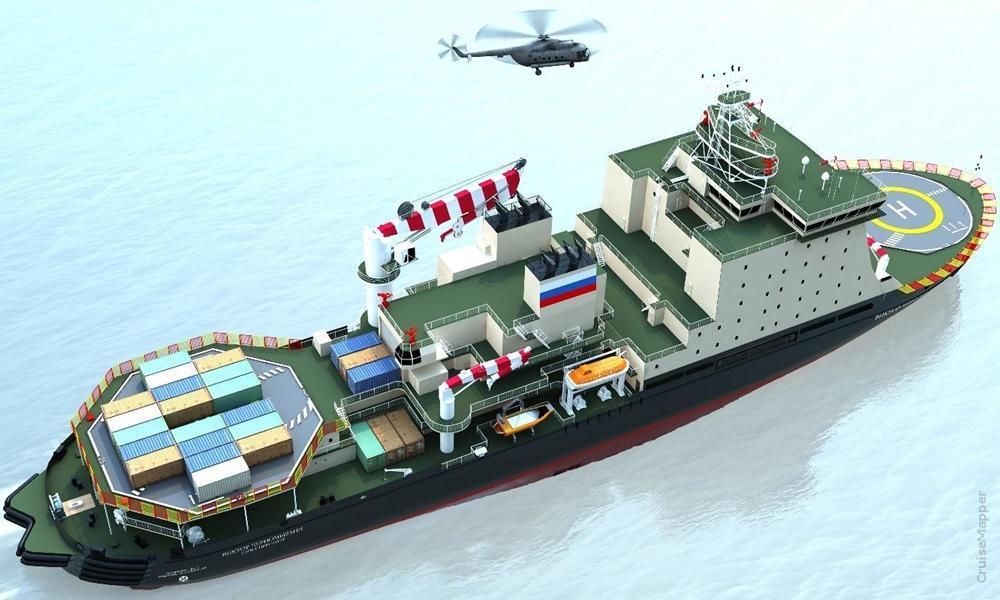
The vessel has 1 dining room, Sauna, Passenger Lounge, Gymnasium, 1 swimming pool (indoor, heated), Infirmary, 1 elevator, 2 helipads (helicopter deck) plus hangar with 2 transport helicopters.
- DWT Deadweight tonnage: 22258 tons
- Displacement tonnage: 22000 tons
- Clear path width: 50 m (164 ft)
- Max Draft: 9.5 m (31 ft)
- Icebreaking capacity: 3 m (10 ft)
- Ice-class 8 (highest is 9)
- Range: 60 days
- Powerplant: Four marine diesel engines (8.7 MW each, or 34.8 MW total power output)
- Propulsion: Diesel-electric; centerline shaft (10 MW FPP/fixed pitch propeller), two ABB Azipods (VI1600 azimuth thrusters, 7.5 MW each, or 15 MW combined output)
Note: In the case of poor AIS coverage, tracking the vessel's current location will be impossible. You can see CruiseMapper's list of all icebreakers and icebreaking research ships in the "itinerary" section of our Icebreakers hub. All states and their fleets are listed there.
Photos of Viktor Chernomyrdin icebreaker