

MS Volga Dream
Former name : MS Komarno
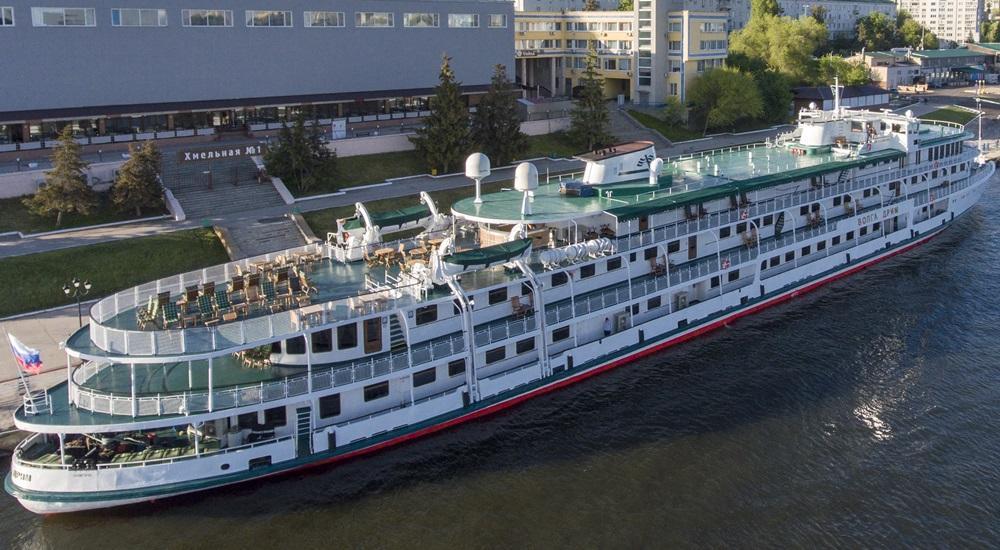
MS Volga Dream last position
The last location of MS Volga Dream is in Russia Inland cruising at speed of 12.3 kn (23 km/h | 14 mph) The AIS position was last reported 1 day ago.
Current PositionSpecifications of MS Volga Dream
| Year of build | 1959 / Age: 67 |
| Flag state | Russia |
| Builder | SLKB Komarno (Komarno, Slovakia) |
| Class | USSR Russian cruise ship (Project 26-37) |
| Ferry route / homeports | St Petersburg-Moscow |
| Speed | 13 kn / 24 km/h / 15 mph |
| Length (LOA) | 96 m / 315 ft |
| Beam (width) | 15 m / 49 ft |
| Gross Tonnage | 1500 gt |
| Passengers | 109 |
| Crew | 60 |
| Decks | 5 |
| Cabins | 56 |
| Decks with cabins | 4 |
| Last Refurbishment | 2007 |
| Sister-ships | Oktyabrskaya Revolyutsiya class |
| Former names | MS Komarno |
| Owner | Volga Dream Cruise Line |
| Operator | Volga Dream Cruises, Thurgau Travel |
MS Volga Dream Review
Review of MS Volga Dream
MS Volga Dream cruise ship (“теплоход Волга Дрим” круизный корабль) entered service in 2007 after a complete reconstruction that reduced her capacity from 200 to just 109 passengers. Originally built in 1959, the vessel underwent a 2-year drydock refurbishment and today offers some of the best cruising experiences along Russia’s inland waterways. The riverboat is frequently chartered by Thurgau Travel (a Switzerland-based cruisetour company).
Volga Dream operates on the Volga River with one-way 7-day itineraries departing from Moscow (northbound) and St Petersburg (southbound). The southbound St Petersburg–Moscow itinerary visits Mandrogi, Kizhi Island (Lake Onega), Goritsy, Yaroslavl, Uglich, and Moscow. The longer southbound roundtrip from Moscow visits Uglich, Yaroslavl, Kazan, Samara, Saratov, Volgograd, and Astrakhan (Caspian Sea).
Volga Dream cruise deals are offered exclusively to foreign tourists. Cruisetour prices start at approximately EUR 3000 per person. Cruise-only deals typically range between EUR 1300-1800 per person, depending on the season. The “Grand Russian Cruise” (20-day St Petersburg–Moscow–Astrakhan) costs EUR 3800-11000 per person based on cabin category.
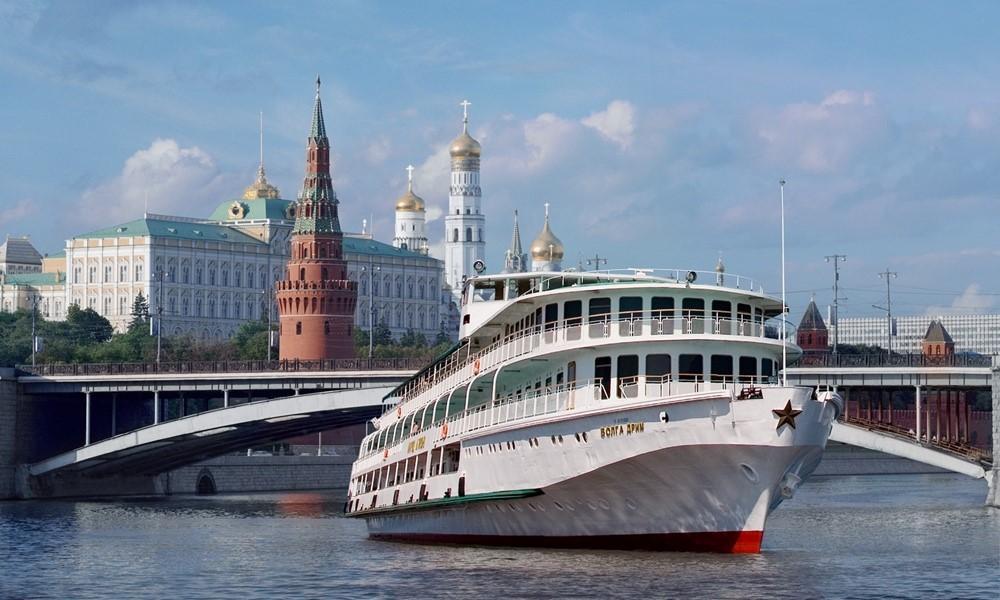
From the same Project 26-37 series, 14 ships were built between 1957 and 1962. All belonged to the Oktyabrskaya Revolyutsiya class and were originally designed to carry 312 passengers and 70 crew.
As MS Komarno, the vessel operated the Nizhny Novgorod–Astrakhan route (1959-1964) and the Moscow–Astrakhan–Moscow route (1965-2004). Volga Dream Cruise Line was founded in 2004 after acquiring the former Soviet ship Komarno. The vessel was refitted into a modern river cruise ship and relaunched as “Volga Dream” in June 2007 following a comprehensive 2-year refurbishment. The company positioned the vessel in the premium market segment of Russian river cruising.
Cabins
The ship has 56 staterooms across several categories, from Standard (with portholes) to the Owner’s Suite. All cabins are outside-facing with large opening windows (except Standard cabins on Cabin Deck, which have non-opening portholes). The Owner’s Suite (forward on Promenade Deck) features large windows and a private terrace (wraparound balcony). Standard amenities in all cabins include opening window, individually controlled air-conditioning, direct-dial phone, minibar, flat HDTV (satellite reception), bedside cabinets, 220 V power outlets, wardrobe, safe (in the closet), and an en-suite bathroom (WC, glass shower, washbasin, hairdryer, bathrobes, slippers, bath products, accessories kit). Guests also receive a welcome fruit basket and daily replenished bottled water.
Shipboard dining and entertainment options
Shipboard facilities include:
- Dining Room Restaurant (single-seating capacity), serving European and traditional Russian cuisine; wine by the glass and soft drinks are complimentary with lunch and dinner
- Neva Lounge — the main lounge with comfortable seating (leather sofas and armchairs), bar area, live music, and floor-to-ceiling windows
- Ladoga Bar — aft open-air Sun Deck bar with teak furniture (tables and chairs)
- Library (aft on Promenade Deck) with comfortable seating, board games, books, and Wi-Fi; it opens to an outdoor seating area
- Boutique Shop, Fitness Center (Gym Room), Spa (Sauna and Massage Room), Infirmary (Doctor’s Office)
- Satellite Internet and phone services, and laundry service, available at extra charge

Onboard dining features both international and traditional Russian dishes. Breakfast is buffet-style (cooked and continental). Lunch is also buffet-style, with à la carte main course selections. Weather permitting, guests may enjoy al-fresco dining aft on the Sun Deck. Dinner is a 4-course service, with themed evenings showcasing regional specialties. A complimentary 24-hour coffee and tea station is provided. Afternoon Tea (with a traditional samovar) is served daily in the Neva Lounge. Laundry service (no dry cleaning) is available.
Reasons to book a Volga Dream cruise include:
- Small ship size (only 109 guests) ensures a premium travel experience
- Shore excursions led by professional guides; tour groups are limited to 25 guests (Gold Program) or 15 guests (Platinum Program)
- Family-owned and operated vessel offering an authentic Russian travel experience; the entire crew is Russian and fluent in English
- Professional lecturers (professors) provide in-depth presentations on Russian history, culture, politics, lifestyle, and education
- Additional onboard enrichment: Russian tea ceremony, cooking classes, language lessons, vodka tasting, classical music performances (piano), and Matreshka (nesting doll) painting workshop
Note: You can see CruiseMapper’s full list of river cruise ships and riverboats in the “itinerary” section of our River Cruises hub. All companies and fleets are listed there.
Photos of MS Volga Dream
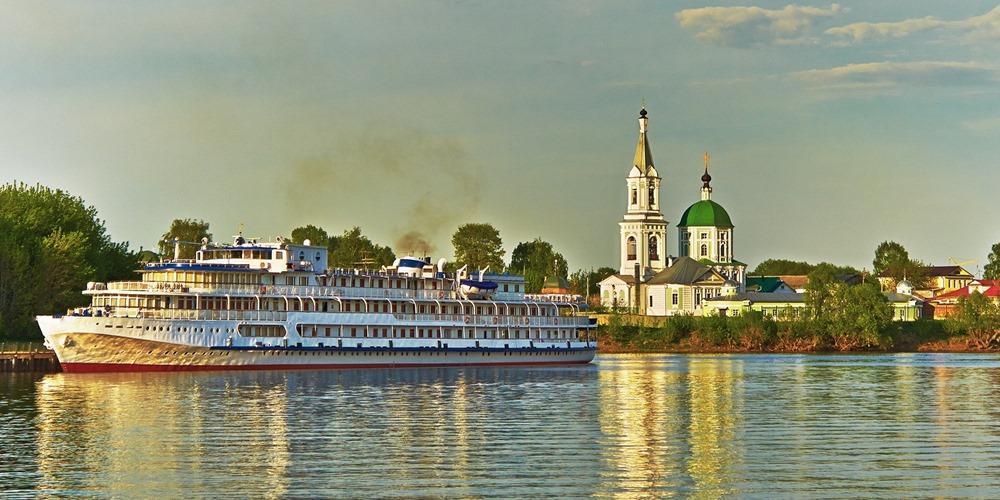
MS Volga Dream Wiki
Built as Komarno, MS Volga Dream is one of Russia’s “Project 26-37” river cruise ships.
Oktyabrskaya Revolyutsiya-class Russian river ships
“Oktyabrskaya Revolyutsiya” (also “Project 26-37”) is a series of Russian river cruise ships built in Czechoslovakia (now Slovakia) for the USSR between 1957 and 1962. The class was named in honor of Russia’s October Revolution (also known as Red October or the Socialist Revolution) of 1917.
A total of 14 vessels (with a maximum output of four per year) were produced by “Narodny Podnik Skoda Komarno”—today’s SLKB Komarno Shipyard in Komarno (Slovakia). Designed for cargo-passenger service on the Volga River, they operated primarily on the Nizhny Novgorod–Astrakhan and Moscow–Astrakhan routes. All ships were originally operated by the “Volga Shipping Company” (Волжское пароходство). After the dissolution of the USSR in 1991, the entire fleet was acquired by private Russian companies.
“Project 26-37” ship technology
Project 26-37 ships have the following characteristics:
- LOA 96 m (316 ft)
- Beam 15 m (49 ft)
- Draft 2.4 m (8 ft)
- DWT 1473 tons
- V-shaped hull, 4 decks (3 passenger decks)
- Original capacity: 312 passengers and 70 crew; all cabins outside-facing (1-, 2-, and 4-berth); 2 restaurants (63-seat and 50-seat), 2 lounge bars (18-seat Music Salon and 30-seat Café), 25-seat Reading Room, Hospital (first-aid room), and wrap-around Promenade Decks
- All staterooms originally had wash basins; only Suites had full bathrooms
- Powerplant: three 6L275B marine diesel engines with a combined output of 1.2 MW
- Propulsion: three 4-blade controllable-pitch propellers (1.7 m / 5.5 ft diameter)
- All vessels have undergone full modernization and refurbishment for both domestic and international cruise operators. During multimillion-dollar drydock rebuilds, larger cabins were introduced, reducing passenger capacity to enhance comfort and safety.
Project 26-37 ships
The Project 26-37 series includes the following vessels:
- Oktyabrskaya Revolyutsiya (1957, Октябрьская Революция)
- Komarno (February 1959, now Volga Dream)
- Mir (July 1959, now Afanasiy Nikitin)
- Druzhba (April 1960, later Kapitan Rachkov and Sergey Abramov) – scrapped in 2012
- XXI S'ezd KPSS (July 1960, now Kapitan Pushkarev)
- Yakov Sverdlov (September 1960, now Aleksandr Benua)
- Andrey Zhdanov (November 1960, now Ivan Kulibin)
- Sergo Ordzhonikidze (March 1961, now Nikolay Nekrasov)
- Klement Gotvald (March 1961, later Professor Lukachev and Yekaterina Velikaya, now Rodnaya Rus)
- Klara Tsetkin (August 1961, Клара Цеткин) – scrapped in 1998
- Vatslav Vorovskiy (September 1961, Вацлав Воровский)
- Valeriy Chkalov (October 1961, Валерий Чкалов)
- Sergey Lazo (November 1961, now President)
- Nikolay Shchors (July 1962, now Mikhail Tanich)