

Viking Helgi
Former names : MS Surkov, MS Alexey Surkov
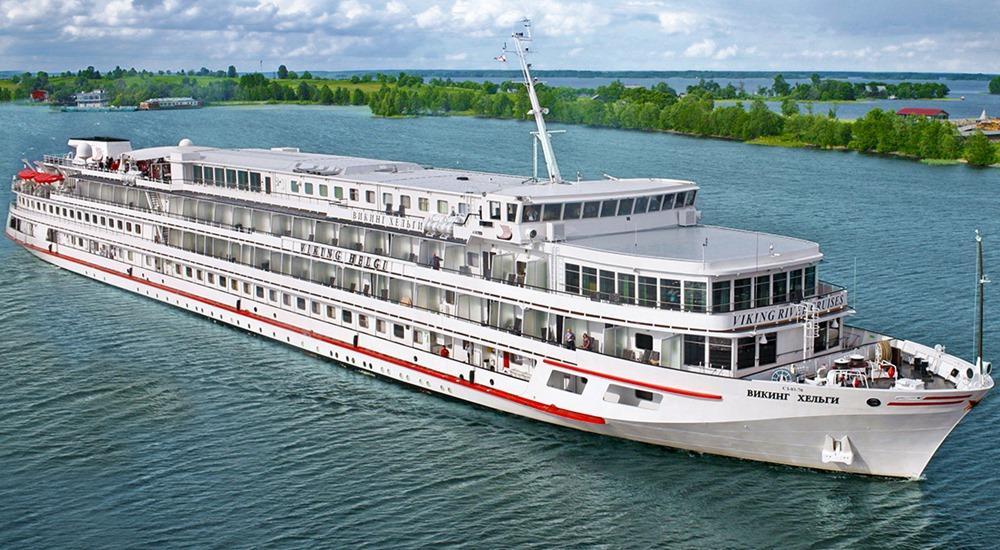
Viking Helgi last position
The last location of Viking Helgi is in Baltic Sea cruising at speed of 102.3 kn (189 km/h | 118 mph) en route to KSZ-SOLYANOY PRICHAL. The AIS position was last reported 1 month ago.
Current PositionSpecifications of Viking Helgi
| Year of build | 1984 / Age: 42 |
| Flag state | Russia |
| Builder | VEB Elbewerften Boizenburg (Rosslau, Germany) |
| Class | USSR Russian cruise ship (Project 302) |
| Ferry route / homeports | St Petersburg-Moscow |
| Speed | 14 kn / 26 km/h / 16 mph |
| Length (LOA) | 129 m / 423 ft |
| Beam (width) | 17 m / 56 ft |
| Gross Tonnage | 5350 gt |
| Passengers | 104 - 210 |
| Crew | 115 |
| Decks | 5 |
| Cabins | 104 |
| Decks with cabins | 3 |
| Last Refurbishment | 2013 |
| Sister-ships | Dmitriy Furmanov-class |
| Former names | MS Surkov, MS Alexey Surkov |
| Owner | North-Western Shipping Company (UCL Holding, Russia) |
| Operator | Viking River Cruises Russia |
Viking Helgi Review
Review of Viking Helgi
The Viking Helgi ship cruises on the Volga River in Russia, departing from St Petersburg and Moscow. This Viking cruise ship is named after Helgi (also known as Oleg of Novgorod)—a Viking by origin (Varangian prince) who succeeded Prince Rurik and ruled the Kievan Rus state in the 10th century.
MS Surkov was extensively refitted, refurbished, and renamed in 2012. The vessel’s name honors Helgi (Oleg of Novgorod), a Varangian ruler and successor of Rurik.

There are 6 cabin categories. The total number of cabins is 102, including 4 Suites, 67 Balcony staterooms, and 33 with non-opening windows. Below are the stateroom categories, including number and deck location:
- Suites - JS (x2, Deck 3), AA (x2, Deck 2)
- Balcony Staterooms - AX (x35, Deck 3), BX (x32, Deck 2)
- Deluxe Riverview Staterooms - CX (x8, Deck 1), DX (x23, Deck 1), plus 2 Single cabins
- Staterooms feature standard amenities including hotel-style beds (double or twin configuration / 200 x 160 cm or 2 x 80 cm), 26-inch flat-screen TV (satellite reception, infotainment system), wardrobe, safe (in the closet), mini-refrigerator, direct-dial telephone, radio, en-suite bathroom (WC, shower, washbasin, hairdryer, towels, bathrobes, slippers, and bath products), mirrored vanity (writing desk with chair), bedside tables, reading lights, 220V power outlets, central air-conditioning (individually controlled thermostat for heating and ventilation), premium bedding, and modern LED lighting. Ceiling height is 2.2 m.
The Main Dining Room is named the Neva Restaurant. The ship offers the following facilities:
- Panorama Lounge and Bar (observation lounge)
- Atrium lobby (Reception Desk)
- Bar and Library (with 2 Internet stations)
- Boutique Shop (Russian gifts and souvenirs)
- Walk-around Promenade Deck (Deck 1)
- Sun Deck (Wheelhouse/Bridge, Sky Bar, shaded seating area)
- 1 elevator (connecting all decks)
- Medical Room (Infirmary/Doctor’s Office)
Viking River Cruises Russia deals include Internet (Wi-Fi), laundry service, all land tours/excursions, ground transfers, live onboard entertainment and lectures, traditional Russian cuisine and vodka tastings, 24-hour tea and coffee, and replenished daily bottled water. To/from ship transfers and airport meet-and-greet services are included only when air travel is purchased through Viking Cruises.
Viking Helgi river cruise prices are per person and based on double occupancy. These rates are indicative and may vary depending on travel agency promotions, special offers, discounts, group bookings, or last-minute deals. On select Viking Helgi Volga cruise itineraries, the company may offer discounted round-trip USA airfare packages (on selected cabins or departure dates).
River Cruise Itineraries
The following are Viking Helgi river cruise itineraries by theme, as officially announced by Viking Cruises:
- "WATERWAYS OF THE TSARS" is a 12-day luxury Volga River cruise between Saint Petersburg and Moscow (and reverse). The itinerary includes 11 complimentary guided excursions and no hotel packages.
- St Petersburg excursions include the Winter Palace and the Hermitage Museum (one of the world’s largest and oldest museums, housing extensive collections of art, antiquities, jewelry, and sculptures), traditional Russian ballet performances, excursions to Pushkin and Catherine Palace (summer residence of the Russian tsars), panoramic city tours, and optional visits to Peterhof Palace (gardens and fountains). Departure from St Petersburg is typically on Day 4 in the evening.
- Cruising on the Neva River and crossing Lake Ladoga (Europe’s largest lake) on Day 5.
- Svir River cruise to Mandrogy (featuring a Vodka Museum and traditional crafts), with optional excursions including a Russian “banya” (bathhouse) experience and matryoshka doll painting.
- Cruising along the Russian “Blue Route” (225 km / 139 mi).
- Lake Onega crossing (Europe’s second-largest lake).
- Kizhi Island visit (open-air museum of traditional Russian wooden architecture, including churches and windmills built without nails).
- Volga-Baltic Waterway transit (370 km / 230 mi system of rivers, canals, and 7 locks connecting the Volga River with the Baltic Sea).
- Kuzino (visit to Kirillo-Belozersky Monastery, Assumption Cathedral, and local museum).
- Yaroslavl (visit to a local covered market featuring food and handmade goods).
- Moscow Canal cruise (arrival around lunchtime), including a half-day city tour (Bolshoi Theatre, Red Square, St Basil’s Cathedral, GUM Department Store, and Metro). Additional days include full-day tours of parks and monuments, optional visit to the Tretyakov Gallery, and visits to the Kremlin and its cathedrals, with an optional Kremlin Armory tour.
- Departures from St Petersburg may include an optional 2-night Moscow hotel package. Departures from Moscow may include an optional 3-night Helsinki (Finland) hotel package.
Note: You can view CruiseMapper’s list of all river cruise ships and riverboats in the “Itinerary” section of our River Cruises hub. All companies and their fleets are listed there. For other Russia-based vessels, visit our dedicated Russian River Cruises hub.
Other Viking Cruises cruise ships
Viking Helgi Wiki
Built as Aleksey Surkov, Viking Akun is one of Russia's signature "Project 302" river cruise ships.
Dmitriy Furmanov-class Russian river ships
The "Dmitriy Furmanov class" (also known as "Project 302") comprises four series of Russian river cruise ships built in the GDR (Eastern Germany) for the USSR (Soviet Union) between 1983 and 1992. The class is named after Russian writer Dmitriy Andreyevich Furmanov (1891–1926), who also served as a Bolshevik commissar (Red Army officer).
A total of 27 vessels were constructed by VEB Elbewerft Boizenburg. These ships represent an upgraded and larger version of the earlier Project 301 (Vladimir Ilyich-class) riverboats. They were originally used for passenger cruising across northwestern USSR waterways, including the Volga River, Belomor Canal, Lake Onega, Volga–Don Canal, Kama and Amur rivers, as well as the Dnieper River (Ukraine), Black Sea (coastal cruising), and even the Yangtze River (China). Following the collapse of the USSR in 1991, all vessels were acquired by private operators (both Russian and international).
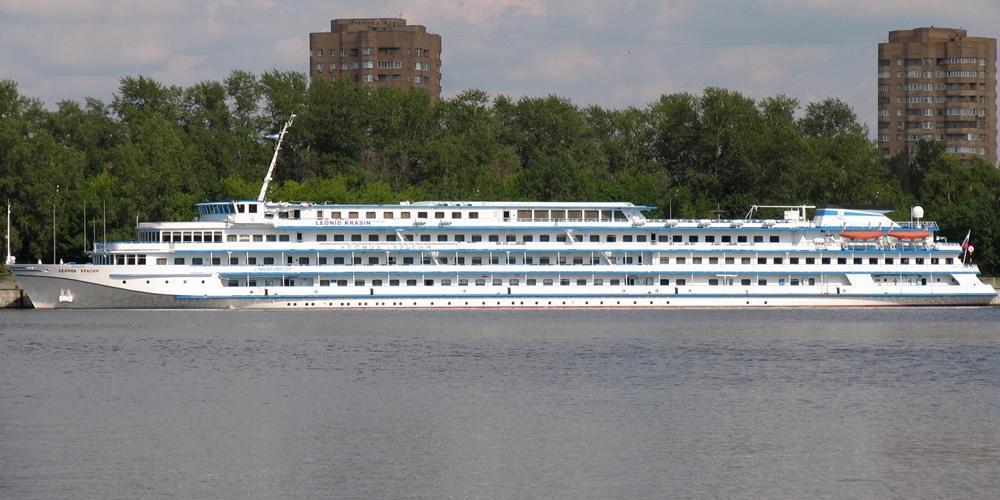
"Project 302" ship technology
"Project 302" ships have the following characteristics:
- LOA length: 129 m (423 ft)
- Beam: 17 m (55 ft)
- DWT tonnage: 3,852 tons
- V-shaped hulls, with variations between series in external features, window shapes (rectangular or rounded), and wheelhouse headlights
- 5 decks (4 passenger decks)
- Originally configured for 332 passengers and 98 crew, with all outside cabins (1-, 2-, and 3-berth)
- Public spaces included 2 restaurants (180 and 80 seats), café bar (79 seats with dance floor), 2 bar lounges, cinema (102 seats), music hall with bar (75 seats), observation lounge with bar (75 seats), sauna, souvenir shop, hair salon, massage salon, library, hospital (first-aid room), and a 360-degree promenade deck (with outdoor seating and sports area)
- Powerplant: 3 marine diesel engines (4-stroke, model 6ЧРН 36/45 / aka ЭГ70-5), each with a turbocharger
- Total power output: 2.2 MW
- Propulsion system includes three bow thrusters
- Staterooms originally included single, double, and triple configurations with en-suite bathrooms
- Following reconstruction, cabins were enlarged and upgraded, including the addition of suites and quad cabins (with Pullman beds)
- All vessels underwent extensive modernization and refurbishment, significantly reducing passenger capacity to improve comfort and safety standards
Project 302 ships
From Project 302’s first series are the vessels:
- Dmitriy Furmanov (1983, Дмитрий Фурманов)
- Akademik Viktor Glushkov (1983, now Igor Stravinsky / Игорь Стравинский)
- Novikov-Priboy (1983, now Sergei Rachmaninov)
- Aleksey Surkov (1984, now Viking Helgi)
- Konstantin Simonov (1984, Константин Симонов)
- Leonid Sobolev (1985, Леонид Соболев)
- Mikhail Sholokhov (1985, Михаил Шолохов)
From Project 302’s second series are the vessels:
- Aleksey Vatchenko (1985, now Ivan Bunin)
- Yuriy Andropov (1986, Юрий Андропов)
- Zosima Shashkov (1986, Зосима Шашков)
- General Vatutin (1986, Генерал Ватутин)
- MS Russ (1987, Русь)
- MS Lenin (1987, Ленин)
- Sergey Kirov (1987, now Viking Truvor)
- Marshal Rybalko (1988, now The Little Prince
- Marshal Koshevoy (1988, now Viking Akun)
- Georgy Chicherin (1988, Георгий Чичерин)
- Leonid Krasin (1989, Леонид Красин)
- Nikolay Bauman (1989, now Knyazhna Anastasia)
- General Lavrinenkov (1990, Генерал Лавриненков)
- Narkom Pakhomov (1990, now Viking Ingvar)
From Project 302’s third series are the vessels:
- Gleb Krzhizhanovskiy (1990, Глеб Кржижановский)
- Maxim Litvinov (1991, Максим Литвинов)
From Project 302’s fourth (final) series are the vessels:
- Taras Shevchenko (September 1991, now TG Shevchenko)
- Konstantin Stanyukovich (October 1991, now Princess Jeannie / Xian Ni, Regal China Cruises)
- Arkadiy Gaydar (November 1991, now Princess Sheena / Xian Na, Regal China Cruises)
- Aleksandr Grin (December 1991, now Princess Elaine / Xian Ting, Regal China Cruises)
- Vladimir Vysotsky (planned; hull built in 1996, launched in 2003 as "Ocean Diva Original")