

MS Peter Tchaikovsky
Former names : MS Lesya Ukrainka, XXV Syezd KPSS
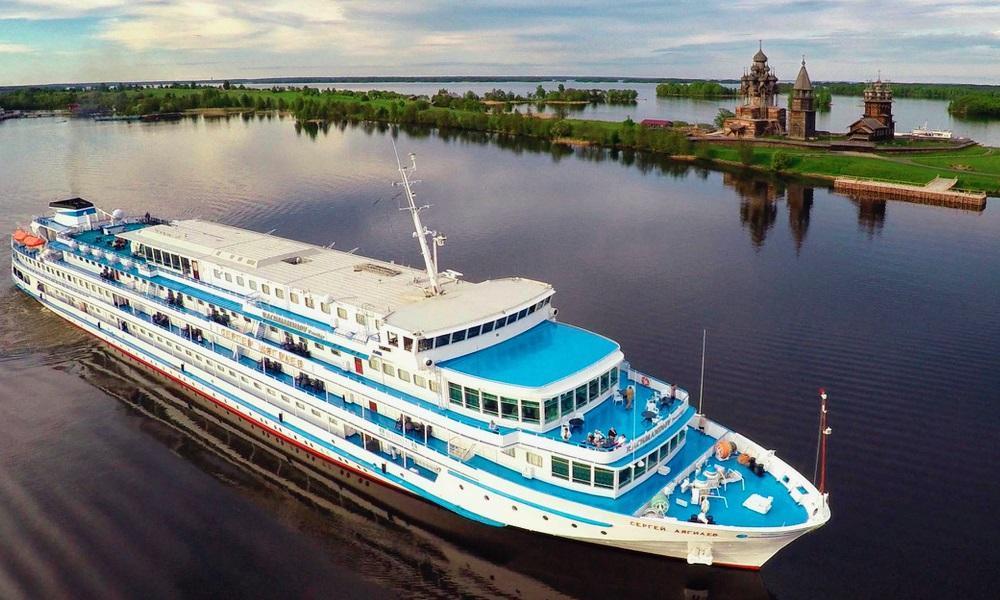
MS Peter Tchaikovsky last position
The last location of MS Peter Tchaikovsky is in Russia Inland cruising The AIS position was last reported 1 day ago.
Current PositionSpecifications of MS Peter Tchaikovsky
| Year of build | 1977 / Age: 49 |
| Flag state | Russia |
| Builder | RSW Rosslauer Schiffswerft GmbH (Dessau-Rosslau, Germany) |
| Class | USSR Russian cruise ship (Project 301) |
| Ferry route / homeports | St Petersburg-Moscow-Astrakhan-Rostov on Don |
| Speed | 14 kn / 26 km/h / 16 mph |
| Length (LOA) | 129 m / 423 ft |
| Beam (width) | 17 m / 56 ft |
| Gross Tonnage | 5600 gt |
| Passengers | 207 |
| Crew | 90 |
| Decks | 4 |
| Cabins | 108 |
| Decks with cabins | 3 |
| Last Refurbishment | 2011 |
| Sister-ships | Vladimir Ilyich-class |
| Former names | MS Lesya Ukrainka, XXV Syezd KPSS |
| Owner | Doninturflot (Russia) |
| Operator | Orthodox Cruise Company, Imperial River Cruises |
MS Peter Tchaikovsky Review
Review of MS Peter Tchaikovsky
MS Peter Tchaikovsky cruise ship ("теплоход Петр Чайковский" круизный корабль) is a traditional Russian river passenger vessel built for the USSR (Soviet Union) in the GDR (Eastern Germany). MS Tchaikovsky cruises on the Volga and Don rivers in Russia on itineraries between Moscow–Astrakhan–Rostov-on-Don (17-day route, and reverse), as well as between St Petersburg and Moscow (11-day route).
Currently, the vessel is owned by the Russian shipping company Doninturflot (Донинтурфлот) and operated under charter by its subsidiary Orthodox Cruise Company, as well as by Imperial River Cruises Russia (tour operator).

The ship is named after the Russian composer Pyotr Ilyich Tchaikovsky (1840-1893). MS Tchaikovsky was fully refurbished in 2011.
In line with traditional Russian river cruise vessels, MS Tchaikovsky’s onboard facilities include:
- 2 restaurants (main dining room and bar-restaurant / dinner only)
- 3 bars and a small Boutique (Souvenir Shop)
- spacious Lobby (Reception / Guest Services Desk) and a Coffee Station (coffee, hot water, tea, milk, cocoa, cookies)
- Bar Lounge (piano bar)
- Conference Hall and Bar (Music Hall / Cinema / Meeting Room)
- Reading Lounge (Library)
- Sun Deck (Solarium with outdoor seating/deckchairs and 4-seat tables), plus a covered fitness area (outdoor gym with exercise machines)
- wrap-around Promenade Deck (outdoor walkway) and additional outer deck seating
- Medical Room (Infirmary)
- Beauty Salon (hairdresser, barber, and massage services)
- Ironing Room (laundry service) and Sauna
- Wi-Fi onboard is available at $5 per device per day
Onboard entertainment includes games, traditional tea ceremonies (with pies), themed parties (folk shows, dancing evenings), daily live music performances (grand piano and concerts), Russian language lessons, dancing and singing classes, blini (pancake) and vodka tastings, and lectures. The Dining Room menu also highlights regional specialties based on the ports visited along the itinerary.
The ship’s crew includes resident, Russian government-licensed tour guides (fluent in English or German) who conduct the line’s onboard and ashore enrichment program. Throughout the voyage, these professional guides deliver lectures on Russian culture, art, history, and current politics, and provide detailed information about all shore excursions and ports visited during the cruise.
Cabins
The ship offers several stateroom categories, including 2 Triple-Quad cabins, 63 Standard Twin cabins, 3 Premium Twin cabins, 20 Junior Suites, and 12 Suites. Standard amenities in all cabins include individually controlled air-conditioning (thermostat-controlled heating and ventilation), wardrobe, bedside table, mirrored dressing table with padded stool, mini-refrigerator, radio, flat-screen TV, safe deposit box (in the closet), en-suite bathroom (WC, shower, single-sink vanity), and large opening windows (Lower Deck cabins have portholes).
Most staterooms feature two sofabeds (pull-out couches). Suites are single-room accommodations (equal in size), furnished with a double bed and sofa, and can accommodate a third passenger via a folding bed.
Note: You can view CruiseMapper’s full list of river cruise ships and riverboats in the “itinerary” section of our River Cruises hub, where all companies and their fleets are listed.
Other Orthodox Cruise Company cruise ships
MS Peter Tchaikovsky Wiki
Built as XXV Syezd KPSS, MS Tchaikovsky is one of Russia's signature “Project 301” river cruise ships.
Vladimir Ilyich-class Russian river ships
The “Vladimir Ilyich class” (also known as “Project 301”) consists of three series of Russian river cruise ships built in the GDR (Germany) for the USSR between 1974 and 1983. The class is named in honor of Vladimir Ilyich Ulyanov (1870-1924), regarded as the founder of the Soviet Union.
These river cruise ships (22 units in total) were produced by VEB Elbewerft Boizenburg and became one of the industry’s most successful riverboat designs. They operated throughout Northwestern USSR on the Volga River, Belomorkanal, Lake Onega, Volga–Don Canal, Kama and Amur rivers, as well as on the Dnieper River (Ukraine) and the Black Sea. After the Soviet Union’s dissolution in 1991, all vessels were acquired by private companies (Russian and foreign).
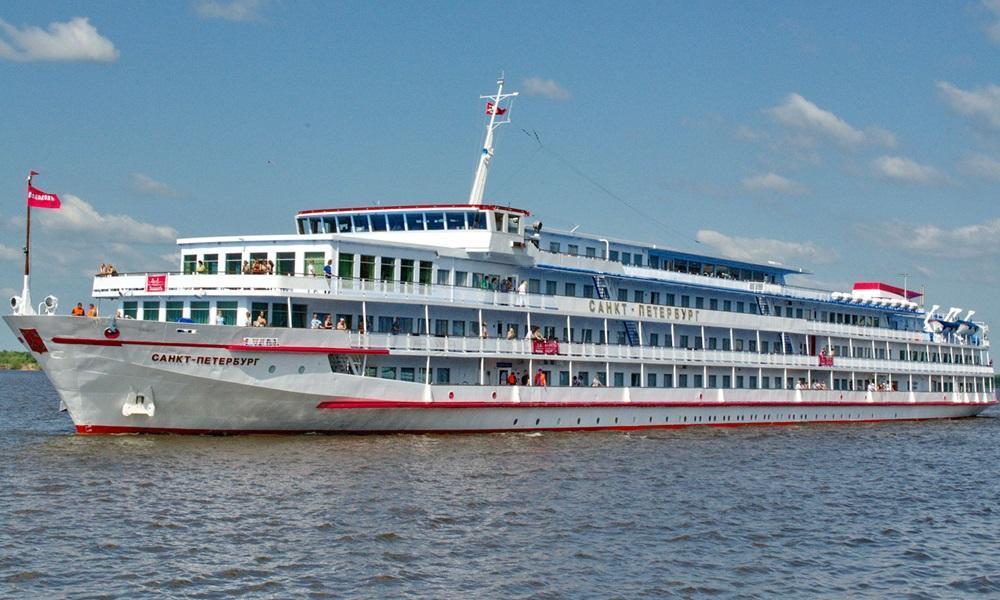
"Project 301" ship technology
All “Project 301” ships share the following characteristics:
- LOA 125 m (410 ft)
- Width 17 m (55 ft)
- DWT 3063 tons
- V-shaped hulls, differing by series in exterior elements, window shape (rectangular or rounded), and wheelhouse headlights
- 5 decks
- Capacity of 240 passengers and 110 crew, 102 outside cabins, 2 restaurants, 2 bar lounges, Sauna Room, Souvenir Shop, Lobby (Reception Desk with safe), and a 360-degree Promenade Deck (with outdoor seating)
- Powerplant with three marine diesel engines “Viertakt-Dieselmotor” (4-stroke model 6ЧРН 36/45 / also known as ЭГ70-5), each equipped with a turbocharger
- Third-series vessels are fitted with stronger propulsion (including bow thrusters)
- Staterooms include single and double cabins (originally 1-, 2-, or 3-bed), all equipped with en-suite bathrooms
- During later reconstructions, larger cabins (including suites) were introduced
Depending on the series, the ships differ in size and equipment (including engine variations). Many of these vessels have undergone complete refurbishments and rebuilding for foreign river cruise operators (such as Viking, AMA Waterways, and Grand Circle). During these multi-million-dollar drydock refits, passenger capacity was significantly reduced to enhance travel comfort and safety.
Project 301 ships
The first series of Project 301 includes:
- Vladimir Ilyich (1975, now Sankt Peterburg / Санкт-Петербург)
- Mariya Ulyanova (1975, now Viking Rurik)
- Yevgeniy Vuchetich (1976, now The Little Prince
- Sovetskaya Ukraina (1976, now Konstantin Korotkov)
- Tikhiy Don (1977, Тихий Дон)
- XXV Syezd KPSS (1977, now Petr Chaykovskiy)
The second series includes:
- Sovetskaya Rossiya (1977, now Nizhny Novgorod / Нижний Новгород)
- 60 let Oktyabrya (1978, scrapped as Avicena)
- Rossiya (1978, Россия)
- Vladimir Mayakovskiy (1978, Владимир Маяковский)
- Lenin (1979, now Mikhail Bulgakov / Михаил Булгаков)
- Aleksandr Ulyanov (1979, now Kronstadt / Кронштадт)
- Mikhail Lomonosov (1979, now Viking Sineus)
- Konstantin Fedin (1980, Константин Федин)
- 30 let GDR (1980, scrapped as Ferris Flotel)
- Vissarion Belinskiy (1980, Виссарион Белинский)
The third (final) series includes:
- Sovetskaya Konstitutsiya (1981, now Nikolay Karamzin / Николай Карамзин)
- Nikolay Chernyshevsky (1981, Николай Чернышевский)
- Nikolay Dobrolyubov (1981, now Andrey Rublev / Андрей Рублев)
- Aleksandr Radishchev (1982, Александр Радищев)
- Aleksandr Griboyedov (1982, now Knyazhna Viktoria / Княжна Виктория)
- Fedor Dostoevskiy (1983, Федор Достоевский)