

MS Tikhi Don
Former names : MS Borodin, MS Alexander Borodin
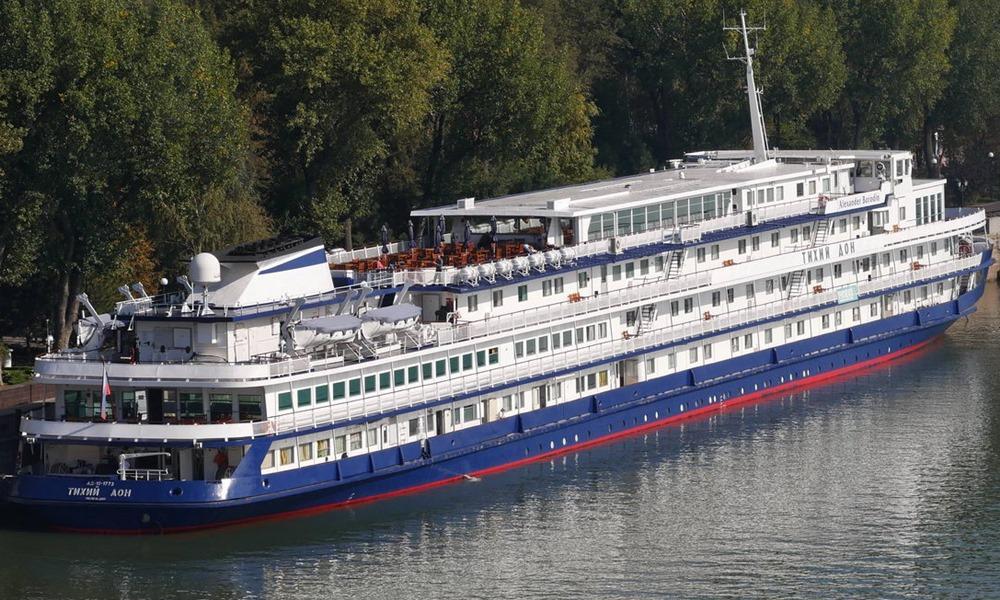
MS Tikhi Don last position
The last location of MS Tikhi Don is in Russia Inland cruising en route to MOSCOW-KAZAN'-MOSCOW. The AIS position was last reported 6 days ago.
Current PositionSpecifications of MS Tikhi Don
| Year of build | 1977 / Age: 49 |
| Flag state | Russia |
| Builder | RSW Rosslauer Schiffswerft GmbH (Dessau-Rosslau, Germany) |
| Class | USSR Russian cruise ship (Project 301) |
| Ferry route / homeports | St Petersburg-Moscow-Rostov on Don |
| Speed | 14 kn / 26 km/h / 16 mph |
| Length (LOA) | 125 m / 410 ft |
| Beam (width) | 17 m / 56 ft |
| Gross Tonnage | 5400 gt |
| Passengers | 220 |
| Crew | 100 |
| Decks | 5 |
| Cabins | 110 |
| Decks with cabins | 4 |
| Last Refurbishment | 2016 |
| Sister-ships | Vladimir Ilyich-class |
| Former names | MS Borodin, MS Alexander Borodin |
| Owner | Doninturflot |
| Operator | Orthodox Cruise Company, Phoenix Reisen |
MS Tikhi Don Review
Review of MS Tikhi Don
MS Tikhi Don cruise ship (“теплоход Тихий Дон”) is a traditional Russian river passenger vessel built for the USSR (Soviet Union) in the GDR (East Germany). On foreign markets, the ship is marketed as “MS Alexander Borodin” (Александр Бородин) or simply “MS Borodin”. Major international charter partners include Phoenix Reisen (Germany) and APT-Travelmarvel (Australia).
Tikhi Don (Alexander Borodin) operates cruises on the Volga River between St Petersburg and Moscow, as well as between Moscow and Rostov-on-Don. A total of 28 sisterships of the same series were built between 1983–1992. All vessels feature diesel-electric propulsion with three propellers and were originally designed for a maximum capacity of 332 passengers.
History and ownership
The ship was built in 1977 for the USSR’s state-owned company “Volga-Donskoe Rechnoye Parokhodstvo” (“Волго-Донское пароходство”, today “Азово-Донское Пароходство”), headquartered in Rostov-on-Don. Today, the vessel is owned by the Russian company Doninturflot (Донинтурфлот) and is operated under charter by the Russian companies “Orthodox Cruise Company” and “Imperial River Cruises Russia”.
MS Alexander Borodin is named after Aleksandr Porfiryevich Borodin — Russian physician (Doctor of Medicine), chemist and composer (pianist, cellist, flautist). Officially named “Tikhiy Don” (Тихий Дон), the ship underwent a major drydock reconstruction in 2005 and a full refurbishment in 2016.
Between 1992–2001, the vessel was docked in Sassnitz (Germany), initially for repairs and later used as a hotel ship. In 2001, it was sold to Moscow River Shipping Company and returned to Russia. Between 2002–2004, the ship operated under charter by Mosturflot.
In 2004–2005, the vessel underwent repairs and refitting in Romania, after which it was sold to Grand Circle Cruise Line. It then operated fly-cruise packages (mainly for US and Canadian tourists) on itineraries between Moscow and St Petersburg. In 2009, the vessel was chartered to Samara Travel Company. Between 2010–2014, it was marketed to foreign tourists with domestic flights between Moscow and St Petersburg. On August 1, 2014, the ship was decommissioned and out of service until 2016. In July 2016, Grand Circle Cruise Line sold the vessel to Doninturflot.
The ship is named after “Tikhiy Don” — a four-volume novel by Mikhail Sholokhov (1905–1984), written between 1925–1940 and considered one of Russia’s greatest literary works. The novel portrays the life of Don Cossacks during WWI (1914–1918), the Russian Revolution (1917) and the Russian Civil War (1917–1922).
Cabins
Accommodations include 6 suites (2 Panorama Suites and 4 Junior Suites) and 104 double cabins — 34 Twin Deluxe Plus (14 m²) and 70 Twin Deluxe (13 m²). Unlike most sisterships, MS Borodin has no triple or single cabins available. All 110 staterooms are outside cabins with large opening windows. The Lower Deck houses all staff and crew cabins (with round, non-opening portholes), the Sauna Room and the vessel’s machinery spaces (engines and propulsion).
Each cabin includes individually controlled central air conditioning, private en-suite bathroom (WC, shower, washbasin, hairdryer), flat TV (satellite channels), radio, minibar (refrigerator), shelves, wardrobe, electronic safe (in the closet), vanity mirror, writing desk with padded stool, round table with two armchairs, bedside cabinets with reading lamps, twin beds (two lower beds convertible to a double bed) and 220V power outlets. Suites additionally include a double bed, sofa, coffee table, armchairs, lounge cabinet and floor lamps. Cabin ceiling height is 2.2 m.
After multi-million-dollar refurbishments, all staterooms feature larger layouts than the originals, new furniture and flooring, upgraded bedding and modern lighting.
- Panorama Suites (Upper Deck forward, 17 m²): one-room cabins with five large non-opening windows, king-size bed, two armchairs, coffee table, mirrored dressing table with padded stool and large wardrobe.
- Junior Suites (Upper Deck / Boat Deck, 15.5 m²): one-room cabins with double bed, two large opening windows, two armchairs, coffee table and mirrored dressing table with padded stool.
- Twin Deluxe / Double Cabins (Main Deck / Boat Deck / Upper Deck): each with one opening window. Most measure 12.5 m²; Boat Deck cabins are slightly larger (14 m²).
- Triple cabins (Lower Deck): all 10 are fitted with bunk beds and two small round non-opening portholes. These cabins are currently not bookable.
Shipboard dining and entertainment
Dining onboard MS Alexander Borodin features European cuisine with elements of traditional Russian cooking. Breakfast is buffet-style. Lunch typically includes a Russian soup, while dinner is waiter-served with traditional Russian dishes. Waitstaff wear traditional attire.
Entertainment focuses on scheduled activities and live performances — classical and Russian folk music concerts, lectures on Russian history and culture, port talks, traditional tea ceremonies, Russian language lessons, singing and dancing classes, vodka tastings and matryoshka (nesting doll) painting workshops.
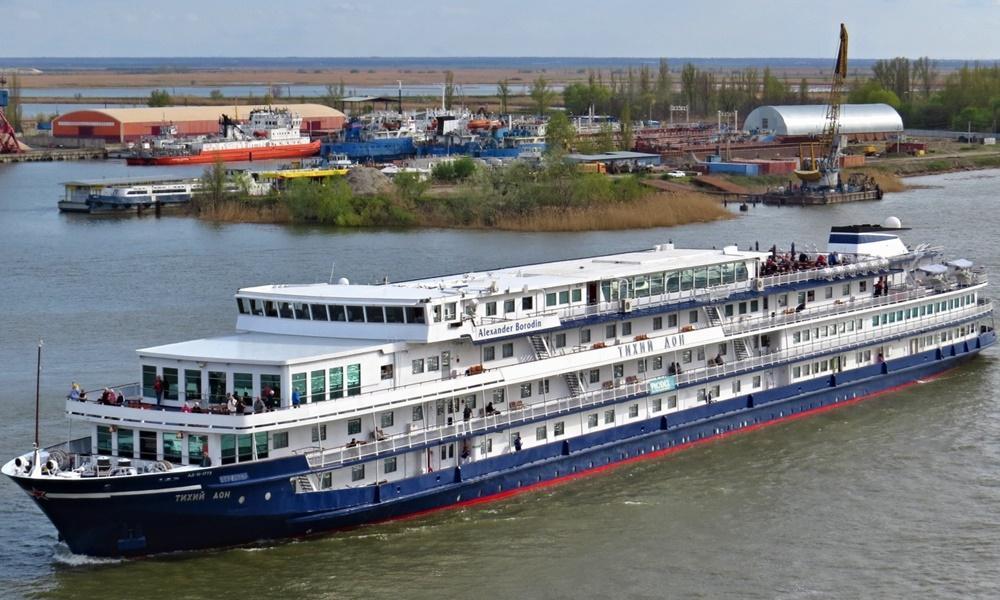
Facilities aboard MS Alexander Borodin traditionally include:
- 2 restaurants (main dining room and dinner-only bar-restaurant)
- 3 bars, small Boutique (Souvenir Shop)
- Spacious Lobby (Reception / Guest Services Desk), Coffee Station (complimentary coffee, hot water, tea, milk, cocoa, cookies)
- Bar Lounge (piano bar)
- Sundeck Conference Hall and Bar (Music Hall / Cinema / Meeting Room)
- Reading Lounge (Library)
- Sun Deck (Solarium) with outdoor seating — loungers, deckchairs and 4-seat tables
- Wrap-around Promenade Deck and outdoor seating areas
- Medical Room (Infirmary, staffed 24 hours by a resident doctor and nurse)
- Beauty Salon (hairdresser, barber, massage services)
- Ironing Room (laundry service), Sauna Room
- Complimentary Wi-Fi throughout the ship
- One elevator (passenger lift) and two staircases connecting all decks
Onboard entertainment includes games, tea ceremonies with pastries, themed parties (folk shows, dancing evenings), daily live music (grand piano and concerts), Russian language lessons, dancing and singing classes, blini (pancake) and vodka tastings and cultural lectures. The dining room menu also features regional specialties based on the itinerary.
River cruise itineraries
The Alexander Borodin itinerary program includes regularly scheduled cruises on the Volga and Don rivers in Russia — between St Petersburg and Moscow (11 days), and between Moscow and Rostov-on-Don, as well as Rostov–St Petersburg (20 days, via Astrakhan). Ports visited along the Moscow–Rostov route (northbound and southbound) include Uglich, Yaroslavl, Kostroma, Plyos, Nizhny Novgorod, Cheboksary, the Volga–Don Canal and Rostov.
The ship’s crew includes Russian government-licensed tour guides (fluent in English or German) who lead the onboard and ashore enrichment programs. Throughout the voyage, they deliver lectures on Russian culture, art, history and current affairs, and provide detailed information about all shore excursions and visited ports.
Note: You can view CruiseMapper’s list of all river cruise ships and riverboats in the “Itinerary” section of our River Cruises hub. All companies and their fleets are listed there.
Photos of MS Tikhi Don
Other Orthodox Cruise Company cruise ships
MS Tikhi Don Wiki
Built as Tikhi Don, MS Alexander Borodin is one of Russia’s signature “Project 301” river cruise ships.
Vladimir Ilyich-class Russian river ships
The “Vladimir Ilyich class” (also known as “Project 301”) consists of three series of Russian river cruise ships built in GDR (East Germany) for the USSR between 1974 and 1983. The class is named in honor of Vladimir Ilyich Ulyanov (1870–1924), considered the founder of the Soviet Union.
This highly successful ship class includes a total of 22 vessels constructed by VEB Elbewerft Boizenburg. They were deployed across Northwestern USSR waterways — the Volga River, Belomorkanal, Lake Onega, Volga–Don Canal, Kama and Amur rivers, as well as the Dnieper River (Ukraine) and the Black Sea. After the USSR’s dissolution in 1991, all vessels were acquired by private companies (Russian and foreign).
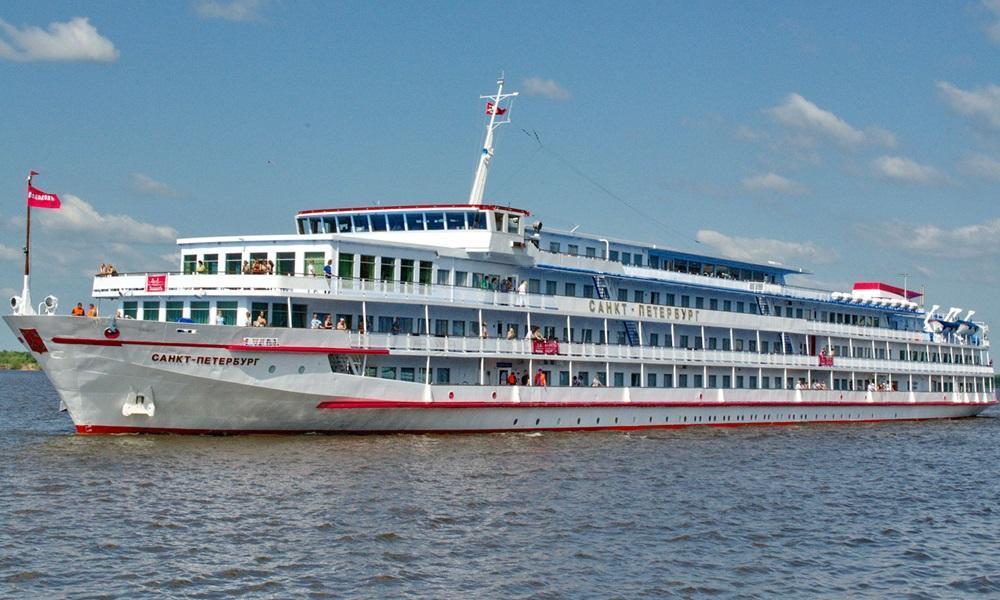
"Project 301" ship technology
All Project 301 ships share the following features:
- LOA length: 125 m (410 ft)
- Width: 17 m (55 ft)
- DWT: 3063 tons
- V-shaped hulls — details vary by series (exterior elements, window shape, wheelhouse headlights)
- 5 decks
- Approx. capacity: 240 passengers and 110 crew
- 102 outside cabins, 2 restaurants, 2 bar lounges, Sauna Room, Souvenir Shop, Lobby (Reception Desk with safe), 360-degree Promenade Deck with outdoor seating
- Powerplant: three 4-stroke marine diesel engines (“Viertakt-Dieselmotor”, model 6ЧРН 36/45 / ЭГ70-5), each equipped with a turbocharger
- Third-series vessels have stronger propulsion systems (enhanced bow thrusters)
- Original staterooms were singles and doubles (1–2–3-bed cabins), all with en-suite bathrooms
- After reconstruction, many ships received enlarged cabins, including suites
Depending on the production series, ships differ in dimensions and equipment, including variations in diesel engine models. Many Project 301 vessels underwent complete refurbishments for foreign cruise operators — such as Viking, AmaWaterways and Grand Circle. These multimillion-dollar drydock refits significantly reduced passenger capacity in favor of improved comfort and safety.
Project 301 ships
First series
- Vladimir Ilyich (1975, now Sankt Peterburg / Санкт-Петербург)
- Mariya Ulyanova (1975, now Viking Rurik)
- Yevgeniy Vuchetich (1976, now The Little Prince
- Sovetskaya Ukraina (1976, now Konstantin Korotkov)
- Tikhiy Don (1977, Тихий Дон)
- XXV Syezd KPSS (1977, now Petr Chaykovskiy)
Second series
- Sovetskaya Rossiya (1977, now Nizhny Novgorod / Нижний Новгород)
- 60 let Oktyabrya (1978, scrapped as Avicena)
- Rossiya (1978, Россия)
- Vladimir Mayakovskiy (1978, Владимир Маяковский)
- Lenin (1979, now Mikhail Bulgakov / Михаил Булгаков)
- Aleksandr Ulyanov (1979, now Kronstadt / Кронштадт)
- Mikhail Lomonosov (1979, now Viking Sineus)
- Konstantin Fedin (1980, Константин Федин)
- 30 let GDR (1980, scrapped as Ferris Flotel)
- Vissarion Belinskiy (1980, Виссарион Белинский)
Third (last) series
- Sovetskaya Konstitutsiya (1981, now Nikolay Karamzin / Николай Карамзин)
- Nikolay Chernyshevsky (1981, Николай Чернышевский)
- Nikolay Dobrolyubov (1981, now Andrey Rublev / Андрей Рублев)
- Aleksandr Radishchev (1982, Александр Радищев)
- Aleksandr Griboyedov (1982, now Knyazhna Viktoria / Княжна Виктория)
- Fedor Dostoevskiy (1983, Федор Достоевский)