

RMS St Helena
Former name : MNG Tahiti
RMS St Helena last position
The last location of RMS St Helena is in Persian Gulf cruising en route to Dubai. The AIS position was last reported 2 weeks ago.
Current PositionSpecifications of RMS St Helena
| Year of build | 1989 / Age: 37 |
| Flag state | Djibouti |
| Builder | A&P-Appledore International Ltd (Aberdeen, Scotland) |
| Class | Royal Mail Ship / cargo passenger ship |
| Speed | 15 kn / 28 km/h / 17 mph |
| Length (LOA) | 105 m / 344 ft |
| Beam (width) | 19 m / 62 ft |
| Gross Tonnage | 6767 gt |
| Passengers | 98 |
| Crew | 56 |
| Decks | 4 |
| Cabins | 56 |
| Decks with cabins | 3 |
| Last Refurbishment | 2025 |
| Former names | MNG Tahiti |
| Owner | St Helena Line Ltd |
| Operator | Terra Nova Expeditions |
RMS St Helena Review
Review of RMS St Helena
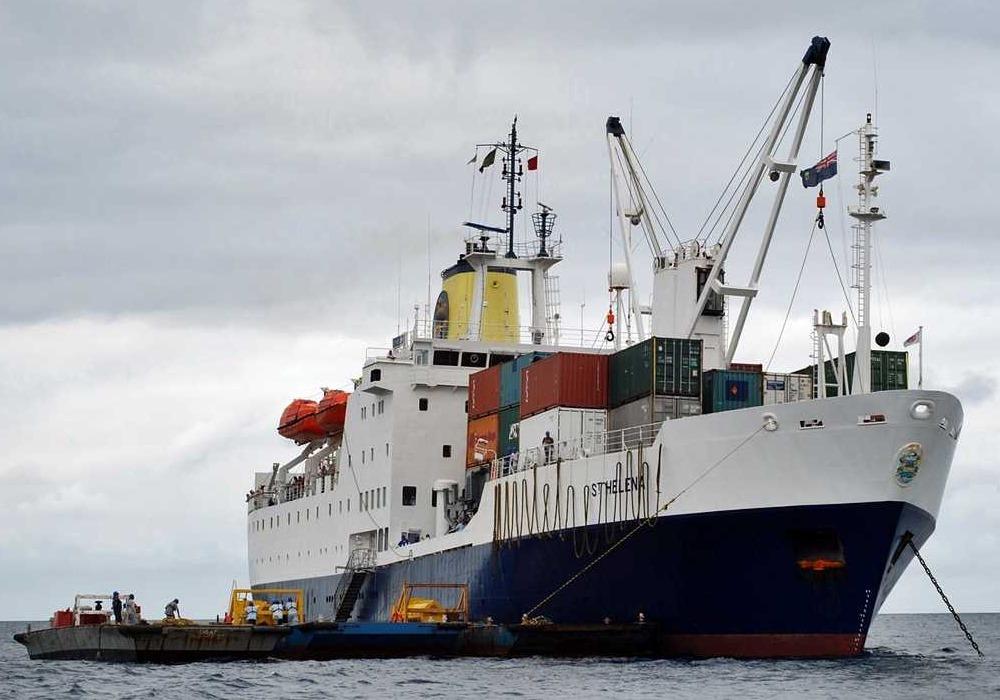
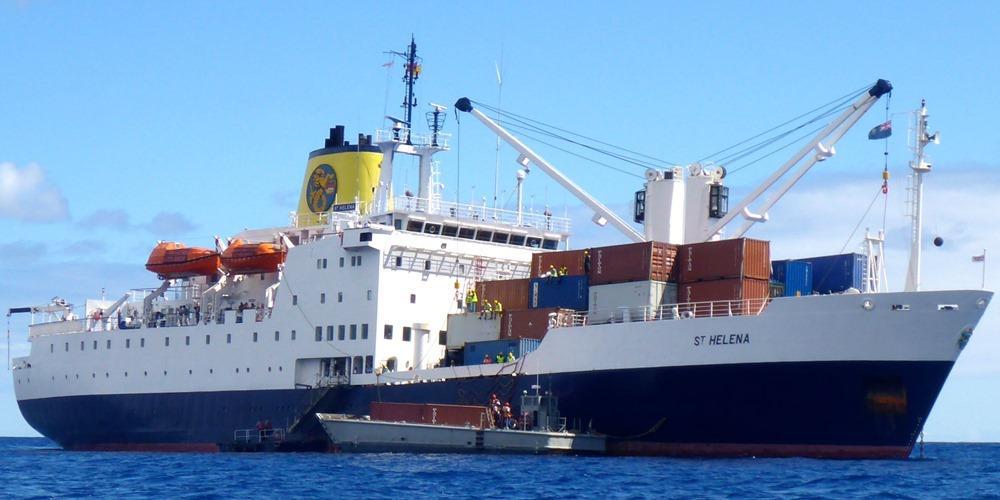
The 1989-built RMS Saint Helena is one of the world’s last operational “Royal Mail Ships” (RMS), the most famous of which is Cunard’s RMS Queen Mary 2. She was purpose-built as a combined cargo-passenger vessel to supply St Helena Island, a remote British Overseas Territory in the South Atlantic Ocean located approximately 1,200 mi (~1,900 km) off the coast of Africa.
The current shipowner is listed as RPTD SOLD UNDISCLOSED INTEREST. In July 2025, it was announced that the vessel had been long-term chartered to the new travel brand “Terra Nova Expeditions.” Established by Greg Carter (co-founder of Chimu Adventures), the Australian company plans to commence Antarctic voyages during the winter 2026–2027 season.
The vessel is currently Djibouti-flagged (MMSI 621819108). During her ferry service (1990–2017) under the ownership of St Helena Line Ltd, she was UK-flagged (MMSI 232669000) and registered in London.
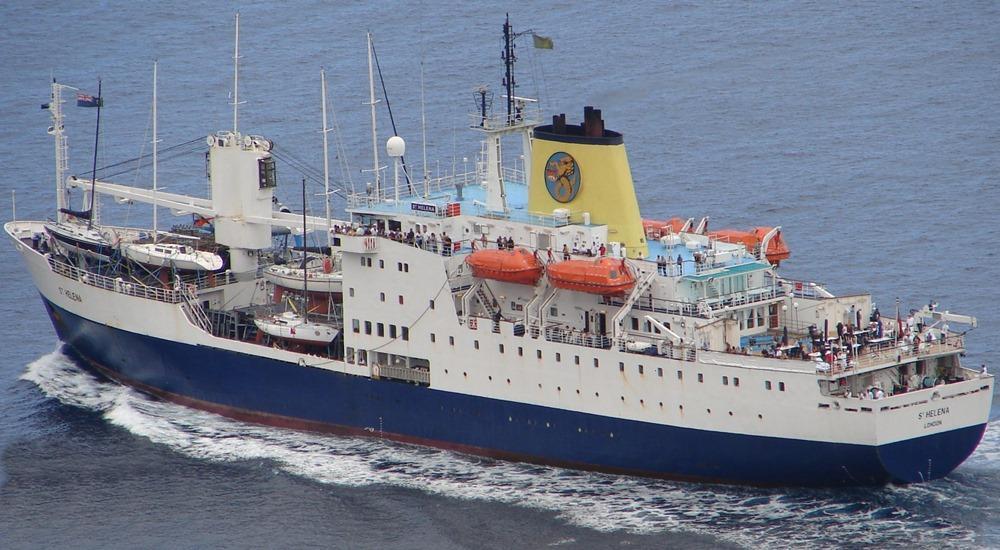
The ship previously operated a regular service departing approximately every three weeks from Cape Town (South Africa), transporting passengers and supplies to Saint Helena Island before continuing north to Ascension Island. Under the “ferry cruise” schedule, passengers were required to remain on St Helena Island for a minimum of eight nights.
This arrangement changed when Saint Helena Island opened its first international airport in June 2016, enabling direct flights from Britain and South Africa. The new air link led to the retirement of the Royal Mail Ship and marked a major shift for the island. According to UK Government estimates, up to 30,000 visitors per year could reach Saint Helena Island by air. The first commercial passenger flight arrived on October 14, 2017.
The voyage originally intended to be RMS St Helena’s final sailing began on June 16, 2016, from the UK and concluded on July 15 in Cape Town. As part of the farewell journey, Royal Mail organized a letter exchange between pupils from St Helena Island and Cardiff. However, due to delays in the airport’s opening, the ship’s service was extended on an interim basis through July 2017.
Shipboard facilities
By design, RMS St Helena was equipped to carry a wide range of cargo, including liquid supplies, to meet the needs of the island’s population. Initially, she accommodated 128 passengers and featured public facilities such as lounges, a shop, a swimming pool, and a well-equipped infirmary staffed by a resident physician.
During a drydock refurbishment in 2012, passenger capacity was increased from 128 to 156 with the addition of 24 extra berths, and a gym/fitness room was installed.
The drydock refurbishment in 2025 (a USD 10.8 million project) transformed the former cargo-passenger vessel into an ice-strengthened (Ice Class 1C) expedition cruise ship.
Following the conversion, maximum passenger capacity was reduced from 156 to 98.
Newly introduced modern amenities include a science laboratory and VR (virtual reality) headsets designed to help reduce seasickness.
The vessel has 4 passenger decks (3 with cabins) and a total of 56 staterooms.
Photos of RMS St Helena
RMS St Helena ship related cruise news
- Cruise Industry
Terra Nova Expeditions replaces RMS St. Helena for inaugural Antarctic season
The Australia-based, 2024-founded travel company Terra Nova Expeditions has changed plans for its inaugural Antarctic season after concluding that...
September 8, 2026 - Cruise Industry
Terra Nova Expeditions to launch Antarctic voyages aboard refurbished RMS St Helena
Australian entrepreneur Greg Carter, known for co-founding Chimu Adventures and serving on the Mawson’s Huts Foundation board, has established...
August 2, 2025 - show more news
RMS St Helena Wiki
The vessel was launched (floated out) from drydock on October 31, 1989, at Hall, Russell & Company’s (A&P Group) shipyard in Aberdeen (Scotland UK). The Scottish shipbuilder operated between 1864 and 1992.
The Saint Helena Island ferry service was officially terminated on February 17, 2018.
From 1990 to 2001, the ship was operated by Curnow Shipping Ltd, and from 2001 to 2018 by Andrew Weir Shipping Ltd.
On October 5, 2017, the shipowner St Helena Line Ltd announced that the vessel would be withdrawn from service in February 2018. The company appointed the London UK-based shipbroker CW Kellock (part of the Eggar Forrester Group) to handle the sale.
For several months in 2018 (February through October), the ship was renamed “MNG Tahiti” under the ownership of the Dorset-based company Tahiti Shipping Ltd. Ownership changed again in October 2018 to the Jersey-registered St Helena LLC.
In May 2018, the vessel was acquired by MNG Maritime (a UK-based company founded in 2013 providing floating armoury and transfer services to private military and security companies) and renamed “MNG Tahiti.” She was converted into a floating armoury (a vessel used to store military-grade weapons) and deployed in the Gulf of Oman to supply weaponry to ships transiting the High Risk Area of increased pirate activity in the Indian Ocean. In October 2018, she was resold to St Helena LLC (Jersey). In 2019, the ship was refitted and chartered by Extreme E (founded in 2018 and specializing in electric off-road racing events) to serve as a mobile logistics hub, transporting equipment—including race cars—to event locations.
The ship was purpose-built for the “UK – St Helena Island” route. As a combined cargo-passenger vessel, she originally accommodated 126 passengers (increased to 156 passengers in 56 cabins during a drydock refurbishment in 2012). Cargo capacity was 3,750 m³ (bale), with space for 92 TEUs, including 17 reefer (refrigerated) containers. The vessel was staffed by 56 crew members and officers.
RMS St Helena was one of only four ships in operation authorized to carry the RMS (“Royal Mail Ship”) prefix.
The ship’s final ferry voyage departed Saint Helena Island on February 10 and arrived in Cape Town (South Africa) on February 15, 2018. During her service between 1990 and 2017, she completed a total of 268 crossings, transporting the island’s supplies and goods.