

Yamal icebreaker
Yamal icebreaker last position
The last location of Yamal icebreaker is in North Russia cruising at speed of 11 kn (20 km/h | 13 mph) en route to Murmansk. The AIS position was last reported 1 month ago.
Current PositionSpecifications of Yamal icebreaker
| Year of build | 1992 / Age: 34 |
| Flag state | Russia |
| Builder | Baltiysky Zavod/Baltic Shipyard (St Petersburg, Russia) |
| Class | Russian nuclear icebreaker (Arktika-class, Project 10520) |
| Engines (power) | OK-900A nuclear reactors (342 MW / 458630 hp) |
| Propulsion power | 52.8 MW / 70806 hp |
| Speed | 22 kn / 41 km/h / 25 mph |
| Length (LOA) | 150 m / 492 ft |
| Beam (width) | 30 m / 98 ft |
| Gross Tonnage | 20646 gt |
| Passengers | 100 |
| Crew | 150 |
| Decks | 8 |
| Cabins | 50 |
| Decks with cabins | 4 |
| Sister-ships | Arktika (1975), Sibir (1977), Rossiya (1985), Sovetskiy Soyuz (1990), 50 Let Pobedy (2007) |
| Owner | Russian Federation (via FSUE Atomflot) |
| Operator | Rosatom (Rosmorport) |
Yamal icebreaker Review
Review of Yamal icebreaker
NS Yamal ("атомный ледокол Ямал") is a Russian nuclear icebreaker. "NS" stands for "nuclear ship." The vessel is state-owned by the Russian Federation via FSUE Atomflot and operated by Rosatom. Atomflot provides all Russian nuclear icebreakers with maintenance and technological services. The company also serves the country's special-purpose vessel fleet.
The vessel (IMO number 9077549) is Russia-flagged (MMSI 273132400) and registered in Murmansk.
The list of other Russian icebreaker cruise ships also includes Akademik Ioffe, Akademik Sergey Vavilov, Kapitan Dranitsyn, Kapitan Khlebnikov, and 50 Let Pobedy.
Besides NS Yamal, the list of other active Russian nuclear icebreaker ships includes Taymyr (1989), Vaygach (1990), 50 Let Pobedy (2007), Arktika (2020), Sibir (2021), Ural (2022), Yakutia (2024), Chukotka (2026), Rossiya (2027/Project Leader), and Sevmorput (1988, cargo ship).

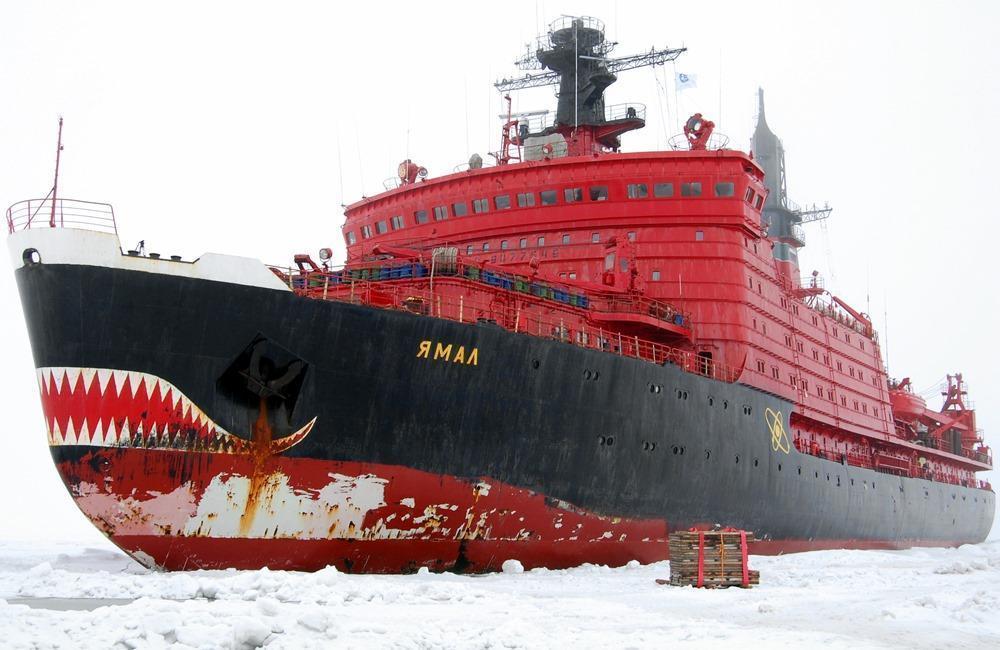
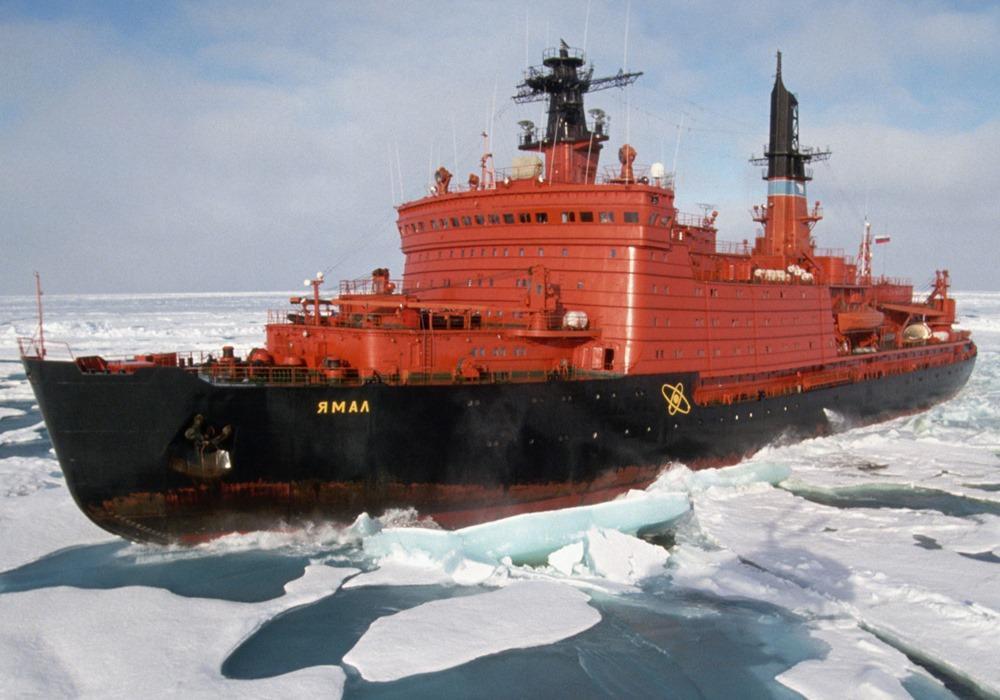
One of the Russian icebreaker cruise ships, Yamal is a nuclear-powered icebreaking vessel of the Arktika class. She is named after the Yamal Peninsula in northwestern Siberia. The name means "End of the Nenets Land." The Nenets (also known as Samoyeds) are indigenous people living in the Arctic regions of Russia. NS Yamal was laid down in Leningrad in 1986 but launched six years later, in October 1992, after the breakup of the USSR (Soviet Union). This nuclear ship never fulfilled her designed role of keeping the Arctic shipping route open. Instead, she has always carried passengers on Arctic icebreaker cruises. In July 1994, Yamal made an excursion to the North Pole with the National Science Foundation (NSF) to celebrate the ship's official maiden voyage. While at the exact North Pole, the cruise passengers and crew celebrated with a barbecue at -10°F, with wind gusts measured at -40°F. Because of the 90/90 coordinates, Captain Smirnov organized a swimming party with Mr. Will Rountree, a US citizen. The American was recorded as the first person ever to swim there (July 21, 1994). The water temperature was below freezing, approximately 30°F. Yamal played a significant role in the development of annual North Pole cruise expeditions, being one of the few ships capable of reaching the area and bringing tourists there safely. Since 1993, the ship has been operated by Murmansk Shipping Company (abbrev MSCO), with operations in Arctic Russia and the Baltic Sea (Northern Europe). During the 2001-2008 period, the ship was also operated by Poseidon Expeditions, the Arctic and Antarctica cruise operator.
Among the most serious NS Yamal ship accidents are:
- December 23, 1996 - a crew member was killed when a fire broke out on the ship. The fire was extinguished within 30 minutes. The nuclear reactor was not affected.
- March 16, 2009 - the ship collided with MT Indiga (Russia-flagged product tanker/oil tanker). The accident occurred in the Kara Sea (Yenisei Gulf, the Yenisei River's estuary). The oil tanker suffered a 9.5 m (31 ft) crack on her main deck. No damage was reported for the icebreaker.
The icebreaker's itinerary program offers North Pole expedition cruises and longer itineraries on the Northern Sea Route along Russia's Arctic coastline. Russia's nuclear fleet of icebreaking vessels is used exclusively in the Arctic Ocean for escorting merchant ships and assisting research stations floating in the ice-covered waters north of Siberia. These ships are also used for scientific and Arctic cruise expeditions. Russian nuclear icebreakers must sail in ice-cold waters to effectively cool their reactors.
NS Yamal vessel details
Yamal is one of the six Arktika-class icebreaking vessels, together with the old Sibir (1977-1992), the old Arktika (1975-2008), Rossiya (1985-2013), Sovetskiy Soyuz (1990), and 50 Let Pobedy (2007).
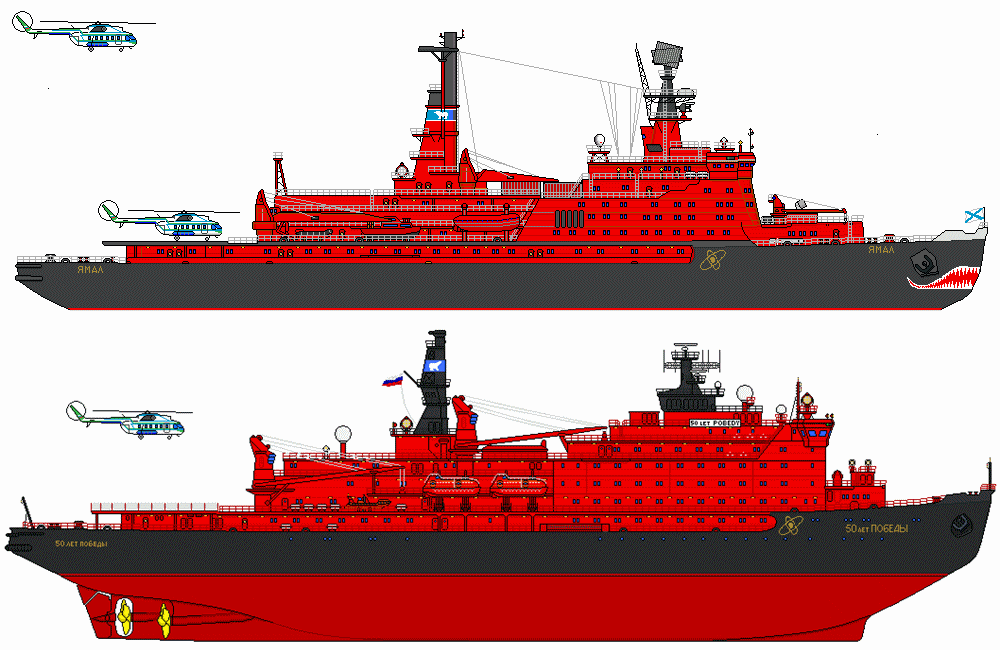
The vessel has one dining room, Sauna, Library, Auditorium, Passenger Lounge, Volleyball Court, Gymnasium, one swimming pool (indoor, heated), Infirmary, one elevator, and one helipad (helicopter deck) with a Mi-2 transport helicopter. The ship is also equipped with Zodiacs (large-capacity inflatable boats) used for remote landings.
- DWT Deadweight tonnage: 2,750 tons
- Displacement tonnage: 23,455 tons
- Max Draft: 11 m (35 ft)
- Icebreaking capacity: 5 m (16 ft)
- Ice-class LL1
- Range: unlimited (4 years endurance)
- Powerplant: 2x OK-900A nuclear reactors (171 MW each, combined power output 342 MW)
- Propulsion: turbo-electric, 3 shafts, 3 electric motors (17.6 MW output each, combined power output 52.8 MW).
Note: In cases of poor AIS coverage, tracking the vessel's current location will be impossible. CruiseMapper's list of all icebreakers and icebreaking research ships is available in the "itinerary" section of our Icebreakers hub, where all states and their fleets are listed.
Photos of Yamal icebreaker