

Dover (England)
Cruise Port schedule, live map, terminals, news
Region
Ireland - UK - British Isles
Local Time
2026-11-03 02:51
 55°F
12.6°C

 Strong breeze
11.9 m/s
 56 °F / 14 °C
52 °F / 12 °C
Port Dover cruise ship schedule shows timetable calendars of all arrival and departure dates by month. The port's schedule lists all ships (in links) with cruises going to or leaving from Dover, England. To see the full itineraries (ports of call dates and arrival / departure times) and their lowest rates – just follow the corresponding ship-link.
| Day | Ship | Arrival | Departure |
|---|---|---|---|
| 17 March, 2027 Wednesday |  AIDAdiva | 08:00 | 19:00 |
Dover cruise port (part of Port Dover, locode GBDVR) is ranked the UK's second largest passenger seaport (ferry and cruise) - after Southampton. Dover is also the homeport of the British shipping company P&O Ferries (23 daily crossings to Calais). Another major passenger shipping company from Dover is the Danish DFDS Seaways, with several daily crossings to France (15 to Calais and 12 to Dunkerque).
Calais offers quick road and rail access to Paris City. Dunkerque (Dunkirk) is just 10 km (6 mi) away from the border with Belgium (1-hour drive distance from Bruges). Ferry travel times are 1,5 hours (to Calais) and 2 hours (to Dunkirk). The Dover-Dunkirk route is served with 3 ships - DELFT SEAWAYS, DOVER SEAWAYS and DUNKERQUE SEAWAYS.
Occasionally, Fred Olsen and Saga UK offer "Mystery Cruise" deals on roundtrips from Dover. The itinerary is unique as its ports of call are not officially announced by the company prior the voyage. For 2021, Hurtigruten scheduled roundtrip departures from the UK with homeporting in Dover (embarkation port).
Port Dover UK
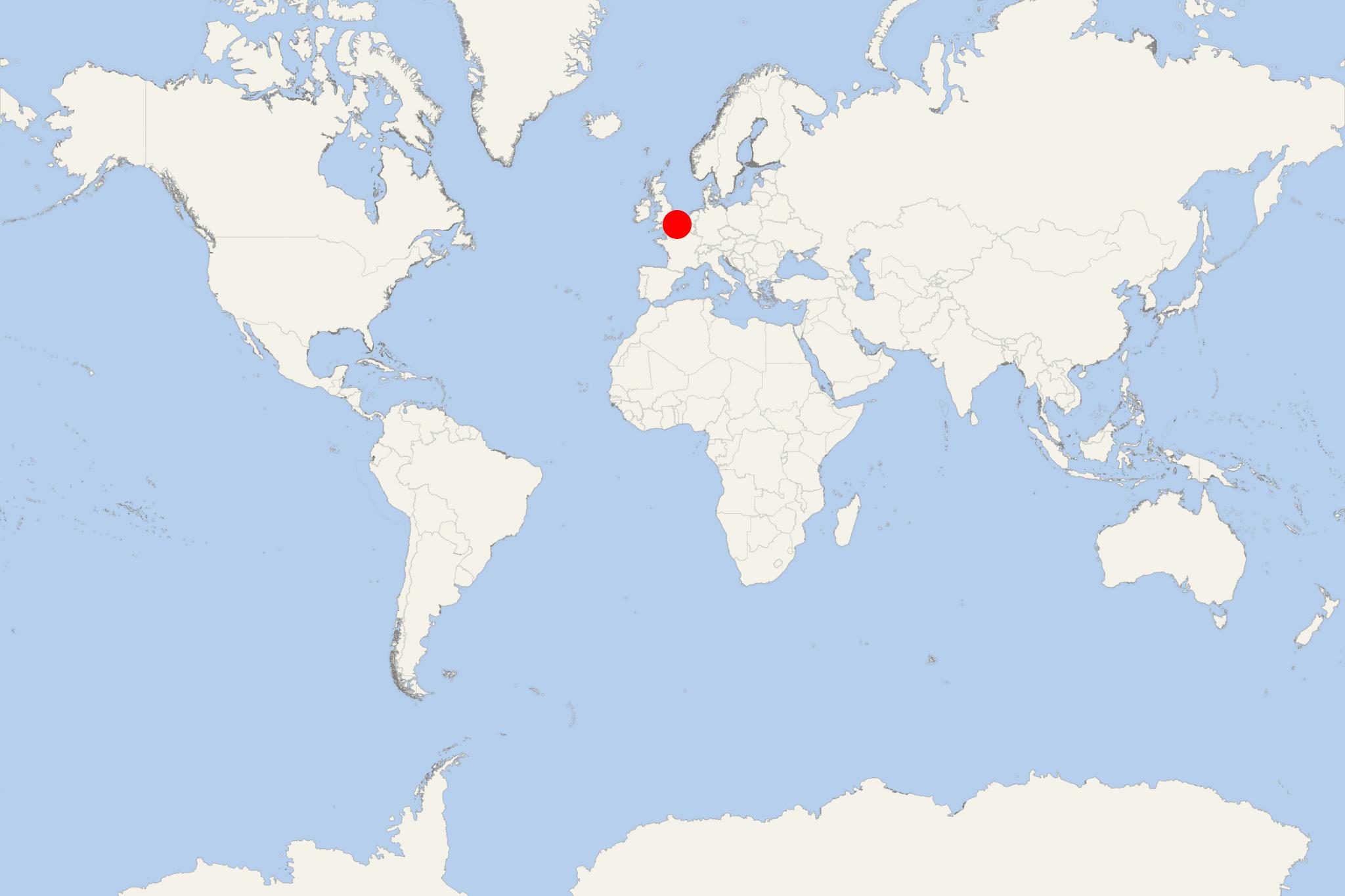
The seaport was established in 1606 by a Royal Charter and is currently operated by "Dover Harbor Board". Along with its 2 cruise terminals, Port Dover also has passenger ferry terminals, 2 cargo terminals, 1 boating (yacht) marina, its own police force. Located at English Channel's narrowest point, Dover has world's busiest shipping lanes with ferries constantly crossing between UK and France. Channel's width here is approx 30 km (20 mi).
The port is located on England's southern coast. It is approx 65 mi (105 km) from London and approx 21 mi (34 km) from Calais France. The cruise port schedule shows itineraries mainly during the summer months (April through late October). Passenger ships leave out of Dover on 4-day short breaks, as well as 7-day or 14-day cruises to the Canary Islands, Around Britain (British Isles), also to mainland Europe (Baltic, Norway Fjords, Atlantic Coast), Mediterranean, Iceland and Greenland. Due to the port's strategic position on the English Channel, it was nicknamed “the Lock and Key of England”.
Port Dover handles annually shipping trade valued at around GBP 122 billion, which is roughly 17% of the UK's trade in goods.
Dover is one of the 3 UK cruise ports used for visiting London City - together with London docks and Tilbury.
- On May 11, 2012, the port welcomed the inaugural visit of the Royal Caribbean ship Brilliance of the Seas.
- On July 18, 2012, the port hosted the Olympic Torch Relay event. It consisted of the Torch Relay, followed by a stage show and a fireworks display.
- On September 8, 2014, the port's tugboats performed a farewell salute (with water cannons) for the Holland America ship MS Ryndam. The ship departed Dover for the very last time. In November 2015, the ship joined the P&O Australia's fleet under the name Pacific Aria.
- On June 5, 2016, the Disney Magic ship departed from Dover on its first-ever British Isles cruise. The 12-night itinerary had scheduled ports of call Invergordon, Kirkwall, Greenock-Glasgow, Newcastle, Liverpool, Dublin, Le Havre-Paris and Guernsey (Channel Islands). The ship also did two 12-night cruises to Iceland with included overnight stays in Reykjavik plus stopping in Akureyri. The May 29 itinerary from Dover was a 7-day round-trip to the Norwegian Fjords visiting Stavanger, Alesund, Geiranger and Bergen.
In mid-March 2018, the company Buckingham Group Contracting Ltd was awarded a GBP 15 million contract to build a Refrigerated Cargo Terminal.
- The new multi-purpose facility is sized 9630 m2 (103,650 ft2) and is part of the "Dover Western Docks Revival" (port development project).
- The building consists of 8 individually temperature-controlled chambers with 20 dock levellers. It was required to produce quick turnaround for the port's cargo customers, thus increasing the overall volumes of the shipping trade.
- Opened in December 2019, the new cargo terminal has a new infrastructure with 2 dedicated berths and "Gottwald 5" mobile harbour cranes.
Following the COVID crisis, in 2022 the cruise port reported a record year with booked 130 ship calls, including 73 turnarounds/roundtrips and 11 inaugurals/maiden visits. Among the inaugurals was Carnival Pride (June 10th), which was CCL-Carnival Cruise Line's first port call since 2013.
On May 8th, 2026, 4 cruise vessels docked simultaneously for the first time in the Port's history. The ships were Celebrity Eclipse (Celebrity Cruises), Viking Sky (Viking OCEAN), MS Fram (HX Expeditions) and Le Bellot (Ponant).
Cruise itineraries to and from Dover
Follows a list of destinations visited by cruise ships leaving out of Dover:
- World Cruises - around the world voyages leaving from Dover include westbound Transatlantic crossings with either Panama Canal transition or around South America routes. Itinerary segments may end up in Canada, USA (Florida, East Coast or West Coast / California ports), Australia (Sydney, Brisbane, Melbourne) and even in New Zealand (Auckland).
- Iceland and Greenland are often included in "British Isles" themed cruise itineraries around Britain, visiting island ports in England, Scotland, Ireland (Northern Ireland) and Wales.
- Baltic Sea cruises to Norway from Dover are 7- to 9-night round-trips and visit Norwegian Fjords ports. North Pole itineraries additionally visit Haugesund, Leknes-Gravdal, Spitsbergen Island, Tromso, Alta, Molde, Trondheim, Skjolden.
- Baltic Sea cruises to Scandinavia and Russia are usually 2-week long and visit ports in Holland, Denmark, Germany, Norway, Sweden, Finland, and Russia (Sankt Petersburg overnight stay).
- One-ways from Dover to the Mediterranean usually end up in Italy (Civitavecchia-Rome or Venice).
- Iberia (voyages to Portugal and Spain ports located on Europe's Atlantic Coast) are often combined with Gibraltar (UK) and ports in France.
- Western Europe cruise itineraries from Dover go to the Canary Islands (Fuerteventura, Gran Canaria, La Gomera), the Azores islands (Terceira, Faial, Sao Miguel) and Madeira Island.
- Mediterranean Sea - Western Med itineraries (roundtrips from Dover) visit Spain, France (also French Riviera ports) and Italy.
Dover cruise terminal
Dover Port's cruise ship terminal is at the old Dover Marine railway station. The building houses a passenger terminal and has a dedicated car parking. The second (new passenger terminal) is further out along the pier.
The cruise port is easy to access from Folkestone (M20/A20), Canterbury (M2/A2) and by train from Ramsgate, London Charing Cross, London Victoria and London St Pancras.
Dover Passenger Terminal serves the ferry traffic to France. P&O Ferries is currently the only company serving foot passengers (daily service between 6 am and 7.30 pm). This means travel to Dunkerque is not possible unless passengers are in vehicles. The P&O's desk (located at the building's rear) is for purchasing tickets and check-in. Checked-in passengers wait in the terminal building until their sailing is announced, then board a shuttle bus taking them directly to the ferry ship.
Dover Marina (member of TransEurope Marinas) is very convenient for English Channel crossing sailings from England to France. The Marina features a sheltered harbour location and a total of 3 berthing areas (total capacity 400 berths).
Inner Harbour cruise terminals 1 & 2
Dover has 2 cruise ship terminals located in the Inner Harbour area (Western Docks). The former railway station building "Dover Marine" was transformed into Terminal 1 in the period 1994-96. This terminal also offers a secured on-site parking. The second (Terminal 2) building was inaugurated in 1999 and is located further out along the Admiralty Pier. Terminal 2 serves passengers on the largest cruise liners in Dover.
Dover port offers a direct high-speed train connection to London, plus two motorways and international airports located close to the terminals.
The UK's Kent county (called "the garden of England") has numerous historical attractions making the region an unique destination and an excellent choice for pre- and post cruise vacation.
Night at Dover Cruise Port, secure with regular Harbour Police patrol and porters.
Cruise Terminal 1
Terminal 1 is on the place of the ex Marine Railway Station. It is located at the Western docks and was transformed in the period 1994 – 1996. A lot of the original features are kept and the atmosphere resembles the bygone era. Dover Cruise Port Terminal 1 offers snackbar, waiting area, check-in desk, telephone booths, luggage handling and toilets.
Cruise Terminal 2
The largest ships are served by Terminal 2 (1999-opened). It offers all kind of amenities and services for passengers, including an information kiosk, ATM, vending (snack) machines, public restrooms, payphones.
- port address - "Port of Dover, Harbour House, Marine Parade, Dover England"
- UN-LOCODE (United Nations location code) - GBDVR
- Port Authority is the Dover Harbour Board.
- two dedicated cruise terminals
- capability to accommodate 3 vessels at a time
- supported by excellent road, rail and air infrastructure
- deep water channel and berths
- no restrictions on length and GT tonnage of cruise ships
- sheltered harbor area
The cruise port is accessible the whole year round - 24/7, 365 days a tear. However, the Baltic Sea cruising season runs between late March and late September.
Cruise ships usually arrive in Dover in early morning (5, 6 am) and depart from Dover in early afternoon (3, 4 pm).
(statistics) Dover is visited annually by over 200000 cruise passengers served by 20+ different line companies. Known as the "Gateway to Europe", Dover's ferry shipping lines transport each year millions of passengers and vehicles (cars, buses, trucks, motorcycles).
Ferry crossings from Dover to France are offered 24 hours a day, the whole year round, with departures on every 30 min (taken across both operators' shipping schedules).
Dover’s main choices are Dover Castle, the White Cliffs and a shorter outing around the waterfront and town centre. Independent sightseeing is practical with some planning or transport. The town is straightforward to explore once you reach the seafront, but the castle and clifftop paths involve substantial climbs. Canterbury is a separate excursion requiring more time.
Getting from the Cruise Port
Ships normally dock rather than tender. Dover uses Cruise Terminals 1 and 2 at the Western Docks, plus the WD4 port-of-call berth beside Marina Curve. Confirm your berth and passenger exit before planning a walking route: the ferry terminals are elsewhere in the harbour.
- Terminals 1 and 2: walking into town is possible using the designated pedestrian route, but allow roughly 30–40 minutes depending on your terminal and destination. Dover Priory railway station is also approximately 30–40 minutes away on foot.
- WD4: the pedestrian route along Marina Curve leads directly towards the seafront, making a waterfront outing more convenient.
- Shuttle: a paid cruise shuttle serves the terminals, town centre, Dover Priory and Dover Castle on port-of-call days. Confirm that day’s stops, frequency and final return service before leaving. Turnaround-day services are more limited.
- Taxis: ranks are provided outside Terminals 1 and 2. A taxi is useful for the castle or White Cliffs Visitor Centre; arrange the return pickup when travelling to the cliffs.
Best Ways to Spend Your Time
Dover Castle
Allow 3–4 hours at the attraction, plus transport. Focus on the Great Tower, castle grounds, harbour views and wartime tunnel experiences available during your visit. This is the strongest single-attraction choice for a substantial local outing.
Use the castle shuttle or a taxi to avoid the steep uphill approach from town. Independent visiting is straightforward, although the grounds are extensive and some interiors involve narrow stairs, slopes or enclosed spaces. Check opening dates and tunnel arrangements beforehand; queues can make a short visit feel rushed.
White Cliffs: viewpoints and a coastal walk
Allow 2–3 hours including a prearranged taxi transfer for a shorter visit. Start at the National Trust White Cliffs Visitor Centre and follow the marked paths to viewpoints. Choose your turnaround point according to the weather, walking ability and remaining time.
The longer walk to South Foreland Lighthouse is approximately 3.2 km (2.0 mi) each way. Allow around 2 hours of walking and 3–4 hours overall from the visitor centre, including breaks and any lighthouse visit. Check seasonal opening before relying on entry or refreshments.
The clifftop terrain is uneven, undulating and exposed. Wear shoes with grip, carry a windproof layer and stay well back from cliff edges. A taxi to the visitor centre removes the steep climb from the waterfront, but does not make the longer coastal paths level.
Waterfront, town centre and Dover Museum
Allow 2–3 hours, plus the walk or transfer from your berth. Combine Marina Curve, the seafront promenade and Market Square with Dover Museum’s Bronze Age Boat Gallery. This is a manageable independent option for a shorter call or changeable weather.
The waterfront is mostly level, with places to pause and watch harbour traffic. Dover’s beach is shingle, so it suits a brief seaside stop better than a sandy-beach day. Check museum opening before making it the centrepiece of your outing.
Canterbury: a separate city excursion
Allow approximately 5–6 hours overall. Explore the cathedral, surrounding medieval streets and riverside area. Direct trains from Dover Priory to Canterbury East take approximately 28 minutes, followed by a short walk into the centre. Station transfers, waiting and the return journey add considerably to the rail time.
Independent travel is practical on a sufficiently long call if you check both outward and return trains, including engineering works. Choose a return service with a later backup available. An organized excursion is preferable if you want transport coordination or have limited time ashore. Canterbury should normally replace, rather than accompany, a full castle or extended cliffs visit.
Self-Guided Walking Routes
Easy: waterfront and town loop
Start: Marina Curve, after walking from WD4 or reaching the waterfront from your terminal. Distance: approximately 2.5–3 km (1.6–1.9 mi). Pure walking time: 40–50 minutes. Recommended time: 2–3 hours with museum and refreshment stops. Mostly level paved surfaces, with road crossings.
- Marina Curve: begin with views across the marina and harbour.
- Wellington Dock and Clock Tower: follow the public waterfront route around the dock area.
- Seafront promenade: continue east for beach and castle views.
- Market Square: turn inland using the designated pedestrian crossings.
- Dover Museum: visit the Bronze Age Boat Gallery if open.
- St James’s shopping area: pause for refreshments before returning to the promenade and Marina Curve.
The distance excludes the additional approach from Terminals 1 and 2. Retrace the approved pedestrian route to your terminal, or return to the confirmed shuttle stop.
Moderate: Western Docks to the White Cliffs Visitor Centre
Start: the designated pedestrian exit from the Western Docks cruise terminals. Distance: approximately 3.7 km (2.3 mi) one way, with extra walking possible from your ship. Pure walking time: about 1 hour each way. Recommended time: 3–4 hours for an out-and-back outing with a short viewpoint stop.
- Western Docks exit: follow the signed public footway towards the waterfront.
- Marina and Clock Tower: join the route towards the Esplanade.
- Seafront promenade: walk east towards the cliffs.
- East Cliff: use the marked crossing and follow the brown White Cliffs signs.
- Athol Terrace: continue to the pedestrian approach to Dame Vera Lynn Way.
- White Cliffs Visitor Centre: climb the stepped path and follow the signed entrance route.
Most of the approach is paved and fairly level, but the final climb is steep with several flights of steps. Return the same way or arrange a taxi pickup at the visitor centre beforehand. This route is unsuitable for anyone who cannot manage stairs; adding the lighthouse creates a much longer walking day.
Practical Return Planning
- Use the ship’s all-aboard time when planning your return, rather than its published departure time.
- For local outings, aim to reach the terminal at least an hour before all-aboard; leave a larger margin for Canterbury and other excursions outside Dover.
- Check the final shuttle carefully: services finish before the ship departs. Do not assume a town shuttle also serves the White Cliffs Visitor Centre.
- Check attraction opening dates, especially outside summer. Short daylight hours and strong winds can substantially reduce the appeal of a long cliffs walk.
- London consumes much of a port call in transfers and travel. If it is your priority, choose an organized excursion on a suitably long call rather than treating it as a quick trip from Dover.
Dover hotels
- Accidents
Princess Cruises 2028-2029 Australia & New Zealand itineraries, World Cruise 2029
Princess Cruises has announced its 2028–2029 Australia and New Zealand programme alongside the 2029 Grand World Odyssey, combining regional...
October 28, 2026 - Cruise Industry
CCL-Carnival uses cruise ships to position for Solar Eclipses in 2027
CCL-Carnival Cruise Line is expanding its use of longer Carnival Journeys (repositioning) itineraries to incorporate astronomical events, with 3...
August 13, 2026 - Cruise Industry
Port Dover UK marks record 4-ship cruise day
The Port of Dover (England UK) recorded the busiest cruise day in its history on May 8th, 2026, when 4 cruise vessels arrived simultaneously for the...
May 23, 2026 - Cruise Industry
Seabourn Quest ship's 120-day “Cape to Cape” World Cruise 2028
Seabourn has outlined its 2028 Cape to Cape World Cruise, a 120-day global passage aboard Seabourn Quest that will span 5 continents and more than 50...
December 23, 2025 - Cruise Industry
CLIA UK & Ireland 2026 Expedition Summit to be held on HX's ship MS Fram
Cruise Lines International Association (CLIA) UK & Ireland has confirmed that its next annual Expedition Summit will be held on May 8th, 2026...
December 19, 2025 - Cruise Industry
CCL-Carnival unveils 2027-2028 deployments including eclipse-viewing cruise
CCL-Carnival Cruise Line has announced its 2027–2028 deployment schedule, highlighting a broad mix of Caribbean sailings from three USA...
October 9, 2025 - Cruise Industry
Dover sees aerial farewell to Carnival Miracle from WWII Mustang
A concluding aerial salute marked the final cruise of Carnival Miracle from Dover (England) on August 10th. A single-seat 1944 Mustang fighter...
August 17, 2025 - Cruise Industry
HAL-Holland America Line schedules 2027 voyages for celestial phenomena
HAL-Holland America Line has announced a series of cruises for 2027, offering passengers the opportunity to witness notable celestial events...
June 1, 2025 - Cruise Industry
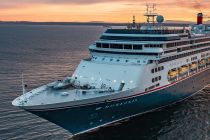
Fred Olsen's ship Borealis returns to Dover UK for Summer 2025 cruises
Fred. Olsen Cruise Lines has resumed operations from the Port of Dover (England), offering a series of summer 2025 sailings aboard the Borealis to...
May 30, 2025 - Cruise Industry
HAL-Holland America returns to Dover UK in 2025 (ship MS Nieuw Statendam)
HAL-Holland America Line has commenced its first UK-based season in over a decade, with the Pinnacle-class vessel Nieuw Statendam embarking on a 14...
April 25, 2025 - show more news