

MS Vissarion Belinsky
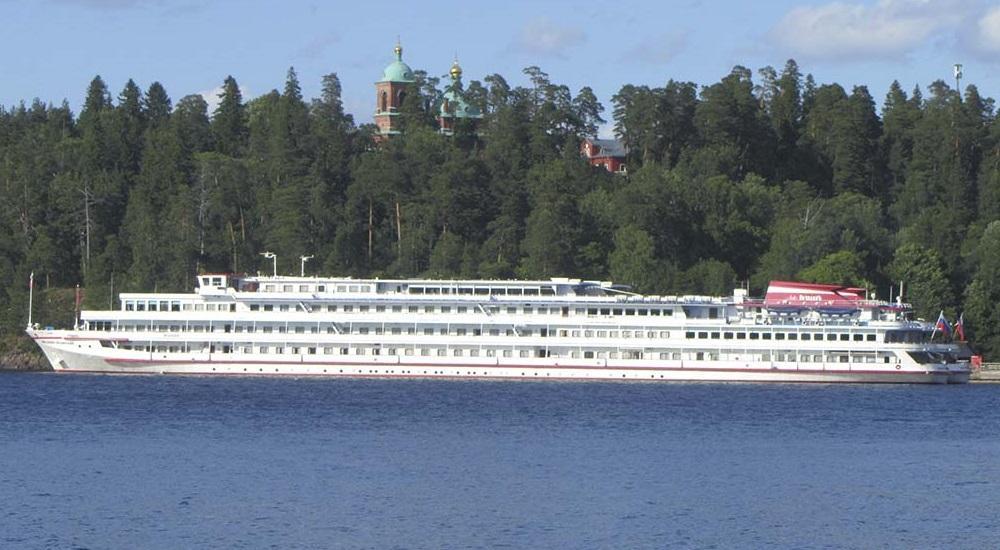
MS Vissarion Belinsky last position
The last location of MS Vissarion Belinsky is in Russia Inland cruising at speed of 10.6 kn (20 km/h | 12 mph) The AIS position was last reported 1 week ago.
Current PositionSpecifications of MS Vissarion Belinsky
| Year of build | 1980 / Age: 46 |
| Flag state | Russia |
| Builder | RSW Rosslauer Schiffswerft GmbH (Dessau-Rosslau, Germany) |
| Class | USSR Russian cruise ship (Project 301) |
| Ferry route / homeports | St Petersburg-Moscow |
| Speed | 14 kn / 26 km/h / 16 mph |
| Length (LOA) | 125 m / 410 ft |
| Beam (width) | 17 m / 56 ft |
| Gross Tonnage | 5400 gt |
| Passengers | 289 |
| Crew | 98 |
| Cabins | 141 |
| Last Refurbishment | 2004 |
| Sister-ships | Vladimir Ilyich-class |
| Owner | Volga Shipping Company (Russia) |
| Operator | Vodohod |
MS Vissarion Belinsky Review
Review of MS Vissarion Belinsky
MS Vissarion Belinsky cruise ship ("теплоход Виссарион Белинский" круизный корабль) is a traditional Russian river passenger vessel built for the USSR in the GDR (Eastern Germany). The ship is currently owned and operated by the Russian cruise company VODOHOD ("Водоход"). MS Belinsky sails on the Volga River, offering round-trip itineraries from St Petersburg.
Vodohod is Russia's largest river cruise operator. The company was founded in 2004 as Volga Shipping Company. Following its merger with Volga Flot Tour, Vodohod now operates a fleet of more than 50 cruise ships on the Don, Volga, Kama and Moscow rivers, the Volga-Don Canal, the Volga-Baltic Waterway, and on Lakes Ladoga and Onega.
Vodohod's predecessor, Volga Shipping Company (Volzhskoye parokhodstvo / Волжское пароходство), was established in 1843 as a Volga steamship transportation company. By 2011, it operated more than 300 passenger and cargo river vessels and transported over 6.7 billion tons of cargo and more than 368,000 passengers on Russia’s major inland waterways.

MS Belinsky is named after the Russian (Soviet-era) literary critic Vissarion Grigoryevich Belinsky (1811-1848). The ship underwent an extensive refurbishment in 2004.
Cabins
Accommodations include 4 Junior Suites, 108 twins (14 of which have bunk beds), 11 singles and 18 triples. All staterooms are outside (no interior cabins) and feature large opening windows, except for Lower Deck cabins, which have round, non-opening portholes. Standard cabin amenities include central air-conditioning (individually controlled heating and ventilation), private en-suite bathrooms (WC, shower, washbasin, hairdryer, towels, bath products), flat TV, radio, direct-dial phone, refrigerator, wardrobe, safe (in the closet), vanity mirror, writing desk with chair, bedside table, reading lights and 220 V power sockets. Suites additionally offer a double bed, sofa, coffee table, armchairs, cabinet and floor lamps. Cabin ceiling height is 2.2 m.
Following multi-million-dollar refurbishments, all cabins feature larger layouts, new furniture and flooring, premium bedding and modern lighting.
- Junior Suites (Middle Deck) are spacious cabins with combined living-sleeping areas, 3 large opening windows, L-shaped sofa, low table, King-size double bed (plus folding bed), mirrored vanity table with chair and wardrobe. Suites can accommodate up to 3 passengers using the folding bed.
- Single Cabins (Middle Deck / Boat Deck) are 1-bed staterooms with 1 large opening window.
- Twin / Double Cabins (Main Deck / Middle Deck / Boat Deck) are 2-bed staterooms with 1 large opening window. Bunk-Bed Double cabins (Middle Deck) can also be booked as singles.
- Triple Cabins (Lower Deck) are 3-bed staterooms with 2 non-opening porthole windows. Triple cabins can also be booked as doubles.
Shipboard dining and entertainment options
Dining onboard MS Belinsky features European cuisine with elements of traditional Russian cooking. Breakfast is buffet-style, lunch includes a Russian soup course, and dinner is waiter-served with a classic Russian menu. Waitstaff wear traditional costumes.
Onboard entertainment focuses on scheduled activities and live performances (classical and Russian folk music). Lectures cover the country’s history and culture, while port talks (led by a professional tour guide) provide information on visited ports, nearby towns and available shore excursions. Guests may also enjoy Russian tea ceremonies, language lessons, dancing and singing classes, vodka tasting and matryoshka (nesting doll) painting workshops.
MS Vissarion Belinsky ship facilities include:
- (Boat Deck, Middle Deck) Two restaurants (Neva and Ladoga)
- (Boat Deck) Panorama Bar Lounge (Main Lounge / Music Hall)
- (Sun Deck) Conference Hall and Bar (Dance Hall / Cinema / Meeting Room)
- (Middle Deck) Bar Lounge (Library / Reading Hall), Boutique (Souvenir Shop)
- (Sun Deck) Spa (Sauna), Solarium (sundeck with outdoor seating, deckchairs and 4-seat tables)
- (Main Deck) Medical Room (Infirmary), Beauty Salon (hairdresser, barber, massage services), Lobby (Reception / Guest Services Desk), Kids Club
- (Middle Deck) Ironing Room (laundry service)
VODOHOD cruise deals
- Departure port (dock/berth), check-in, boarding and landing times are listed on the company’s website (vodohod.com) and on passengers’ boarding passes. The ship’s exact departure time is confirmed online the day before departure.
- Child discount ticket prices apply to children up to 14 years old (age fixed on departure day).
- Children aged 2 to 5 (inclusive) travel free of charge but without an additional bed (when no free beds are available). Shore excursions are also free.
- Toddlers under 2 travel free of charge; however, no bed, food or tour services are provided. Extra beds (baby cribs, cots) are not available onboard.
- The single supplement for a TWIN (double) cabin is 75%.
- Cabin numbers are provided 7 days before departure. Reserving a specific cabin number costs EUR 50 per person per cruise.
- Ticket prices include three meals a day. Onboard dining includes: Breakfast (buffet; water in pitchers, tea/coffee served; drinks such as cocoa, milk, juices, hot and cold dishes), Lunch (buffet; water in pitchers, tea/coffee served) and Dinner (waiter-served), featuring 1 Starter, 1 Main Course (choice of 3 options: meat, fish or vegetarian), and 1 Dessert (choice of 2 or fruit).
- On embarkation and disembarkation days, meal times depend on arrival/departure schedules. If a land tour coincides with lunchtime, passengers receive complimentary meals at a local restaurant or “dry rations.”
- Ticket price–included onboard events include: Welcome Aboard (“bread and salt” ceremony), Welcome Cocktail (1 complimentary glass of champagne or juice), Tea Ceremony (tea and traditional pies), Vodka Show (blini and vodka tasting), Cocktail Party (once per cruise, 1 complimentary cocktail per person from 3 options), Captain’s Dinner (gourmet menu), mulled wine or iced tea (weather-dependent, offered after excursions), complimentary Coffee Station (coffee, hot water, tea, milk, cocoa, cookies; available during set hours), and 1 bottled water (0.33l per person per day in cabins). Tickets also include foreign-language guide services, onboard entertainment (language and singing lessons, live music, nightly dancing, Wheelhouse tour).
- Complimentary excursions are listed in the itinerary program. Optional tours are available for booking onboard. An additional excursion fee applies to foreign tourists (including children aged 6-14), except travelers from Russia, Ukraine, Estonia, Latvia and Lithuania. This surcharge depends on cruise length (1-2 days, 3-4 days, 5 days, 6 days, 7 days).
- VODOHOD cruise tickets do not include land transfers, beverages and snacks (in onboard bars and lounges), phone calls, sauna visits, optional excursions, travel insurance or personal expenses. Ticket prices include 18% VAT.
- Cashless payments onboard are made via the company’s debit card “Vodohod” (issued at registration), with no interest or commissions. The card is accepted in all venues (bars, restaurant, shop, administration). Cash payments are not accepted. International bank cards are accepted for final settlement.
- Gift Certificates (“Vodohod” vouchers) may be purchased for any amount. Recipients can choose itinerary, departure date and cabin category. If the cruise cost is lower than the certificate value, the difference is non-refundable.
- Smoking is allowed only in designated outdoor areas (marked “Place for smoking”), located aft on Middle and/or Boat Decks (depending on ship). Smoking is prohibited in all interior spaces and on open decks outside the designated areas.
- All VODOHOD ships offer morning exercises and health gymnastics (led by a certified physician), oxygen cocktails and dietary meals.
- Medical services provided free of charge on all VODOHOD ships include emergency care for sudden illnesses, measurement of blood pressure and temperature and primary wound treatment.
- VODOHOD advises passengers to arrive in the departure city at least 6 hours before the ship’s departure. Boarding begins 2 hours before departure, and all passengers must be onboard at least 1 hour prior. Late arrivals are not eligible for refunds.
- VODOHOD departure ports include Moscow, St Petersburg, Astrakhan, Nizhny Novgorod, Perm, Samara, Kazan, Volgograd, Rostov-on-Don and Saratov.
Note: You can browse CruiseMapper’s full list of river cruise ships and riverboats in the “itinerary” section of our River Cruises hub, where all companies and their fleets are listed.
Other Vodohod cruise ships
MS Vissarion Belinsky Wiki
MS Belinsky is one of Russia's signature “Project 301” river cruise ships.
Vladimir Ilyich-class Russian river ships
The “Vladimir Ilyich class” (also known as “Project 301”) consists of three series of Russian river cruise ships built in the GDR (Germany) for the USSR between 1974 and 1983. The class is named in honor of Vladimir Ilyich Ulyanov (1870-1924), recognized as the founder of the Soviet Union.
A total of 22 vessels were produced by VEB Elbewerft Boizenburg, making the class one of the most successful riverboat designs of its time. These ships operated in northwestern USSR waterways, including the Volga, Belomorkanal, Lake Onega, Volga–Don Canal, Kama and Amur rivers, as well as the Dnieper River (Ukraine) and the Black Sea. After the USSR dissolved in 1991, all ships were acquired by private (Russian and foreign) companies.
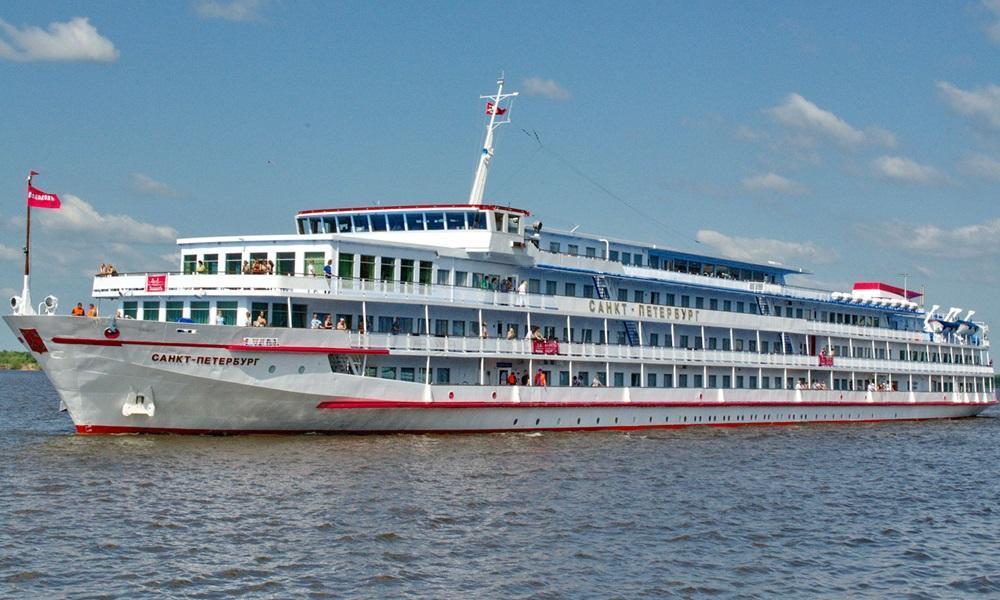
“Project 301” ship technology
All “Project 301” ships share the following characteristics:
- LOA length 125 m (410 ft),
- width 17 m (55 ft),
- DWT tonnage 3063 tons,
- V-shaped hulls, differing by series in terms of exterior elements, window shape (rectangular or rounded) and wheelhouse headlights,
- 5 decks,
- Passenger capacity 240 and crew capacity 110, 102 outside cabins, 2 restaurants, 2 bar lounges, Sauna Room, Souvenir Shop, Lobby (Reception Desk with safe) and a 360-degree Promenade Deck with outdoor seating,
- Powerplant: three “Viertakt-Dieselmotor” 4-stroke marine diesel engines (model 6ЧРН 36/45, also known as ЭГ70-5), each with a turbocharger,
- The third (final) series is equipped with stronger propulsion and bow thrusters,
- Original staterooms included single and double cabins (1-2-3-berth layouts), all with en-suite bathrooms,
- During later reconstructions, larger cabins (including suites) were introduced.
Depending on the series, ships differ in size, onboard equipment and engine configuration. Many Project 301 ships were extensively refurbished for foreign river cruise lines such as Viking, AmaWaterways and Grand Circle. During these multi-million-dollar drydock refits, passenger capacity was significantly reduced to enhance comfort and safety.
Project 301 ships
Project 301 first-series vessels include:
- Vladimir Ilyich (1975, now Sankt Peterburg / Санкт-Петербург)
- Mariya Ulyanova (1975, now Viking Rurik)
- Yevgeniy Vuchetich (1976, now The Little Prince
- Sovetskaya Ukraina (1976, now Konstantin Korotkov)
- Tikhiy Don (1977, Тихий Дон)
- XXV Syezd KPSS (1977, now Petr Chaykovskiy)
Project 301 second-series vessels include:
- Sovetskaya Rossiya (1977, now Nizhny Novgorod / Нижний Новгород)
- 60 let Oktyabrya (1978, scrapped as Avicena)
- Rossiya (1978, Россия)
- Vladimir Mayakovskiy (1978, Владимир Маяковский)
- Lenin (1979, now Mikhail Bulgakov / Михаил Булгаков)
- Aleksandr Ulyanov (1979, now Kronstadt / Кронштадт)
- Mikhail Lomonosov (1979, now Viking Sineus)
- Konstantin Fedin (1980, Константин Федин)
- 30 let GDR (1980, scrapped as Ferris Flotel)
- Vissarion Belinsky (1980, Виссарион Белинский)
Project 301 third-series vessels include:
- Sovetskaya Konstitutsiya (1981, now Nikolay Karamzin / Николай Карамзин)
- Nikolay Chernyshevsky (1981, Николай Чернышевский)
- Nikolay Dobrolyubov (1981, now Andrey Rublev / Андрей Рублев)
- Aleksandr Radishchev (1982, Александр Радищев)
- Aleksandr Griboyedov (1982, now Knyazhna Viktoria / Княжна Виктория)
- Fedor Dostoevskiy (1983, Федор Достоевский)