

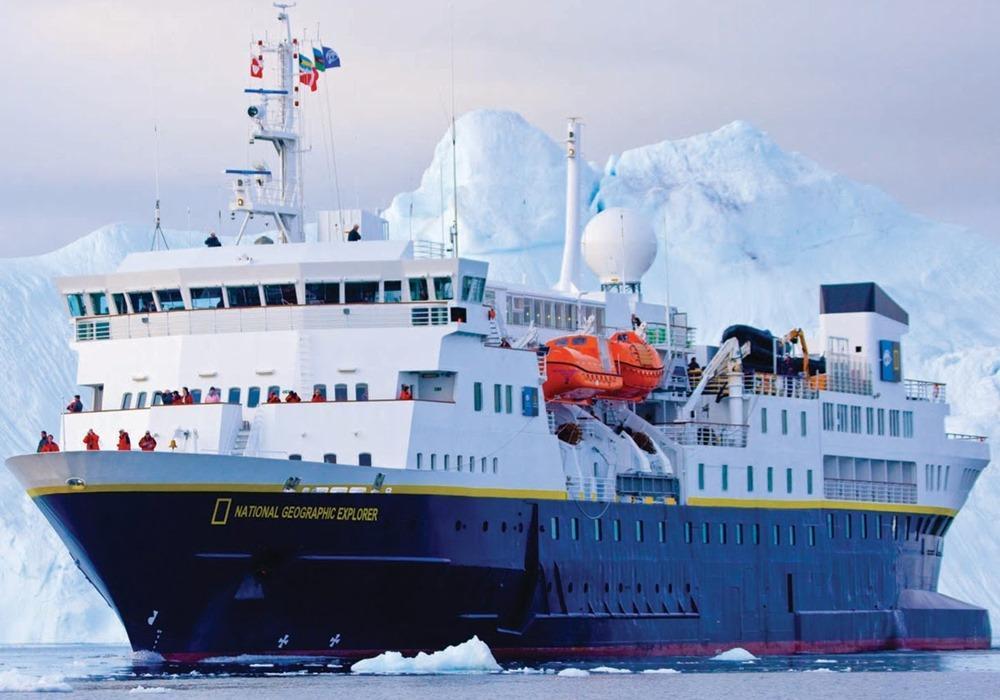
National Geographic Explorer
Former names : Nat Geo Explorer, MS Lyngen, MS Midnatsol 2, MS Midnatsol
Cruise line
Lindblad Expeditions
National Geographic Explorer current position
The current location of National Geographic Explorer is in South America East Coast cruising at speed of 13.5 kn (25 km/h | 16 mph) en route to Salvador de Bahia. The AIS position was last reported 5 minutes ago.
All Itineraries Current PositionCurrent itinerary of National Geographic Explorer
National Geographic Explorer current cruise is а 8 nights, one-way from Puerto Natales to Ushuaia. The itinerary begins on October 22, 2026 and ends on October 30, 2026.
| Date / Time | Port |
|---|---|
| 22 Oct | Departing from Puerto Natales, Chile hotels |
| 23 Oct - 24 Oct | Chilean Fjords, Patagonia |
| 25 Oct | Ushuaia, Argentina |
| 26 Oct | Chilean Fjords, Patagonia |
| 27 Oct | Beagle Channel, Glacier Alley, Chile Patagonia |
| 28 Oct - 29 Oct | Isla de los Estados Argentina, Staten Island |
| 30 Oct | Arriving in Ushuaia, Argentina hotels |
Specifications of National Geographic Explorer
| Year of build | 1982 / Age: 44 |
| Flag state | Bahamas |
| Builder | Ulstein Verft AS (Ulsteinvik, Norway) |
| Class | ice-strengthened expedition ship |
| Engines (power) | Rolls-Royce Bergen (4.7 MW / 6303 hp) |
| Speed | 18 kn / 33 km/h / 21 mph |
| Length (LOA) | 112 m / 367 ft |
| Beam (width) | 17 m / 56 ft |
| Gross Tonnage | 6471 gt |
| Passengers | 148 - 162 |
| Crew | 70 |
| Passengers-to-space ratio | 41 |
| Decks | 6 |
| Cabins | 81 |
| Decks with cabins | 3 |
| Last Refurbishment | 2023 |
| Former names | Nat Geo Explorer, MS Lyngen, MS Midnatsol 2, MS Midnatsol |
| Owner | Lindblad Expeditions Holdings Inc (via Lindblad Expeditions Holdings LLC) |
| Operator | Lindblad National Geographic Cruises (via LEX Explorer Ltd) |
National Geographic Explorer Itineraries
| Date | Itinerary | Departure Port | From |
|---|---|---|---|
| 2026 Sep 22 | 9 nights, round-trip from St Johns NL, Canada | St John's NL | $11419 |
| 2026 Oct 01 | 9 nights, round-trip from St Johns NL, Canada | St John's NL | $11419 |
| 2026 Oct 22 | 8 nights, one-way from Puerto Natales to Ushuaia | Puerto Natales | |
| 2026 Oct 30 | 20 nights, round-trip from Buenos Aires, Argentina | Buenos Aires | $22715 |
| 2026 Oct 31 | 19 nights, round-trip from Ushuaia, Argentina | Ushuaia | $22715 |
| 2026 Nov 18 | 9 nights, one-way from Ushuaia to Puerto Natales | Ushuaia | $15156 |
| 2026 Nov 19 | 7 nights, one-way from Ushuaia to King George Island Antarctica | Ushuaia | $15156 |
| 2026 Nov 25 | 7 nights, round-trip from Puerto Natales, Chile | Puerto Natales | $12611 |
| 2026 Nov 26 | 5 nights, round-trip from King George Island Antarctica | King George Island Antarctica | $12611 |
| 2026 Nov 30 | 7 nights, round-trip from Puerto Natales, Chile | Puerto Natales | $15210 |
| 2026 Dec 01 | 5 nights, round-trip from King George Island Antarctica | King George Island Antarctica | $15210 |
| 2026 Dec 07 | 9 nights, one-way from Ushuaia to Puerto Natales | Ushuaia | $16981 |
| 2026 Dec 08 | 7 nights, one-way from Ushuaia to King George Island Antarctica | Ushuaia | $16981 |
| 2026 Dec 14 | 7 nights, round-trip from Puerto Natales, Chile | Puerto Natales | $15589 |
| 2026 Dec 15 | 5 nights, round-trip from King George Island Antarctica | King George Island Antarctica | $15589 |
| 2026 Dec 19 | 9 nights, one-way from Puerto Natales to Ushuaia | Puerto Natales | $17029 |
| 2026 Dec 20 | 7 nights, one-way from King George Island Antarctica to Ushuaia | King George Island Antarctica | $17029 |
| 2026 Dec 26 | 9 nights, one-way from Ushuaia to Puerto Natales | Ushuaia | $20512 |
| 2026 Dec 27 | 7 nights, one-way from Ushuaia to King George Island Antarctica | Ushuaia | $20512 |
| 2027 Jan 02 | 7 nights, round-trip from Puerto Natales, Chile | Puerto Natales | $19964 |
| 2027 Jan 03 | 5 nights, round-trip from King George Island Antarctica | King George Island Antarctica | $19964 |
| 2027 Jan 07 | 9 nights, one-way from Puerto Natales to Ushuaia | Puerto Natales | $19435 |
| 2027 Jan 08 | 7 nights, one-way from King George Island Antarctica to Ushuaia | King George Island Antarctica | $19435 |
| 2027 Jan 14 | 9 nights, one-way from Ushuaia to Puerto Natales | Ushuaia | $20400 |
| 2027 Jan 15 | 7 nights, one-way from Ushuaia to King George Island Antarctica | Ushuaia | $20400 |
| 2027 Jan 21 | 7 nights, round-trip from Puerto Natales, Chile | Puerto Natales | $19964 |
| 2027 Jan 22 | 5 nights, round-trip from King George Island Antarctica | King George Island Antarctica | $19964 |
| 2027 Jan 26 | 9 nights, one-way from Puerto Natales to Ushuaia | Puerto Natales | $18400 |
| 2027 Jan 27 | 7 nights, one-way from King George Island Antarctica to Ushuaia | King George Island Antarctica | $18400 |
| 2027 Feb 02 | 9 nights, one-way from Ushuaia to Puerto Natales | Ushuaia | $20400 |
| 2027 Feb 03 | 7 nights, one-way from Ushuaia to King George Island Antarctica | Ushuaia | $20400 |
| 2027 Feb 09 | 7 nights, round-trip from Puerto Natales, Chile | Puerto Natales | $20812 |
| 2027 Feb 10 | 5 nights, round-trip from King George Island Antarctica | King George Island Antarctica | $20812 |
| 2027 Feb 14 | 9 nights, one-way from Puerto Natales to Ushuaia | Puerto Natales | $18400 |
| 2027 Feb 15 | 7 nights, one-way from King George Island Antarctica to Ushuaia | King George Island Antarctica | $18400 |
| 2027 Feb 21 | 17 nights, round-trip from Valparaiso-Santiago, Chile | Valparaiso-Santiago | $26948 |
| 2027 Feb 22 | 16 nights, one-way from Ushuaia to Puerto Natales | Ushuaia | $26948 |
| 2027 Apr 14 | 11 nights, one-way from Lisbon to Leith-Edinburgh | Lisbon | $8250 |
| 2027 Apr 25 | 11 nights, one-way from Leith-Edinburgh to Portsmouth UK | Leith-Edinburgh | $11000 |
| 2027 May 06 | 11 nights, one-way from Portsmouth UK to Leith-Edinburgh | Portsmouth UK | $12100 |
| 2027 May 17 | 8 nights, one-way from Leith-Edinburgh to Copenhagen | Leith-Edinburgh | $6750 |
| 2027 May 25 | 8 nights, one-way from Copenhagen to Leith-Edinburgh | Copenhagen | $6750 |
| 2027 Jun 02 | 7 nights, one-way from Leith-Edinburgh to Dublin | Leith-Edinburgh | $8390 |
| 2027 Jun 09 | 7 nights, one-way from Dublin to Leith-Edinburgh | Dublin | $8390 |
| 2027 Jun 16 | 10 nights, one-way from Leith-Edinburgh to Reykjavik | Leith-Edinburgh | $11990 |
| 2027 Jun 26 | 7 nights, round-trip from Reykjavik, Iceland | Reykjavik | $7900 |
| 2027 Jul 03 | 7 nights, round-trip from Reykjavik, Iceland | Reykjavik | $7400 |
| 2027 Jul 10 | 7 nights, round-trip from Reykjavik, Iceland | Reykjavik | $7400 |
| 2027 Jul 17 | 7 nights, round-trip from Reykjavik, Iceland | Reykjavik | $7400 |
| 2027 Jul 24 | 7 nights, round-trip from Reykjavik, Iceland | Reykjavik | $7400 |
| 2027 Jul 31 | 7 nights, round-trip from Reykjavik, Iceland | Reykjavik | $7400 |
| 2027 Aug 07 | 9 nights, one-way from Reykjavik to Nuuk | Reykjavik | $11690 |
| 2027 Aug 07 | 10 nights, round-trip from Reykjavik, Iceland | Reykjavik | $11690 |
| 2027 Aug 15 | 16 nights, one-way from Reykjavik to St Johns NL | Reykjavik | $14500 |
| 2027 Aug 16 | 15 nights, one-way from Nuuk to St Johns NL | Nuuk | $14500 |
| 2027 Aug 31 | 9 nights, round-trip from St Johns NL, Canada | St John's NL | $9500 |
| 2027 Sep 09 | 11 nights, round-trip from St Johns NL, Canada | St John's NL | $9900 |
| 2027 Sep 20 | 11 nights, round-trip from St Johns NL, Canada | St John's NL | $9900 |
| 2027 Oct 01 | 9 nights, round-trip from St Johns NL, Canada | St John's NL | $9000 |
| 2027 Nov 03 | 17 nights, one-way from Valparaiso-Santiago to Buenos Aires | Valparaiso-Santiago | $18967 |
| 2027 Nov 04 | 16 nights, one-way from Puerto Natales to Ushuaia | Puerto Natales | $18967 |
| 2027 Nov 19 | 9 nights, one-way from Ushuaia to Puerto Natales | Ushuaia | $14603 |
| 2027 Nov 20 | 7 nights, one-way from Ushuaia to King George Island Antarctica | Ushuaia | $14603 |
| 2027 Nov 26 | 7 nights, round-trip from Puerto Natales, Chile | Puerto Natales | $12400 |
| 2027 Nov 27 | 5 nights, round-trip from King George Island Antarctica | King George Island Antarctica | $12400 |
| 2027 Dec 01 | 9 nights, one-way from Puerto Natales to Ushuaia | Puerto Natales | $12912 |
| 2027 Dec 02 | 7 nights, one-way from King George Island Antarctica to Ushuaia | King George Island Antarctica | $12912 |
| 2027 Dec 08 | 9 nights, one-way from Ushuaia to Puerto Natales | Ushuaia | $12912 |
| 2027 Dec 09 | 7 nights, one-way from Ushuaia to King George Island Antarctica | Ushuaia | $12912 |
| 2027 Dec 15 | 7 nights, round-trip from Puerto Natales, Chile | Puerto Natales | $12600 |
| 2027 Dec 16 | 5 nights, round-trip from King George Island Antarctica | King George Island Antarctica | $12600 |
| 2027 Dec 20 | 9 nights, one-way from Puerto Natales to Ushuaia | Puerto Natales | $13752 |
| 2027 Dec 21 | 7 nights, one-way from King George Island Antarctica to Ushuaia | King George Island Antarctica | $13752 |
| 2027 Dec 27 | 9 nights, one-way from Ushuaia to Puerto Natales | Ushuaia | $15000 |
| 2027 Dec 28 | 7 nights, one-way from Ushuaia to King George Island Antarctica | Ushuaia | $15000 |
| 2028 Jan 03 | 7 nights, round-trip from Puerto Natales, Chile | Puerto Natales | $15500 |
| 2028 Jan 04 | 5 nights, round-trip from King George Island Antarctica | King George Island Antarctica | $15500 |
| 2028 Jan 08 | 9 nights, one-way from Puerto Natales to Ushuaia | Puerto Natales | $17390 |
| 2028 Jan 09 | 7 nights, one-way from King George Island Antarctica to Ushuaia | King George Island Antarctica | $17390 |
| 2028 Jan 15 | 9 nights, one-way from Ushuaia to Puerto Natales | Ushuaia | $17390 |
| 2028 Jan 16 | 7 nights, one-way from Ushuaia to King George Island Antarctica | Ushuaia | $17390 |
| 2028 Jan 22 | 7 nights, round-trip from Puerto Natales, Chile | Puerto Natales | $15500 |
| 2028 Jan 23 | 5 nights, round-trip from King George Island Antarctica | King George Island Antarctica | $15500 |
| 2028 Jan 27 | 9 nights, one-way from Puerto Natales to Ushuaia | Puerto Natales | $16340 |
| 2028 Jan 28 | 7 nights, one-way from King George Island Antarctica to Ushuaia | King George Island Antarctica | $16340 |
| 2028 Feb 03 | 9 nights, one-way from Ushuaia to Puerto Natales | Ushuaia | $16340 |
| 2028 Feb 04 | 7 nights, one-way from Ushuaia to King George Island Antarctica | Ushuaia | $16340 |
| 2028 Feb 10 | 7 nights, round-trip from Puerto Natales, Chile | Puerto Natales | $14750 |
| 2028 Feb 11 | 5 nights, round-trip from King George Island Antarctica | King George Island Antarctica | $14750 |
| 2028 Feb 15 | 9 nights, one-way from Puerto Natales to Ushuaia | Puerto Natales | $15640 |
| 2028 Feb 16 | 7 nights, one-way from King George Island Antarctica to Ushuaia | King George Island Antarctica | $15640 |
| 2028 Feb 22 | 9 nights, one-way from Ushuaia to Puerto Natales | Ushuaia | $15370 |
| 2028 Feb 23 | 7 nights, one-way from Ushuaia to King George Island Antarctica | Ushuaia | $15370 |
| 2028 Feb 29 | 7 nights, round-trip from Puerto Natales, Chile | Puerto Natales | $13680 |
| 2028 Mar 01 | 5 nights, round-trip from King George Island Antarctica | King George Island Antarctica | $13680 |
| 2028 Mar 05 | 9 nights, one-way from Puerto Natales to Ushuaia | Puerto Natales | $14280 |
| 2028 Mar 06 | 7 nights, one-way from King George Island Antarctica to Ushuaia | King George Island Antarctica | $14280 |
National Geographic Explorer Review
Review of National Geographic Explorer
The 1982-built National Geographic Explorer cruise ship was launched as MS Midnatsol for Hurtigruten.
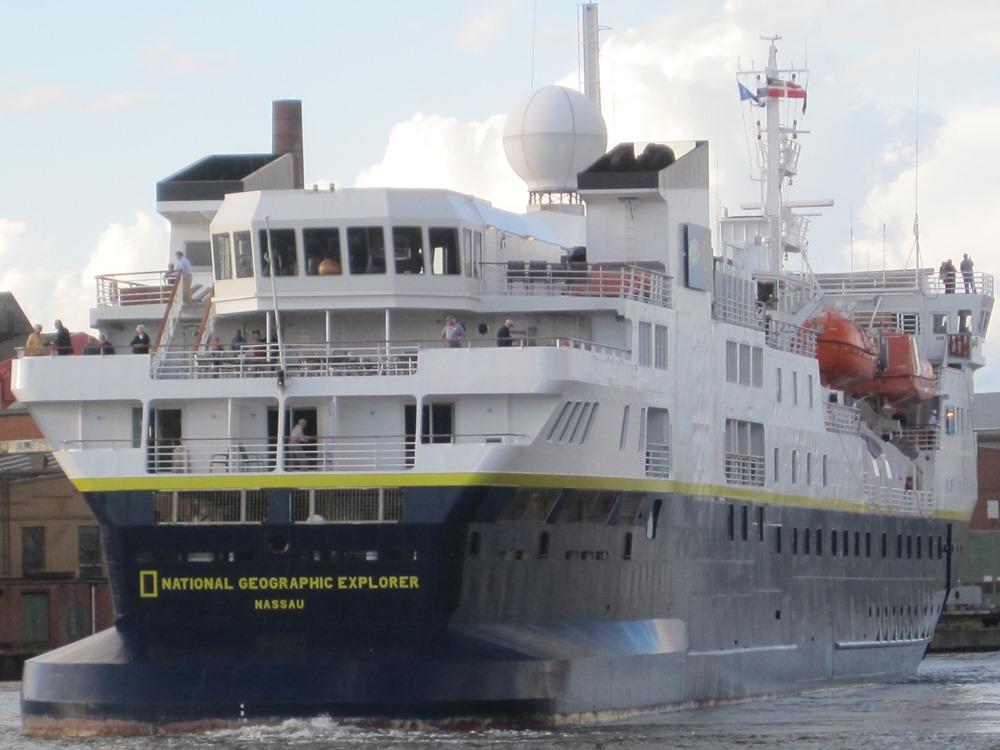
The vessel (IMO number 8019356) is currently Bahamas-flagged (MMSI 309336000) and registered in Nassau.
History – construction and ownership
The 162-passenger Nat Geo Explorer is an expedition vessel capable of reaching some of the most remote shores on the planet while providing a first-class onboard experience. The ship is equipped with a full suite of tools for marine exploration.

National Geographic Explorer is owned and operated by Lindblad Expeditions in cooperation with the National Geographic Society (NatGeo, a US non-profit institution for science and education). This partnership enables guests to enjoy expedition-style small-ship travel as active explorers. Lindblad ships sail to unique destinations, exploring remote inlets, making Zodiac landings, and searching for wildlife.
Decks and Cabins
National Geographic Explorer has 5 decks (3 with cabins) and 81 staterooms, all Outside accommodations featuring either portholes or picture windows.
The ship offers 9 cabin categories.
During the May 2023 drydock refurbishment (conducted at Astilleros Canarios/ASTICAN Shipyard in Las Palmas de Gran Canaria, Canary Islands), the vessel’s 8 Suites were redesigned and renovated. The updated décor incorporates textured fabrics in aqua and cassis tones, and each Suite was fitted with a Command Center (LG HDTV, Nat Geo Atlas, barometer) and a Nescafe espresso machine.
Shipboard facilities and amenities
Nat Geo Explorer has one Main Dining Room offering single-seating service with unassigned tables, as well as a Bistro. Dining emphasizes regional cuisine prepared with local ingredients.
The ship carries a fleet of Zodiacs and kayaks, along with HD cameras, hydrophones, and video equipment that provide access to the underwater world. In the lounge, guests can view imagery from the ocean depths projected from a remotely operated vehicle (ROV). A full-time doctor, photo instructor, video chronicler, wellness specialist, and undersea specialist accompany every voyage. Internet access is also available.
Lindblad’s “Open Bridge” policy allows passengers round-the-clock access (weather permitting) to the Wheelhouse/Navigation Bridge to meet and converse with the officers on duty and the Captain.
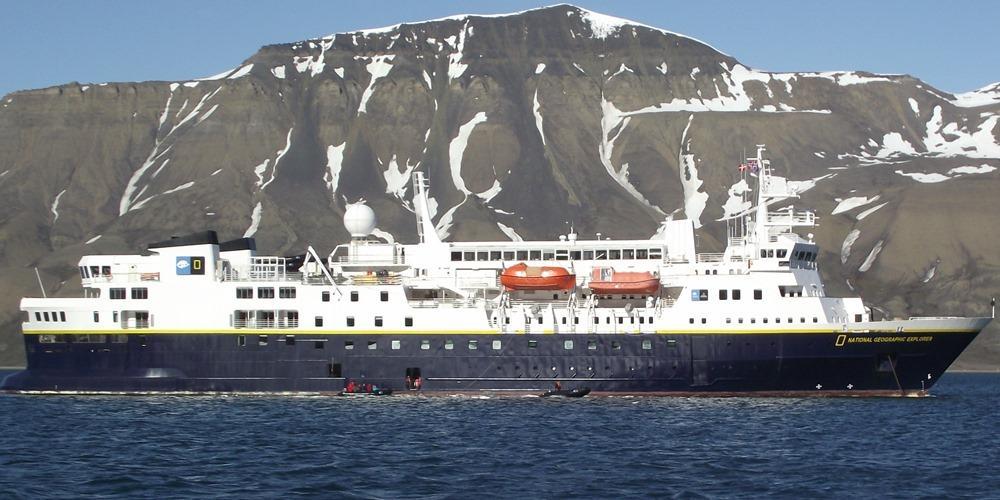
The ship’s public spaces include a Chart Room (with facilities for films and presentations), Global Gallery (shop), Internet Café, Observation Lounge with full-service bar, sauna, LEX spa, and fitness center. A well-stocked library provides a quiet retreat. The Sun Deck offers excellent viewing platforms for observing Antarctica’s sculpted icebergs or Norway’s dramatic fjords.
Itineraries
Nat Geo Explorer’s itinerary program is based on expedition cruises in Antarctica during the winter season and in the Arctic during summer. The ship also sails along the Atlantic coast and explores the Baltic Sea, Norway, the Northwest Passage, Iceland, coastal Canada, and South America (Patagonia), departing from various ports.
Following the Coronavirus shutdown, Nat Geo Explorer resumed operations in July 2021 with two alternating Iceland itineraries, both operating roundtrip from Reykjavik:
- (July 7, 2021) The 6-day “Wild Island Escape” itinerary visits the Westfjords (Djupavik), Arnafjordur (Dynjandi Waterfall), Latrabjarg Cliffs, and the Westman Islands (Heimaey and Surtsey). Fares started at USD 5180 per person (double occupancy).
- (July 11, 2021) The 11-day “A Circumnavigation of Iceland” itinerary visits Flatey Island, Latrabjarg, Westfjords (Isafjardardjup, Vigur Island, Isafjordur), Siglufjordur, Akureyri, Lake Myvatn, Husavik, Langanes Peninsula, Djupivogur, and the Westman Islands. Fares started at USD 11,460 per person.
- Lindblad’s cruise fares are inclusive of all meals, drinks, shore excursions (including Zodiac cruising), complimentary bar tab, and crew gratuities.
In 2024, Lindblad and Nat Geo Explorer introduced two new Antarctic itineraries focused on shorter voyages and air travel (charter flights) over the Drake Passage:
The first 8-day itinerary includes roundtrip charter flights over the Drake Passage to/from the Chilean Base on King George Island, where guests embark the ship. At the end of the voyage, guests disembark on King George Island, fly to Puerto Natales, stay overnight, and fly home the following day.
The second 8-day itinerary is a one-way cruise from Ushuaia, Argentina. Guests board the ship, spend two days crossing the Drake Passage, enjoy five days of Antarctic cruising, and disembark on King George Island for a charter flight home.
Photos of National Geographic Explorer
National Geographic Explorer ship related cruise news
- Cruise Industry
Polar research voyages with National Geographic–Lindblad Expeditions
Fourteen advanced research projects led by certified National Geographic Explorers and affiliated scientists are scheduled to operate in some of the...
December 26, 2025 - Cruise Industry
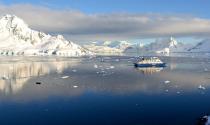
Lindblad expands Antarctica itineraries with shorter cruises and Drake Passage flyover
Lindblad Expeditions-National Geographic introduces two novel Antarctica itineraries, emphasizing shortened sailings and flights over the Drake...
January 11, 2024 - Cruise Industry
Lindblad Expeditions bringing enhanced Internet connectivity with Spacex’s Starlink
Lindblad Expeditions announced the beginning of the roll-out of Starlink - SpaceX’s high-speed, low-latency broadband internet. With the...
May 25, 2023 - Cruise Industry
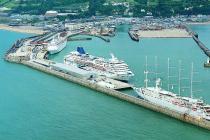
Port of Dover (England) set for a record-breaking year with 130 cruise ship calls
With 130 calls scheduled for 2022, Port Dover (England UK) is set to receive more liners than in any previous year. Of those, 73 are turnarounds...
July 8, 2022 - Cruise Industry
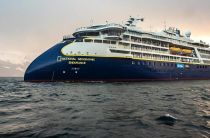
Lindblad Expeditions returns to Antarctica on November 3
National Geographic-Lindblad Expeditions announced their return to Antarctica for the 2021-2022 cruise season. The Antarctica season starts on...
October 16, 2021 - Cruise Industry
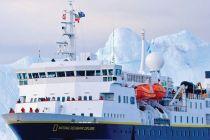
Lindblad Expeditions' ship National Geographic Explorer returns to Iceland in July
Lindblad Expeditions announced it is reactivating its National Geographic Explorer ship for a series of cruises in Iceland this summer. The 148...
May 29, 2021 - show more news
Other Lindblad Expeditions cruise ships
National Geographic Explorer Wiki
Lindblad’s flagship, National Geographic Explorer, cruises from pole to pole (Arctic and Antarctica) and also operates in Europe, including Iceland, Greenland, and the Norwegian Fjords. The vessel was originally built as MS Midnatsol (a Hurtigruten ship). Today, Nat Geo Explorer is a purpose-built expedition cruise vessel designed for safe navigation in remote regions, particularly the polar areas. She is reinforced with additional hull plating to withstand high ice-class tolerances.
As a true expedition ship, National Geographic Explorer carries a full-time doctor, wellness specialist, photo instructor, video chronicler, and an undersea specialist. She is also equipped with dedicated expedition gear, including a remotely operated vehicle (ROV) capable of diving to 1000 ft, a fleet of 36 two-person kayaks and 15 Zodiacs, wetsuits and snorkeling gear, and a glass-bottom boat. Onboard educational and enrichment venues include the observation lounge and the library. A mudroom with personal lockers provides storage for boots and outerwear, helping to maximize cabin space.
MS Explorer (also known as “Nat Geo Explorer”) is designed specifically for polar operations. She is fully outfitted for expedition cruising, carrying wetsuits, diving and snorkeling equipment, underwater cameras, kayaks, a glass-bottom boat, and a Zodiac fleet. The vessel’s ROV can reach depths of up to 1000 ft / 305 m.
Nat Geo Explorer has a maximum draft of 4.7 m (16 ft) and is powered by two Rolls-Royce Bergen marine diesel engines (model Normo-Bergen KVM-16) with a combined output of 4708 kW. The vessel (yard/hull number 114470) was constructed by Hatlo Verksted AS in Ulsteinvik, Norway.